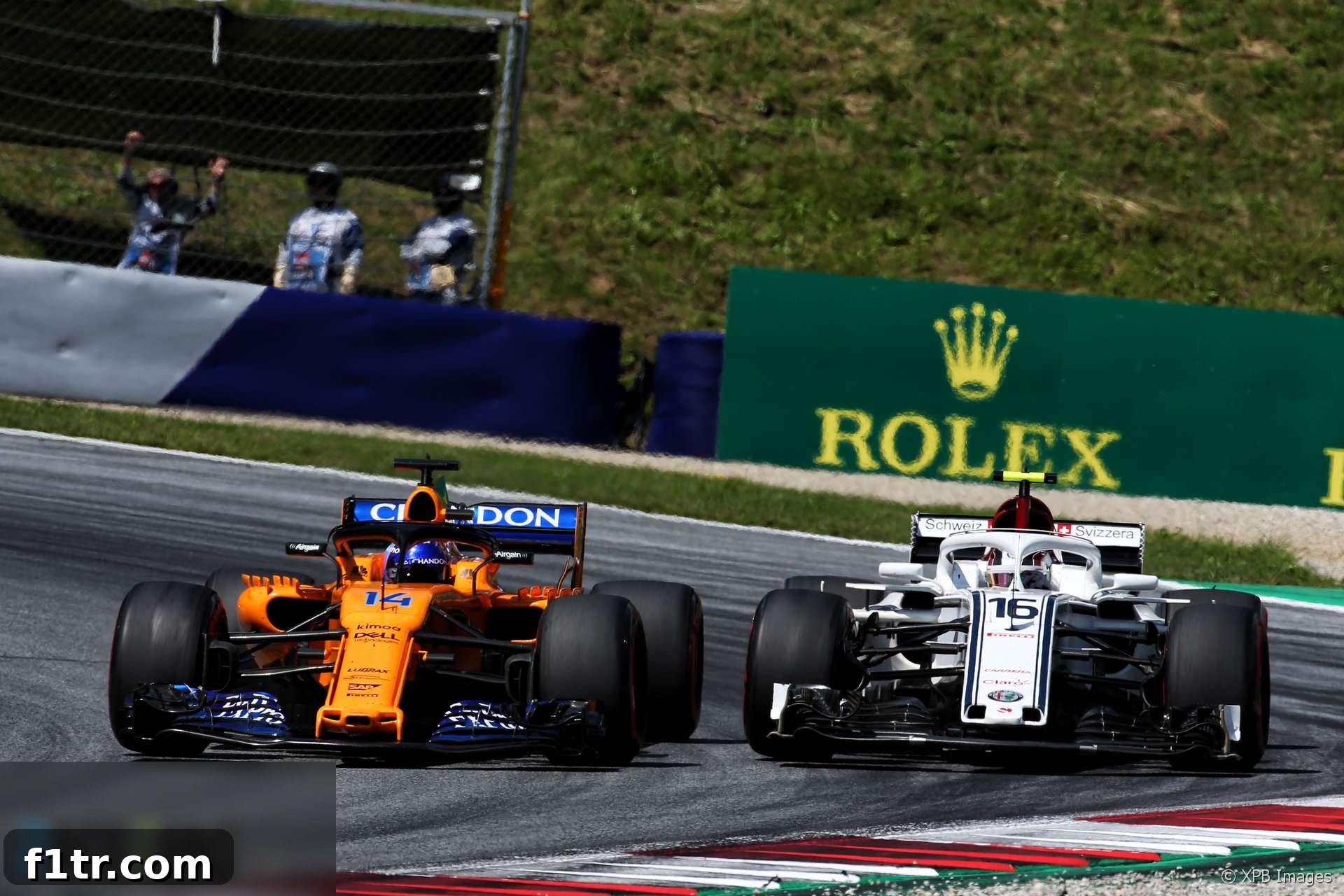
McLaren has candidly acknowledged a significant performance deficit in Formula 1, a persistent challenge that continues to plague the team despite their strategic shift in power unit suppliers for the current season. This admission comes at a crucial juncture for the Woking-based outfit, one of the most storied names in motorsport history, as it grapples with a prolonged period away from its former glory.
The team’s standing in the constructors’ championship last weekend saw them settle in sixth place. While this represents an improvement of three positions compared to their finish in the preceding season, the result falls considerably short of the lofty expectations that accompanied their highly anticipated split from former engine partner Honda. For years, Honda’s power units were repeatedly cited as a primary factor behind McLaren’s under-performance, leading to a much-publicized divorce and a fresh start with Renault engines.
Driver Fernando Alonso, a two-time world champion and a central figure in McLaren’s recent struggles, has consistently stepped forward to defend the team’s efforts. He often highlighted the incremental gains and improved results when compared to the abysmal seasons endured with Honda. Alonso, known for his outspoken nature, even went so far as to blame sections of the media for what he perceived as overly negative coverage, suggesting that the narrative surrounding the team often overshadowed their tangible, albeit modest, progress.
However, the internal reality at McLaren appears to have been less optimistic. Following the recent resignation of racing director Eric Boullier, a clear signal of underlying issues, McLaren Racing CEO Zak Brown offered a candid assessment, openly admitting that the team was significantly under-performing against its own benchmarks and legacy.
“Obviously our results this year have demonstrated we have a big performance issue,” Brown told media, including RaceFans, in a frank revelation. “We are punching well below our weight given the history, the talented people, the resources, the technology at our disposal.” This statement resonated deeply within the Formula 1 community, underscoring the severity of the challenge facing McLaren. It highlighted a stark contrast between the team’s immense potential and its current on-track output, emphasizing that the issues extended beyond mere engine reliability.
McLaren’s struggles have now spanned well over five years without a single race victory in Formula 1, an unprecedented drought for a team that once dominated the sport. Brown identified a crucial factor contributing to this long-running under-performance: a pervasive lack of stability within the organization. He stressed that a consistent, long-term leadership structure is paramount to addressing the deep-seated issues and steering the team back towards competitiveness.
“This comes from a culmination of being destabilised over many years within our team,” Brown explained, detailing the turbulent internal landscape. “If you look at our past seven, eight years we’ve had different CEOs, different shareholders. Shareholders in, shareholders out, CEOs in, CEOs out and [we] have really failed to get on a stable footing to be able to rebuild this great team.” This insight revealed a corporate merry-go-round that undoubtedly hindered consistent strategic planning, technical development, and staff morale, making it incredibly difficult for the team to establish a clear direction and execute long-term goals.
Brown articulated a clear vision for the future, emphasizing that the era of internal flux must end. “Which is now what we’re going to do,” he declared, signaling a renewed commitment to organizational stability and a methodical rebuilding process. “We’ve been doing a lot of work behind the scenes and we’re now taking measures to rebuild McLaren to make us a great winning organisation again.” This promise signifies a fundamental shift in approach, moving away from short-term fixes towards a comprehensive, sustainable recovery plan. The ambition remains unequivocal: to restore McLaren to its rightful place at the pinnacle of Formula 1.
While acknowledging the persistent challenges, Brown also highlighted areas where McLaren had indeed made progress since the previous year. He conceded that the team cannot be satisfied with its current trajectory, yet he was keen to point out the discernible improvements that underpin their efforts.
“We have improved over last year. We have more points this year than we had all of last season,” Brown stated, offering concrete evidence of the team’s upward trend in performance metrics. While points alone do not equate to race victories, they signify a better competitive standing relative to the previous season’s dismal returns. This data suggests that the switch to Renault power units, combined with chassis improvements, was beginning to yield some positive, albeit limited, results on track.
“So while it is unsatisfactory, at our race pace we are improving. We have more commercial partners, this year than we had last year, so we are improving,” he elaborated. The increase in commercial partners is a critical indicator of renewed faith from external stakeholders and a stronger financial footing, both essential for sustained development in a highly capital-intensive sport like Formula 1. It suggests that despite the on-track difficulties, McLaren’s brand appeal and Brown’s commercial acumen were making headway in attracting vital investment.
“However we are not in a good enough place and expect to be much better,” Brown concluded, striking a balanced tone between acknowledging progress and maintaining a relentless pursuit of excellence. This nuanced perspective underscores the deep-seated ambition within McLaren; while improvements are noted, they are viewed merely as stepping stones towards the ultimate goal of competing for championships once again.
McLaren’s Journey: From Glory Days to Rebuilding Phase
The story of McLaren in Formula 1 is one steeped in unparalleled success, rivaled by only a handful of teams. From the championship triumphs of Emerson Fittipaldi and James Hunt in the 1970s, to the iconic rivalries and dominance of Alain Prost and Ayrton Senna in the late 1980s and early 1990s, and later Mika Hakkinen’s titles and Lewis Hamilton’s inaugural championship, McLaren has consistently been synonymous with winning. This rich heritage is a constant reminder of what the team is capable of, and concurrently, a heavy burden during periods of underperformance. The current struggles are therefore not just a matter of competitive standing, but a blow to the very identity of the team and its passionate fanbase.
The decision to partner with Honda in 2015, reviving a legendary alliance, was initially met with immense excitement. Yet, the reality quickly devolved into one of the most publicly challenging periods for both McLaren and Honda. The power unit’s chronic lack of performance, reliability issues, and the resulting public frustration from drivers like Fernando Alonso became a recurring narrative. The partnership became a symbol of unfulfilled potential, leading to strained relations and, ultimately, an unavoidable divorce. The hope was that by switching to customer Renault power units for the 2018 season, McLaren would shed the shackles of a underperforming engine and allow its chassis to shine. The early season results, however, indicated that the issues were more complex and deeply rooted than just the engine supplier.
Addressing the Root Causes: Beyond the Power Unit
Zak Brown’s diagnosis of long-term instability points to systemic issues that extend beyond the choice of power unit. A constant churn of leadership at the CEO and shareholder level can severely impede a Formula 1 team’s ability to develop a cohesive long-term vision. Consistent leadership is vital for attracting and retaining top talent, implementing stable technical philosophies, and fostering a winning culture. Without this bedrock, even the most talented engineers and designers struggle to deliver peak performance when confronted with shifting priorities and uncertain directives.
The resignation of Eric Boullier, who had served as racing director since 2014, signaled a recognition that structural changes were necessary at the very top of the racing operations. While Boullier oversaw the challenging Honda years, his departure opened the door for a fresh approach to the team’s technical and operational leadership. This move was a clear indication from Brown and the McLaren board that incremental improvements were no longer sufficient; a more radical overhaul was needed to address the fundamental issues impacting the car’s performance and the team’s overall direction.
The Road Ahead: Building for a Sustainable Future
McLaren’s rebuilding efforts under Zak Brown are multifaceted. They involve not only securing a stable financial base through new commercial partnerships but, more importantly, establishing a robust and consistent leadership structure. This includes empowering technical leaders to innovate, streamlining decision-making processes, and fostering an environment where talent can thrive without the distractions of internal politics or uncertainty. The goal is to move beyond simply chasing points and to develop a car concept that can consistently challenge the front-runners.
For a team like McLaren, success is measured by victories and championships. The current position in the constructors’ championship, while an improvement, still leaves them far behind the likes of Mercedes, Ferrari, and Red Bull. The gap in performance is not easily bridged, requiring significant investment in infrastructure, meticulous aerodynamic development, and a continuous push for marginal gains across every aspect of the car. The ambition to become a “great winning organisation again” is a long-term project, demanding patience, resilience, and unwavering commitment from everyone within the Woking factory and trackside team.
Fernando Alonso’s presence during this challenging period was a double-edged sword. His exceptional talent often allowed McLaren to achieve results that the car perhaps didn’t fully deserve, masking some of the underlying deficiencies. His outspoken nature, while sometimes seen as critical, also served as a constant reminder of the team’s competitive aspirations. His continued defense of the team, even amidst palpable frustration, highlighted a deep-seated desire to see McLaren succeed, reflecting the passion that runs deep within the team’s history. His eventual departure would signify the end of an era, putting even greater pressure on the team’s ability to develop its next generation of talent and engineers.
2018 F1 season
- F1 feared “death knell” for Drive to Survive after Ferrari and Mercedes snub
- McLaren staff told us we were “totally crazy” to take Honda engines in 2018 – Tost
- ‘It doesn’t matter if we start last’: How Red Bull’s junior team aided Honda’s leap forward
- Honda’s jet division helped F1 engineers solve power unit problem
- McLaren Racing losses rise after Honda split
Browse all 2018 F1 season articles