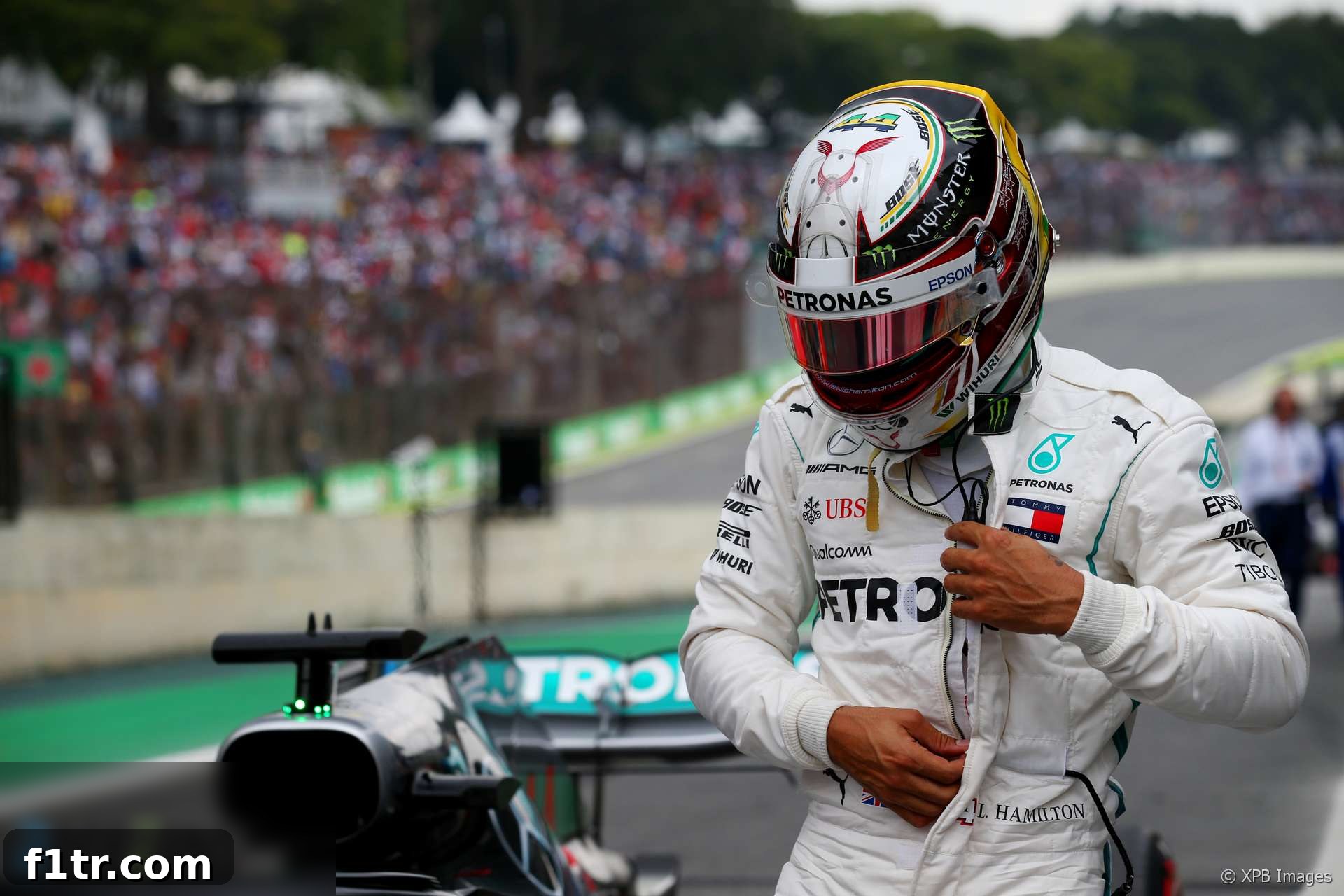
The high-octane world of Formula 1 qualifying is a crucible of speed, strategy, and split-second decisions. At the 2018 Brazilian Grand Prix, an incident during the crucial Q2 session briefly captured the spotlight, involving Williams driver Sergey Sirotkin and then-Mercedes star Lewis Hamilton. Despite the dramatic nature of their near-collision, Sirotkin was quick to dismiss any wrongdoing by Hamilton, offering a nuanced perspective on the intricacies of F1 out-laps and the relentless pursuit of optimal tire performance.
Understanding the Brazilian GP Q2 Qualifying Incident
The stage was set at the iconic Autódromo José Carlos Pace (Interlagos) for a qualifying session where every tenth of a second mattered. As drivers ventured out for their flying laps in Q2, managing track position, tire temperatures, and traffic became paramount. The incident unfolded when Sirotkin, piloting the less competitive Williams FW41, found himself in an unconventional situation that necessitated an extremely aggressive out-lap, contrasting sharply with Hamilton’s more measured approach.
Sirotkin provided a detailed account of the unique circumstances that dictated his rapid pace. “The only tyres that I had were a scrubbed set from the end of Q1,” he explained. This meant he was on used tires, which generally require a more precise warm-up than fresh rubber. Compounding this challenge, the tires had not been kept in their heated blankets for an adequate duration. “We didn’t have it in the blankets long enough so when I left the pits the tyres were minus 20 degrees [to target],” Sirotkin clarified. For context, Formula 1 tires operate within a very narrow optimal temperature window, typically around 100-110°C. Being 20 degrees below target is a significant deficit that drastically reduces grip and makes the tires extremely unpredictable. To bring them up to temperature quickly, Sirotkin had no choice but to push the car to its limits, even on an out-lap.
Sergey Sirotkin’s Perspective: A Battle Against Cold Tires and Time
The pressure on Sirotkin to generate tire temperature was immense. “So I had to push very hard all the way on my out-lap. I was really as quick as I had the grip for all the way around and I was still pushing all the way from turn 11,” he recounted. This wasn’t merely aggressive driving; it was a strategic imperative born out of a technical disadvantage. As he approached the latter section of the circuit, he encountered Lewis Hamilton, who was on a more typical, slower warm-up lap, focused on meticulous tire preparation for his own timed attempt.
“And then Lewis was there, he was obviously very slow, preparing his lap,” Sirotkin continued. The speed differential between the two cars was staggering. “Because I was coming so quickly I didn’t expect him to give me the room as we were both on out-laps and I had such a big speed difference between him that I just moved myself to the left, trying to get through.” Sirotkin estimated his closing speed on Hamilton to be an astonishing “like 200[kph] quicker than him at that point on the left.” Such an immense speed gap demands instant reactions and precise car control, turning a routine out-lap into a high-stakes evasive maneuver. “I think at the last minute he saw me and tried to move and I was like 200[kph] quicker than him on that point on the left so it was quite difficult to get around and avoid the contact,” he elaborated, underscoring the razor-thin margin that prevented a major collision.
Despite the heart-stopping moment, Sirotkin’s assessment was remarkably understanding and mature. He unequivocally stated that he harbored no ill will or blame towards Hamilton. “I don’t think there is anything he did wrong, it [was] just the situation that I had to push, which is quite unusual for the out-lap. These things can happen.” This professional outlook highlighted Sirotkin’s awareness of the unique pressures and unpredictable scenarios that can unfold in the intensely competitive environment of Formula 1 qualifying, especially when drivers are operating under different strategic and technical constraints.
Lewis Hamilton’s Response: Frustration Over an “Unnecessary” Moment
While Sirotkin adopted a pragmatic and forgiving stance, Lewis Hamilton, a multiple world champion renowned for his precision and focus, expressed a degree of frustration over the incident. From Hamilton’s vantage point, the near-miss was “completely unnecessary.” For a driver of his caliber, every aspect of an out-lap is meticulously planned to ensure optimal tire and brake temperatures, and crucially, clear air for the subsequent flying lap. Any disruption, however minor, can compromise this delicate process and impact performance on the timed lap.
Hamilton pointed to available track space as a factor: “We had a space behind. Behind him there was a bit of a space so ultimately his lap and my lap weren’t great from that so hopefully he can learn from it.” This implied that Sirotkin perhaps could have better managed his track positioning or timing to avoid such a significant speed differential with a car ahead. While no physical damage occurred, the interruption to his rhythm and the potential impact on his tire preparation would have been a cause for concern for Hamilton, who consistently strives for perfection in every aspect of his performance. His comment about learning from the incident underscored his belief that such situations could be avoided with better traffic management from the trailing driver.
Toto Wolff’s Assessment: A “Non-Issue” Rooted in Misunderstanding
Mercedes Team Principal Toto Wolff, ever the diplomat, quickly moved to de-escalate any potential controversy, labeling the near-miss a “non-issue.” Wolff’s perspective is often aimed at managing public perception and protecting his team and drivers from unnecessary scrutiny. “This was a warm-up lap and a misunderstanding between two drivers,” he stated, offering a concise and rational explanation for the incident.
Wolff further supported his assessment by referencing Sirotkin’s own post-incident comments: “Sergey came out and said he didn’t lose any time and it was a misunderstanding.” This mutual acknowledgment of a lack of malicious intent helped solidify the “non-issue” narrative. Wolff also provided insight into Hamilton’s perspective and actions, explaining, “And for Lewis it was a misunderstanding, he tried to get out of the way whilst thinking that somebody was on a quick lap and wasn’t flagged to him.” This highlights the often-chaotic nature of qualifying, where drivers rely on real-time information and sometimes make assumptions about other cars’ intentions. Without specific blue flags (which are typically only deployed for cars on flying laps approaching slower vehicles) or immediate radio communication, Hamilton might not have been fully aware of the extreme speed differential or Sirotkin’s urgent need to heat his tires.
While acknowledging the gravity of what could have been – “It could have ended up in an accident but it didn’t” – Wolff concluded definitively, “So for me, a non-issue.” His statement effectively drew a line under the event, allowing both teams to focus on the remainder of the qualifying session and the race without lingering distractions or accusations.
The Intricacies of F1 Qualifying: Out-Laps, Tire Management, and Safety
The incident at the 2018 Brazilian Grand Prix serves as a vivid illustration of the complex and often unseen challenges inherent in Formula 1 qualifying. An out-lap, far from being a leisurely cruise, is a meticulously managed phase critical for setting up a successful timed lap. Drivers engage in a precise ballet of accelerating and braking, weaving to scrub off tire release agents, bedding in brake pads, and most importantly, bringing their delicate Pirelli tires to a very specific operating temperature window. Failure to achieve this optimal temperature can result in a significant loss of grip, balance, and ultimately, lap time.
Sirotkin’s predicament of being “minus 20 degrees to target” underscores the severe impact of tire temperature on F1 performance. Such a deficit meant his tires would have been struggling for adhesion, justifying his aggressive driving to generate frictional heat. Conversely, Hamilton was executing a more standard warm-up, balancing heat generation with preserving tire integrity for the flying lap. This clash of differing out-lap objectives is a recurring theme in F1 qualifying, highlighting the delicate balance between a driver’s right to prepare their car and the responsibility not to impede others.
Safety remains paramount in Formula 1, and incidents involving significant speed differentials, even outside of racing conditions, are inherently dangerous. Sirotkin’s reported closing speed of 200 km/h on Hamilton translates to approximately 55 meters per second, demanding exceptional awareness and reaction times from both drivers to prevent a catastrophic collision. While no contact occurred, the potential for a serious accident was undeniable, serving as a stark reminder of the fine margins that define safety in such a high-speed sport. F1 regulations, including rules on minimum out-lap times and specific slowing-down areas, are continually reviewed and refined to mitigate such risks, although human judgment and unforeseen circumstances will always play a role.
Ultimately, the Sirotkin-Hamilton near-miss at Interlagos in 2018, though quickly resolved without penalties, offered a valuable insight into the unique pressures drivers face. It showcased the demanding technical aspects of tire management, the strategic nuances of qualifying out-laps, and the critical importance of driver etiquette and awareness in a sport where milliseconds and millimeters can separate success from disaster. It was a fleeting but significant moment that revealed the hidden complexities beneath the surface of Grand Prix racing.
2018 F1 Season Insights
The 2018 Formula 1 season was a memorable year, rich with compelling storylines and intense competition. This particular incident, while minor in the broader context of the championship, was a microcosm of the challenges faced by drivers and teams throughout the year. Lewis Hamilton was in dominant form, ultimately securing his fifth World Drivers’ Championship title, further cementing his legacy as one of the sport’s greats. The Mercedes-AMG Petronas F1 Team continued to showcase its engineering prowess and strategic excellence, contributing to their constructors’ title.
For Sergey Sirotkin, 2018 marked his rookie season in Formula 1 with Williams Racing. It was a baptism of fire, as the team struggled significantly with the performance of the FW41 car, often finding themselves at the back of the grid. Incidents like the one with Hamilton, despite being deemed “non-issues” by those involved, were part of his steep learning curve in adapting to the relentless pace, intricate rules, and high-pressure environment of Grand Prix racing. These experiences, even the near-misses, were crucial in honing his spatial awareness, understanding of F1 traffic dynamics, and overall racing craft.
Beyond the top teams, the season also featured other intriguing narratives, such as the resurgence of Honda as an engine supplier with Toro Rosso, McLaren’s continued struggles following their split from Honda, and the evolving technical regulations that pushed teams to innovate. Each qualifying session, including the Brazilian Grand Prix, provided these individual narratives, building a comprehensive picture of the season’s unfolding drama and the continuous pursuit of peak performance in Formula 1.
- F1 feared “death knell” for Drive to Survive after Ferrari and Mercedes snub
- McLaren staff told us we were “totally crazy” to take Honda engines in 2018 – Tost
- ‘It doesn’t matter if we start last’: How Red Bull’s junior team aided Honda’s leap forward
- Honda’s jet division helped F1 engineers solve power unit problem
- McLaren Racing losses rise after Honda split
Browse all 2018 F1 season articles