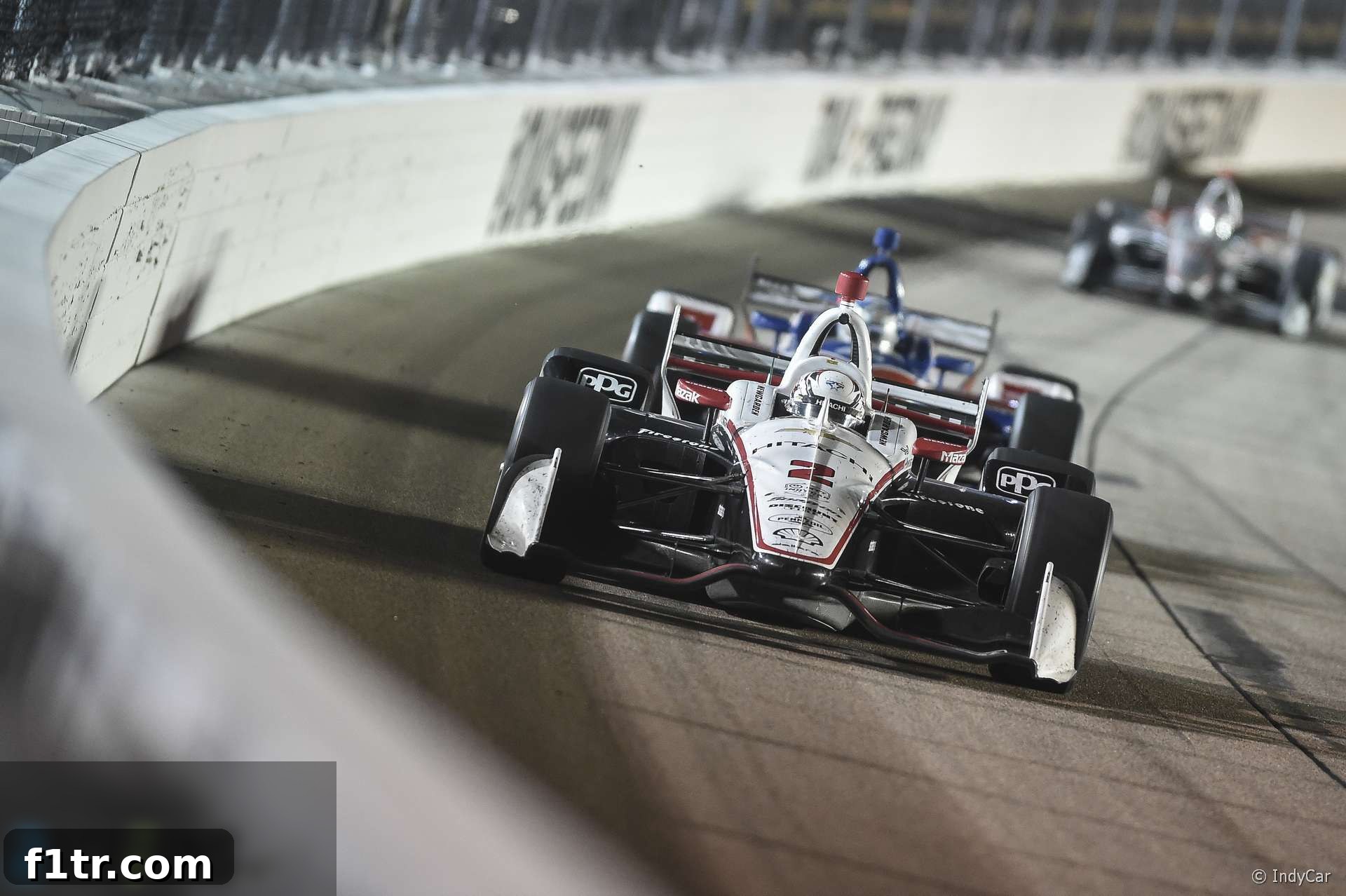
Newgarden Dominates Rain-Delayed Iowa 300, Extends IndyCar Championship Lead
In a masterful display of oval racing prowess and strategic brilliance, Josef Newgarden carved out a commanding victory at the Iowa 300, a race profoundly shaped by inclement weather and dramatic on-track incidents. The Team Penske driver expertly navigated the treacherous conditions and fierce competition at the Iowa Speedway, not only securing his fourth win of the season but also significantly bolstering his lead in the fiercely contested NTT IndyCar Series championship standings. The event, initially hampered by a lengthy rain delay, ultimately transformed into a thrilling spectacle, with Newgarden emerging as the undisputed king of the short oval.
A Challenging Start: Rain Delays and Pole Position Drama
Anticipation for the Iowa 300 had been building, with fans eager to witness the high-speed, close-quarters action characteristic of the 7/8-mile Iowa Speedway. However, Mother Nature had other plans. A significant rain shower descended upon Newton, Iowa, just before the scheduled start, forcing officials to delay proceedings for several hours. This interruption tested the patience of both teams and spectators, but ultimately set the stage for a race brimming with unpredictability.
When the green flag finally waved, it was Simon Pagenaud, Newgarden’s Team Penske stablemate, who started from the pole position. Pagenaud had demonstrated impressive speed in qualifying, underlining Team Penske’s formidable presence at the front of the grid. Yet, the initial moments of the race saw immediate challenges to his lead.
Advert | Become a Supporter & go ad-free
As the field roared into turn one, another Penske driver, Will Power, launched an aggressive attack, quickly seizing the lead from Pagenaud. Power, known for his blistering starts and aggressive driving style, established an early rhythm at the front, looking to convert his strong qualifying performance into a race victory. Pagenaud, meanwhile, found himself slipping back slightly, unable to hold off the initial charge from his teammate.
Newgarden’s Ascent: Methodical Pace and Unyielding Pursuit
While Power initially dictated the pace, Josef Newgarden was not content to remain in the shadows. Displaying the calculated aggression that has defined his championship campaigns, Newgarden began his methodical climb through the field. He meticulously worked his way past Pagenaud, then set his sights on Power. The battle between the Penske teammates was a captivating display of precision and nerve, with Newgarden ultimately finding a way past Power to take command of the race.
Once at the front, Newgarden asserted his dominance, quickly establishing a comfortable gap over the chasing pack. However, the track conditions remained temperamental. A brief second rain shower swept across the circuit, leading to another short interruption. This unexpected development could have derailed many drivers, forcing a restart and potentially reshuffling the order. Yet, the track dried out remarkably quickly, and racing resumed with Newgarden still firmly in control.
Despite Power’s relentless pursuit, no one seemed to have an answer for Newgarden’s pace. He masterfully navigated through lapped traffic, maintaining his blistering speed and extending his lead with every passing lap. His ability to manage his tires, conserve fuel when necessary, and expertly use the available grip on the rapidly changing track surface highlighted his immense talent and the meticulous preparation of his Team Penske crew.
Race-Defining Incidents and Strategic Gambles
The Iowa 300 was far from a clean affair, punctuated by several caution periods that dramatically altered the complexion of the race and the fortunes of several drivers. One of the most significant incidents involved Takuma Sato. The former Indianapolis 500 winner, known for his bold strategic calls, attempted an early pit stop in a bid to gain track position and challenge the leaders. This gamble initially paid off, briefly elevating him to second place.
However, Sato’s promising run was cut short in a devastating incident with Sage Karam. As Sato slowed while exiting the final corner and heading towards the pit lane, Karam’s Carlin machine made contact with the rear of Sato’s RLL entry. The collision sent Sato’s car spinning and into the wall, forcing him out of the race. It was a cruel end to what had been a strategically brilliant drive for the Japanese veteran.
Advert | Become a RaceFans supporter andgo ad-free
For Sage Karam, this marked his second caution period of the evening. Earlier in the race, Karam had already caused a delay when he spun into the path of Scott Dixon, one of the championship’s perennial contenders. Both cars sustained damage in that initial incident but were remarkably able to continue, albeit with their races compromised. Karam’s involvement in two significant incidents underscored the intense and often unforgiving nature of short oval racing, where small errors can have large consequences.
Power’s Heartbreak and Carpenter’s Costly Error
Will Power’s last, desperate hope of challenging Newgarden came during the final round of pit stops. A perfectly executed stop and a quick out-lap might have provided him with the slim chance he needed. However, fate intervened in the form of a costly error. Power ran wide on his entry into the pit lane, crossing the dreaded white line that delineates the pit entry, an infraction that immediately incurred a drive-through penalty. This setback effectively extinguished his chances of a podium finish, amplifying the immense pressure under which these elite drivers operate.
Adding to the drama, Ed Carpenter, the team owner-driver, then brought out yet another caution period when he made contact with the wall. Carpenter’s incident further shuffled the field and gave Power’s drive-through penalty even greater significance, dropping him out of the top ten entirely. These late-race cautions, while providing opportunities for some, proved disastrous for others, highlighting the fine margins that define success and failure in IndyCar racing.
The Final Chase: Podium Finishers and Championship Implications
The numerous cautions and penalties ultimately promoted Scott Dixon to second place. Despite his earlier incident with Karam, Dixon, the wily veteran and multiple champion, once again demonstrated his remarkable ability to recover and capitalize on others’ misfortunes. While he couldn’t mount a serious challenge to Newgarden in the final sprint to the flag, his second-place finish was a testament to his resilience and consistency.
Claiming a well-deserved third place, and his best finish of the season, was James Hinchcliffe. The popular Canadian driver, who had won at Iowa the previous year, put together a strong performance, navigating the chaos to secure a valuable podium finish. His race was a demonstration of tenacity and skillful driving under pressure.
Simon Pagenaud, despite starting from pole, eventually slipped to fourth place, still a solid points haul for his championship aspirations. He finished just ahead of Spencer Pigot, who rounded out the top five with a commendable drive.
Further down the order, Alexander Rossi took sixth after an intense, prolonged scrap with rookie Santino Ferrucci. Ferrucci, in particular, impressed with several bold and aggressive moves throughout the race, showcasing his potential, especially by utilizing the outside line on restarts. However, the challenging nature of the short oval eventually saw him fall to a lapped 12th place by the checkered flag, a valuable learning experience for the young driver.
Zach Veach claimed seventh, becoming the last driver to finish on the lead lap. Graham Rahal secured eighth ahead of Sebastien Bourdais, while veteran Tony Kanaan completed the top ten, once again proving his enduring skill at the Iowa Speedway.
Newgarden’s Dominance: A Clear Path to the Title?
Josef Newgarden’s commanding victory at the Iowa 300 was more than just another race win; it was a powerful statement of intent in the NTT IndyCar Series championship battle. His fourth triumph of the season puts the 28-year-old in an exceptionally strong position to reclaim the title he previously won in 2017. With just five races remaining on the calendar, Newgarden now enjoys a significant 29-point lead over his closest rival, Alexander Rossi. Simon Pagenaud, despite a decent points day, sits a further 29 points behind, illustrating the substantial gap Newgarden has established.
The Iowa 300 showcased Newgarden’s exceptional talent, his team’s strategic acumen, and his ability to perform under the most challenging circumstances. From navigating rain delays to managing multiple caution periods and fending off strong competitors, Newgarden proved he is a force to be reckoned with. This victory not only provides a substantial boost in the championship standings but also instills immense confidence as the series heads into its final, crucial stretch.
The unpredictable nature of IndyCar racing, combined with the condensed schedule and high stakes of the remaining races, promises a thrilling conclusion to the season. However, with his dominant performance at Iowa, Josef Newgarden has firmly positioned himself as the driver to beat for the 2019 NTT IndyCar Series championship.
Advert | Become a RaceFans supporter andgo ad-free
IndyCar News and Features
- IndyCar driver McLaughlin cleared of injury after crashing through barrier at Barber
- Schumacher says his IndyCar feels like ‘an F2 car, just with better tyres’
- IndyCar “way faster than Formula 1” in some corners, says Grosjean
- FIA to award more F1 superlicence points to IndyCar drivers from 2026
- Schumacher to race full-time in IndyCar with RLL in 2026
Browse all IndyCar articles