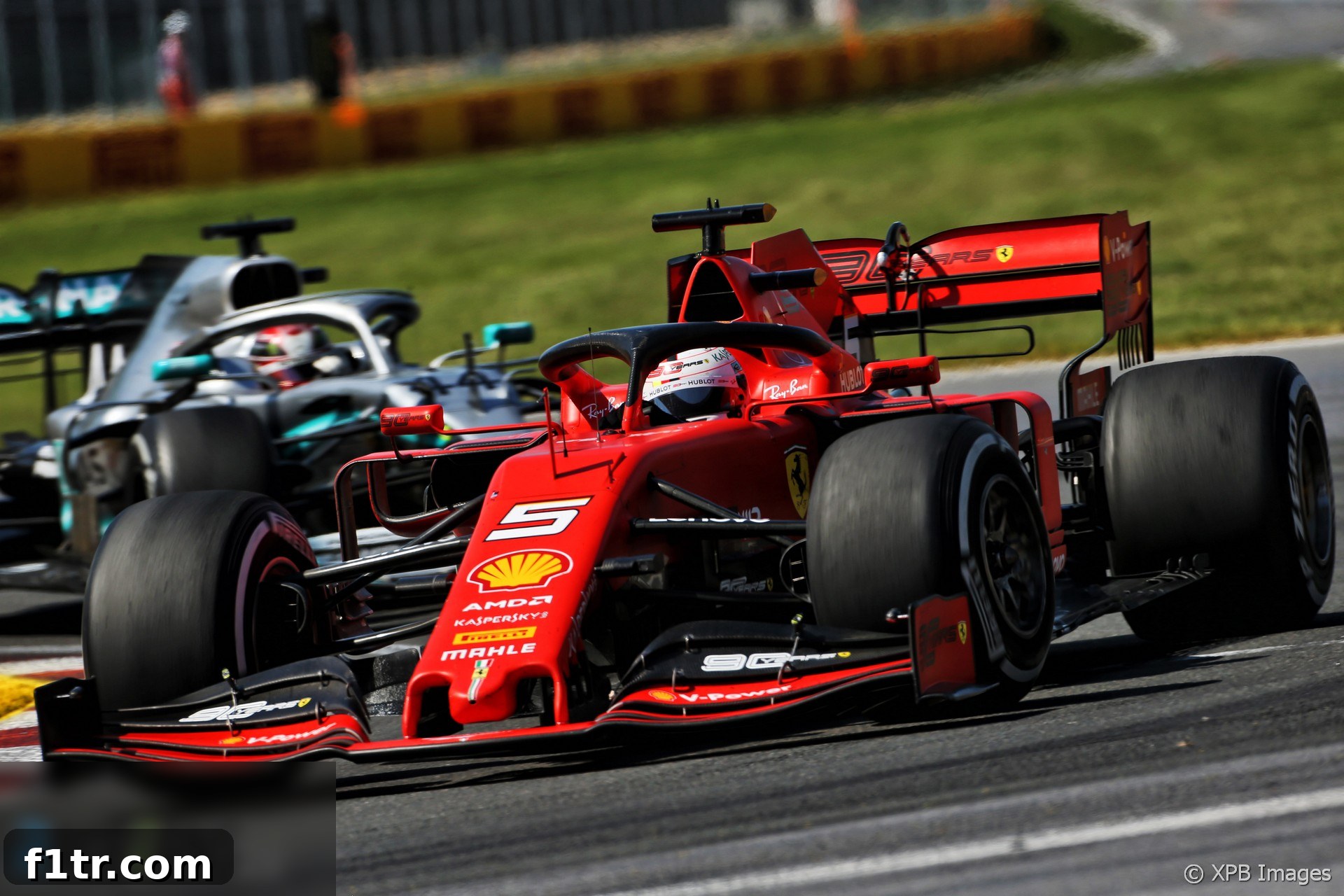
The 2019 Formula 1 season proved to be a pivotal and often tumultuous year for Sebastian Vettel, marked by intense speculation regarding his future in the sport. Persistent rumors circulated about a potential departure from Ferrari, a highly anticipated return to Red Bull Racing, or even a complete exit from F1. This widespread conjecture served as a stark reflection of a season that, for a four-time world champion, was undeniably disappointing and challenging on multiple fronts. The pressure on Vettel was immense, not just from the media and fans, but internally within Ferrari, a team with a rich history and an insatiable desire for championship success.
Advert | Become a Supporter & go ad-free
While a raw statistical analysis of 2019 might not paint a picture of utter disaster, the season inflicted significant, perhaps even terminal, damage to Vettel’s standing within Formula 1 and his prospects of contending for another world championship. His stature as a seasoned champion was tested severely by the emergence of Charles Leclerc, a young, aggressive talent widely heralded as a future star. Leclerc’s performance, particularly in qualifying and increasingly in race trim, exposed vulnerabilities in Vettel’s driving, leading to a series of high-profile and costly mistakes that undermined his campaign and cast a shadow over his illustrious career. The dynamic within the Scuderia shifted dramatically, placing Vettel in an unfamiliar and uncomfortable position as the veteran under siege.
At the outset of the 2019 season, Vettel appeared to have a better grasp of the new Ferrari challenger, the SF-90. In the initial half-dozen races, he demonstrated a clear edge over Leclerc in qualifying, often setting faster times and securing stronger grid positions. This early advantage suggested a season where Vettel might reassert his dominance. However, despite these promising qualifying performances and the inherent speed of the SF-90, Vettel repeatedly failed to convert these opportunities into victories. The consistent and relentless challenge from Mercedes, who started the season with an exceptionally strong package, meant that any slight misstep or strategic oversight proved critical, preventing Vettel from capitalizing on his early pace and securing those crucial championship points. The inability to turn poles or strong starts into wins early on began to chip away at his confidence.
Bahrain, for instance, represented a significant missed opportunity. While Vettel showed flashes of pace, Leclerc proved considerably quicker, showcasing blistering speed that caught many by surprise. In a tense battle with Lewis Hamilton, Vettel uncharacteristically spun off the track, an error that cost him valuable positions and momentum. The Canadian Grand Prix presented another moment of immense pressure, where Vettel, leading the race, ran wide and off the track while being hounded by Hamilton. This incident resulted in a contentious five-second penalty, which Ferrari vehemently condemned and fruitlessly protested. The ruling drew strong parallels to a similar incident at Suzuka the previous year, where a call had gone in Ferrari’s favor, a decision Vettel had publicly supported at the time. This perceived inconsistency in officiating, whether justified or not, added to Ferrari’s frustration and inadvertently placed more scrutiny on Vettel’s driving under duress. The penalty itself effectively handed Hamilton the victory, intensifying the pressure on Vettel and the team.
Sebastian Vettel |
|
|---|---|
| Beat team mate in qualifying | 9/20 |
| Beat team mate in race | 10/17 |
| Races finished | 18/21 |
| Laps spent ahead of team mate | 507/1078 |
| Qualifying margin | +0.07 |
| Points | 240 |
Following his initial qualifying advantage, Vettel then endured a challenging period where he failed to out-qualify Leclerc in nine consecutive races. While car problems were cited as contributing factors in Austria and Germany, the shift in momentum towards Leclerc was undeniable. Despite this temporary struggle to find his single-lap pace, Vettel still demonstrated his formidable race craft on Sundays, showcasing moments of brilliance that reminded everyone of his championship pedigree. A particularly redemptive performance came at the damp Hockenheimring, where he spectacularly raced from the very back of the grid to a remarkable second place, seemingly exorcising the demons of his costly 2018 crash at the same venue. In Hungary, a circuit where Ferrari typically struggled, Vettel managed to overtake Leclerc for the final podium spot, a testament to his persistent fighting spirit and ability to extract performance even when the car wasn’t optimal. These drives highlighted his enduring skill and determination, providing glimmers of hope amidst a difficult season.
However, these inspiring performances were frequently interspersed with severe lows and unfortunate incidents that further compounded his woes. At Silverstone, a clumsy collision with Max Verstappen, where Vettel misjudged a braking point, resulted in a penalty and added to his growing list of errors. Yet, worse was to come at his home race, the Italian Grand Prix in Monza, the heartland of Ferrari. Under no immediate pressure, Vettel spun off the track, a mistake that on its own was damaging. The situation then escalated dramatically when, in rejoining the track, he pulled back into the path of the oncoming Lance Stroll, causing an unavoidable collision. This blundering sequence of events at such a high-stakes venue was deeply embarrassing and costly, drawing heavy criticism and raising serious questions about his focus and composure.
This period of vulnerability for Vettel coincided with Charles Leclerc reaching new heights. Having already secured a breakthrough maiden F1 victory in Belgium, demonstrating exceptional maturity and speed, Leclerc arrived at Monza with surging confidence. In the crucial final Q3 runs at Monza, a pre-arranged strategic plan for Vettel to receive a tow from Leclerc reportedly fell apart, with Leclerc powering to pole position. He then converted this into a second consecutive victory, delighting the Tifosi and firmly establishing himself as a formidable force. Vettel’s subsequent victory at Singapore, his only win of the year, felt somewhat hollow. It was largely seen as an inherited triumph, facilitated by a Ferrari strategy call that saw him undercut his pole-winning teammate. While a victory, the manner in which it was achieved, potentially as “payback” for Monza’s perceived strategic missteps or a way to appease Vettel, only exacerbated the underlying tension between the two drivers and the complexities within the Ferrari garage.
The delicate relations between the pair remained palpably rocky throughout the remainder of the year. The Russian Grand Prix at Sochi provided another flashpoint. Under a pre-race agreement, Vettel was expected to allow Leclerc to pass him for the lead, a strategic move designed to benefit the team’s overall race. However, Vettel conspicuously ignored these team orders, maintaining his position and creating further internal friction. His race, however, ended prematurely due to a power unit failure, an unfortunate conclusion that, while mechanical, did little to de-escalate the burgeoning rivalry and team dynamics. This defiance highlighted a growing breakdown in communication and trust within the Scuderia, indicating the high stakes and personal ambitions clashing within the team.
The nadir of their rivalry, and perhaps Vettel’s season, arrived spectacularly at the Brazilian Grand Prix. For Vettel, the race unfolded with a frustrating series of events. He found himself on the fringes of an exhilarating fight for the lead between Verstappen and Hamilton when a Safety Car period unexpectedly brought his delayed teammate, Leclerc, onto his tail. Leclerc, having benefited from a fresh set of tires, executed an audacious dive past Vettel into Turn 1 from a considerable distance. Vettel, determined to regain his position, immediately launched a counter-attack out of Turn 3. However, in a moment of questionable judgment, he needlessly squeezed Leclerc as he came past, triggering a shocking collision that instantly put both Ferraris out of the race. The incident was eerily reminiscent of the infamous Turkey 2010 clash between Vettel and his then-Red Bull teammate Mark Webber, serving as a powerful visual metaphor for the internal turmoil plaguing Ferrari and Vettel’s own season. This self-inflicted double DNF was a devastating blow for the team and a stark demonstration of the raw, unfiltered emotions at play.
Despite the array of setbacks and headline-grabbing errors, Vettel’s 2019 season was not entirely devoid of commendable performances. There were clear instances where he demonstrated his enduring capability to outmaneuver and outperform his junior teammate. A prime example was his brilliant pole position at Suzuka, a testament to his exceptional skill and precision on a challenging circuit. This qualifying masterclass had perfectly set him up for a serious shot at victory, only for his hopes to be dashed by a spoiled start where he moved fractionally too soon. Furthermore, a strong second-place finish to Lewis Hamilton in Mexico offered another compelling indication of his potential. That race could very easily have been a victory had Ferrari’s strategic decisions been sharper and more decisive. These moments, particularly towards the latter end of the year, suggested that Vettel had finally mastered the intricacies of the SF-90, demonstrating a renewed sense of confidence and understanding of the car’s limits. He proved, unequivocally, that the underlying speed and talent were still there, waiting to be unleashed without the burden of errors.
Yet, the overarching and most vexing question that continues to surround Sebastian Vettel’s career, particularly his tenure at Ferrari, remains: how can he consistently eliminate the costly errors that have come to define his past few seasons? These mistakes, whether self-induced spins, avoidable collisions, or misjudgments under pressure, have repeatedly undermined his championship challenges and impacted his legacy. For a driver of his immense talent and experience, finding a way to consistently deliver error-free performances will be paramount if he wishes to reclaim his status as a perennial championship contender and silence the critics who point to a pattern of crucial missteps at the most critical moments. The mental fortitude required to overcome such a challenging period and return to peak form will be the ultimate test for Sebastian Vettel in the seasons to come.
Advert | Become a RaceFans supporter andgo ad-free
Over to you
What’s your definitive verdict on Sebastian Vettel’s 2019 Formula 1 season? Considering the dramatic shifts in team dynamics and his individual performance, which drivers do you believe he performed better or worse than throughout the year? Share your insights and opinions in the comments section below.
Vote for your 2019 F1 driver of the year
Participate in our annual poll and cast your vote for the standout performer of the 2019 F1 season here:
- Vote for your 2019 F1 Driver of the Year
Advert | Become a RaceFans supporter andgo ad-free
2019 F1 season review
- ‘I should have done a better job. There’s things that I know I can do better’
- ‘I am definitely not a rookie anymore – but I’m still getting better’
- ‘I didn’t believe in myself much. But after Australia and Bahrain and I gained a lot of confidence’
- ‘It was my best season for sure so far in terms of pure results and speed’
- ‘There’s been plenty of good performances – but there’s also other years I’ve performed at my best’
Browse all 2019 F1 season review articles