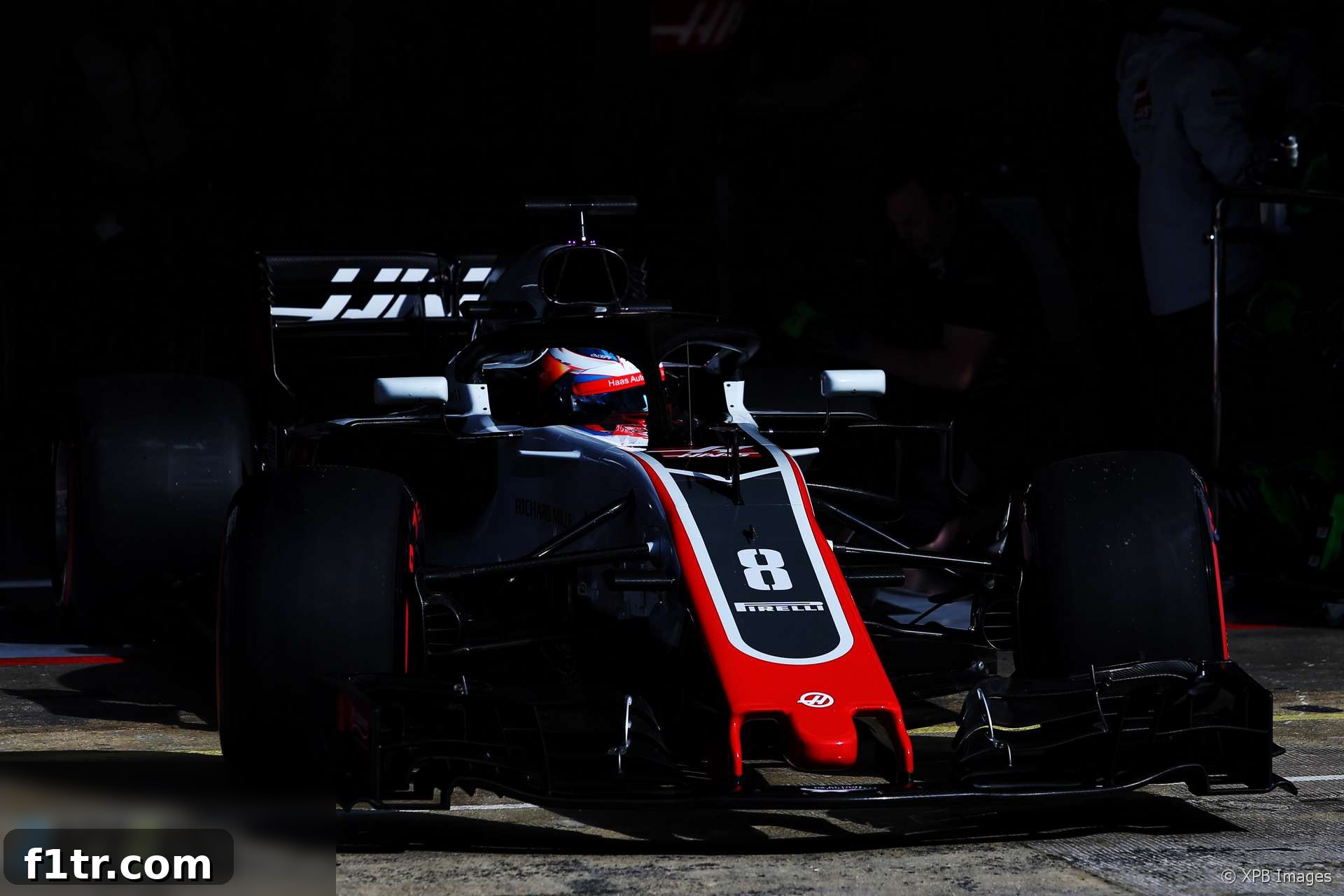
Haas F1 Team’s 2018 Season: A Story of Unfulfilled Potential and Crucial Lessons
The 2018 Formula 1 season marked a pivotal chapter in the relatively young history of the Haas F1 Team. Having entered the pinnacle of motorsport just three years prior, the American outfit had consistently demonstrated an impressive upward trajectory. In 2018, they unveiled the VF-18, a machine that unequivocally established itself as the fourth-fastest car on the grid. Yet, despite possessing such a competitive package, the team concluded the championship in a somewhat deflating fifth place. This stark contrast between car performance and final standings underscores a season filled with both exhilarating highs and frustrating lows, offering valuable insights into the complexities of competing at the highest level of motorsport.
A cornerstone of Haas’s rapid ascent in Formula 1 has been its unique technical partnership with Ferrari. This collaboration allows Haas to procure numerous non-listed parts, including the potent power unit, which was widely regarded as a match for the best in the sport. Furthermore, the extensive use of Ferrari’s rear end components naturally led the VF-18 to adopt aerodynamic characteristics strikingly similar to those of the red cars from Maranello. This strategic alliance has been instrumental in enabling Haas to compete effectively with a more modest budget than many of its rivals, fast-tracking their development cycle and technical understanding.
The close resemblance between the Haas VF-18 and its Ferrari counterpart did not go unnoticed by rival midfield teams, who frequently cast wary glances and made pointed remarks throughout the season. The murmurs surrounding the “B-team” debate intensified, with some competitors suggesting an unfair advantage. However, despite the ongoing discussions and occasional controversies, the fact remained that Haas’s cars meticulously complied with all technical regulations. This adherence to the rulebook, though legally sound, did little to quell the broader philosophical debate about the role of customer teams and their relationship with larger manufacturers in Formula 1, a discussion that continues to shape the sport’s competitive landscape.
With a car boasting such a strong competitive edge, there was a palpable sense within the team that their 2018 performance should have yielded a better championship outcome. Kevin Magnussen, the team’s leading points scorer, candidly acknowledged this sentiment: “We had the performance in the car to probably finish fourth in the championship, but we haven’t been able to really capitalise enough.” His observation highlighted a critical disconnect between raw pace and effective execution, a recurring theme for Haas throughout the year. Magnussen further elaborated, “We’re a very new team, and I think we are punching above our weight a little bit with a car that’s a little bit too good for the experience we have.” This honest assessment perfectly encapsulated the team’s predicament – possessing a powerful weapon but still in the process of mastering its full deployment.
The opening race of the season in Australia served as a stark, early reminder of this operational gap. What promised to be a momentous double-points finish, with both VF-18s running comfortably in a strategic ‘no man’s land’ between the leading pack and the chasing midfield, tragically unravelled in the pits. A double blunder saw both cars released with loose wheels, forcing their immediate retirement. This catastrophic error not only cost the team a significant haul of points but also cast a shadow of doubt over their operational maturity. Team principal Guenther Steiner minced no words, stating, “I think fourth place was lost in Australia more than anything else. 22 points, plus the points which Renault scored, we would be still fourth now.” His comment underscored the profound impact of that single race on their championship aspirations, setting a challenging tone for the remainder of the year.
Haas team stats 2018
| Best race result (number) | 4 (1) |
| Best grid position (number) | 5 (6) |
| Non-classifications (technical/other) | 9 (3/6) |
| Laps completed (% of total) | 2,246 (88.7%) |
| Laps led (% of total) | 0 (0%) |
| Championship position (2017) | 6 (8) |
| Championship points (2017) | 93 (47) |
| Pit stop performance ranking | 8 |
However, the Australian Grand Prix was far from the only instance where valuable points slipped through Haas’s fingers. Numerous other opportunities throughout the season to cement their position ahead of fourth-place finishers Renault were regrettably squandered. These included not only driver errors but also team management issues that collectively undermined their potential. The margin separating Haas from Renault at the season’s close was a mere 29 points, a gap that felt agonizingly small given the VF-18’s inherent pace.
Romain Grosjean, in particular, endured a conspicuously poor start to his 2018 campaign, sparking uncomfortable comparisons to his challenging period in late 2012. Early incidents plagued his season, including a frustrating crash behind the Safety Car in Baku and causing a first-lap collision at the Spanish Grand Prix. These early setbacks undoubtedly impacted his confidence and the team’s morale. Yet, amidst these travails, Grosjean delivered one of the team’s standout performances in Austria, where he and Magnussen secured a superb fourth and fifth-place finish, representing Haas’s best collective result to date. This glimmer of form hinted at the raw speed Grosjean possessed when everything aligned.
Unfortunately, the Austrian success did not signal an end to Grosjean’s difficulties. Further incidents followed, including a collision with his teammate Kevin Magnussen at Silverstone, a crash with Carlos Sainz Jnr, and subsequent troubles in Singapore and Austin. These accumulating incidents led him perilously close to facing a race ban, having collected 10 penalty points at one stage. Despite these persistent challenges and the mounting pressure, the team steadfastly kept faith in Grosjean, a driver who had started every single one of their races since their Formula 1 debut. This unwavering loyalty spoke volumes about the team’s belief in his underlying talent and their commitment to continuity.
Beyond individual driver errors, both Magnussen and Grosjean lost crucial points due to operational missteps on the team’s part, leading to highly impactful disqualifications. Grosjean was controversially stripped of a hard-fought sixth place at the Italian Grand Prix. The team had chanced running a floor design that had already been rendered illegal by a new technical directive. Haas’s explanation, citing insufficient time to update their floor, regrettably highlighted their limited development resources – a constraint further evidenced by their strategic decision to skip the mid-season test at the Hungaroring, opting instead to focus resources elsewhere. This incident underscored the fine line teams walk between aggressive development and regulatory compliance, particularly for those with finite budgets.
Similarly, Kevin Magnussen lost a potential eighth-place finish at the team’s home race due to exceeding fuel limits. Crucially, the team was reportedly aware of this developing situation during the race but failed to adequately manage it, ultimately leading to his disqualification. This incident, much like the Australian pit stop fiasco and Grosjean’s floor disqualification, pointed directly to areas where the team’s operational processes and race management required significant refinement. While the car itself possessed impressive speed, the ability to consistently convert that speed into championship points was hampered by a series of avoidable errors.
While the Haas F1 Team undoubtedly left significant points on the table during its 2018 campaign, resulting in a bittersweet sense of what might have been, the season was far from a failure. Critically, the team concluded the year in a robust financial and competitive position. They successfully improved their championship standing from eighth in 2017 to fifth, securing a significant increase in prize money and bolstering their financial stability. Furthermore, their pragmatic approach to development saw them make an early start on preparations for the 2019 season, a strategic decision given their resource constraints.
Guenther Steiner elaborated on this forward-thinking strategy regarding their 2019 development: “We stuck to our plan. We didn’t change anything.” He added, “I think this year the car was pretty good all the time, so we weren’t panicking to put something on to do more than we planned at the beginning of the year. So I’m quite relaxed about that one.” This disciplined approach, focusing on known strengths and steady evolution rather than frantic mid-season changes, reflected a maturing team understanding its limitations and playing to its strengths. The 2018 season, therefore, was not merely a collection of race results but a crucial learning experience, providing invaluable data and lessons that would undoubtedly shape Haas’s future trajectory in Formula 1.
2018 F1 season review
- Pass masters: Who made F1’s biggest recovery drives of 2018?
- The complete RaceFans 2018 F1 season review
- Hamilton and Mercedes succeed in their toughest challenge yet
- Vettel’s errors thwart Ferrari title hopes
- Analysis: How F1 teams spent $2.2 billion in 2018
Browse all 2018 F1 season review articles