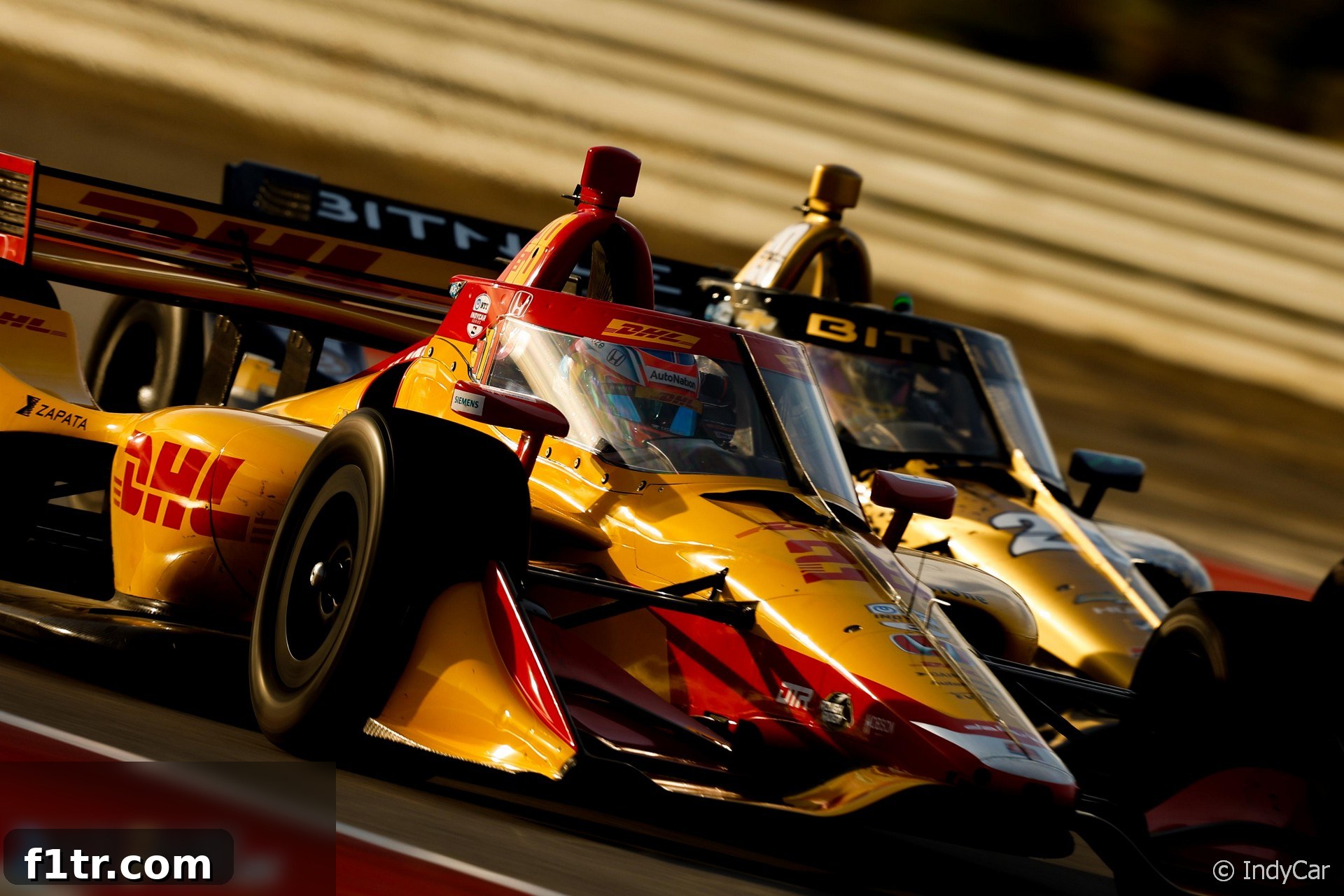
The 2023 IndyCar season is poised to deliver yet another spectacle of high-speed, wheel-to-wheel racing, boasting its largest full-time driver lineup since the historic reunification of American open-wheel motorsport in 2008. This robust field is a beacon of optimism for a series that, despite its thrilling on-track product, navigated an off-season fraught with challenging headlines and a noticeable absence of sweeping regulatory changes. Fans can anticipate an intensely competitive championship fight, a hallmark of IndyCar’s enduring appeal, even as the series grapples with pivotal developmental and market positioning issues.
While IndyCar consistently produces some of the most exciting races across global motorsport, with its crown jewel, the Indianapolis 500, routinely exceeding expectations, the path to 2023 has not been without its bumps. Key strategic decisions and ongoing challenges have cast a shadow, highlighting areas where the series faces an uphill battle to solidify its future and expand its reach.
One of the most significant shifts concerns the much-anticipated introduction of hybrid powertrains. Originally slated for 2023 and intended to be paired with a new generation of internal combustion engines, the hybrid rollout has been delayed, and crucially, the existing 2.2-litre turbocharged V6 engines—a staple since 2012—will remain in service. While Chevrolet and Honda continue to provide reliable and potent power units, the indefinite postponement of new engines is not merely a consequence of global supply chain disruptions. Deeper analysis reveals a persistent, and thus far fruitless, search for a third engine supplier. This lack of additional manufacturer interest poses a strategic threat, limiting competitive diversity and placing undue pressure on the existing partners, potentially hindering long-term innovation and growth for the championship.
Beyond technical development, IndyCar’s strategic choices for fan engagement have also drawn criticism. The series’ venture into a behind-the-scenes reality television show, while a promising concept on paper, has raised eyebrows by choosing to primarily spotlight the Indianapolis 500. The Indy 500, already a global motorsport phenomenon, arguably needs the least additional publicity push on the calendar. Furthermore, the handling of its racing simulations rights has been particularly unpopular among the fan base. An exclusive contract was awarded to a company that has yet to deliver a fully developed title, effectively sidelining established avenues for younger fans to connect with and experience IndyCar in the digital realm. This decision risks alienating a crucial demographic and stifling the potential for broader engagement through popular interactive media.
Adding to these off-track complexities is the high-profile dispute involving one of IndyCar’s most prominent teams, Andretti Autosport, and their ongoing efforts to secure an entry into Formula 1. Despite substantial financial backing and the formation of significant OEM alliances, Andretti has faced considerable resistance from Formula 1 management, underscoring the challenges of breaking into the established elite of global motorsport. This public struggle not only creates uncertainty for a key IndyCar team but also draws attention away from the series’ own narrative at a time when it seeks to elevate its profile.
In the broader American sporting landscape, IndyCar continues to battle its niche status. The lingering effects of the 1996 open-wheel split kept it in NASCAR’s shadow for decades, and now, Formula 1 has captivated the nation’s imagination to an unprecedented degree. F1’s aggressive marketing, popular Netflix series, and high-profile races in the US have amplified its appeal, posing a new challenge for IndyCar to assert its unique identity and attract a wider audience. However, despite these formidable headwinds, there remains an undeniable undercurrent of optimism. IndyCar’s unparalleled on-track action, characterized by razor-thin margins and unpredictable outcomes, remains its greatest asset. This inherent strength suggests that, regardless of the off-track turbulence, fans can look forward to another season of breathtaking racing and a championship battle that, true to form, is expected to go down to the final lap of the final race.
The Largest Full-Time Field in 15 Years: A Deep Dive into the 2023 Grid
The 2023 IndyCar season welcomes an impressive grid of 26 full-time drivers, with an additional entry shared by two talents, marking the most extensive full-time field in 15 years. This robust roster promises a season of intense competition, with familiar faces battling against rising stars and intriguing rookies across 17 demanding races.
Andretti Autosport, a powerhouse in IndyCar, enters the season under pressure to translate its undeniable potential into consistent results. While their ambitions for Formula 1 entry, alongside 22-year-old ace Colton Herta’s aspirations, are well-documented, their four-car fleet only managed two wins in 2022—a tally below their championship-winning standards. The team, which last took a driver to the title with Ryan Hunter-Reay in 2012 but boasts three Indy 500 victories in that period, looks to rebuild its championship challenge. Kyle Kirkwood, the highly touted product of the Road To Indy developmental system, returns to the Andretti fold after a challenging rookie year elsewhere, expected to flourish with the team that nurtured his early success. Romain Grosjean, after a largely disappointing sophomore campaign with Andretti, needs to demonstrate the form that made him a rookie sensation. Meanwhile, Devlin DeFrancesco is tasked with proving his on-track capabilities extend beyond his financial contributions to the team. All eyes, however, will undoubtedly be on Colton Herta, arguably one of the most naturally gifted drivers on the grid. Few can command a race with his sheer pace and aggression when at his peak, a talent that nearly saw him leap to F1 with AlphaTauri before superlicence rules intervened. The question is whether 2023 will finally be the year Herta delivers a consistent, championship-contending performance.
IndyCar Champions Since 2012: A Decade of Dominance
| Year | Champion | Team |
|---|---|---|
| 2012 | Ryan Hunter-Reay | Andretti |
| 2013 | Scott Dixon | Ganassi |
| 2014 | Will Power | Penske |
| 2015 | Scott Dixon | Ganassi |
| 2016 | Simon Pagenaud | Penske |
| 2017 | Josef Newgarden | Penske |
| 2018 | Scott Dixon | Ganassi |
| 2019 | Josef Newgarden | Penske |
| 2020 | Scott Dixon | Ganassi |
| 2021 | Alex Palou | Ganassi |
| 2022 | Will Power | Penske |
McLaren’s IndyCar team continues its ambitious expansion, making a significant statement by adding former Andretti standout and free agent Alexander Rossi to its formidable lineup. This move positions McLaren as a potential major challenger to the long-standing Penske-Ganassi duopoly. Charismatic Pato O’Ward, with his diverse skill set and blistering speed, has consistently been a championship contender, and the expectation for this multi-million-dollar motorsport powerhouse is nothing less than a full-throttle assault on the title. Felix Rosenqvist, buoyed by a resurgent 2022 campaign, retains his place, providing a crucial blend of experience and renewed confidence.
The highly publicized contract dispute between reigning 2021 champion Alex Palou and Chip Ganassi Racing ultimately found a resolution that, on the surface, appears beneficial for all parties involved. However, it’s an open secret that 2023 will mark Palou’s final year with Ganassi, as he is widely expected to transition to McLaren, fueled by his own aspirations for Formula 1. Despite this impending departure, Ganassi enters the season with a potent four-car lineup, all genuinely competitive. The focus remains on franchise driver Scott Dixon, as he chases a record-equaling seventh championship, continuing his remarkable standard of excellence. After his triumphant Indy 500 victory, Marcus Ericsson will aim to build on his consistency and elevate himself into the elite bracket of championship contenders. The team also introduces Marcus Armstrong, splitting the renumbered #11 car with two-time Indy 500 winner Takuma Sato. Armstrong, while voluntarily sitting out the five oval races, benefits from arguably the strongest team infrastructure among the rookie class, making him a strong contender for Rookie of the Year in road and street course events.
The 2023 Rookie class is rich with intriguing narratives. Agustin Canapino, a four-time Turismo Carretera champion from Argentina whose title count even surpasses motorsport legend Juan Manuel Fangio in that specific series, makes a long-desired leap to IndyCar, joining Callum Ilott at Juncos Hollinger Racing. While not expected to emulate the immediate success of Scott McLaughlin, the 33-year-old’s pre-season testing form suggests he will be far from a “Jimmie Johnson” in terms of adaptation to open-wheel racing. Sting Ray Robb, the 2022 Indy Lights runner-up and a graduate of the series now known as Indy NXT, brings one of the most memorable names in racing. He takes over the Rick Ware Racing-backed Dale Coyne Racing entry, partnered with David Malukas, who impressed many by contending for Rookie of the Year honors until the final weekend of 2022. Benjamin Pedersen, an Indy Lights race winner in 2022, faces the formidable task of standing out at perennial underdog AJ Foyt Racing, where he’ll be paired with the ever-controversial Santino Ferrucci, making a full-time return after two seasons as a highly sought-after super-sub.
Within the rest of the full-time grid, Rahal Letterman Lanigan Racing (RLLR) has significantly bolstered its staff to alleviate the strain from their 2022 expansion. Christian Lundgaard, the reigning Rookie of the Year, marginally outshone the experienced Graham Rahal and significantly outperformed Jack Harvey. Lundgaard’s reward is a move to the #45 car and a more lucrative title sponsor, while Harvey faces pressure to prove his worth after a lackluster first season with the team. Ed Carpenter Racing (ECR) secured the long-term services of Rinus VeeKay, hoping the talented Dutchman can not only return to the top step of the podium but also deliver a consistent championship campaign. Journeyman Conor Daly remains a steady presence at ECR, aiming to demonstrate his versatility beyond being an Indy 500 specialist.
Meyer Shank Racing (MSR) stands at a pivotal juncture in 2023. Fresh off consecutive Daytona 24 Hours victories, there’s renewed optimism that Simon Pagenaud can recapture his title-winning IndyCar form. Even at 48, four-time Indy 500 winner Hélio Castroneves remains a significant threat to break the record and claim a fifth victory. However, speculation looms regarding 2023 potentially being Helio’s final full season, especially with Tom Blomqvist, a key part of MSR’s Daytona-winning lineup, likely waiting for his own open-wheel opportunity. Finally, at the formidable Team Penske, the questions are simple yet profound: Can 41-year-old reigning champion Will Power continue to defy age and defend his crown? After three consecutive runner-up finishes, can Josef Newgarden finally secure his third championship? And following a seismic leap forward in 2022, is Scott McLaughlin now the man to beat?
Subtle Innovations: The Small Changes Making a Big Impact
While the core engine and chassis remain consistent, the 2023 IndyCar season introduces several crucial technical and safety enhancements designed to improve racing, promote sustainability, and ensure driver well-being. These subtle yet significant changes are worth scrutinizing as they could influence competitive dynamics throughout the year.
A notable shift comes with Shell becoming the series’ new fuel supplier, introducing a revolutionary “100% renewable race fuel.” This isn’t merely a superficial branding exercise; both Chevrolet and Honda have been rigorously testing with this new blend for months, meticulously working to optimize their engines’ performance and efficiency. The integration of renewable fuel underscores IndyCar’s commitment to environmental responsibility while simultaneously adding another layer of technical challenge for teams to master. Optimizing engine mapping and fuel strategy around this new blend could provide a critical competitive advantage.
On the front of sustainability and race strategy, Firestone’s innovative guayule rubber “alternate” tire, which saw a soft launch in Nashville last year, will now be mandated at every street circuit. Furthermore, IndyCar is extending its requirement for both soft compound “alternate” and hard compound “primary” tires to the 500km short oval race at Gateway Motorsports Park. This strategic move is intended to diversify race strategies, encourage more pit lane variations, and ultimately create more on-track position changes and exciting overtakes, enhancing the spectacle for fans.
Safety remains a paramount concern for IndyCar, and the series has implemented a comprehensive suite of updates to its venerable DW12 chassis. Engineers have redesigned the steering arm to better absorb impact forces without fracturing, while headrest protectors in the cockpit have been raised for improved driver containment. Rear wheel tethers have been strengthened to prevent wheels from detaching during severe incidents, and the rear attenuator has been re-engineered with competitor safety in mind. For wet weather conditions, new mandatory rain vanes will efficiently dissipate water away from the aeroscreen, and enhanced LED rain lights will significantly boost driver visibility in low-grip, low-light situations. These vehicle-specific improvements are complemented by the introduction of a new state-of-the-art mobile medical unit at every race, ensuring rapid and advanced care for any incident.
Teams will also benefit from an expanded array of aerodynamic options for virtually every race venue. Short oval-style barge boards and underwing strakes can now be deployed at road and street courses, offering greater tuning flexibility for downforce and balance. For the iconic Indy 500, multiple new options are available, including underwing wickers and a redesigned rear wing main plane pillar that allows for more granular adjustments. These aerodynamic refinements provide teams with more tools to optimize their cars for specific track characteristics, potentially leading to even tighter competition and diverse setup philosophies.
2023 IndyCar Driver Line-up
| Number | Team | Engine | Driver | Schedule |
|---|---|---|---|---|
| 14 | AJ Foyt Racing | Chevrolet | Santino Ferrucci | Full |
| 55 | AJ Foyt Racing | Chevrolet | Benjamin Pedersen | Full |
| 26 | Andretti Autosport | Honda | Colton Herta | Full |
| 27 | Andretti Autosport | Honda | Kyle Kirkwood | Full |
| 28 | Andretti Autosport | Honda | Romain Grosjean | Full |
| 29 | Andretti Autosport | Honda | Devlin DeFrancesco | Full |
| 8 | Chip Ganassi Racing | Honda | Marcus Ericsson | Full |
| 9 | Chip Ganassi Racing | Honda | Scott Dixon | Full |
| 10 | Chip Ganassi Racing | Honda | Alex Palou | Full |
| 18 | Dale Coyne Racing w/ HMD | Honda | David Malukas | Full |
| 51 | Dale Coyne Racing w/ Rick Ware Racing | Honda | Sting Ray Robb | Full |
| 20 | Ed Carpenter Racing | Chevrolet | Conor Daly | Full |
| 21 | Ed Carpenter Racing | Chevrolet | Rinus VeeKay | Full |
| 77 | Juncos Hollinger | Chevrolet | Callum Ilott | Full |
| 78 | Juncos Hollinger | Chevrolet | Agustin Canapino | Full |
| 5 | McLaren (Schmidt Peterson) | Chevrolet | Pato O’Ward | Full |
| 6 | McLaren (Schmidt Peterson) | Chevrolet | Felix Rosenqvist | Full |
| 7 | McLaren (Schmidt Peterson) | Chevrolet | Alexander Rossi | Full |
| 06 | Meyer Shank Racing | Honda | Helio Castroneves | Full |
| 60 | Meyer Shank Racing | Honda | Simon Pagenaud | Full |
| 15 | Rahal Letterman Lanigan Racing | Honda | Graham Rahal | Full |
| 30 | Rahal Letterman Lanigan Racing | Honda | Jack Harvey | Full |
| 45 | Rahal Letterman Lanigan Racing | Honda | Christian Lundgaard | Full |
| 1 | Team Penske | Chevrolet | Will Power | Full |
| 2 | Team Penske | Chevrolet | Josef Newgarden | Full |
| 3 | Team Penske | Chevrolet | Scott McLaughlin | Full |
| 98 | Andretti Autosport | Honda | Marco Andretti | Indy 500 |
| 24 | Dreyer & Reinbold Racing / Cuisick Motorsports | Chevrolet | Stefan Wilson | Indy 500 |
| 66 | McLaren (Schmidt Peterson) | Chevrolet | Tony Kanaan | Indy 500 |
| 44 | Rahal Letterman Lanigan Racing | Honda | Katherine Legge | Indy 500 |
| 11 | Chip Ganassi Racing | Honda | Takuma Sato | Oval courses |
| 33 | Ed Carpenter Racing | Chevrolet | Ed Carpenter | Oval courses |
| 11 | Chip Ganassi Racing | Honda | Marcus Armstrong | Road and street courses |
| 16 | Paretta Autosport | Chevrolet | Simona de Silvestro | TBC |
Evolution of the Calendar: Key Schedule Adjustments for 2023
The 2023 IndyCar calendar largely retains its familiar structure, featuring 17 rounds at the same locations as the previous season, and predominantly in the same sequential order. However, a few notable adjustments promise to inject fresh dynamics into the championship, offering new challenges and potentially altering strategic approaches.
The most significant alteration is the relocation of the Detroit Grand Prix. Instead of its traditional setting on Belle Isle, the event will now take place downtown in the vibrant Renaissance Center district. This move introduces an entirely new course layout, incorporating elements from the historic street circuit used between 1982 and 1991. The downtown setting is expected to bring the roar of open-wheel racing closer to the heart of the city, offering a unique urban spectacle and a fresh challenge for drivers and engineers alike. A new street circuit always presents a steep learning curve, demanding quick adaptation and precise car setups, which could create unpredictable and thrilling races.
Another calendar adjustment sees the Music City Grand Prix in Nashville, which has produced two eventful and often chaotic editions in its short history, switching places with August’s Brickyard Grand Prix weekend. The latter event will once again be held on the Indianapolis road course, sharing top billing with NASCAR’s annual visit to the iconic venue. This schedule shuffle might influence team logistics and momentum, adding another strategic consideration for the championship contenders.
Tying the entire season together, of course, is the 107th running of the Indianapolis 500 on May 28th. However, for the first time since 2013, the self-proclaimed ‘Greatest Spectacle in Racing’ will no longer award double points. This pivotal change fundamentally alters the championship landscape. The Indy 500, while retaining its unparalleled prestige and historical significance, will no longer exert an outsized influence on the overall season-long championship standings. This ensures that consistent performance across all 17 races, rather than a single exceptional result, will be the ultimate determinant of the IndyCar champion, making every race weekend equally critical in the quest for the Astor Challenge Cup.
2023 IndyCar Calendar
| Round | Date | Circuit | Type |
|---|---|---|---|
| 1 | 5 March | St. Petersburg | Street |
| 2 | 2 April | Texas Motor Speedway | Oval |
| 3 | 16 April | Long Beach | Street |
| 4 | 30 April | Barber Motorsports Park | Road |
| 5 | 13 May | Indianapolis Motor Speedway (road course) | Road |
| 6 | 28 May | Indianapolis Motor Speedway (oval) | Oval |
| 7 | 4 June | Detroit | Street |
| 8 | 18 June | Road America | Road |
| 9 | 2 July | Mid-Ohio Sports Car Course | Road |
| 10 | 16 July | Toronto | Street |
| 11 | 22 July | Iowa Speedway | Oval |
| 12 | 23 July | Iowa Speedway | Oval |
| 13 | 6 August | Nashville | Street |
| 14 | 12 August | Indianapolis Motor Speedway (road course) | Road |
| 15 | 27 August | Gateway | Oval |
| 16 | 3 September | Portland | Road |
| 17 | 10 September | Laguna Seca | Road |