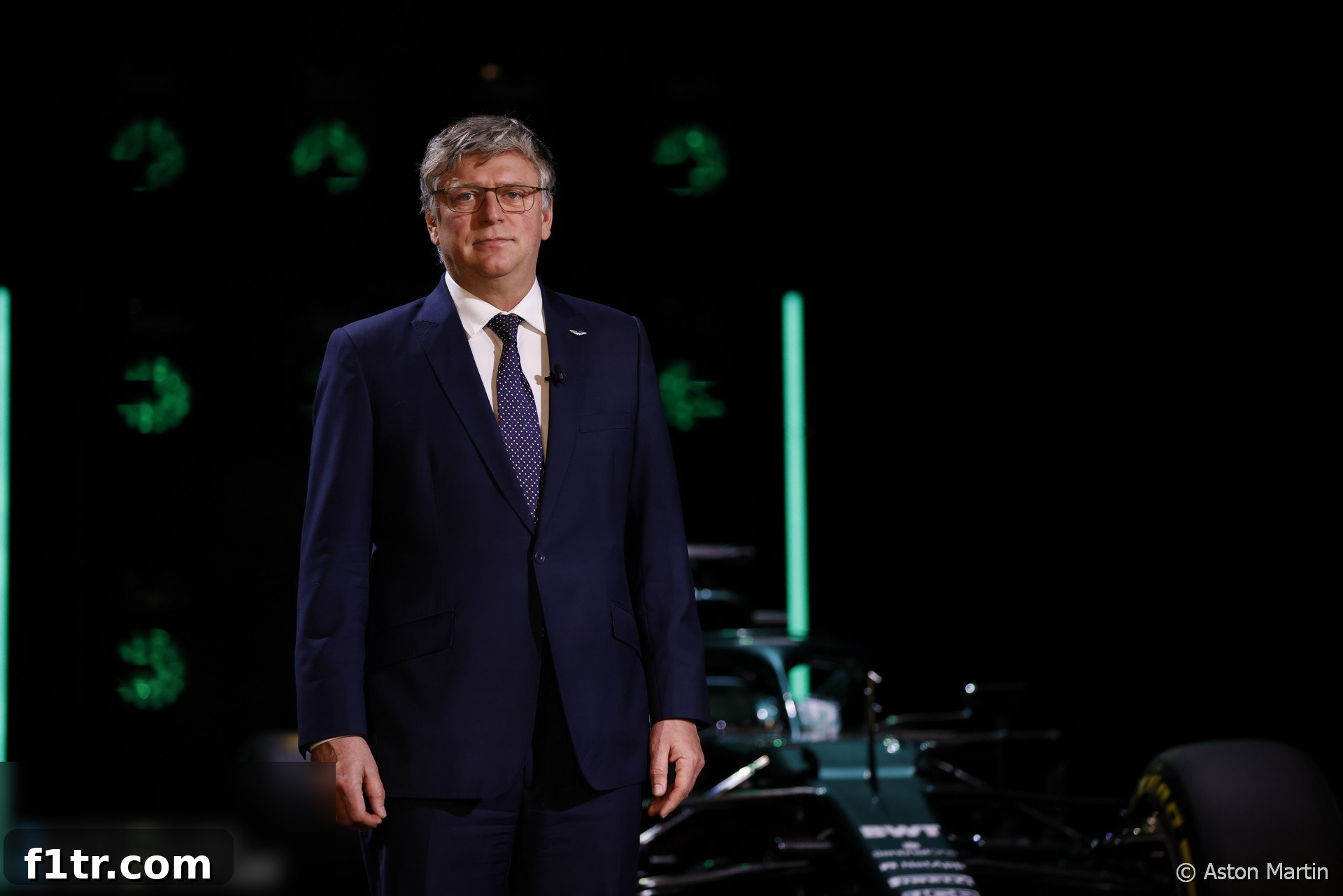
In the latest motorsport round-up, Aston Martin CEO Otmar Szafnauer provides a candid assessment of his team’s aspirations, indicating that it will realistically take at least three years for the Silverstone-based outfit to mature into genuine championship contenders.
Aston Martin’s Ambitious Journey: The Road to F1 Championship Contention
Otmar Szafnauer Details Three-to-Five-Year Plan for Success
Speaking ahead of the highly anticipated presentation of the team’s AMR21 chassis for the 2021 Formula 1 season, Otmar Szafnauer, CEO and Team Principal of Aston Martin Cognizant Formula One Team, offered a pragmatic view on the monumental task of transforming a midfield team into a championship-winning force. His remarks underscore the immense challenge and strategic foresight required to compete at the pinnacle of motorsport.
“It’s a lot easier to say ‘we’re going to be fighting and winning a world championship’ than actually doing it. The two things that have to happen are, one, we need a good plan in order for us to start today and get to world championship contenders. And then we’ve got to execute. We’re in the midst of that planning now and the execution will definitely take some time.”
Szafnauer’s statement highlights the dual necessity of meticulous planning and flawless execution. Formula 1 is a sport where success is not merely bought but painstakingly built over years. The CEO pointed to the common consensus within the paddock regarding the timeframe required for such a transformation.
“People in Formula 1 and other teams have said ‘you’ve got to give us three to five years to do so’ and we’re no different. We’ve for the last year planned a new factory with new infrastructure and a place to house all of us under one roof to grow the team. The implementation of that is just now begun at Silverstone and towards the end of 2022 we should be moving into a new factory, for example.”
This commitment to infrastructure is a cornerstone of Aston Martin’s long-term strategy. The new state-of-the-art factory at Silverstone signifies a significant investment by owner Lawrence Stroll, aimed at consolidating operations, fostering a cohesive team environment, and providing the necessary resources for innovation. This consolidated facility will be crucial for streamlining design, development, and manufacturing processes, which are vital for competitive F1 performance.
“Within that factory, we’re going to need state-of-the-art tools that will help us design and develop a car that’s worthy of contending for world championships. So that’s a few years away. If I have to look into the future, it’ll be in the three to five year time period.”
The acquisition and integration of cutting-edge design and development tools are as important as the physical factory itself. Modern Formula 1 relies heavily on advanced simulation, computational fluid dynamics (CFD), and wind tunnel testing. Investing in these technologies allows teams to push the boundaries of car performance, optimizing aerodynamics, suspension, and overall vehicle dynamics. Szafnauer’s realistic assessment of a three to five-year timeline resonates with the historical development curves of other successful F1 teams, emphasizing that patience and sustained effort are paramount in the pursuit of Formula 1 glory.
Quotes: Dieter Rencken
Social Media Buzz: Unpacking Key Motorsport Moments
Social media continues to be a vibrant hub for motorsport enthusiasts, offering real-time updates, historical throwbacks, and exclusive glimpses into the world of racing. Here’s a look at some notable posts that captured attention:
An engaging post shared on Instagram showcased the excitement around the new season: https://www.instagram.com/p/CL9UgZPBnRX/. Such content often generates significant fan interaction, building anticipation for upcoming races and car launches.
A fascinating dive into IndyCar history reminded fans that 25 years ago, @JimmyVasser clinched victory in the CART IndyCar season-opener at the newly unveiled @HomesteadMiami oval. The race was also notable for his teammate and newcomer @lxznr (Alex Zanardi) crashing out after a wheel detached from his car following a pit stop. Fellow debutant Greg Moore, a future star, impressively secured seventh place, hinting at his prodigious talent. This tweet offers a nostalgic look at a pivotal moment in American open-wheel racing, showcasing both triumph and early career challenges for legendary drivers.
— RaceFans (@racefansdotnet) March 3, 2021
Another exciting update came from the BWT Alpine F1 Team, who shared a captivating image of their new challenger, stating, “She’s even more beautifully real life.
And that sound…! 🤩#A521Launch pic.twitter.com/tPEMln47Ti”. This kind of direct engagement allows teams to share their excitement with fans globally, providing intimate views of their latest machinery and building hype for the season ahead. The mention of its “sound” resonates deeply with F1 purists, who cherish the distinct acoustics of a Formula 1 engine.— BWT Alpine F1 Team (@AlpineF1Team) March 3, 2021
- For those looking to deepen their F1 social media experience, a comprehensive F1 Twitter Directory is available, listing official accounts and key figures to follow across the sport.
Exploring the Motorsport Landscape: Key Industry Links and Insights
Beyond the immediate headlines, the broader world of motor racing constantly generates intriguing developments and historical reflections. Here are some noteworthy stories and discussions from across the industry:
Porsche and Volkswagen Group Considering Entering F1 (BBC)
Speculation surrounding the entry of automotive giants like Porsche and the wider Volkswagen Group into Formula 1 is always a hot topic. The BBC reported that the “VAG is said to have had initial exploratory talks with three teams – Red Bull, McLaren and Williams.” A move of this magnitude would represent a seismic shift in the F1 landscape, potentially introducing new engine manufacturers and injecting significant financial and technological prowess into the sport. Such an entry would likely lead to intense competition and could reshape the power dynamics among existing teams and engine suppliers.
Finbarr O’Connell: How Caterham’s F1 Dreams Ended (Formula Spy)
In a candid interview, Finbarr O’Connell shed light on the tumultuous final days of the Caterham F1 team, a stark reminder of the immense financial pressures within Formula 1. O’Connell recounted, “We had to get all the suppliers we needed to commit to actually support us, so effectively Red Bull… because these people were already owed a very substantial amount of money; but then to allow us to use the gearbox, Pirelli for the tyres… Actually, we had to pay for (every drop of) our oil at full price, and and we had a lot of support from Renault on using the engines as well.” This illustrates the precarious position of smaller, independent teams, often reliant on the goodwill and financial flexibility of major suppliers for their very existence. The story serves as a cautionary tale about the challenges of sustaining an F1 operation without deep pockets.
What Victor Martins Did to Get a Rare F1 Academy Recall (Formula Scout)
The journey to Formula 1 is fraught with intense competition, and driver academies play a crucial role in nurturing young talent. Formula Scout highlighted the unusual circumstance of Victor Martins’ F1 academy recall, explaining, “Sometimes the world goes around, and we got back together, and he knew before the start of the (2020) season what is required of him. Yes, you win the title, we come in. It’s not a given thing as well, we need to get you a competitive seat to challenge for honours.” This underscores the meritocratic yet demanding nature of driver development programs, where performance and championship victories are often non-negotiable prerequisites for continued support and progression towards motorsport’s highest echelons. It also shows the importance of securing a competitive seat to truly demonstrate a driver’s potential.
We always endeavour to credit original sources. If you have a tip for a link to feature in the next RaceFans round-up please send it in via the contact form.
The Sprint Race Debate: F1’s Future Format Under Scrutiny
Recent discussions regarding potential format changes in Formula 1 have ignited passionate debates among fans and industry insiders. One of the most prominent proposals, put forth by Toto Wolff, suggests that F1 should draw inspiration from DTM by introducing sprint races to spice up weekend action. However, this idea has not met with universal approval, with @Eurobrun offering a compelling counter-argument:
“DTM was a glorified domestic series with a limited audience. No one watched DTM qualifying, so changing the format worked for them, because they had nothing to lose. But that series imploded after Mercedes left… good omens!
F1 is the biggest motor series in the world and has millions tune in for qualifying specifically because it is qualifying.”
@Eurobrun argues that the context of DTM’s format change is fundamentally different from F1’s. DTM, as a more regional series with less global viewership for its qualifying sessions, had little to lose by experimenting. The fact that DTM faced significant challenges after Mercedes’ departure further casts doubt on its suitability as a model for F1.
“Yes more people tune in for the race, but would more tune in for this sprint race? Maybe for the first one, to see what the fuss is about. For example, call me cynical but I was dead against the elimination qualifying embarrassment, however I got up early to watch the first one (Australia) live, specifically to see just how bad it was, so that I could accurately discuss it.
I chose not to watch the second attempt (Bahrain) as the joke wasn’t funny anymore. Not even on catch-up, unlike every other qualifying I’ve missed live over the past 10 years.”
This sentiment reflects a common concern among purist fans: the fear that format changes might dilute the essence of Formula 1 rather than enhance it. @Eurobrun’s personal experience with the ill-fated elimination qualifying format serves as a cautionary tale, illustrating how initial curiosity can quickly turn into disinterest if the changes are perceived as detrimental to the sport’s core appeal.
“I just don’t see the added excitement of this unless you are going to muck around with the format, but people don’t want to do that cos of DNA, etc… The only way this will be “exciting” is if the top 4 collide at the first corner in the sprint race/super qualifying/insert-your-own-joke-name-here causing an ‘artificial’ grid for the main race that looks suspiciously like a reverse grid.”
@EurobrunThe core of @Eurobrun’s apprehension lies in the potential for “artificial” grids, particularly if sprint race outcomes lead to manipulated starting positions for the main Grand Prix. Many fans believe that genuine racing and meritocratic grids are fundamental to F1’s “DNA.” The debate over sprint races encapsulates a broader tension within Formula 1: how to innovate and attract new audiences without alienating the loyal fanbase and undermining the sport’s long-standing traditions and competitive integrity.
From the Forum
- Discussions on the RaceFans forum often delve into timely topics, with one current thread asking: Which F1 races will and won’t go ahead in 2021? This highlights the ongoing uncertainties and logistical challenges facing the Formula 1 calendar, especially in a dynamic global environment.
Happy Birthday!
There are no RaceFans birthdays on record for today.
If you’d like to receive a birthday shout-out on RaceFans, you can tell us your date of birth via the contact form or by adding it to our community list here.
On This Day in F1 History: Celebrating the Legacy of Jim Clark
- Born on this day in 1936 was none other than Jim Clark, a name synonymous with speed, grace, and unparalleled talent in Formula 1. A two-time Formula 1 World Champion (1963, 1965), Clark is widely regarded as one of the greatest racing drivers of all time. His career, tragically cut short in 1968, saw him dominate an era with Lotus, achieving 25 Grand Prix wins and 33 pole positions from just 72 starts. Beyond his F1 success, Clark also triumphed at the Indianapolis 500 in 1965, becoming the first non-American to win the prestigious race since 1916. His smooth, precise driving style and humble demeanor left an enduring legacy that continues to inspire generations of motorsport enthusiasts and drivers alike. Celebrating his birthday today reminds us of his immense contributions to the sport and the timeless nature of true driving genius.