Formula 1 Tyre Safety Under Intense Scrutiny After Dramatic Baku Crashes
The exhilarating speeds and unforgiving walls of the Baku City Circuit delivered yet another dose of high drama at the Azerbaijan Grand Prix, but not without significant concern. Following the alarming, high-speed tyre failures suffered by Max Verstappen and Lance Stroll, Formula 1’s official tyre supplier, Pirelli, has initiated an urgent investigation. Their preliminary findings suggest that debris on the track is the most probable cause of these catastrophic incidents.
Both drivers experienced sudden left-rear tyre blowouts around the fastest sections of the circuit, leading to impactful crashes that sent shockwaves through the paddock. The immediate focus shifted to understanding what went wrong, with Pirelli swiftly collecting all available evidence. Failed tyres, alongside various other samples from the race weekend, are currently being air-freighted to Pirelli’s headquarters in Milan for meticulous, in-depth analysis by their expert teams.
The Devastating Incidents: Verstappen and Stroll’s High-Speed Failures
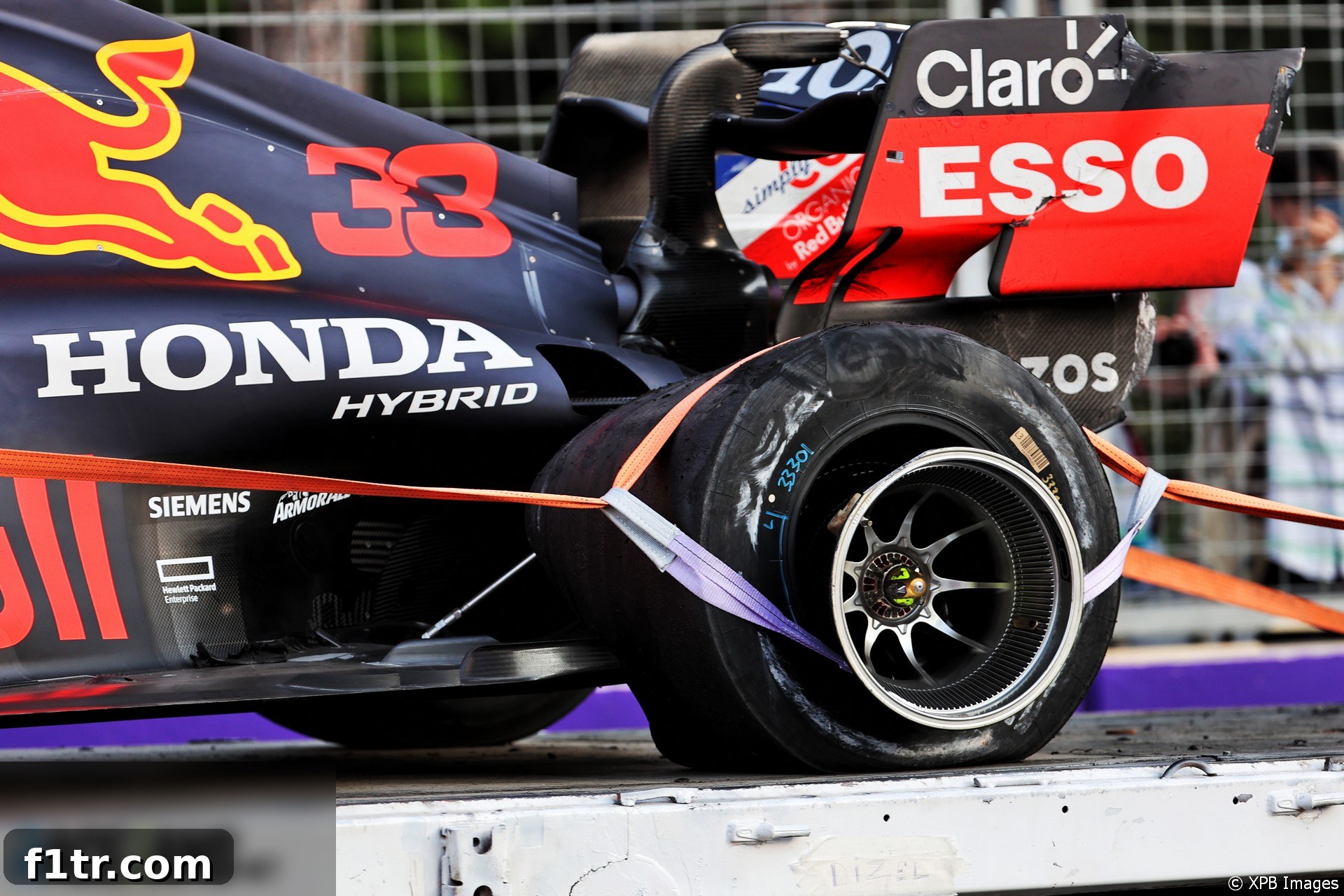
The Azerbaijan Grand Prix, renowned for its unique blend of blistering straights and challenging tight corners, once again tested the limits of both machinery and driver skill. However, the unexpected tyre failures added an unprecedented layer of concern. Max Verstappen, dominant throughout the race and seemingly on course for a crucial victory, suffered a terrifying 300kph crash when his left-rear tyre disintegrated on the main straight. The impact was significant, yet remarkably, his wheel sustained only light damage, a factor Red Bull team principal Christian Horner believes could provide invaluable evidence.
“The fact the tyre’s still on the rim gives us something to work with,” Horner commented, highlighting the potential for forensic analysis of the tyre structure and its interaction with the wheel. Just laps prior, Aston Martin’s Lance Stroll endured a similar, equally dramatic incident, also experiencing a left-rear tyre failure that sent his car into the wall. These concurrent events, involving two different teams and occurring in similar parts of the track, immediately raised red flags regarding tyre integrity and track conditions.
Pirelli’s Swift Response and Initial Investigation
As the sole tyre supplier to Formula 1, Pirelli bears the significant responsibility of ensuring the safety and performance of every car on the grid. In the wake of the Baku incidents, their motorsport head, Mario Isola, moved quickly to address the escalating concerns. Isola’s initial assessment, based on early visual inspections and data, pointed away from inherent tyre wear as the primary culprit, instead leaning towards an external factor.
“Looking at the tyres used in the second stint, for most of the drivers we didn’t find any evidence of anything,” Isola stated, emphasizing the lack of widespread issues. “I believe I can exclude that failures were due to tyre wear because it’s not a matter of tyre wear.” This crucial distinction shifts the focus from manufacturing defects or material fatigue to environmental factors present on the circuit.
Adding weight to the debris hypothesis, Isola also highlighted the specific characteristics of the Baku City Circuit. Being an anti-clockwise track, the rear-right tyre typically experiences the most stress, particularly through the circuit’s demanding corners. The failures, however, occurred on the left-rear tyre. “The rear-left tyre is not the most stressed tyre in Baku because, talking about the rear tyres, it’s obviously the rear right,” Isola explained. This positional anomaly further reinforces the theory that the failures were not a result of expected operational stress or degradation but rather an unforeseen external intervention.
Furthermore, both Red Bull and Aston Martin confirmed that their drivers received “no sign or any warning” of impending failures. Isola conveyed that neither team reported vibrations, sudden performance drops, or any other indicators that would typically precede a tyre issue. This absence of warning meant drivers had no time to react, underscoring the sudden and unexpected nature of the blowouts and compounding the safety concerns.
Crucial Evidence: Verstappen’s Wheel and Hamilton’s Tyre
The comprehensive investigation hinges on a detailed examination of the physical evidence. The condition of Max Verstappen’s wheel, with the tyre still partially attached, provides a unique opportunity for engineers to study the precise mechanics of the failure. This intact connection between tyre and rim offers critical insights into the forces at play and the exact point of initiation of the catastrophic event.
Further compounding the debris theory was the discovery of a distinct cut on Lewis Hamilton’s left-rear tyre following the race. Pirelli’s Mario Isola confirmed that this damage was unequivocally caused by external debris. While it remains unconfirmed whether this particular cut occurred when Hamilton drove through the scene of Verstappen’s crash, its presence provides a tangible link to potential track contamination. Isola clarified, “The cut on Lewis’ tyre is clearly coming from debris. It is clear because the tyre is still in one piece and you can see that the cut is not following any direction. It’s clearly a cut that is coming from outside.” This finding is a significant piece of the puzzle, strongly supporting the hypothesis that foreign objects on the track contributed to the catastrophic failures.
A Comprehensive Investigation Promised by the FIA
The gravity of the incidents has prompted the sport’s governing body, the FIA, to commit to a robust and transparent investigation. FIA Formula 1 race director Michael Masi assured the paddock and fans alike that “a full and thorough investigation” would be conducted. This inquiry will be a collaborative effort, involving the FIA, Pirelli, and the affected teams, Red Bull Racing and Aston Martin, to ensure all perspectives and data points are considered.
The urgency of this investigation is paramount. Mario Isola has expressed his determination to “push to have a report as a priority before Paul Ricard,” referring to the French Grand Prix, the next round of the world championship, scheduled in less than two weeks. This tight deadline underscores the critical need to identify the root cause and implement any necessary preventative measures to safeguard driver safety and the integrity of the competition before the circus moves to France. The rapid turnaround is essential not only for technical rectification but also for restoring driver confidence, which can be profoundly shaken by such unpredictable and dangerous failures.
Understanding Tyre Dynamics at Baku City Circuit
The Baku City Circuit is notorious for its extreme demands on Formula 1 cars and their tyres. Featuring the longest straight on the F1 calendar, cars reach peak speeds exceeding 340 km/h, placing immense longitudinal stress on the tyres. This is then followed by heavy braking zones and a series of tight, technical corners that generate considerable lateral forces. Given these unique characteristics, understanding how tyres are expected to perform, and where they might be vulnerable, is crucial.
Both Verstappen and Stroll were running on the hard compound tyres, which are designed for durability and long stints. Their failures occurred approximately 30 laps into their stints. However, this timeframe itself points away from inherent wear, as several other drivers managed significantly longer runs on the same compound without incident. Notably, Lando Norris successfully completed 41 laps on his hard tyres before the race was red-flagged due to Verstappen’s crash. This stark contrast in tyre lifespan, under similar race conditions, strongly supports Pirelli’s initial conclusion that an external factor, rather than a fundamental flaw or excessive wear, was the likely trigger for the failures.
Looking Ahead: Ensuring Safety for Future Races
The incidents at Baku serve as a stark reminder of the ever-present risks in top-tier motorsport and the continuous pursuit of safety. The findings from Pirelli’s and the FIA’s investigation will be critical not only for understanding the specific circumstances of the Azerbaijan Grand Prix but also for shaping future tyre development, circuit safety protocols, and operational guidelines across Formula 1. The championship battle is incredibly tight, and tyre integrity is a foundational element of fair and safe competition.
The commitment to delivering a comprehensive report before the French Grand Prix at Paul Ricard highlights the sport’s proactive approach. This ensures that any identified issues can be addressed with urgency, preventing potential recurrences and maintaining the highest standards of safety for drivers, teams, and fans alike. The collaboration between the governing body, the tyre supplier, and the teams is paramount in situations like these, fostering a united front to tackle complex technical challenges and reinforce F1’s dedication to safety.
Conclusion: Awaiting Definitive Answers and Enhanced Safety
The Azerbaijan Grand Prix left an indelible mark, not just for its thrilling racing but for the profound questions it raised about tyre safety. While Pirelli’s preliminary investigation points strongly towards debris as the cause of Max Verstappen’s and Lance Stroll’s dramatic tyre failures, a thorough and meticulous analysis is underway. The combined efforts of Pirelli, the FIA, and the F1 teams are focused on uncovering definitive answers. The motorsport world eagerly awaits the final report, confident that the findings will lead to enhanced safety measures and a clearer understanding of the challenges posed by the sport’s relentless pursuit of speed and performance.
2021 Azerbaijan Grand Prix Coverage
- Aston Martin also confirms it followed Pirelli’s tyre restrictions before crash
- Pirelli confirm teams not to blame for Baku tyre failures following investigation
- “Tyres should not explode like that” says Villeneuve as Pirelli prepares to reveal findings
- Why Alonso is able to enjoy F1 more now than when he left
- Penalty for Safety Car error was just one of Latifi’s frustrations in Baku
Browse all 2021 Azerbaijan Grand Prix articles