Kimi Raikkonen: The Iceman’s Unforgettable Two-Decade F1 Journey and Enduring Legacy
Kimi Raikkonen, often affectionately known as “The Iceman,” holds a distinguished place in the annals of Formula 1 history. Beyond his celebrated 2007 Formula 1 World Championship title and 21 Grand Prix victories, the fiercely independent Finn has recently earned another monumental accolade. Last year, he officially surpassed the legendary Rubens Barrichello to become the most experienced driver in the sport’s illustrious history, a testament to his remarkable longevity and unwavering passion for racing.
This milestone was highlighted during his 340th Grand Prix start at the iconic Hungaroring. In typical Raikkonen fashion, such records are met with a characteristic lack of fanfare; he remains unfazed by statistics, his focus perpetually fixed on the thrill of competition. Yet, this humble demeanor belies an extraordinary journey that began two decades ago, a stark contrast to his surprising F1 debut following just 23 starts in Formula Renault. His path into the pinnacle of motorsport was unconventional, challenging established norms and captivating the racing world from the very beginning.
From Karting Dreams to F1 Reality: A Humble Beginning for the Iceman
Today’s stringent superlicence points system would render such an audacious leap virtually impossible. However, in the early 2000s, the landscape was different. Then-FIA president Max Mosley openly voiced doubts regarding Raikkonen’s immediate suitability for Formula 1, mandating that his initial four races be completed on a probationary basis. This skepticism, however, was quickly dispelled. A stunning sixth-place finish on his debut – which, at the time, awarded a single point compared to today’s eight – left very few questioning the young Finn’s inherent abilities and raw speed. It was clear a new star had arrived, ready to challenge the established order.
Emerging from a relatively obscure karting background, Raikkonen had already faced numerous obstacles, making his unexpected entry into Formula 1 even more remarkable. He candidly admits that Formula 1 was not even a considered destination until very late in his junior career. “I was doing go-karts and it got to the point that it didn’t cost anything,” he revealed. “I got some pocket money working with Peter de Bruijn between the races and building go-karts that I sold. I thought that I can do go-kart for the next 10 years and at some point I’d get some money out of it.” This early perspective underscores his pragmatic approach and the deep-seated love for racing that transcended aspirations of grandeur.
After a brief but impactful appearance in the Formula Renault UK series at the tail end of 1999, Raikkonen returned for a full assault on the championship the following year. Despite competing on unfamiliar circuits across 12 rounds, his talent shone brightly, yielding an astonishing seven wins and an additional three podium finishes. This phenomenal performance caught the attention of many, but it was the patronage of David and Steve Robertson, who had funded his crucial transition into car racing, that ultimately propelled Raikkonen into Formula 1 with breathtaking speed. “Without the Robertsons I would never have had the chance to go for the racing in cars, that’s for sure. That was the next big step from go-karts,” Raikkonen acknowledged, highlighting the pivotal role his mentors played in shaping his destiny.
It was also during this period that Raikkonen earned his very first salary. A significant portion of these earnings was dedicated to his parents, who had tirelessly bankrolled his karting ambitions. The funds were used to make crucial improvements to the family home, including the installation of an indoor toilet – a luxury they previously lacked – and the purchase of a small piece of land adjacent to their property. These early actions reveal a grounded individual, deeply appreciative of his roots and the sacrifices made to support his nascent career.
The Astonishing F1 Debut: Superlicence Saga and Immediate Impact
Impressed by Raikkonen’s remarkable prowess in Formula Renault, the Robertsons successfully convinced Peter Sauber to grant him a Formula 1 test. The chosen venue was Mugello, a high-speed circuit renowned for its challenging corners. It was here that the young driver experienced the sheer cornering performance of an F1 car, a revelation that he described as a profound “shock to the system.”
Advert | Become a RaceFans supporter andgo ad-free
Raikkonen candidly admits that he had little idea at the time whether he possessed the physical conditioning required to tame an F1 car, yet he was determined not to voice any reservations. “If I had a chance, I will take it, because obviously you might not get many chances in here. I obviously tried to use the chance as long as I can. Who knows what comes out of it,” he reasoned, displaying the pragmatic and opportunistic mindset that would define his career. The experience was undoubtedly demanding. “For sure it was hard to drive it. No power steering, my neck couldn’t take it. Obviously from Formula Renault the braking and the speed through the corner was completely a different story than I was used to. So on that side I was not ready. But obviously I wouldn’t tell them that ‘no, sorry, I can’t come because I’m not feeling strong enough’ or something,” he recounted, reflecting on the immense physical jump.
A crucial advantage Raikkonen enjoyed during this era was the then-unlimited testing in Formula 1. The Sauber team wisely provided him with three full days of lapping, interspersed with generous gaps between runs, allowing him to adapt and recover. “The first day for sure [it felt] everything was like happening too fast. But it’s funny how the head works out. Once I slept overnight then everything kind of slowed down and was looking much more normal. So it became much easier,” he observed, highlighting the brain’s remarkable capacity to process and adapt to extreme stimuli. The team understood the demands, ensuring he wouldn’t overexert himself: “Obviously they knew that it will be difficult to do many laps in a row. So I did like three laps always in a row and then came in.” While Mugello was “not maybe the easiest place” for an F1 debut test, he wouldn’t complain. “For sure it wasn’t sometimes so easy the steering on the fast corners without the power steering but it worked out okay,” he added, characteristic of his understated grit.
The inclusion of Raikkonen’s name on the 2001 Formula 1 entry list sparked considerable bemusement throughout the paddock. Many questioned the sudden appearance of this Finnish driver who had not competed in Formula 3, let alone Formula 3000 (the precursor to today’s Formula 2). His profound lack of experience ultimately led to the infamous wrangle over his superlicence. Yet, Raikkonen himself remained surprisingly detached from the intricacies of whether his temporary licence would last one or two races. “There was this story about the superlicence, if I would get it. Probably I worried about it but I never found out if I have it for one race or two races, I never even asked,” he stated, illustrating his focus solely on driving.
After acquitting himself exceptionally well with Sauber during the opening races, Raikkonen’s place in the sport was unequivocally assured. His blistering speed and remarkable composure impressed observers and competitors alike, so much so that McLaren, a top-tier team, controversially overlooked their own junior driver, Nick Heidfeld (who was Raikkonen’s teammate at Sauber), and instead promoted the Finn to their team for the 2002 season. This audacious move cemented Raikkonen’s reputation as an undeniable talent destined for greatness.
Ascension to Stardom: McLaren, Ferrari, and the World Championship
The period following his McLaren move, characterized by lightweight cars, powerful V10 engines, the intense tyre wars between manufacturers, and the luxury of unlimited testing, remains among Raikkonen’s most cherished eras in the sport. He frequently singles out the 2005 McLaren MP4-20 as one of the most satisfying cars he ever drove. Despite winning seven races with it, he narrowly missed out on the world title that year, a season remembered for its fierce competition and thrilling battles. “Those Michelin tyres when you could kind of pick and choose what you want, that was obviously nice,” he fondly recalled. “It was like a set-up tool that every team could have their own wishes. That was a nice time.” This era allowed for unprecedented technical freedom and engineering creativity, which Raikkonen clearly relished.
Its successor, which arrived after the sport’s mandated switch to V8 engines, was arguably better than its win-less record suggested, according to Raikkonen. “In 2006 the car was actually very good but the engine wasn’t good enough, obviously,” he added, underscoring the critical importance of powertrain performance in Formula 1.
Advert | Become a RaceFans supporter andgo ad-free
By then, Raikkonen had already inked a landmark deal to join Ferrari, stepping into the colossal shoes of the departing Michael Schumacher. In a fairytale debut season with the Scuderia, he delivered the ultimate prize, securing the World Championship in 2007 in a car he describes as another one of his all-time favorites. This triumph solidified his status as a true Formula 1 legend and endeared him to the passionate Tifosi.
Although his initial stint with Ferrari concluded abruptly just two years later when the team made a strategic swoop for Fernando Alonso, Raikkonen’s bond with the Italian marque proved enduring. He made a highly anticipated return to the team in 2014, and four years later, he scored his most recent victory to date with Ferrari at the Circuit of the Americas. As a testament to his significant contributions and the team’s appreciation, Ferrari gifted him the very car he used to achieve that memorable win.
“It’s a full running car so I [can] take it to the track and use it,” he proudly explained, though with a slight caveat: “But obviously I need a few mechanics to come from Italy to start it up.” While he hasn’t yet had the opportunity to take his championship-winning machine out for a spin, he harbors plans to do so “when I’m old enough that it’s scary,” a remark typical of his dry wit and enduring love for driving.
The Iceman’s Unwavering Longevity and Return to Roots
Following his departure from Ferrari, Raikkonen embarked on his third season back with Sauber, now operating under the Alfa Romeo-branded F1 outfit. Many drivers, particularly world champions, might not contemplate continuing their Formula 1 careers with a midfield team. However, Raikkonen’s extraordinary longevity and unwavering commitment to the sport powerfully demonstrate that he is not one of them. His presence, even in a less competitive car, speaks volumes about his pure passion for racing and his unique perspective on what truly matters in Formula 1.
Much has evolved within the sport over his remarkable two-decade span, bookended by stints with the same team, and Raikkonen notes that not all changes have been for the better. A significant shift he observes is the drastic reduction of in-season testing, a direct consequence of an increasingly packed race calendar. “Sometimes you wish it would be a bit more [testing] or you could kind of pick and choose when you could do it,” he pondered. “Like maybe there could be 10 days and you pick and choose when you use them. Maybe somewhere in the middle.” He acknowledges the practicalities: “It really depends. If you have a good car everything is nice and easy, but sometimes it would be nice to try some things and see what happens.” While Friday practice sessions offer some opportunities for experimentation, Raikkonen clearly misses the extensive testing opportunities of the past. “We can do it on Fridays in the race tracks. But I think how it was in the past, obviously there was less racing, but then we had testing. For sure that was harder than it is now,” he concluded, indicating a preference for the more rigorous preparation of earlier eras.
Reflections on a Changing Sport: Testing, Regulations, and Racing Etiquette
The sport itself has become increasingly tightly regulated with each passing year. Raikkonen himself fell afoul of this strict environment at Imola in April, where he controversially lost one of Alfa Romeo’s rare top-10 finishes that season due to a regulation. Even the stewards, in their ruling, conceded that the rule was arguably inconsistent with other standing regulations, highlighting the often-complex and sometimes frustrating nature of modern F1’s rulebook.
He finds the concept of reverting to the leaner rulebooks of the past appealing, though he admits it might not be a realistic prospect in today’s highly competitive environment. Raikkonen astutely observes that the current generation of drivers are adept at ruthlessly exploiting every minute detail within the regulations. “In the past, the drivers kind of – I don’t know what’s the right word, not ‘fair’ – but now it’s more that you need the rules in a way. I think you could get rid of a lot of rules if you were more harsh on some things,” he mused, suggesting a tougher approach to enforcement could simplify the rulebook.
He specifically points to the widely used ‘three strikes’ rule for enforcing track limits as an example. “I don’t mean that you need to give more penalties or anything, but if you get penalised for doing something wrong, people would stop doing it because they know,” he asserted. “Now there’s always this grey area that you have ‘three chances’. So obviously everybody will use it. But if you tell them ‘this is what’s going to happen if you do it’, we will not do it because we know. Now you can get away with a lot of things, but not so much.” His perspective suggests that a clear, unequivocal penalty for infringements would foster greater discipline and reduce ambiguity. “If we’re told that if you go off, obviously there’s things [from the car] that you can lose if you go off, but those are usually quite obvious things. So nobody will take the piss out of it. But that’s not our thing to change,” he concluded, acknowledging that ultimate rule changes lie outside the drivers’ control.
While various aspects of the sport have undergone transformation, it is arguably the fundamental shift in how drivers race each other that stands out most for Raikkonen. He notes the macroscopic changes: “There’s more people, bigger motorhomes, bigger factories, all these things. All the small details matter much more now than when I started.” Yet, he believes the core act of driving remains largely unchanged: “But I think the driving part hasn’t really changed that much.”
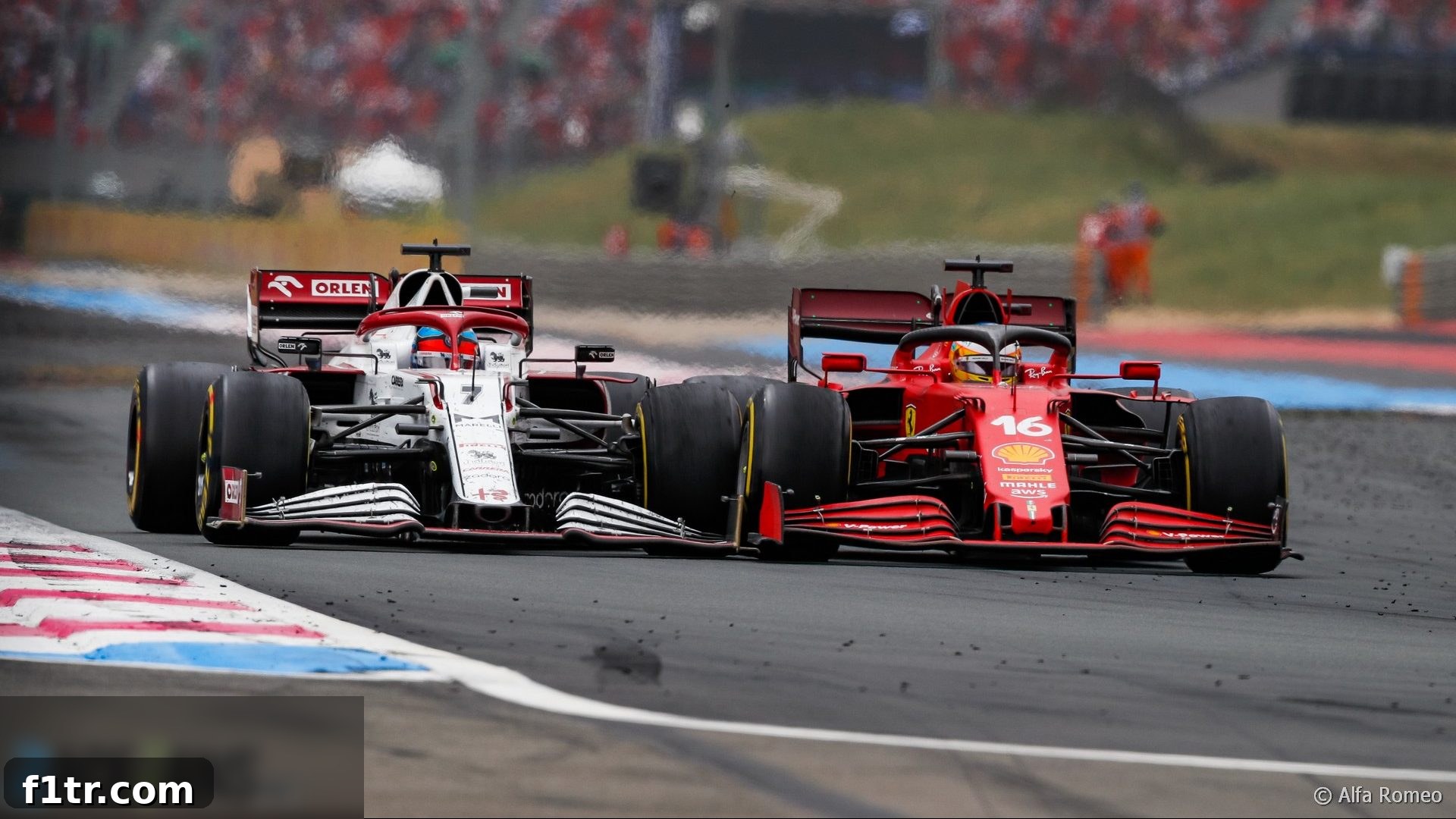
He elaborates on the perceived differences: “The rules have changed, some cars being faster, some slower, because of the rule changes from year to year. But honestly if it’s a five seconds difference, you don’t really feel it. It’s not much. It’s a lot on the watch but when you go around, it’s like it’s the same. [From] qualifying to race you don’t lose that much because we are on full tanks but it doesn’t change the life.” His most poignant observation, however, concerns the spirit of competition: “In the earlier days maybe the racing itself was a bit more fair. If somebody was there [alongside], you didn’t kind of push him off. Sometimes, yes, but that was maybe different then.” This reflects a subtle but significant change in the unwritten rules of engagement between drivers.
The Enduring Legacy of Kimi Raikkonen
In characteristic Raikkonen fashion, he refrains from waxing lyrical about how vastly different today’s cars feel compared to their predecessors, maintaining his pragmatic and unsentimental approach. “Obviously the cars are now very big but because you go from year to year, you lose the reference. Now if we go and drive the mid-2000 or whatever, those cars, they feel a lot different for sure,” he admitted, acknowledging the objective differences.
However, he quickly injects his unique perspective: “But if I tell you that they were a lot different I would bullshit because your memory plays a game. I don’t know – was it better or it’s now better? It’s what it is.” This statement perfectly encapsulates the essence of Kimi Raikkonen – a driver utterly focused on the present moment, driven by the pure joy of racing, and unfazed by nostalgia or subjective comparisons across different eras. His indelible mark on Formula 1, characterized by raw talent, unwavering dedication, and an iconic personality, ensures his legacy as “The Iceman” will resonate for generations to come.
Go ad-free for just £1 per month>> Find out more and sign up
2021 F1 season
- Masi ‘basically gifted the championship’ to Verstappen says 2021 FIA steward Sullivan
- Las Vegas race backers looking to extend F1 deal beyond 2025
- Why Mercedes put ‘a reminder of joy and pain’ on display in their factory lobby
- Verdict on error in GT race suggests Mercedes would have lost 2021 Abu Dhabi GP appeal
- Title ‘stolen’ from Mercedes made us ‘underdogs people cheer for’ – Wolff
Browse all 2021 F1 season articles