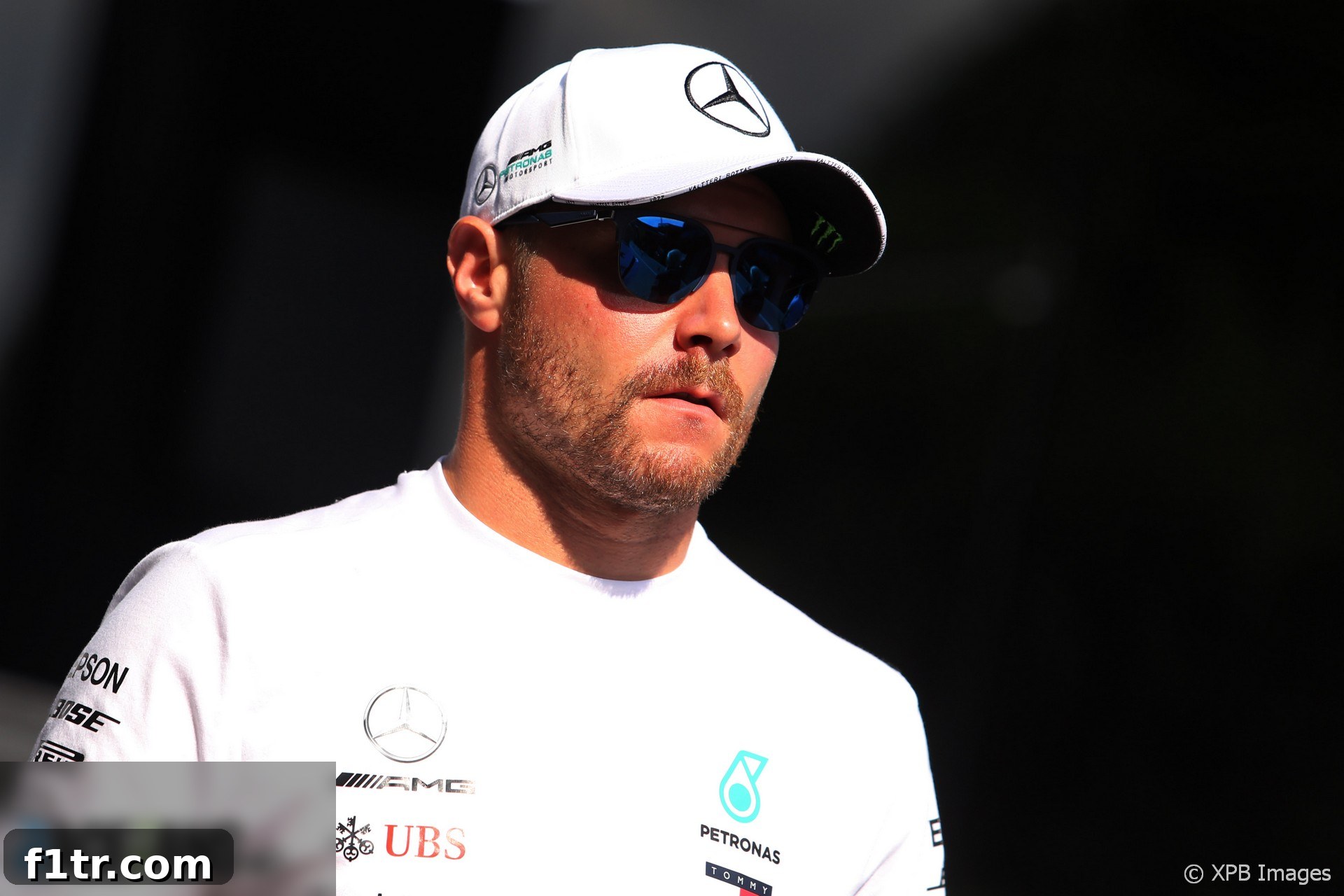
Mercedes’ Crucial Driver Decision: Bottas’s Future and the Junior Talent Conundrum
The high-stakes world of Formula 1 driver contracts is once again at the forefront, with Mercedes-AMG Petronas Formula One Team facing a pivotal decision regarding Valtteri Bottas’s future. The reigning constructors’ champions are set to evaluate the Finn’s contract extension for another season following the upcoming two rounds of the championship, a period that will undoubtedly weigh heavily on Bottas and ignite intense speculation across the paddock.
Bottas, who initially joined the illustrious Mercedes outfit in 2017 as a replacement for the retiring Nico Rosberg, finds himself at a familiar crossroads. His current contract is slated to conclude at the end of the year, a pattern that has seen him on successive one-year extensions throughout his tenure with the team. Last July, Mercedes announced a one-year renewal, yet team principal Toto Wolff indicated that such an early decision was an uncommon approach for the Silver Arrows, suggesting a more calculated and deliberate process for the future.
The Contractual Crossroads for Valtteri Bottas
“It is pretty unusual to announce drivers in July,” stated Toto Wolff during a recent FIA press conference, shedding light on Mercedes’ traditional approach to driver market dynamics. He elaborated on the flexibility available to teams, noting, “If you want to take all the time you properly need to assess you can even drag it into the winter like we have seen in some other teams. Which was a standard in the past.” This insight underscores Mercedes’ preference for a comprehensive evaluation, ensuring that all variables are meticulously considered before committing to a driver pairing.
For Mercedes, the decision transcends merely filling a seat for the forthcoming season. It encompasses a broader, long-term strategic vision for the team’s success and stability. Wolff clarified the timeline, stating, “For us it is not only about making the right decision for next year but looking ahead. This is why we agreed that we will take the decision in August and going forward, but it doesn’t necessarily mean we will announce it in August.” This measured approach suggests Mercedes is not just looking at immediate performance but also the intricate ecosystem of driver development, team harmony, and future competitive edge. The pressure on Bottas in these two crucial races will be immense, as he aims to solidify his position and demonstrate his indispensable value to the team.
The Weight of Decision: Performance, Stability, and the Long Game
Valtteri Bottas’s journey with Mercedes has been marked by strong performances, including multiple race wins and pole positions, yet also by the inherent challenge of partnering a seven-time world champion in Lewis Hamilton. His ability to push Hamilton, contribute to constructors’ championships, and maintain a harmonious team environment has been invaluable. However, the nature of his one-year contracts has invariably placed him under constant scrutiny, a pressure cooker environment where every race is a proving ground. The upcoming races will serve as a final audition, where consistent pace, strategic execution, and race results will speak volumes.
Mercedes’ philosophy often prioritizes stability and a clear team structure, but they also maintain a keen eye on emerging talent. The decision to finalize Bottas’s contract in August, rather than extending it earlier, allows the team to thoroughly assess his current form, his mental resilience under pressure, and how he integrates with the evolving technical regulations and team objectives. This meticulousness reflects Mercedes’ relentless pursuit of excellence, where every component, including the driver lineup, is optimized for peak performance. The outcome will not only impact Bottas’s career but also significantly shape the F1 driver market landscape for 2021 and beyond.
The Junior Talent Dilemma: Ocon and Russell’s Aspirations
Should Bottas ultimately secure another season alongside Lewis Hamilton, it would inherently close the door for Mercedes’ leading junior drivers, Esteban Ocon and George Russell, to graduate to the senior team for the immediate future. Both drivers are considered exceptionally talented and are integral components of Mercedes’ celebrated young driver program, a testament to their potential and the team’s investment in nurturing the next generation of F1 stars. Their aspirations for a top-tier seat are well-documented, making Mercedes’ decision a critical juncture for their respective career paths.
Mercedes’ commitment to developing young talent is unwavering, yet the reality of a two-car team means limited opportunities at the very top. This presents a unique challenge for Toto Wolff and his management team: how to retain and properly place their prized assets without disrupting the established championship-winning structure. The delicate balance involves assessing not only the senior team’s needs but also ensuring that the junior drivers continue to gain valuable experience and maintain their competitive edge, whether within the Mercedes family or through strategic placements with partner or rival teams. The long-term implications for Ocon and Russell are immense, making Mercedes’ choice a defining moment for their F1 journeys.
Esteban Ocon: Awaiting His F1 Return
Esteban Ocon, a driver of immense promise, has endured a challenging period, having been forced to sit out a season despite his undeniable talent. His situation last year, where he “fell between the chairs” and ultimately found no F1 seat, was widely regarded as unfortunate, highlighting the ruthless competitive nature of the sport. Throughout his time away from racing, Ocon has remained closely integrated with Mercedes, serving as a reserve driver and simulator specialist. His contributions behind closed doors have been invaluable, driving the simulator overnight during race weekends, providing critical data, and offering crucial input to the engineers and strategists.
Toto Wolff acknowledges Ocon’s significant value, stating, “From our perspective everyone knows about his driving capabilities for Mercedes, for ourselves. Valtteri is showing some very strong performances and merits the seat. But equally Esteban has shown that in the past and is a great addition to the team. He contributes a lot behind closed doors… and he is a great kid overall.” This glowing appraisal underlines the dilemma facing Mercedes: balancing the proven performance of Bottas with the burgeoning talent and loyalty of Ocon. Wolff has openly stated his preparedness to assist Ocon in finding a seat with a rival team if a direct promotion to Mercedes is not feasible, reflecting the team’s commitment to their junior drivers’ careers.
The strategic implications of such a move are not lost on Mercedes. Wolff further elaborated, “Having said that, there is interest for Esteban among other teams and we need to carefully make a decision for ourselves and with the other interested parties, not only for our own benefit but also for Esteban’s benefit. If it would mean that we were taking a decision in favour of Valtteri it clearly also means that somebody else would continue to develop [Ocon] and would mean we would lose our hand for a year or two or more on Esteban, and these are the consequences of that decision.” This highlights the complex strategic calculus involved, where Mercedes must weigh the immediate benefits of retaining Bottas against the long-term risk of losing influence over a future star like Ocon, who could potentially thrive elsewhere and even become a competitor.
George Russell: A Star in the Making?
While much of the immediate spotlight shines on Esteban Ocon, the other leading junior driver, George Russell, presents an equally compelling case for a future Mercedes seat. Russell, currently driving for Williams, has consistently impressed with his raw speed, qualifying prowess, and race craft, often extracting performances from his car that defy its capabilities. His calm demeanor and articulate feedback have marked him as a future leader in the sport. Though his opportunities for points have been limited by the performance of his car, his battles with more experienced drivers and his exceptional qualifying record against teammates have not gone unnoticed within the Mercedes camp.
The development trajectory of Russell is a key consideration for Mercedes’ long-term planning. While Ocon is seen as ready for an immediate F1 return, Russell represents a longer-term investment, meticulously groomed through the junior categories and now gaining invaluable experience in F1. Mercedes will need to carefully manage his progression, ensuring he continues to develop in a competitive environment. The potential for a future all-British lineup at Mercedes with Hamilton and Russell remains an enticing prospect, albeit one that requires strategic patience. The team’s decision on Bottas will inevitably send ripple effects down to Russell’s prospects, influencing when and where his inevitable breakthrough might occur.
Navigating the Complex F1 Driver Market
The F1 driver market is a dynamic and often unpredictable ecosystem, with each team’s decision potentially triggering a chain reaction across the grid. Mercedes’ choice regarding Bottas is undoubtedly one of the most significant pieces of the puzzle. If Bottas is retained, the focus will intensely shift to where Ocon might land. Teams like Renault, which has shown interest in the past, or other midfield teams looking for strong, young talent, could become viable options. Haas and Alfa Romeo, for instance, are often in the market for new drivers, and an Ocon with Mercedes backing would be a highly attractive proposition.
Mercedes, as the sport’s dominant force, holds significant sway in these negotiations. Their support for Ocon, even if it means placing him with a rival, is a strategic move to ensure his continued development and to potentially keep a pathway open for his return to Mercedes in the future. This delicate balancing act requires extensive coordination and negotiation with other team principals. The ultimate goal is to balance team continuity and immediate performance with the crucial imperative of nurturing and retaining the next generation of driving talent, ensuring Mercedes’ competitive edge for years to come.
Mercedes’ Driver Philosophy: A Legacy of Strategic Choices
Mercedes’ approach to its driver lineup is deeply rooted in its history and its philosophy of sustained excellence. The team famously managed the intense rivalry between Lewis Hamilton and Nico Rosberg, a period that yielded significant championship success but also tested team cohesion. Since Rosberg’s retirement and Bottas’s arrival, the team has largely fostered a more harmonious environment, which has contributed to their unprecedented run of constructors’ titles.
The decision ahead reflects Mercedes’ commitment to making strategic choices that support both immediate competitive goals and long-term stability. Their meticulous driver selection process goes beyond pure pace, considering factors like team integration, development capabilities, and overall contribution to the team’s culture. This holistic view is a hallmark of Mercedes’ success, ensuring that every driver, whether a seasoned veteran like Bottas or an aspiring talent like Ocon and Russell, fits into the broader vision of a championship-winning organization. The ultimate resolution of Bottas’s contract will be a clear indicator of Mercedes’ strategic priorities for the coming seasons.
The Road Ahead: August Decision and Beyond
As the Formula 1 calendar progresses, all eyes will remain firmly fixed on the Mercedes camp, anticipating the pivotal decision that will shape not only their immediate driver lineup but also influence the broader dynamics of the F1 grid. The August timeline set by Toto Wolff suggests that Mercedes is taking every necessary step to ensure a well-informed and strategically sound decision. The stakes are incredibly high for Valtteri Bottas, who is fighting to secure his place at the pinnacle of motorsport, and equally so for Esteban Ocon and George Russell, whose F1 aspirations hang in the balance.
The coming weeks will undoubtedly be filled with intense speculation and observation. While the decision itself may be made in August, the announcement could potentially be delayed, allowing Mercedes to manage the public relations aspect and any subsequent driver market movements more effectively. Regardless of when the news breaks, the outcome of Mercedes’ driver decision will undoubtedly be one of the defining narratives of the current Formula 1 season, setting the stage for future championships and reinforcing the strategic foresight that has become synonymous with the Silver Arrows.
Related Articles: 2020 F1 Season & Driver Dynamics
- Grosjean to make F1 test return tomorrow for first time since Bahrain horror crash
- Pictures: Wrecked chassis from Grosjean’s Bahrain fireball crash to go on display
- Bottas vs Rosberg: Hamilton’s Mercedes team mates compared after 78 races each
- F1 revenues fell by $877 million in Covid-struck 2020 season
- Hamilton and Mercedes finally announce new deal for 2021 season
Browse all 2020 F1 season articles