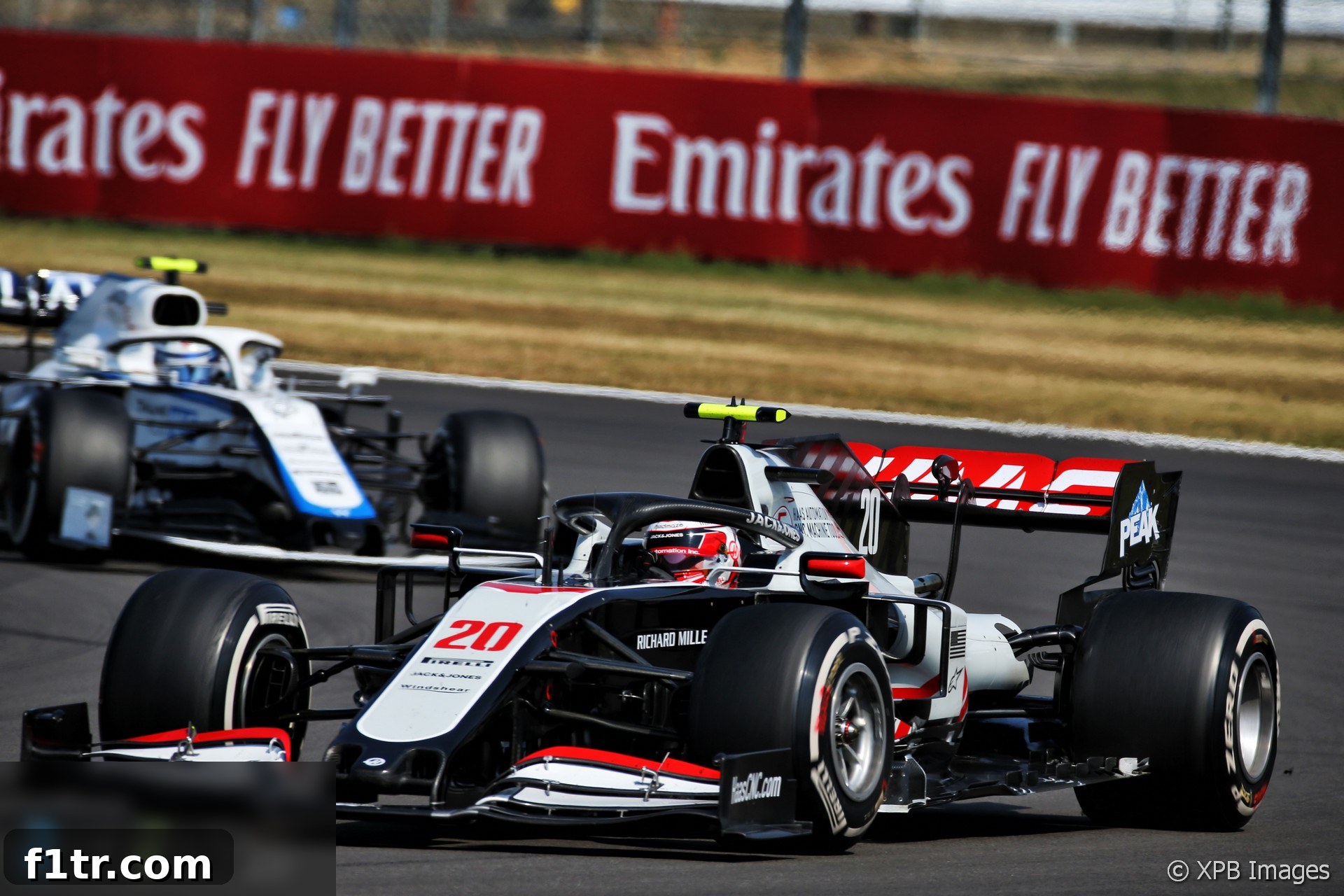
Kevin Magnussen’s Race Cut Short: Unpacking Haas’s Tyre Troubles and Performance Woes
The world of Formula 1 is a relentless crucible of speed, strategy, and engineering prowess, where every component and every decision can be the difference between triumph and despair. For Kevin Magnussen and the Haas F1 Team, a recent race weekend exemplified these intense pressures, culminating in an early retirement shrouded in discussions about tyre integrity and underlying car performance issues. Magnussen’s race was brought to an abrupt halt, not by a crash or a mechanical failure in the traditional sense, but by a critical lack of suitable tyres, a scenario that forced his team into a difficult, safety-conscious decision.
The Danish driver, known for his aggressive style and resilient performances, found himself battling more than just his rivals on the track. From the outset, Magnussen embarked on the race with a set of medium compound tyres, a common strategic choice aimed at establishing early pace and flexibility. His initial strategy saw him make two crucial pit stops during the race. The first transition involved switching to a set of older hard compound tyres, a move often employed to extend a stint and manage tyre wear. This was followed by a subsequent stop for a fresh set of hard tyres, indicating an attempt to stabilize performance and push towards the finish line with a more durable compound.
The Blistering Truth: Magnussen’s Tyre Predicament
However, the narrative of Magnussen’s race took a dramatic turn approximately ten laps before the scheduled end. It was at this critical juncture that the Haas pit wall received an urgent radio message from their driver: “I have a really big blister, left-rear.” This was not just a minor inconvenience; tyre blistering in Formula 1 is a serious issue. It occurs when the temperature difference between the inner and outer layers of the tyre becomes too great, leading to the rubber detaching and forming bubbles on the tyre surface. Such blisters can severely compromise grip, balance, and, most critically, the structural integrity of the tyre, posing a significant safety risk.
Upon hearing Magnussen’s report, his race engineer initially conveyed a message of cautious optimism, suggesting, “If you can make it to the end, that’s good.” The contingency plan, should the hard tyres prove too compromised, involved a switch to the C4 soft compound. However, this option was quickly dismissed by the team. The C4 soft tyres, while offering maximum grip, are notorious for their high levels of degradation over a race stint. Their limited durability and tendency to fall off a performance cliff meant that almost no other driver in the field opted to use them extensively, highlighting the significant challenge they presented for sustained racing.
The team’s reluctance to fit the soft tyres underscores the strategic dilemma they faced. Sacrificing the longevity of hard tyres for the fleeting performance of softs, especially given the existing blistering issue, would have been a high-stakes gamble with potentially disastrous consequences. The risk of rapid degradation and further structural failure on a compound already prone to such issues was deemed too great. Thus, with no viable alternative tyre compounds remaining that could safely complete the race distance, the decision was made. Magnussen was instructed to pit and retire his car shortly after his critical radio call.
Speaking to the media following his early exit, Magnussen succinctly summarized the situation: “We didn’t have any more tyres.” This simple statement belied the complex technical and strategic considerations that led to his retirement, illustrating the brutal reality that sometimes, even with a car capable of continuing, the absence of suitable rubber can bring an end to a race effort.
Haas’s Tough Call: Safety First Amidst Vibrations
The severity of the tyre issue was further elaborated by Haas team principal Guenther Steiner. He confirmed that the vibrations emanating from Magnussen’s compromised hard tyres were the primary concern that ultimately forced their hand. “We had to retire Kevin at the end of the race as there were vibrations and we were not sure any more how badly they’d affect the suspension,” Steiner explained. This statement highlights a crucial aspect of F1 racing: safety is paramount. Intense vibrations from a damaged tyre are not just uncomfortable for the driver; they transmit significant stress through the wheel, suspension components, and even the chassis.
Prolonged exposure to such forces can lead to catastrophic suspension failure, which at Formula 1 speeds, could result in a severe accident. The team, therefore, faced a stark choice: risk a major incident by leaving Magnussen out on track with potentially compromised suspension, or call him in to retire the car. Given the limited number of laps remaining and the perceived lack of a safe alternative tyre, the conservative, safety-first approach prevailed. It was a testament to the team’s responsibility towards their driver’s well-being and the integrity of their machinery, even if it meant sacrificing a potential finish.
The Shadow of Past Incidents: Car Performance Under Scrutiny
Magnussen’s difficult race weekend was not solely attributed to the immediate tyre woes. The driver himself believed that the car’s underperformance throughout the weekend was directly linked to repairs made following his collision with Alexander Albon in the previous week’s race. This insight provides a deeper layer to the narrative, suggesting that the tyre issue might have been exacerbated by or even a symptom of a broader car performance problem.
“The car has not been performing this weekend as we know it can,” Magnussen lamented. His frustration was palpable, stemming from the team’s intimate knowledge of the car’s potential. “We know the car can perform, especially on a Sunday, in the race. It just hasn’t been performing this weekend.” This discrepancy between expected and actual performance pointed to a fundamental issue that had plagued Magnussen’s efforts from Friday practice onwards.
The Dane pinpointed the aftermath of his previous incident with Alexander Albon as the likely culprit. “We had that crash on Sunday last week and I think the parts we put on the floor for this race weekend, they’re old parts. I can’t really say what else it could be. In my mind that’s got to be it, I don’t know, because the car can be a lot better than this.” This candid assessment from Magnussen offers critical insight into the subtle yet profound impact of car damage and subsequent repairs in Formula 1. The “floor” of an F1 car is arguably its most aerodynamically sensitive component, responsible for generating a significant portion of its downforce through intricate airflow management. Even minor imperfections or deviations from optimal specification can have a cascading effect on aerodynamic efficiency, stability, and ultimately, lap time.
The use of “old parts” on such a critical aerodynamic surface could mean several things. These parts might have slightly different characteristics from the latest specifications, or they might have sustained minor, unrepairable damage that subtly alters their aerodynamic profile. Even imperceptible differences can disrupt the delicate airflow beneath the car, leading to a loss of downforce, increased drag, or an inconsistent aero balance. This, in turn, could make the car harder to drive, more prone to tyre wear, and generally slower than its true potential. Magnussen’s conviction that the car “can be a lot better than this” underlines the psychological toll such a situation takes on a driver, knowing the machinery beneath him is not operating at its peak.
A Challenging Season for Haas F1: Beyond Tyre and Damage
The events of this race weekend for Kevin Magnussen fit into a broader context of challenges faced by the Haas F1 Team, particularly within the competitive landscape of the 2020 F1 season. For independent, midfield teams like Haas, resources are often stretched, and the ability to consistently bring upgrades and replace damaged components with brand-new, top-spec parts can be limited. This can lead to situations where “old parts” or repaired components must be pressed back into service, potentially impacting performance and contributing to frustrating weekends.
The 2020 season, for many teams, presented unique logistical and financial hurdles due to the global circumstances. Managing car performance, tyre strategy, and incident recovery became even more complex. For Haas, every point scored, and every strong performance, was crucial in their battle within the Constructors’ Championship. A retirement like Magnussen’s, even if safety-induced, represented a lost opportunity and added pressure on the team’s overall standings.
The interplay between tyre management, car integrity, and driver feedback is a constant balancing act in Formula 1. Teams must not only engineer fast cars but also ensure they are robust enough to withstand the rigors of racing and adaptable enough to cope with unexpected issues. Magnussen’s experience serves as a stark reminder that in F1, a race can be lost not just on pace, but also on the intricacies of tyre composition, the subtle effects of past damage, and the difficult, split-second decisions made in the heat of competition.
Conclusion: The Intricate Web of F1 Racing
Kevin Magnussen’s premature retirement from the race, triggered by an irreparable tyre blister and a lack of viable alternatives, highlights the multi-faceted challenges faced by Formula 1 teams. It wasn’t merely a tyre failure but a confluence of factors: the inherent characteristics of the compounds, the team’s strategic limitations regarding softer options, and perhaps, a deeper underlying issue with car performance attributed to previous incident damage. Guenther Steiner’s emphasis on vibrations and potential suspension damage further underscores the critical importance of driver safety and mechanical integrity in a sport where marginal gains meet extreme forces.
This incident serves as a poignant illustration of the intricate web of engineering, strategy, and human elements that define Formula 1. For Magnussen and Haas, it was a weekend of missed opportunities and frustrating revelations, reminding everyone that even the smallest detail – a blister on a tyre, or an “old part” on the car’s floor – can have profound implications for a race, a championship, and a team’s aspirations.
2020 F1 Season Insights
- Grosjean to make F1 test return tomorrow for first time since Bahrain horror crash
- Pictures: Wrecked chassis from Grosjean’s Bahrain fireball crash to go on display
- Bottas vs Rosberg: Hamilton’s Mercedes team mates compared after 78 races each
- F1 revenues fell by $877 million in Covid-struck 2020 season
- Hamilton and Mercedes finally announce new deal for 2021 season
Browse all 2020 F1 season articles