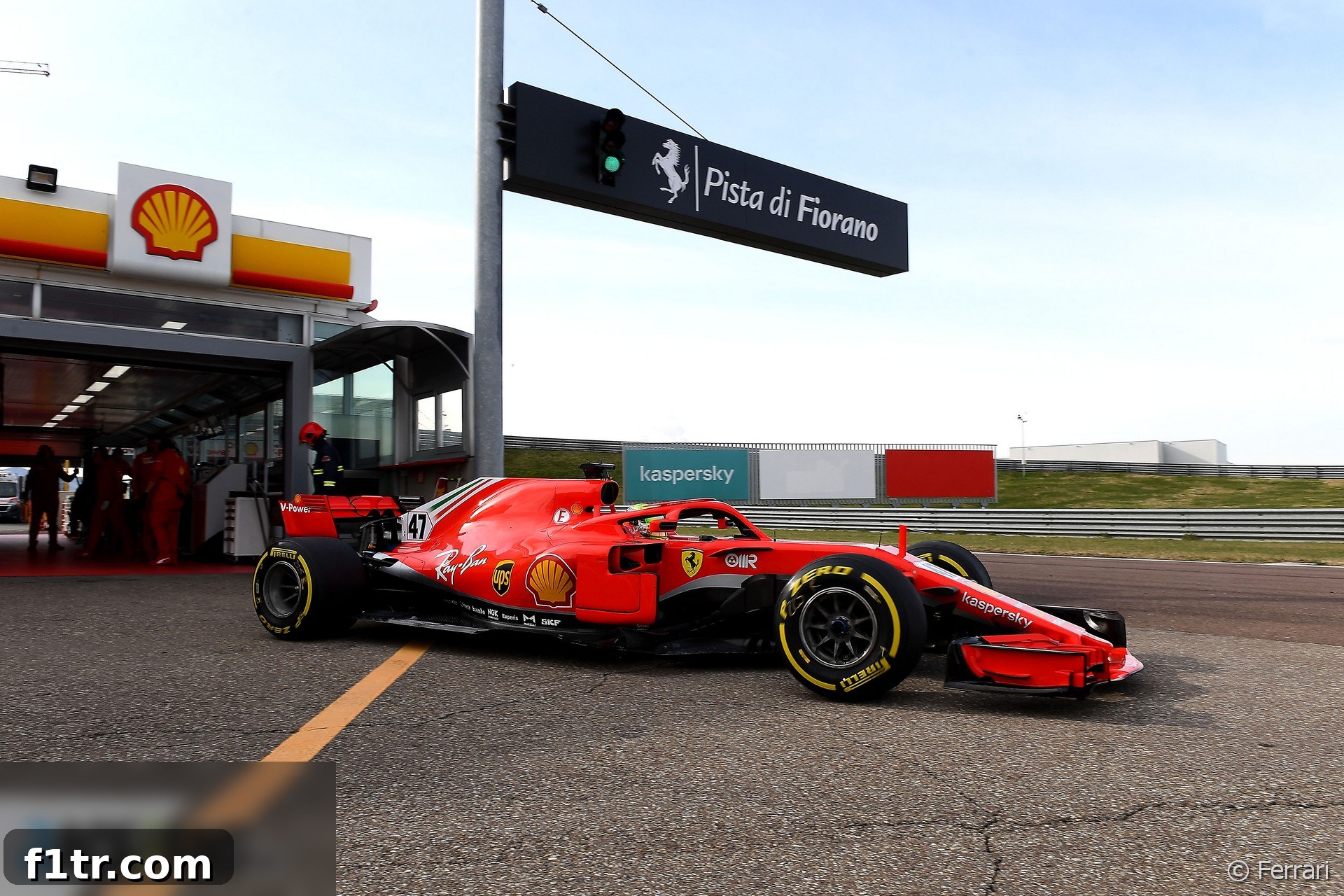
Ferrari Opts for SF71H in Crucial Fiorano Test Amidst Evolving F1 Regulations
In a significant pre-season development, Scuderia Ferrari has commenced a four-day testing program at its iconic Fiorano circuit, opting to run the 2018-specification SF71H car instead of their more recent 2021 challenger. This decision, initially announced as a test for the 2021 car, highlights the complexities and ambiguities surrounding Formula 1’s “Testing of Previous Cars” (TPC) regulations as teams gear up for the radical technical changes anticipated in the 2022 F1 season.
The test features a robust driver lineup, including promising test driver Robert Shwartzman, alongside the team’s primary race drivers, Charles Leclerc and Carlos Sainz Jnr. While seemingly a step back in terms of car vintage, this strategic choice by the Maranello outfit offers invaluable track time and serves multiple objectives as teams navigate the stringent F1 rulebook and prepare for a new era of racing.
Navigating the Nuances of Formula 1 Testing Regulations
Formula 1’s regulations governing in-season and off-season testing are notoriously strict, designed to control costs and prevent teams from gaining an unfair competitive advantage. The sport allows for “Testing of Previous Cars” (TPC), a crucial avenue for teams to conduct driver development, integrate new personnel, and validate simulator data without the restrictions applied to current-year machinery.
According to the F1 Technical Regulations, teams are permitted to use cars “which were designed and built in order to comply with the Formula 1 Technical Regulations of any of the three calendar years falling immediately prior to the calendar year preceding the championship.” For the current year, 2022, this rule would typically permit the use of cars from 2018, 2019, and 2020.
However, the landscape for the 2022 season is unique. With the introduction of drastically new technical rules for 2022, it was widely anticipated that the FIA would update its regulations to allow teams to use their 2021 cars under the “previous cars” umbrella. This would provide more relevant data for driver acclimatization and general operational checks, especially given the significant design philosophies that link a 2021 car to what a team might learn for 2022 compared to an older model.
Despite these expectations, the updated regulations from the FIA regarding the status of 2021 cars for 2022 TPC have not yet been formalized. This regulatory vacuum has compelled teams like Ferrari to exercise caution. Ferrari’s official statement clarified their position: “While awaiting an update from the FIA as to how rules relating to ‘Test Previous Cars’ which establish the criteria for which cars can be used in this type of test, are being applied for 2022, the decision has been taken to use a 2018 SF71H car.” This highlights the importance of regulatory clarity for strategic planning in Formula 1.
Ferrari’s Strategic Rationale: The SF71H Advantage
The choice of the 2018 SF71H is not arbitrary. The SF71H was a highly competitive car in its era, securing six victories and a strong challenge for the championship. Utilizing a car that was fundamentally sound and robust offers several advantages. Firstly, it provides a reliable platform for evaluating driver performance and fitness. For Charles Leclerc and Carlos Sainz, it’s an opportunity to shake off the winter rust, regain their rhythm, and recalibrate their senses for high-speed racing environments. For Robert Shwartzman, it’s an invaluable chance to accrue vital mileage, demonstrate his capabilities, and provide crucial feedback to the engineering team.
Secondly, even an older car can yield valuable insights into general car behavior, tire degradation characteristics (though tire compounds evolve), and track conditions. The data collected from track running, regardless of the car’s age, can be correlated with simulator models, helping to refine the virtual testing environment that is so critical for modern F1 development. This correlation work is paramount, as teams rely heavily on simulations to design and optimize their new cars, especially under the new 2022 regulations where track testing of the actual new car is heavily limited.
Ferrari’s decision to use the SF71H for a four-day program underlines their commitment to maximizing every available opportunity for performance enhancement and driver preparation. The extensive duration of the test ensures that all participating drivers receive significant time behind the wheel, allowing for detailed analysis and comprehensive feedback. “Further details on the test programme will follow later,” Ferrari added, indicating a structured and purposeful approach to these track days.
Driver Development at the Forefront: Shwartzman, Leclerc, and Sainz
The Fiorano test provides a multifaceted approach to driver development. For Robert Shwartzman, a key figure in the Ferrari Driver Academy and the team’s official test driver, this is a golden opportunity. Track time in a Formula 1 car is incredibly scarce for young talents, and the chance to complete two full days of testing is invaluable for his progression. It allows him to deepen his understanding of F1 car dynamics, work closely with the engineers, and refine his feedback skills—all essential steps towards a potential future F1 race seat.
For the primary race drivers, Charles Leclerc and Carlos Sainz Jnr, their participation on Wednesday and Thursday respectively serves a different, yet equally critical, purpose. While they won’t be testing the 2022 car directly, driving a high-performance F1 machine helps maintain their physical and mental sharpness. The intense G-forces, braking points, and precise inputs required to extract performance from an F1 car are unique, and even an older car provides the necessary conditioning. It ensures they are fully prepared for the intensity of the upcoming pre-season testing with the new 2022 car and the demands of a full Grand Prix season.
The structured four-day program ensures that each driver receives dedicated time. Robert Shwartzman was scheduled to run today (Monday) and Friday, sandwiching the runs by Charles Leclerc on Wednesday and Carlos Sainz Jnr on Thursday. This schedule allows for focused work with each driver, optimizing the learning opportunities for both the individual drivers and the team’s engineering department.
A Wider Trend: AlphaTauri Joins the Pre-Season Testing Drive
Ferrari is not alone in utilizing “previous car” testing opportunities. AlphaTauri, Red Bull’s sister team, is also conducting a similar test today. Pierre Gasly is at the helm of an AT01 – the car used by the team in 2020 – at the Autodromo Enzo e Dino Ferrari, more commonly known as Imola. This parallel testing further underscores the strategic importance teams place on maximizing track time under the existing regulations.
Like Ferrari, AlphaTauri will be using this test to gather data, provide Gasly with valuable seat time, and possibly integrate new procedures or personnel ahead of the official 2022 car launch and pre-season testing. The common theme among these teams is the proactive approach to preparation, leveraging every permitted opportunity to gain an edge in a season that promises to be exceptionally challenging with the new technical regulations.
The Road Ahead: Implications for the 2022 F1 Season
The 2022 Formula 1 season marks a seismic shift in the sport’s technical regulations. With ground effect aerodynamics making a return and completely redesigned cars aiming to promote closer racing, teams are facing an unprecedented challenge. Every piece of data, every moment of track time, and every bit of driver feedback becomes critical in understanding these new machines and unlocking their full potential. While testing older cars doesn’t directly provide data on the 2022 car’s performance, it contributes to the overall operational efficiency, driver readiness, and fundamental understanding of car dynamics that are transferable.
These “previous car” tests serve as vital warm-up sessions, ensuring that drivers are at peak performance and that engineering teams are fine-tuned for the intense development cycle ahead. As the F1 world eagerly awaits the unveiling of the new-generation cars and the official pre-season tests, Ferrari’s strategic move at Fiorano, mirrored by AlphaTauri at Imola, highlights the relentless pursuit of perfection that defines Formula 1. The ambiguity surrounding 2021 cars for TPC will hopefully be resolved soon by the FIA, providing greater clarity for future testing programs, but for now, teams are making the most of the rules as they stand.
Related Articles: 2022 F1 Season Insights
- Mercedes told me “you’re wrong” about 2022 car’s problems – Hamilton
- FIA confirms all 10 F1 teams complied with 2022 cost cap
- Steiner “not ashamed” of panning “slow” Schumacher in Drive to Survive
- Albon believes year out of F1 improved him as a driver
- Hamilton sees diversity gains in F1 years on from his ‘traumatising’ experience of racism
Browse all 2022 F1 season articles