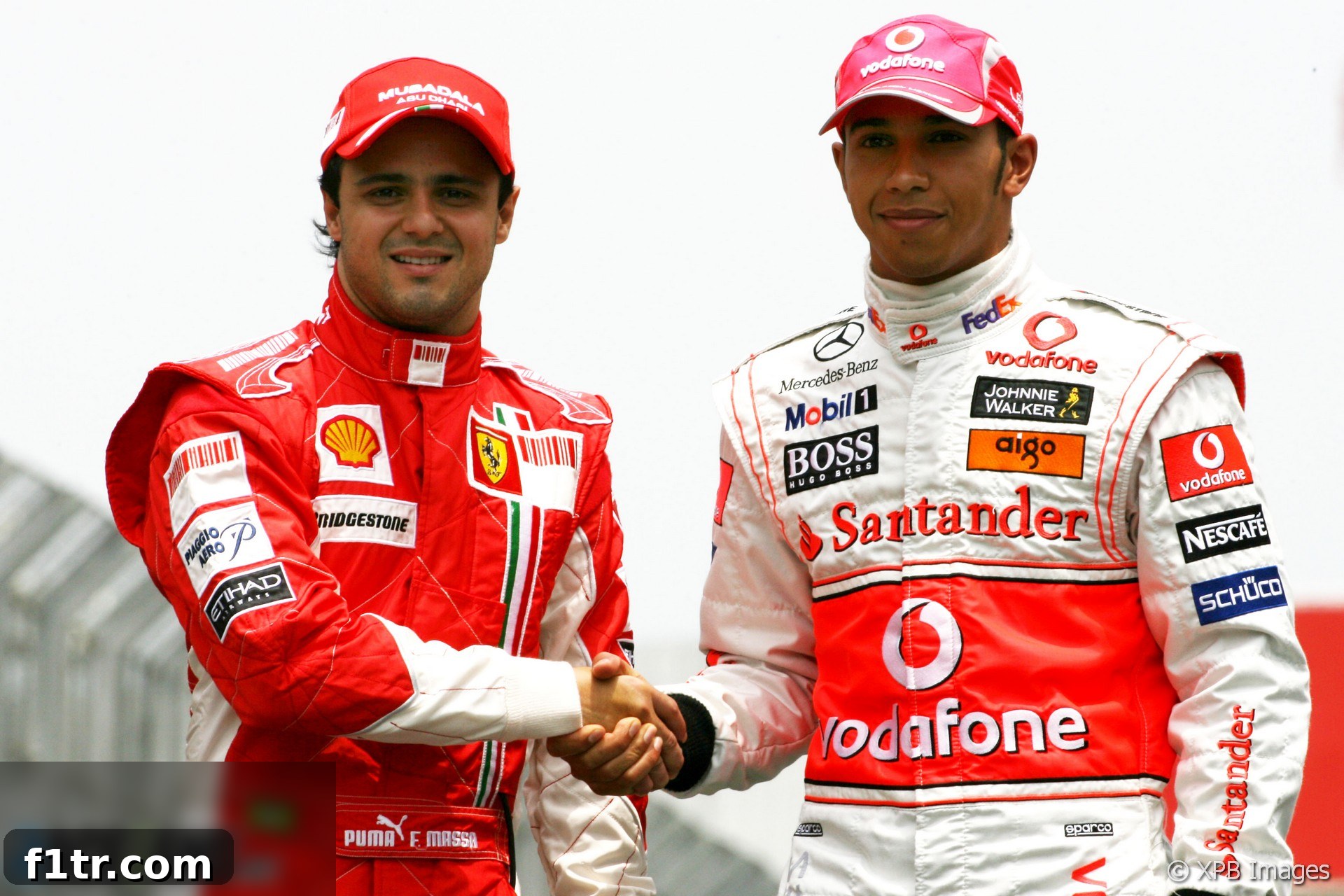
The echoes of the 2008 Formula 1 World Championship continue to reverberate through the sport, with a renewed focus on the contentious season finale. Former Formula 1 supremo Bernie Ecclestone is at the heart of the latest controversy, having reportedly instigated a legal challenge from Felipe Massa regarding the legitimacy of the 2008 title. Two-time world champion Emerson Fittipaldi confirmed Ecclestone’s role in stirring the debate, highlighting the dramatic turn of events that led to Lewis Hamilton securing his maiden world championship title by the narrowest of margins.
Reigniting a Fifteen-Year-Old Controversy: Massa’s Legal Pursuit
Felipe Massa, who finished as runner-up in the 2008 championship, has reportedly assembled a robust legal team to meticulously examine the FIA’s handling and response to the infamous ‘Crashgate’ scandal at that year’s Singapore Grand Prix. This significant move by Massa follows explosive claims made by Ecclestone, who suggested that he and then-FIA president Max Mosley possessed sufficient information at the time to nullify the outcome of the controversial race, thereby altering the championship standings retrospectively.
The 2008 season was a nail-biting, down-to-the-wire battle between Ferrari’s Massa and McLaren’s Lewis Hamilton. The championship crescendoed at the Brazilian Grand Prix, where Hamilton dramatically secured the title on the very last lap of the race, snatching it from Massa’s grasp by a single point. However, the shadow of the Singapore Grand Prix, held earlier in the season, has always lingered, a race riddled with allegations of foul play that only fully came to light a year later.
The Infamous Crashgate Scandal: A Dark Chapter in F1 History
The 2008 Singapore Grand Prix, the inaugural night race in Formula 1 history, became etched in infamy due to what is now widely known as ‘Crashgate’. The race saw Fernando Alonso claim victory for Renault under highly suspicious circumstances. It was later revealed that Alonso’s teammate, Nelson Piquet Jnr, had deliberately crashed his car into a wall on lap 14 as instructed by senior team members, including team principal Flavio Briatore and engineering director Pat Symonds. The engineered crash was designed to trigger a Safety Car period, strategically benefiting Alonso, who had pitted early and was running on a lighter fuel load.
At the time of the deliberate incident, Felipe Massa was leading the race, with Lewis Hamilton trailing closely behind. The Safety Car deployment, however, proved catastrophic for Massa. Ferrari’s pit stop under the Safety Car conditions was botched, with the fuel hose still attached as Massa was waved away, resulting in a drive-through penalty and his race being completely undermined. Massa ultimately failed to score any points in Singapore, a race he had been dominating. In contrast, Hamilton, despite the chaos, managed to finish third, securing six crucial points. This outcome ultimately meant Hamilton out-scored Massa in Singapore by six points, a margin that became paramount when he clinched the title by just one point at the season’s end.
Bernie Ecclestone’s Catalyst: Fueling the Fire
Bernie Ecclestone’s recent comments have acted as the primary catalyst for Massa’s renewed legal efforts. Speaking last month, Ecclestone asserted that the FIA, under the leadership of then-president Max Mosley, “had enough information in time to investigate the matter” and that they “should have cancelled the race in Singapore under these conditions.” He went further, stating, “That means it would never have happened for the world championship standings. Then Felipe Massa would have become world champion and not Lewis Hamilton.” These pronouncements from such a pivotal figure in F1 history have inevitably reignited a dormant debate, bringing the integrity of the 2008 championship back into sharp focus.
Ecclestone’s relationship with figures from that era, including the Piquet family, has also drawn scrutiny. He controversially clashed with Lewis Hamilton last year after defending Nelson Piquet – the father of the ‘Crashgate’ conspirator – over racist comments Piquet Snr made about the seven-time world champion. Hamilton had publicly responded, stating that “older voices” like Ecclestone, Piquet, and Sir Jackie Stewart, should not be given a platform, underscoring a complex web of personal and professional histories intertwined with this latest revelation.
Emerson Fittipaldi’s Insight: A Pragmatic Yet Supportive View
Two-time world champion Emerson Fittipaldi, a fellow Brazilian and a revered figure in motorsport, offered a nuanced perspective on the unfolding drama. Fittipaldi believes that Ecclestone’s comments about the 2008 Singapore Grand Prix were intentionally provocative, designed to capture headlines and generate public debate. “I think who started this was Bernie Ecclestone,” Fittipaldi told The Mirror. “Typical Bernie! Bernie wanted to create a polemic and this polemic that he’s creating, it’s just to generate some news.”
While acknowledging Ecclestone’s role in stirring the pot, Fittipaldi also pointed to the on-track events that ultimately sealed Massa’s fate in Singapore, independent of the deliberate crash. He emphasized that Ferrari’s critical pit stop error during the Safety Car period was the direct cause of Massa’s downfall in that particular race. “When you go backwards, in that race, Ferrari made a mistake during a pit stop,” Fittipaldi explained. “That means the result of the race would not change a lot. It’s so difficult to reverse that. That’s my personal opinion.” This perspective highlights the complexity of retroactively dissecting a race result, particularly when multiple factors contributed to a driver’s outcome.
Despite his pragmatic assessment of the challenge’s difficulty, Fittipaldi made it clear where his loyalties lie, declaring himself “100 percent pro-Felipe Massa, for sure.” He recounted his deep disappointment watching his compatriot lose the title so agonizingly on home soil at Interlagos at the close of that season. “I would love if Felipe would be world champion, being Brazilian, for sure,” he shared. Fittipaldi vividly recalled being in the McLaren pit with Lewis Hamilton at Interlagos that year, describing the initial silence when Massa appeared to have won, followed by the dramatic eruption of cheers as Hamilton clinched the title. “When Felipe went by only two people, myself and my wife, stood up and screamed,” he recalled. “Everybody was quiet. 15 seconds later, everybody stood up and started screaming and I didn’t understand why! But, anyway, that was the day that happened.” This personal anecdote underscores the emotional weight of that season’s conclusion for Brazilians and racing fans alike.
The Legal Battlefield: Massa’s Pursuit of Justice
Felipe Massa’s legal challenge is unprecedented in modern Formula 1, venturing into complex territory regarding sporting statutes, legal precedents, and the retrospective alteration of historical results. The core of his argument rests on the claim that the FIA was aware of the ‘Crashgate’ conspiracy before the end of the 2008 season but failed to act, thereby compromising the integrity of the championship outcome. If proven, this could theoretically open a pathway to challenging the established results.
However, the hurdles are immense. Sporting regulations typically have strict statutes of limitations for appealing results. The FIA’s own World Motor Sport Council had previously concluded its investigation into ‘Crashgate’ in 2009, imposing penalties on Renault officials but not altering the race results. Reopening such a case more than a decade later would set a significant, potentially chaotic, precedent for all motorsports. Legal experts will need to navigate international sports law, national jurisdictions, and the specific regulations governing Formula 1 to determine if Massa has a viable path forward.
The Wider Implications for Formula 1
This renewed controversy carries profound implications not just for the individuals involved but for the very fabric of Formula 1. Should Massa’s challenge gain traction, it could potentially undermine the historical records and the finality of championship results, creating uncertainty for future seasons. Lewis Hamilton, a seven-time world champion and one of the sport’s greatest figures, would see his inaugural title, a cornerstone of his legendary career, called into question.
For the FIA, revisiting such a sensitive issue would force a re-evaluation of its past conduct and potentially lead to difficult questions about transparency and accountability. The sport thrives on clear rules and definitive outcomes; any move to unravel a championship from so long ago could be seen as destabilizing. The racing world, fans, and pundits alike are watching intently, understanding that the outcome of this legal battle could redefine how motorsport history is written and interpreted.
Looking Ahead: An Uncertain Road for Massa
While Felipe Massa’s pursuit of justice is understandable given the revelations and the emotional toll of his 2008 defeat, the road ahead is fraught with legal and logistical challenges. The complexities of overturning a championship result years after the fact are monumental, regardless of the ethical questions surrounding the original ‘Crashgate’ incident. Bernie Ecclestone’s comments have certainly provided the impetus, but whether they translate into a successful legal outcome for Massa remains highly uncertain. The Formula 1 community faces a period of introspection as it grapples with the potential ramifications of revisiting one of its most controversial chapters, balancing the desire for justice with the need for sporting finality.
Related F1 Articles
- FIA president cleared of alleged interference in two 2023 races
- First week viewing figures for new Drive to Survive season fall again
- Max who? Drive to Survive season six prefers its favourite faces
- RaceFans’ complete 2023 season review
- The F1 drivers who pulled off the 10 biggest charges through the field in 2023
Browse all F1 season articles