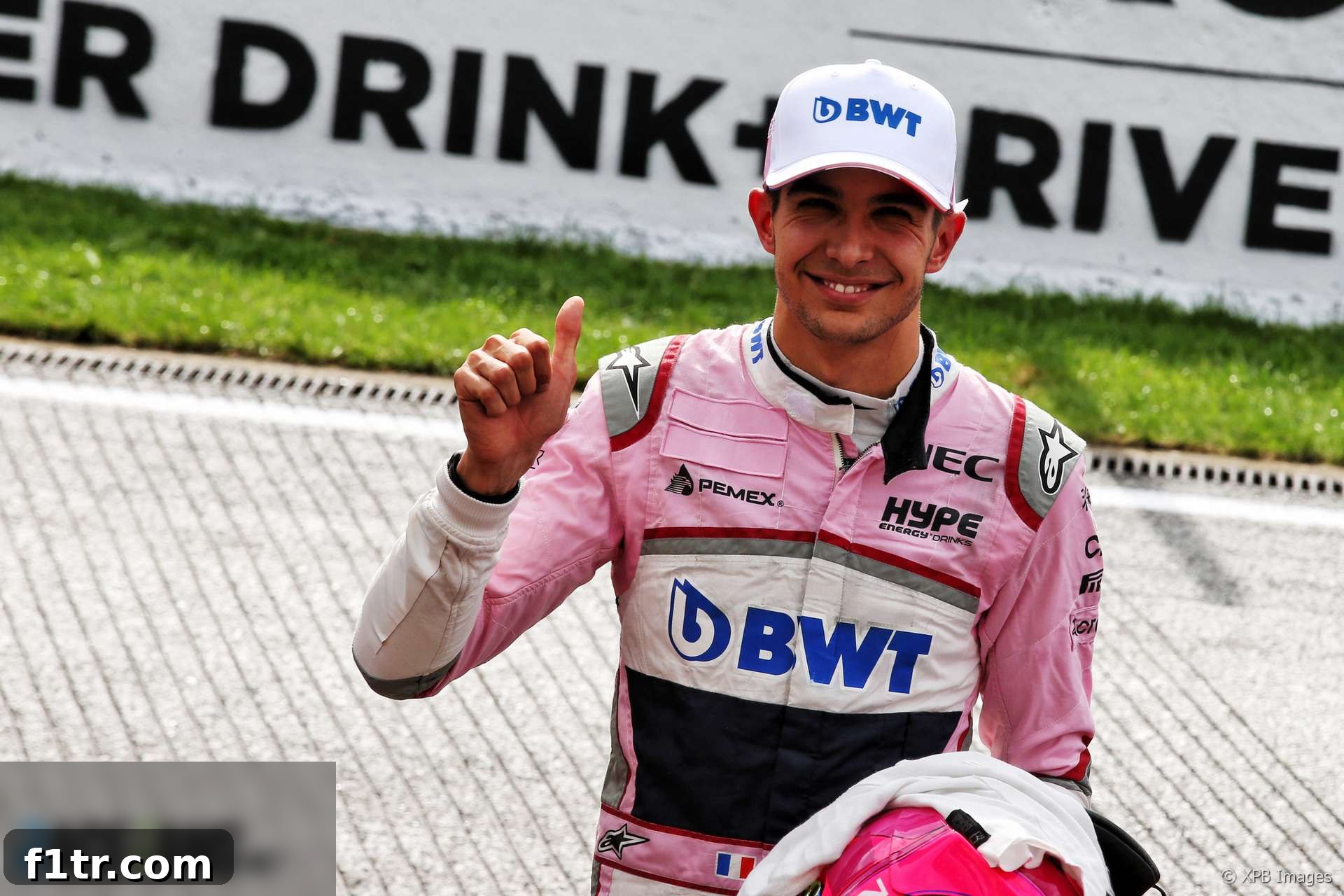
In the high-stakes world of Formula 1, a single performance can speak volumes. For young French driver Esteban Ocon, his stellar qualifying display at the 2018 Belgian Grand Prix at Spa-Francorchamps was exactly that – a powerful declaration of his talent, delivered amidst swirling speculation about his uncertain future in the sport. Piloting his Force India car to a remarkable third place on the grid, Ocon achieved a career-best result, a feat that under normal circumstances would guarantee his standing. Yet, the complex financial landscape of F1 and impending team ownership changes meant his seat was far from secure, creating a poignant contrast between his on-track brilliance and off-track vulnerability.
Esteban Ocon’s Spa Brilliance Underscores Fight for F1 Future
The paddock at Spa-Francorchamps was abuzz with more than just the roar of F1 engines during that momentous weekend. While Ocon celebrated his outstanding P3, a career-best for the 21-year-old, the whispers grew louder: Williams driver Lance Stroll was reportedly poised to take his place at Force India. Insider reports, including those from RaceFans, indicated that Stroll was already scheduled for a seat fitting at Force India the following week, signaling a rapid and significant shift in the team’s driver lineup. This situation stemmed directly from Force India’s entry into administration and the subsequent leadership of a consortium by Lawrence Stroll, Lance’s father, to acquire the team. While this move secured the team’s survival, it inevitably placed Lance Stroll in a preferential position for a race seat, despite Ocon’s proven capabilities.
A Masterclass in Qualifying: Ocon’s Standout Performance
Ocon’s qualifying lap at Spa was nothing short of a masterclass. The challenging, undulating circuit of Spa-Francorchamps, known for its unpredictable weather, demands absolute precision and courage. Ocon navigated these conditions with exceptional skill, extracting maximum performance from his Force India VJM11. To outpace many more experienced drivers and position himself just behind the dominant Mercedes of Lewis Hamilton and the Ferrari of Sebastian Vettel was a testament to his raw speed, adaptability, and unwavering focus. This result was not merely a good lap; it was a definitive statement, reinforcing the widely held belief that Ocon possessed the pedigree of a future Formula 1 star. His performance served as a powerful argument in the ongoing debate about talent versus financial backing in motorsport, showcasing exactly why he deserved a long-term place in the pinnacle of racing.
Ocon’s Frank Assessment of His Precarious Position
Despite the elation of his qualifying success, Esteban Ocon remained acutely aware of the existential threat to his Formula 1 career. In the post-qualifying press conference, he addressed his future with refreshing honesty and a steely resolve. “For sure my future is not done,” Ocon stated, acknowledging the uncertainty hanging over his head. “I don’t know where I will race next year or what I will do.” These words painted a vivid picture of the immense pressure a young driver faces when their career hangs by a thread, regardless of their performance on track. It underscored the brutal realities of Formula 1, where talent alone, sometimes, is not enough to guarantee longevity.
Ocon’s strategy for survival was clear and direct: let his driving do the talking. He articulated his belief that sustained performance was his most potent weapon. “As I said, the only thing I can do is to do well on track, to focus, do the same job as before, try to do the best. If you do a strong job in Formula 1, the team they can’t skip you, they need to have you. That’s what I’m trying to do.” This unwavering commitment to excellence, even in the face of adversity, resonated deeply within the motorsport community. It highlighted the purity of his professional ambition, contrasting sharply with the intricate political and financial maneuvers occurring behind the scenes.
Champions’ Endorsement: Hamilton and Vettel’s Praise
The impact of Ocon’s qualifying heroics was further amplified by the high praise he received from the sport’s most revered figures. Both Lewis Hamilton and Sebastian Vettel, who lined up ahead of Ocon on the grid, openly lauded the young Frenchman’s abilities. Coming from multiple world champions and direct competitors, their words carried immense weight and served as a powerful testament to Ocon’s raw talent and potential. Their recognition affirmed what many in the paddock already believed: Ocon was a driver of exceptional caliber.
Sebastian Vettel, with his characteristic thoughtful commentary, expressed his genuine hope that Ocon’s talents would not be overlooked in the cutthroat 2019 driver market. Vettel’s observations offered a critical insight into the often-fickle nature of Formula 1’s public and professional memory. He lamented the tendency to rapidly move on from one “superhero” to the next, often forgetting those who consistently perform at a high level. Vettel eloquently stated:
“Unfortunately it’s a bit nowadays our times that a new guy comes in and he’s a superhero, and then another guy comes in and he’s a superhero, and by that time the first guy’s easily forgotten even though he’s doing a good job but not really considered any more as in talked about and written about. That’s why I think it’s good for him to have this result today and he should get mentioned I think.”
Vettel’s sentiment perfectly encapsulated the precarious position of many talented drivers in F1, where the demand for novelty can overshadow consistent excellence. For Ocon, hearing such an endorsement from a four-time world champion was a significant morale boost. He described it as “awesome,” acknowledging the profound significance of being recognized by his idols and peers. “Of course I want to be racing next year, I’m doing everything for it, I’m working very hard every day for it. To hear great things from those two champions is just fantastic.”
The Mercedes Factor: Trusting the Management
A pivotal aspect of Esteban Ocon’s career journey was his association with Mercedes. As a Mercedes junior driver, his path had been carefully managed and guided by the formidable German manufacturer, renowned for its meticulous approach to developing young talent. Ocon placed immense trust in their ability to navigate his difficult situation, expressing his hope that they would find a viable solution for his future. “I’m managed by Mercedes, and they’ve taken great decisions for me in the past, so I’m sure it will be the same again for me in the future hopefully, and I will be sorted out.”
Mercedes’ involvement added a layer of both security and complexity. While they were committed to supporting Ocon, their factory team boasted a stable and highly successful lineup of Lewis Hamilton and Valtteri Bottas, leaving no immediate room for Ocon. This meant Mercedes had to actively seek opportunities for him in other teams, often involving intricate negotiations and strategic maneuvering within the F1 paddock. The challenge highlighted how even the backing of a powerhouse like Mercedes could face limitations when a direct path to a top seat wasn’t readily available, forcing their junior talent into the broader, often unforgiving, driver market.
Talent Versus Funding: A Recurring F1 Dilemma
The 2018 Formula 1 driver market was a particularly intense period, marked by a fascinating interplay of emerging talents, established veterans, and the ever-increasing influence of financial backing. Drivers like Ocon, along with fellow Mercedes juniors Pascal Wehrlein and George Russell, found themselves competing not just on track, but also against rivals who could bring substantial sponsorship or, as in Stroll’s unique circumstance, direct team ownership. This era starkly illuminated the perennial dilemma of talent versus funding, a debate that continues to shape F1 lineups.
Ocon’s predicament became a rallying cry for purists who championed the idea that sheer driving skill should always be the ultimate arbiter. His sensational Spa performance was a powerful and public affirmation of this belief. However, the impending arrival of Lance Stroll at Force India, driven by the team’s ownership change, served as a stark reminder that financial rescue packages often come with conditions that directly impact driver choices, irrespective of on-track merit. This unfortunate reality meant that a driver of Ocon’s undeniable caliber, with a proven track record of pace and consistency, could still face the threat of being sidelined if the commercial and political winds shifted unfavorably.
Conclusion: The Enduring Fight for a Deserved Place
Esteban Ocon’s extraordinary qualifying performance at the 2018 Belgian Grand Prix was a defining moment – a magnificent showcase of his formidable talent and immense potential. It firmly cemented his reputation as one of Formula 1’s brightest young stars, capable of delivering under the most intense pressure. Yet, this moment of triumph also cast a harsh light on the stark realities and vulnerabilities inherent in even the most promising careers in a sport where economic considerations frequently intertwine with sporting merit. His passionate fight to retain his place in Formula 1 became a symbolic struggle for many aspiring drivers, illustrating that raw ability, while essential, often requires a robust layer of strategic advocacy and fortunate circumstances.
His unwavering determination to let his driving do the talking, powerfully reinforced by the vocal support from champions like Lewis Hamilton and Sebastian Vettel, unequivocally underscored the profound respect and admiration he commanded within the paddock. The fervent hope was that Mercedes’ strategic guidance would ultimately “sort him out,” ensuring that a talent of Ocon’s magnitude would not be left without a deserved seat on the grid. The entire saga of Esteban Ocon at Spa was far more than just a remarkable qualifying result; it was a compelling microcosm of the intense competition, complex dynamics, and often brutal decisions that continually define the pinnacle of motorsport, where every single lap holds immense weight, not just for race position, but for the trajectory of an entire career.
Related Articles: The 2018 F1 Season in Context
- F1 feared “death knell” for Drive to Survive after Ferrari and Mercedes snub
- McLaren staff told us we were “totally crazy” to take Honda engines in 2018 – Tost
- ‘It doesn’t matter if we start last’: How Red Bull’s junior team aided Honda’s leap forward
- Honda’s jet division helped F1 engineers solve power unit problem
- McLaren Racing losses rise after Honda split
Browse all 2018 F1 season articles