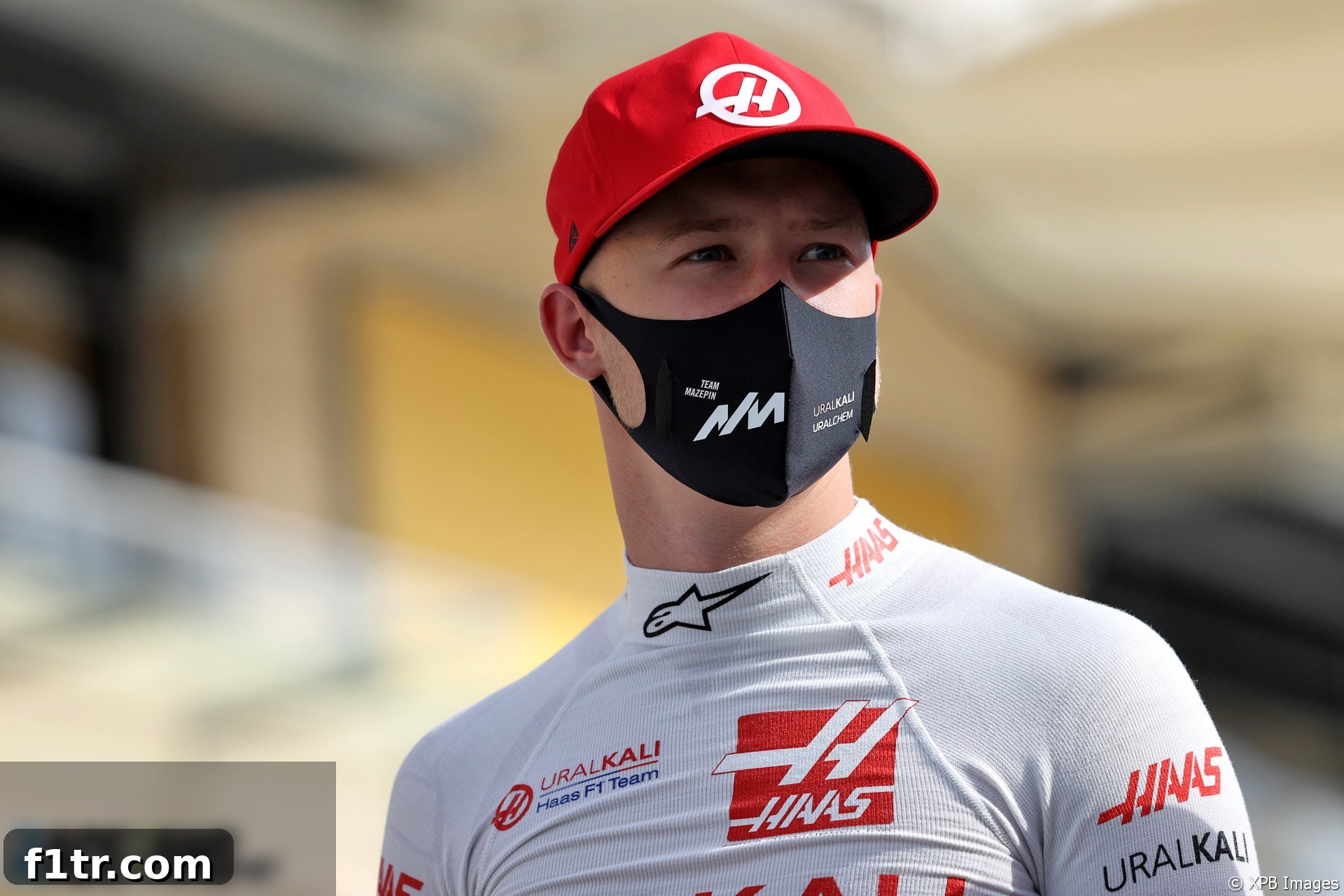
Nikita Mazepin, in his debut Formula 1 season, entered the pinnacle of motorsport as a neutral athlete from Russia, a designation prominently marked by ‘RAF’ next to his name instead of the national flag. This unique entry status is a direct consequence of a significant ruling regarding state-sponsored doping in Russia, which has profoundly impacted Russian athletes across various major international competitions, including Formula 1. The decision, handed down by the Court of Arbitration for Sport (CAS), upheld a crucial ruling initially made by the World Anti-Doping Agency (WADA), setting a precedent for how Russian athletes participate on the global stage.
Advert | Become a Supporter & go ad-free
Nikita Mazepin’s Unique F1 Entry: A ‘Neutral Athlete’ Amidst Global Sanctions
The 2021 Formula 1 season marked an unusual start for rookie Nikita Mazepin. While most drivers proudly carry their national flag and represent their country, Mazepin’s entry list for the Bahrain Grand Prix simply stated his nationality as ‘RAF’. This acronym, standing for the Russian Automobile Federation, was permitted as a compromise, replacing the full phrase ‘Russian Automobile Federation’ to adhere to strict international sanctions. The core issue stems from the fact that the federation itself is considered representative of Russia, a country currently under a ban from major sporting events due to a far-reaching state-sponsored doping scandal.
Although Mazepin’s racing licence is officially issued through the Russian Automobile Federation (RAF), the stringent regulations mean he cannot be officially identified or described as a ‘Russian athlete’ during the 2021 and 2022 seasons. Any reference to his nationality must be carefully worded, with descriptions relating to ‘Russia’ only allowed if they are given equal prominence to the term ‘neutral athlete’. This legal nuance underscores the comprehensive nature of the ban, designed to ensure that no official recognition or promotion of Russia’s national identity occurs in international sporting contexts.
The Genesis of the Ban: Russia’s Doping Scandal and International Response
The root cause of this unprecedented situation lies in the extensive state-sponsored doping program uncovered in Russia. Investigations revealed a systematic manipulation of anti-doping procedures, leading to widespread cheating across numerous sports. The World Anti-Doping Agency (WADA) spearheaded the efforts to bring accountability, eventually recommending a series of severe sanctions against Russia. These recommendations were challenged by Russia but largely upheld, with some modifications, by the Court of Arbitration for Sport (CAS).
The CAS ruling solidified a ban preventing Russian athletes from using their national flag, name ‘Russia’, or any national emblems or symbols at major international competitions. This included not only the athletes’ clothing but also any official facilities or areas controlled by international federations like the FIA (Fédération Internationale de l’Automobile) or event organisers. The initial ban proposed by WADA was for four years, but the CAS reduced this period to two years, concluding at the end of 2022. This means that for two full Formula 1 seasons, Mazepin, like other top Russian athletes, must navigate the complexities of competing without national representation.
The goal of these sanctions is not to punish individual athletes who may not have been involved in doping, but to hold the Russian state accountable for its systemic breaches of anti-doping rules. By requiring athletes to compete as “neutral” individuals, the international sports community aims to send a clear message about the integrity of competition and the consequences of state-level malpractice. This approach seeks to balance the rights of clean athletes to compete with the imperative to maintain fair play and uphold ethical standards in sport.
Decoding ‘RAF’: Mazepin’s Nationality Designation Explained
The use of ‘RAF’ as Mazepin’s nationality on the entry list for the Bahrain Grand Prix serves as a specific compromise within the CAS ruling. While the full name ‘Russian Automobile Federation’ would implicitly link Mazepin to Russia, the acronym ‘RAF’ provides a designation that is technically distinct enough to comply with the letter of the law. This subtle distinction allows for the administrative process of athlete licensing through a national body, while simultaneously avoiding the overt promotion of Russia’s national identity at major international events.
The ruling’s meticulous details extend beyond mere flag display. It expressly forbids athletes from “publicly display[ing] the flag of the Russian Federation (current or historical), the name ‘Russia’ or any national emblem or national symbol on their clothing at any official facilities or in other areas controlled by the FIA or the organisers of FIA competitions.” This broad scope ensures that virtually all public-facing elements of an athlete’s participation are devoid of Russian national branding, underscoring the severity and comprehensive nature of the sanctions.
For Mazepin, this translates into a unique personal challenge. As an F1 rookie, he is not only adjusting to the demands of elite motorsport but also operating under strict guidelines regarding his national representation. Every official statement, every piece of teamwear, and every graphic displayed by the FIA must conform to these rules, making his debut season one of unprecedented scrutiny, not just for his driving performance but also for the diplomatic nuances surrounding his participation.
Haas Livery Controversy: Navigating the Line Between Compliance and National Identity
Adding another layer of complexity to Mazepin’s situation, the livery and overalls of his Haas F1 team attracted considerable attention during pre-season testing and the initial races. The design incorporated prominent blue, red, and white stripes—colors unmistakably associated with the Russian flag. Given the ban on displaying Russian national symbols, this immediately raised eyebrows and sparked debate among fans and media alike regarding whether the team was circumventing the spirit of the CAS ruling.
Despite the visual similarities, Haas team principal Guenther Steiner was quick to confirm that the car’s livery was “the same as it was in the test” and asserted its full compliance with all FIA regulations and the CAS decision. The team argued that the colors were part of a sponsorship agreement with Uralkali, a Russian company, and that the design was legally permissible as it did not explicitly depict the Russian flag. This highlights the fine line that teams and athletes must tread when navigating complex international sanctions, where visual interpretations can sometimes clash with legal interpretations.
The scrutiny of the Haas livery underscores the public and regulatory sensitivity surrounding Russia’s participation in international sport. Even an indirect resemblance to national symbols can draw significant attention, reflecting the ongoing debate about the effectiveness and appropriateness of such wide-ranging bans. Ultimately, while the livery might have evoked the Russian flag, the team maintained that it was designed to adhere strictly to the rules, demonstrating the intricate balance between commercial interests, sporting regulations, and geopolitical realities.
A Tale of Two Series: Mazepin (F1) vs. Shwartzman (F2)
The application of the CAS ban reveals an interesting divergence when comparing Mazepin’s situation in Formula 1 with that of fellow Russian driver Robert Shwartzman, who competes in the feeder series, Formula 2. While both drivers are Russian, the lower status of Formula 2 and its classification as a support series means it falls under a different interpretation of the “major international competitions” clause within the CAS ruling.
Consequently, the restrictions placed on Mazepin do not fully apply to Shwartzman. The entry list for the Formula 2 season-opener in Bahrain explicitly listed the Ferrari Driver Academy member as racing using a Russian license. Furthermore, in stark contrast to Mazepin, Shwartzman’s car and overalls proudly displayed the Russian flag next to his name. This distinction illustrates the specific scope of the ban, which targets the highest tiers of international competition while allowing more leeway in developmental or support categories.
The most striking difference emerges if Shwartzman were to achieve a podium finish. Unlike Mazepin, whose country’s flag would be absent from any F1 podium ceremony, the race organisers for Formula 2 events would be permitted to display the Russian flag. This update corrected an earlier misunderstanding, clarifying that F2 podium ceremonies are not subject to the same stringent rules as Formula 1, further emphasizing the nuanced application of the international sporting sanctions. This clear differentiation highlights the hierarchy of motorsport events and how international bans are tailored to specific levels of competition, creating a complex landscape for Russian athletes aspiring to reach the top.
Advert | Become a RaceFans supporter andgo ad-free
Broader Implications and the Path Forward
The CAS ban on Russian entries is set to continue through to the end of 2022. For Nikita Mazepin, this means his first two seasons in Formula 1 will be spent racing under the ‘neutral athlete’ designation, without the ability to represent his country’s flag. This period of enforced neutrality represents a significant personal and national sporting challenge, extending beyond the track into the broader narrative of sports ethics and national identity.
This situation for Mazepin and Shwartzman is not isolated; it mirrors the experiences of countless Russian athletes across various sports disciplines. From the Olympic Games to World Championships, Russian competitors have adapted to competing under banners such as “ROC” (Russian Olympic Committee) or as “Authorised Neutral Athletes,” all without their national anthem or flag. This collective experience highlights the widespread and impactful nature of the WADA/CAS sanctions, designed to enforce accountability for past transgressions and deter future misconduct in international sports.
The long-term implications of such bans are a subject of ongoing debate. While proponents argue that they are necessary to uphold the integrity of sport, critics sometimes question their effectiveness and fairness, particularly for individual athletes who may not have been directly involved in the systemic issues. As the 2022 deadline approaches, the international sporting community will keenly observe Russia’s compliance and the potential for a full reintegration into global competitions under its national symbols. Until then, the story of Nikita Mazepin racing as a ‘neutral athlete’ serves as a poignant reminder of the intricate relationship between sport, politics, and justice on the global stage.
2021 Bahrain Grand Prix: Related Articles
- Why one driver says there’s no easy solution to F1’s ‘messy’ track limits problem
- Verstappen: Lost win in Bahrain “is not going to matter” if we have fastest car
- The classic rivalry for ‘best of the rest’ and six more Imola talking points
- Ocon: We need to extract the maximum from the car to score points
- Vettel feeling “not at home in the car yet” after tough weekend
Browse all 2021 Bahrain Grand Prix articles