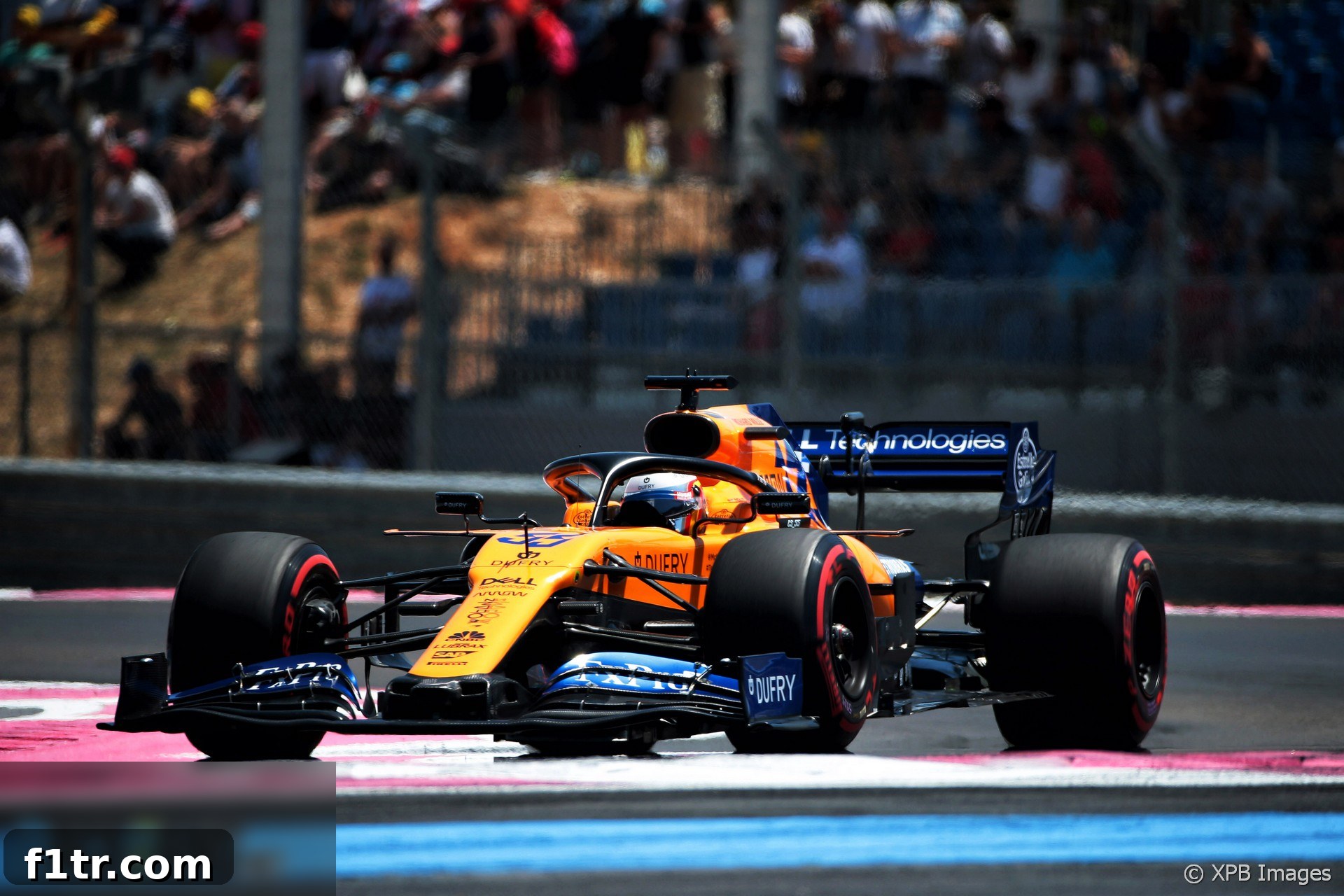
In a sport often defined by marginal gains and incremental progress, McLaren delivered a truly seismic performance upgrade at the 2019 French Grand Prix. Held at the challenging Paul Ricard circuit, this event marked a profound turning point for the Woking-based outfit, demonstrating a staggering three-and-a-half-second improvement in lap times compared to their showing just twelve months prior. This dramatic leap forward wasn’t merely a testament to the team’s relentless efforts but also a vivid illustration of their re-emerging competitive spirit in the highly contested world of Formula 1.
To fully appreciate the magnitude of this achievement, one must recall McLaren’s recent struggles. The years leading up to 2019 were undeniably challenging for one of F1’s most decorated teams. After parting ways with Mercedes engine power at the end of 2014, their subsequent partnership with Honda proved arduous, yielding disappointing results and a consistent position at the back of the midfield. Despite the raw talent of drivers like Fernando Alonso, the machinery simply wasn’t capable of challenging at the sharp end, leading to persistent frustration and a tarnished reputation for a team synonymous with championship success.
The switch to Renault power for the 2018 season brought a glimmer of hope, but the MCL33, piloted by Alonso and Stoffel Vandoorne, still largely underperformed. At the 2018 French Grand Prix, the team’s struggles were laid bare for all to see, with both drivers eliminated in the first round of qualifying, unable to extract competitive pace from their package at Paul Ricard. This left McLaren fans and the wider F1 community questioning when, or if, the team would ever recapture its former glory.
Fast forward to the 2019 event, and the transformation was nothing short of astounding. Rookie sensation Lando Norris and the experienced Carlos Sainz Jr, driving the vibrant orange MCL34s, not only advanced comfortably through qualifying but sensationally locked out the third row of the grid. This wasn’t just a step forward; it was a giant leap that saw them outqualify a Ferrari and a Red Bull, two teams that are traditionally benchmarks for performance and championship contention. Sainz claimed P6, with Norris hot on his heels in P7, a truly remarkable performance that sent a clear message to their rivals: McLaren was back in the conversation.
While it’s true that the resurfaced Paul Ricard circuit contributed to faster lap times across the entire grid in 2019, McLaren’s improvement stood head and shoulders above the rest. Every team benefited from the smoother asphalt and potentially better grip characteristics, but none managed to unlock as much raw pace as the Woking outfit. Mercedes’ Lewis Hamilton, for instance, set a blistering pole position lap, shaving over 1.7 seconds off the track record. Impressive as this was, McLaren’s gain of three-and-a-half seconds highlighted a fundamental improvement in their car’s design, setup, and overall aerodynamic efficiency.
To put McLaren’s progress into perspective, their engine supplier, Renault, showed the next most significant improvement, finding roughly two seconds per lap compared to their 2018 performance. This indicates that while the improved power unit played a role, a substantial portion of McLaren’s added pace came from advancements within their own chassis and aerodynamic departments. This holistic approach to development, encompassing both power and aero, was clearly paying dividends.
Conversely, some teams struggled to adapt as effectively. Haas F1, for example, a team that often performs strongly on tracks with similar characteristics to Paul Ricard – such as the Circuit de Catalunya in Spain – found a mere three-tenths of a second improvement year-on-year. This stark contrast underscores the effectiveness of McLaren’s engineering philosophy and their ability to optimize the MCL34 for the demands of the revised track layout and tire compounds. The difference in gains between McLaren and Haas wasn’t just significant; it revealed a potential divergence in development paths and understanding of the 2019 regulations.
The success at Paul Ricard wasn’t an isolated incident; it was the culmination of strategic decisions and a reinvigorated team spirit. Under the leadership of Andreas Seidl, who joined as Team Principal earlier in the year, and James Key, the new Technical Director, McLaren had embarked on a clear recovery plan. The focus was on refining their aerodynamic philosophy, improving operational efficiency, and fostering a collaborative environment. The MCL34, designed under these new directives, proved to be a far more stable and predictable car than its predecessors, allowing both Lando Norris and Carlos Sainz Jr to push its limits with confidence.
Sainz, with his growing experience, consistently delivered strong performances, acting as a crucial benchmark for the team. Norris, in his rookie season, displayed incredible raw speed and maturity beyond his years, quickly adapting to Formula 1’s demands and extracting maximum performance. Their synergistic partnership and clear feedback to the engineers were instrumental in guiding the development trajectory of the car. The drivers’ ability to provide consistent and accurate data on the car’s behavior allowed the team to make targeted improvements, leading to the kind of lap time gains witnessed in France.
The implications of this performance for McLaren’s 2019 season, and indeed for the future of the team, were profound. It solidified their position as the clear “best of the rest” in the midfield battle, regularly challenging the likes of Red Bull and sometimes even Ferrari on pure pace. This resurgence brought renewed optimism to the team’s factory in Woking and reignited the passion of their global fanbase. It also validated the strategic shift towards a more focused, long-term development strategy rather than quick fixes.
Looking beyond the immediate success, McLaren’s progress at the French Grand Prix signaled their intent to return to the very pinnacle of Formula 1. While the gap to Mercedes and, at times, Ferrari remained substantial, the trajectory was unequivocally positive. The challenge for McLaren would be to sustain this development pace, ensure their update packages continued to deliver, and maintain consistency across a diverse calendar of circuits. The French GP was a crucial proof point that their new approach was working, laying a solid foundation for future growth and potential championship aspirations.
For the wider Formula 1 landscape, a competitive McLaren is always a welcome sight. Their rich history and iconic status add significant prestige to the grid. A strong midfield battle, spearheaded by a resurgent McLaren, enhances the spectacle of the sport, creating more unpredictable races and giving fans more teams and drivers to cheer for. The 2019 French Grand Prix will undoubtedly be remembered as a pivotal moment in McLaren’s journey back to prominence, a race where their commitment, talent, and strategic acumen truly came to fruition.
Stay Connected with Formula 1 Insights
Immerse yourself further in the world of Formula 1 by following our updates and analysis:
- Join our F1 community on Facebook
- Follow us on Twitter for real-time F1 news
- Subscribe to daily email updates and never miss a moment
Explore More from the 2019 French Grand Prix
- Highlighting the Star Performers of the 2019 French Grand Prix
- View the Top Ten Pictures from the 2019 French Grand Prix
- Hamilton’s Call for Change in F1 After Dominant French GP Performance
- Mercedes Nears McLaren’s Historic 31-Year-Old Consecutive Wins Record
- A Glimpse into the Paddock: French Grand Prix Day Four Diary
Browse All Articles Related to the 2019 French Grand Prix