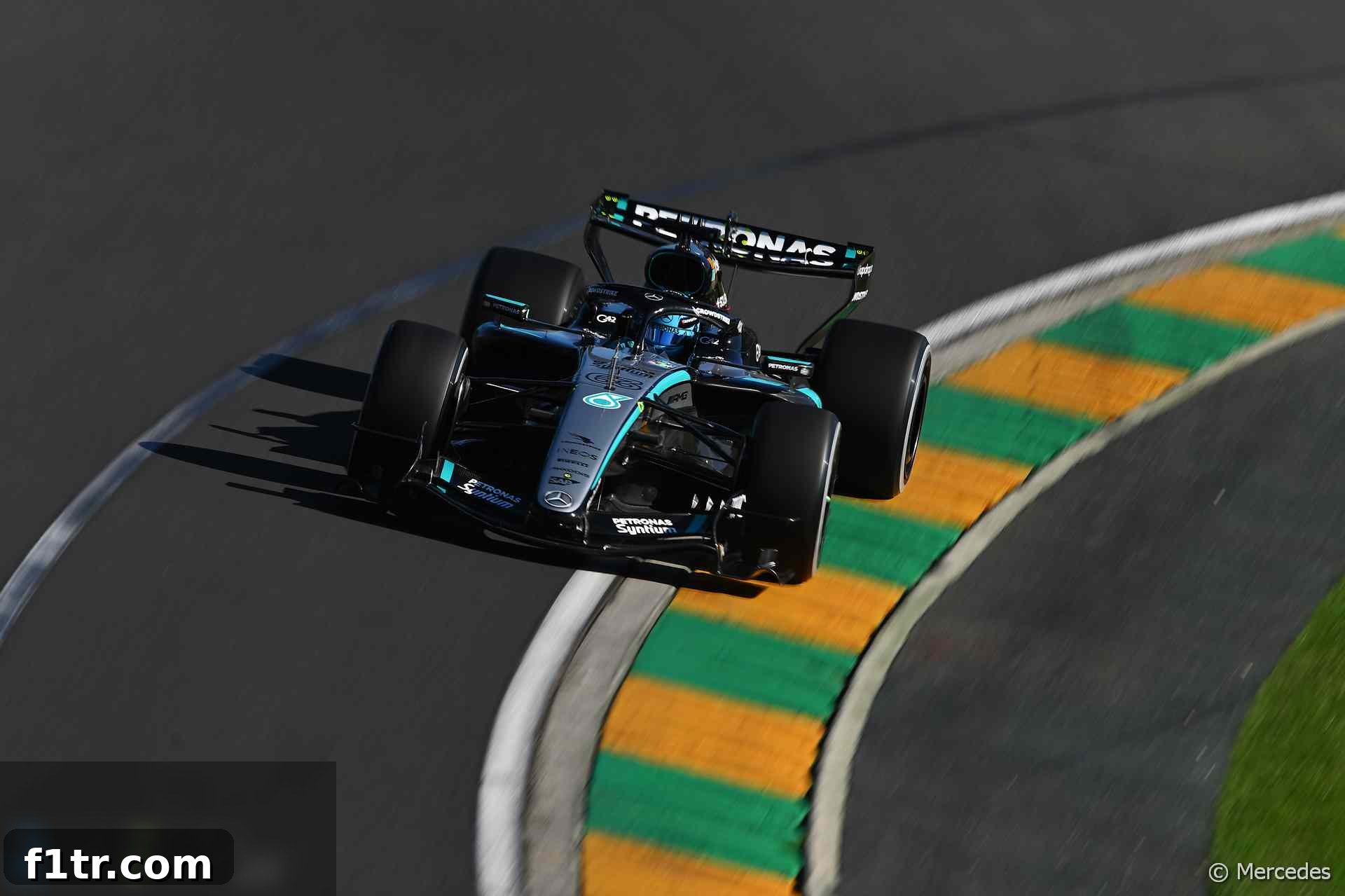
George Russell Claims Stunning Pole Position for the 2026 Australian Grand Prix
The 2026 Formula 1 season ignited with an exhilarating qualifying session for the Australian Grand Prix at the iconic Albert Park circuit in Melbourne. Mercedes-AMG Petronas F1 Team driver George Russell delivered an exceptional performance, masterfully navigating the challenging street track to secure a sensational provisional pole position. His blistering lap time of 1’18.518 not only placed him firmly at the top of the leaderboard but also underscored Mercedes’ formidable return to the front of the grid for the new championship year. Adding to the team’s triumph, young protégé Andrea Kimi Antonelli produced a remarkable qualifying effort, placing his Mercedes W17 alongside Russell on the coveted front row in second position. The grid promises an electrifying race, with Red Bull’s Isack Hadjar also demonstrating impressive speed to secure third place, setting the stage for a dramatic and unpredictable race day down under.
This qualifying session was packed with high drama, unexpected upsets, and sterling displays of driving skill, offering motorsport enthusiasts a thrilling glimpse into the competitive landscape of the 2026 Formula 1 championship. From the intense battle for the fastest lap in Q3 to the surprising exits that shook earlier segments, the Albert Park circuit once again proved to be a challenging proving ground for both seasoned drivers and emerging talents. As we delve into the comprehensive results, we will examine how each team and driver fared, highlight key individual achievements, and consider the crucial implications for Sunday’s eagerly anticipated Grand Prix.
The 2026 Australian Grand Prix Starting Grid: A Detailed Overview
The provisional starting grid for the 2026 Australian Grand Prix presents a captivating mix of established champions and rising stars, with Mercedes making an emphatic statement right from the very front. George Russell’s pole position provides him with the optimal starting advantage, but it is the remarkable presence of Andrea Kimi Antonelli beside him that truly captivated onlookers, marking a significant milestone for the young Italian’s burgeoning career. The grid also reveals the competitive depth behind the leading Mercedes duo, with drivers from Red Bull, Ferrari, and McLaren all strategically positioned to challenge for podium honours.
Beyond the front row, Isack Hadjar’s impressive third place for Red Bull is a commendable achievement, signaling the strong potential of the new Red Bull-Ford powertrain. Ferrari’s Charles Leclerc, a consistent front-runner, lines up fourth, ensuring the Prancing Horse remains a potent force in the leading pack. Further down the top ten, home favourite Oscar Piastri and his McLaren teammate Lando Norris will start fifth and sixth respectively, undoubtedly providing the Australian crowd with plenty to cheer about. Lewis Hamilton, making his debut in Ferrari colours, secured seventh place, while Liam Lawson and Arvid Lindblad both delivered solid performances for Racing Bulls to clinch spots within the top nine. Gabriel Bortoleto, despite making it to Q3, rounds out the top ten after failing to set a representative lap time in the final session.
The qualifying session was not without its dramatic turn of events, as some prominent drivers faced significant setbacks. Reigning champion Max Verstappen, along with Carlos Sainz Jnr and Lance Stroll, will endure an uphill battle starting from the very back of the grid, having failed to record valid lap times in Q1. Their respective teams will be working tirelessly to devise strategies to overcome these early setbacks and orchestrate a charge through the field during the race. The full grid, meticulously detailed row by row below, offers a comprehensive snapshot of where each competitor will commence this thrilling Australian Grand Prix, setting the stage for an unforgettable contest.
| Row 1 | 1. (63) George Russell 1’18.518 Mercedes W17 |
|
| 2. (12) Andrea Kimi Antonelli 1’18.811 Mercedes W17 |
||
| Row 2 | 3. (6) Isack Hadjar 1’19.303 Red Bull-Red Bull-Ford RB22 |
|
| 4. (16) Charles Leclerc 1’19.327 Ferrari SF-26 |
||
| Row 3 | 5. (81) Oscar Piastri 1’19.380 McLaren-Mercedes MCL40 |
|
| 6. (1) Lando Norris 1’19.475 McLaren-Mercedes MCL40 |
||
| Row 4 | 7. (44) Lewis Hamilton 1’19.478 Ferrari SF-26 |
|
| 8. (30) Liam Lawson 1’19.994 Racing Bulls-Red Bull-Ford 03 |
||
| Row 5 | 9. (41) Arvid Lindblad 1’21.247 Racing Bulls-Red Bull-Ford 03 |
|
| 10. (5) Gabriel Bortoleto No time Audi R26 |
||
| Row 6 | 11. (27) Nico Hulkenberg 1’20.303 Audi R26 |
|
| 12. (87) Oliver Bearman 1’20.311 Haas-Ferrari VF-26 |
||
| Row 7 | 13. (31) Esteban Ocon 1’20.491 Haas-Ferrari VF-26 |
|
| 14. (10) Pierre Gasly 1’20.501 Alpine-Mercedes A526 |
||
| Row 8 | 15. (23) Alexander Albon 1’20.941 Williams-Mercedes FW48 |
|
| 16. (43) Franco Colapinto 1’21.270 Alpine-Mercedes A526 |
||
| Row 9 | 17. (14) Fernando Alonso 1’21.969 Aston Martin-Honda AMR26 |
|
| 18. (11) Sergio Perez 1’22.605 Cadillac-Ferrari MAC-26 |
||
| Row 10 | 19. (77) Valtteri Bottas 1’23.244 Cadillac-Ferrari MAC-26 |
|
| 20. (3) Max Verstappen No time Red Bull-Red Bull-Ford RB22 |
||
| Row 11 | 21. (55) Carlos Sainz Jnr No time Williams-Mercedes FW48 |
|
| 22. (18) Lance Stroll No time Aston Martin-Honda AMR26 |
Qualifying Session Breakdown: From Q1 to Pole Position Triumph
The Australian Grand Prix qualifying followed the traditional Formula 1 three-stage knockout format, compelling drivers to deliver their fastest laps under ever-increasing pressure. Each segment involved a ruthless elimination process, pushing the limits of both the advanced machinery and exceptional human skill. Below is a comprehensive breakdown of how the qualifying unfolded, culminating in George Russell’s well-deserved pole position, and providing insights into the performance nuances of each stage.
Australian Grand Prix Detailed Qualifying Results
The qualifying results table below offers a granular view of each driver’s performance across Q1, Q2, and Q3. It meticulously highlights their improvements from one session to the next, along with the crucial margins that ultimately determined who advanced to the next stage and who faced early elimination. This detailed breakdown showcases the incredible consistency and precision required to compete at the absolute pinnacle of motorsport.
| P. | Driver | Team | Q1 | Q2 (v Q1) | Q3 (v Q2) |
|---|---|---|---|---|---|
| 1 | George Russell | Mercedes | 1’19.507 | 1’18.934 (-0.573s) | 1’18.518 (-0.416s) |
| 2 | Andrea Kimi Antonelli | Mercedes | 1’20.120 | 1’19.435 (-0.685s) | 1’18.811 (-0.624s) |
| 3 | Isack Hadjar | Red Bull | 1’20.023 | 1’19.653 (-0.370s) | 1’19.303 (-0.350s) |
| 4 | Charles Leclerc | Ferrari | 1’20.226 | 1’19.357 (-0.869s) | 1’19.327 (-0.030s) |
| 5 | Oscar Piastri | McLaren | 1’19.664 | 1’19.525 (-0.139s) | 1’19.380 (-0.145s) |
| 6 | Lando Norris | McLaren | 1’20.010 | 1’19.882 (-0.128s) | 1’19.475 (-0.407s) |
| 7 | Lewis Hamilton | Ferrari | 1’19.811 | 1’19.921 (+0.110s) | 1’19.478 (-0.443s) |
| 8 | Liam Lawson | Racing Bulls | 1’20.491 | 1’20.144 (-0.347s) | 1’19.994 (-0.150s) |
| 9 | Arvid Lindblad | Racing Bulls | 1’20.409 | 1’19.971 (-0.438s) | 1’21.247 (+1.276s) |
| 10 | Gabriel Bortoleto | Audi | 1’20.495 | 1’20.221 (-0.274s) | |
| 11 | Nico Hulkenberg | Audi | 1’21.024 | 1’20.303 (-0.721s) | Missed by 0.082s |
| 12 | Oliver Bearman | Haas | 1’21.247 | 1’20.311 (-0.936s) | Missed by 0.090s |
| 13 | Esteban Ocon | Haas | 1’20.759 | 1’20.491 (-0.268s) | Missed by 0.270s |
| 14 | Pierre Gasly | Alpine | 1’21.138 | 1’20.501 (-0.637s) | Missed by 0.280s |
| 15 | Alexander Albon | Williams | 1’21.051 | 1’20.941 (-0.110s) | Missed by 0.720s |
| 16 | Franco Colapinto | Alpine | 1’21.200 | 1’21.270 (+0.070s) | Missed by 1.049s |
| 17 | Fernando Alonso | Aston Martin | 1’21.969 | Missed by 0.722s | |
| 18 | Sergio Perez | Cadillac | 1’22.605 | Missed by 1.358s | |
| 19 | Valtteri Bottas | Cadillac | 1’23.244 | Missed by 1.997s | |
| 20 | Max Verstappen | Red Bull | |||
| 21 | Carlos Sainz Jnr | Williams | |||
| 22 | Lance Stroll | Aston Martin |
Q1: The Initial Shakedown and Early Eliminations
The first qualifying segment, Q1, witnessed all 22 cars take to the challenging Albert Park track, each aiming to establish a competitive initial pace. The primary objective was to secure a spot within the top 15 and avoid the dreaded early elimination. George Russell set a strong benchmark with a 1’19.507 lap, immediately showcasing Mercedes’ potential. However, the session also highlighted significant struggles for several drivers. Most notably, Max Verstappen, Carlos Sainz Jnr, and Lance Stroll failed to register a valid lap time at all, placing them automatically at the very back of the grid. This shocking turn of events, particularly for reigning champion Verstappen, dramatically reshapes the narrative and expectations for Sunday’s main event. Fernando Alonso, Sergio Perez, and Valtteri Bottas also found themselves on the wrong side of the cut-off line, signaling potential challenges for their respective teams as they head into the Grand Prix with less favourable starting positions.
Q2: The Midfield Battle Heats Up and Margins Tighten
As Q2 commenced, the remaining 15 drivers intensified their efforts, each pushing the limits to secure a coveted place in the top 10 shootout for pole position. Russell continued his impressive form, significantly improving his time by over half a second to a 1’18.934, firmly consolidating Mercedes’ dominant performance. Andrea Kimi Antonelli also demonstrated immense promise, consistently quickening his pace and adapting flawlessly to the circuit. The midfield battle was particularly fierce, with mere fractions of a second separating drivers vying for a Q3 slot. Unfortunately, Nico Hulkenberg, Oliver Bearman, Esteban Ocon, Pierre Gasly, Alexander Albon, and Franco Colapinto were unable to make the cut, missing out on Q3 by increasingly tighter margins. Their spirited efforts, despite falling short, underscore the fiercely competitive nature of the 2026 grid, where even a slight error or an imperfect lap can cost a crucial qualifying position.
Q3: The Ultimate Fight for Pole Position
The final Q3 session transformed into a tense and thrilling spectacle, with the fastest ten drivers engaging in an ultimate showdown for pole position. George Russell truly shone under pressure, extracting every ounce of performance from his Mercedes W17 to deliver a breathtaking 1’18.518 lap. This final, decisive improvement of over four tenths of a second from his Q2 time secured his pole position by a comfortable margin, a testament to his skill and the car’s capabilities. Andrea Kimi Antonelli further solidified Mercedes’ incredible front-row lockout, finishing a mere three tenths behind his experienced teammate. Isack Hadjar’s Q3 performance was also a standout moment, securing an impressive P3 for Red Bull, demonstrating his raw speed and burgeoning potential. Charles Leclerc, Oscar Piastri, and Lando Norris rounded out the top six, indicating a strong and competitive challenge from both Ferrari and McLaren. Liam Lawson and Arvid Lindblad also made it into the top nine for Racing Bulls, showcasing a promising performance for the team. Gabriel Bortoleto of Audi, while successfully reaching Q3, opted not to set a time in the final session, which placed him tenth on the grid.
Key Talking Points from the 2026 Australian Grand Prix Qualifying
Mercedes’ Dominance and the Unprecedented Double Front Row
The most striking and undeniable aspect of the Australian Grand Prix qualifying was the absolute dominance exhibited by Mercedes. A commanding 1-2 lockout on the front row, spearheaded by George Russell’s exceptional pole position, sent an unequivocal message to their rivals. Russell’s pole lap was a masterclass in precision and speed, and the fact that Andrea Kimi Antonelli, in what is effectively his rookie season, could match such a high standard speaks volumes about both his immense talent and the supreme competitiveness of the Mercedes W17. This stellar performance firmly establishes Mercedes as early favourites in the 2026 season, promising an exciting and potentially title-contending campaign.
Rookie Prowess: Antonelli and Hadjar Shine Brightly
The emergence of new talent was another compelling narrative that unfolded during qualifying. Andrea Kimi Antonelli’s stunning second-place finish, achieved in his very first Formula 1 season, is nothing short of sensational. His remarkable calm under pressure and innate ability to extract maximum performance from the Mercedes are clear testaments to his prodigious potential. Similarly, Isack Hadjar’s impressive third position for Red Bull is a phenomenal result, emphatically proving that he possesses the raw speed and confidence to challenge the sport’s established front-runners. These young, dynamic drivers are undoubtedly ones to watch closely, promising an exhilarating and competitive future for Formula 1.
Ferrari’s Mixed Fortunes and Lewis Hamilton’s Debut Pace
Ferrari demonstrated promising pace, with Charles Leclerc securing a strong fourth place on the grid, positioning him well to contend for a podium finish. However, Lewis Hamilton’s seventh place, while a solid start, suggests he is still in the process of fully acclimatizing to his new Ferrari SF-26 package. The car clearly possesses significant potential, but unlocking consistent, top-tier performance for both drivers across all sessions will be a key focus for the Scuderia. Hamilton’s Q2 time being slightly slower than his Q1 time might indicate some initial struggles in optimizing his performance throughout the evolving track conditions, even though he demonstrated resilience in Q3.
McLaren’s Consistent and Reliable Performance
McLaren continued to exhibit their strong and consistent form, with local hero Oscar Piastri and his teammate Lando Norris lining up fifth and sixth respectively. The reliable performance of both drivers underscores the inherent stability and competitiveness of their MCL40 chassis. Starting within the top six provides them with excellent strategic opportunities to score significant points and potentially challenge for podium positions, especially on a circuit like Albert Park, which is renowned for its unpredictability and potential for dramatic shifts in fortune.
Astonishing Struggles for Max Verstappen, Carlos Sainz Jnr, and Lance Stroll
Perhaps the most unexpected and significant shock of the qualifying session was the collective failure of Max Verstappen, Carlos Sainz Jnr, and Lance Stroll to set competitive lap times, consequently relegating them to starting from the very back of the grid. While the precise reasons for their inability to record a valid lap are subject to ongoing investigation, the fact that three such prominent drivers will commence the race from the rear adds an immense and dramatic element to the Grand Prix. Their anticipated charge through the field, if successful, will undoubtedly be one of the most compelling storylines to follow during the race.
Penalties and Investigations: The Stewards’ Crucial Decisions
The race stewards were kept considerably busy during and immediately after the qualifying session, issuing fines and meticulously evaluating various incidents and infringements. Transparency and consistent application of regulations around these decisions are paramount for maintaining the integrity and fairness of Formula 1. Here’s a comprehensive summary of the official pronouncements and investigations:
Penalty Update: Fans will be interested to note a significant development regarding Valtteri Bottas. His outstanding grid penalty from the 2024 Abu Dhabi Grand Prix has been officially cancelled, a direct consequence of recent rule changes. This provides a clean slate for the Cadillac driver, though his qualifying performance still places him towards the back of the grid.
Investigations and Fines:
- Andrea Kimi Antonelli (Mercedes): The Mercedes team was issued a fine for sending Antonelli’s car out of the pits in an unsafe condition during one of the intense qualifying sessions. Furthermore, stewards conducted an investigation into allegations of Mercedes personnel working on his car while it was positioned in the fast lane of the pits. After careful review, it was concluded that no further action was warranted, indicating that the team successfully demonstrated compliance or that any infringement was minor and did not necessitate additional penalties.
- Pierre Gasly (Alpine): The Alpine team also received a fine for an unsafe release of Pierre Gasly’s car from the garage. Pit lane safety remains an absolutely paramount concern in Formula 1, and teams are rigorously penalized for any lapses or violations of the strict safety protocols.
- Max Verstappen (Red Bull), Carlos Sainz Jnr (Williams), Lance Stroll (Aston Martin): Despite their failure to lap within 107% of the fastest time set in Q1, all three drivers – Max Verstappen, Carlos Sainz Jnr, and Lance Stroll – have been granted permission to start the race. This discretionary decision by the stewards is a common practice, typically applied when mitigating circumstances or unforeseen technical issues prevent a driver from setting a representative qualifying time, especially for experienced competitors who have clearly demonstrated competitive pace in earlier practice sessions. Their forced starts from the very back promise exciting and potentially spectacular recovery drives, adding another layer of intrigue to the Grand Prix.
Looking Ahead to Race Day at Albert Park
With George Russell leading an impressive Mercedes 1-2 on the grid, the 2026 Australian Grand Prix is impeccably set to be a captivating and fiercely contested event. The Albert Park circuit, renowned for its challenging mix of high-speed sections and tricky braking zones, frequently delivers unpredictable and thrilling races. Mercedes’ undeniable one-lap pace will now face its ultimate test over the full race distance, particularly against the formidable challenge posed by rivals from Red Bull, Ferrari, and McLaren, all of whom have shown glimpses of strong race pace and strategic acumen.
The battle for the podium will undoubtedly be intense, with rookies Antonelli and Hadjar aiming to translate their qualifying heroics into significant championship points. Meanwhile, the strategic choices regarding tire management, optimal pit stop windows, and adeptly navigating potential safety car periods will be absolutely crucial for every team. The highly anticipated progress of Max Verstappen, Carlos Sainz Jnr, and Lance Stroll from the back of the grid will undeniably be a major storyline throughout the race, as they endeavour to salvage valuable points from their challenging starting positions. Fans can anticipate a dynamic, strategic, and fiercely competitive race, where anything can happen as the 2026 Formula 1 season truly gets underway with a bang in Melbourne.
Advert | Become a RaceFans supporter andgo ad-free
2026 Australian Grand Prix Articles
- Briatore “not happy at all” with Alpine’s “very weak” performance
- Drivers want rules changes to cut “dangerous” risk of crash at start
- Russell becomes the 68th different Formula 1 driver to lead the world championship
- Hadjar told Red Bull his car’s performance was “embarrassing” and “just c***”
- “How did you not call the pit?” Ups and downs in Hamilton’s first race with new engineer
Browse all 2026 Australian Grand Prix articles
Latest F1 Grids
- 2026 Japanese Grand Prix grid
- 2026 Chinese Grand Prix grid
- 2026 Australian Grand Prix grid
- 2025 Abu Dhabi Grand Prix grid
- 2025 Qatar Grand Prix grid
Browse all F1 grids