F1 Daily Roundup: Haas Rookies Tackle Learning Curve, Red Bull Gains Edge, and Sprint Qualifying Divides Opinion
Welcome to our comprehensive Formula 1 daily round-up, where we bring you the latest insights, team updates, and significant discussions from across the paddock. Today, we delve into Haas Team Principal Guenther Steiner’s perspective on his junior drivers’ rapid development, Max Verstappen’s candid assessment of Red Bull’s performance gains from new regulations, a pivotal debate surrounding the newly confirmed Sprint Qualifying format, and a collection of other compelling motorsport headlines. As the season progresses, every race weekend offers fresh challenges and narratives, and our aim is to distill these into an engaging and informative digest for every F1 enthusiast.
Key Insights from the F1 Paddock
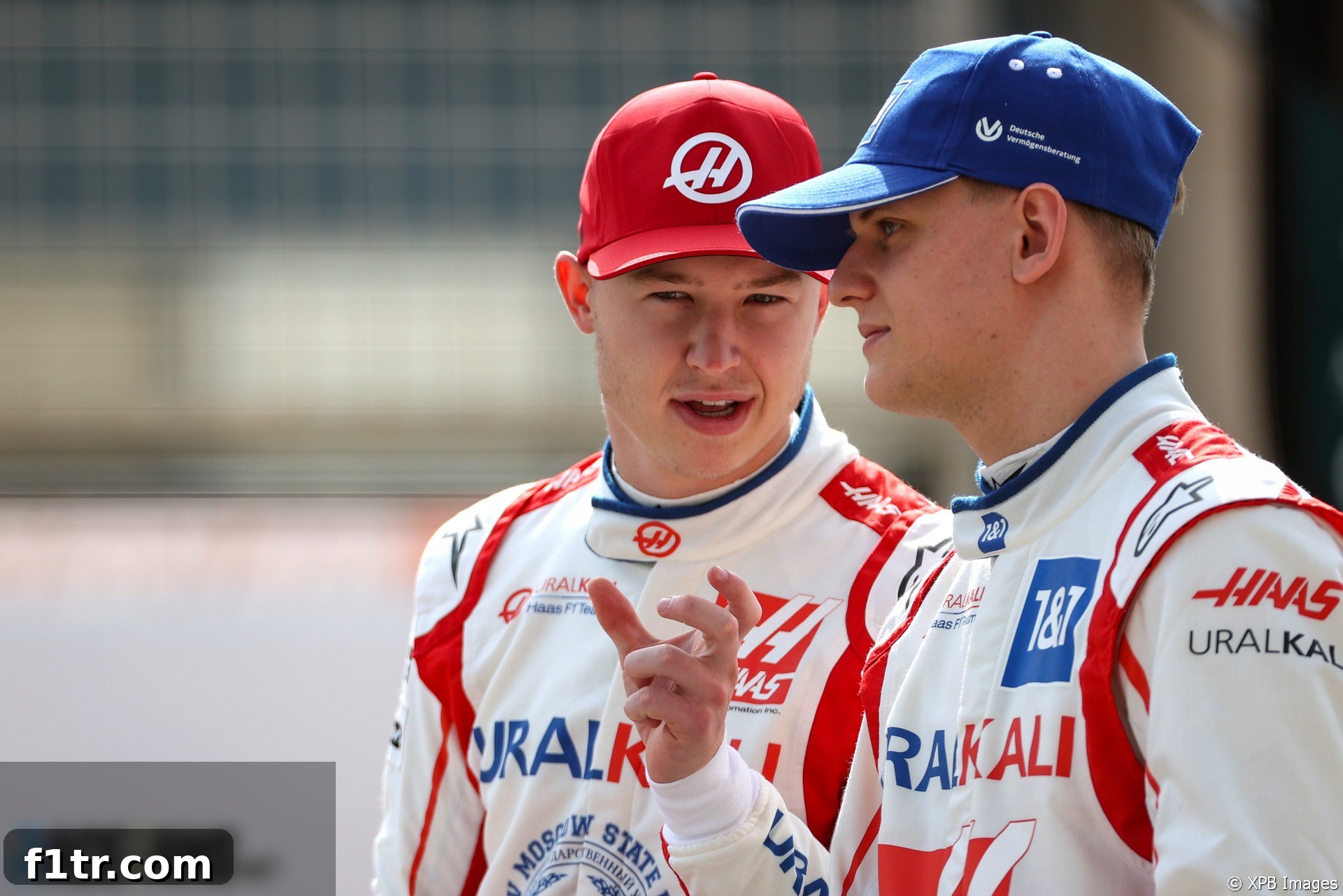
Varied Races “Ideal” for Rookie Drivers – Steiner on Schumacher and Mazepin’s Progress
Advert | Become a Supporter & go ad-free
In the demanding and high-stakes environment of Formula 1, the learning curve for rookie drivers is notoriously steep. Haas Team Principal Guenther Steiner has shed light on how the unpredictable conditions encountered in the initial two races of the 2021 season have provided an invaluable, accelerated education for his young pairing, Mick Schumacher and Nikita Mazepin. The season opener in Bahrain was characterized by challenging windy conditions, while the Emilia Romagna Grand Prix at Imola presented an entirely different set of obstacles with its damp track and changing weather. Steiner emphasized that these diverse scenarios are, paradoxically, an ideal proving ground for new talents.
“We got the rain and had to deal with it and learn from it,” Steiner explained, highlighting the forced adaptability required from his drivers. He described the current experience for Schumacher and Mazepin as “drinking from a water hose,” a vivid metaphor for the sheer volume of new information and situations they are absorbing. “Every grand prix is bringing something new up,” he added, underscoring the constant novelty of their early F1 careers.
Steiner believes that confronting such varied circumstances early on is crucial for holistic development, extending beyond mere car control. “For learning it’s ideal, just learning things like the processes and how to behave in these situations,” he elaborated. This includes understanding intricate race weekend protocols, managing pressure, and reacting instinctively to dynamic track conditions. He posited that overcoming these challenges early helps build resilience and reduces future stress. “Once you’ve done these things once, the second time, for sure, it brings a lot less stress I would say,” Steiner noted. While acknowledging that an abundance of immediate challenges might not be an explicit wish, he maintained a positive outlook, stating, “Do you want it all at the beginning? Maybe not, but if it comes, you take the experience. I think it’s a good thing all these new experiences.” This rigorous early exposure is expected to forge stronger, more adaptable drivers, laying a robust foundation for their long-term careers in Formula 1 and ultimately benefiting the Haas F1 Team’s objectives.
Red Bull Lost Less From New Floor Rules – Verstappen Reveals RB16B’s Strength
Max Verstappen, a key contender for the 2021 F1 season championship, has openly acknowledged that the significant new floor regulations introduced for this season have inadvertently played into the strengths of his Red Bull Racing team. These technical changes, designed to reduce downforce, posed a considerable challenge for all teams to recover performance. However, Verstappen suggests that Red Bull’s innovative approach and aerodynamic efficiency have allowed them to mitigate these losses more effectively than their rivals, thereby gaining a competitive edge.
Speaking confidently about the team’s machinery, Verstappen remarked, “I’m happy with what we have with the RB16B.” He went on to detail the tangible improvements evident in their challenger, stating, “It’s faster, it has more grip and better balance.” These attributes are crucial for outright pace and consistent performance across various circuit types. His assessment points to Red Bull’s engineering team successfully adapting to the new rules, potentially even finding areas of optimization that other teams might have overlooked or struggled to implement.
Verstappen further elaborated on the impact of the regulatory changes: “We lost downforce with the floor, but I think we lost a bit less than other teams and it shows that we made a good step forward.” This perceived smaller deficit in downforce, combined with enhanced grip and balance, positions the RB16B as a formidable package, especially in the context of their fierce championship battle. Heading into the upcoming race, Verstappen found himself just one point behind championship leader Lewis Hamilton, underscoring the intensity of the title fight.
Despite the strong start, Verstappen remains pragmatic about the long road ahead. “We’re starting the season strong, the best we’ve had since I’ve been with the team,” he affirmed, acknowledging the team’s exceptional early form. However, he also stressed the importance of continuous improvement: “It’s a long season, and if we want to fight for the championship, we have to keep improving.” This highlights the relentless development race that defines Formula 1, where stagnation can quickly lead to being overtaken. Red Bull’s early advantage, therefore, must be sustained and built upon if they are to successfully challenge for the coveted drivers’ and constructors’ titles.
Advert | Become a RaceFans supporter andgo ad-free
Essential Motorsport Links and Commentary
Here’s a selection of compelling motor racing links and discussions from around the web, offering deeper dives into current events and opinions within single-seater motorsport:
‘George drives for Williams, not Mercedes’ feat. Alan Jones by Peter Windsor (Peter Windsor via YouTube)
Former F1 driver and respected pundit Peter Windsor, in a video featuring Alan Jones, critically examines Toto Wolff’s comments regarding George Russell’s on-track incident with Valtteri Bottas. Windsor highlights a concerning trend of external influence in Formula 1 driver dynamics, specifically taking issue with Wolff’s remarks suggesting Russell should have been more cautious against a Mercedes-powered car. He quotes Wolff’s hypothetical admonition: “‘if he’s not careful he’ll end up racing a Renault bloody sedan’ or something.” Windsor and Jones argue that despite Mercedes’ engine supply to Williams and Russell’s potential future with the German giant, the young Briton’s primary loyalty and responsibility lie with his current team. “If I was George Russell I’d say ‘pull your head in, I drive for Williams, not for you’,” Windsor states, advocating for driver autonomy and expressing concern that “too much outside influence from every direction” is detrimentally shaping the sport. This discussion underscores the complex web of team affiliations, driver contracts, and personal ambitions that often play out behind the scenes in F1.
- **Related Read:** Why Wolff was wrong to tell Russell he should have backed down against Bottas
‘This is a situation that we really wanted’ – Sander Dorsman Delighted with Rookie Trio Following F3 Tests (F3)
In the junior categories, the development of young talent is paramount. Sander Dorsman, a prominent figure in the FIA Formula 3 championship, expressed immense satisfaction with his team’s rookie lineup following recent F3 tests. He highlighted the symbiotic relationship between experienced and developing drivers, particularly praising the dynamic between Caio Collet and Victor Martins. Dorsman stated, “Caio (Collet) and Victor (Martins) are really pushing each other to another level. That is really nice to have in the team.” This healthy internal competition fosters an environment of continuous improvement, where drivers elevate each other’s performance. Furthermore, Dorsman noted the positive impact on younger talents: “Then, we’ve got a really young driver in Tijmen (Van der Helm), who is still super young, but profits from having two strong, slightly more experienced, teammates next to him.” This commentary reinforces the importance of a well-balanced team structure in junior formulae, where seasoned rookies can mentor and push absolute newcomers, creating a beneficial learning ecosystem for all involved.
F1 2020 – Patch Notes (Formula 1 Game)
For fans who enjoy Formula 1 beyond the real-world tracks, the official F1 video game offers an immersive experience. Codemasters, the developers, regularly release updates to enhance gameplay and address issues. The latest patch notes for F1 2020 include important fixes designed to improve stability and user experience. One notable fix addresses a specific crash scenario: “Addressed a crash in career that could occur when completing a tyre management practice program and using a mid-session save.” Such updates are critical for the gaming community, ensuring that players can fully enjoy the career mode and other features without encountering frustrating technical glitches. The continuous support through patch releases demonstrates the developers’ commitment to delivering a polished and enjoyable racing simulation experience for F1 enthusiasts worldwide.
We always endeavour to credit original sources and welcome contributions from our readers. If you have a tip for a link relating to single-seater motorsport to feature in the next RaceFans round-up, please send it in via our contact form. Your insights help us keep the community informed and engaged.
Advert | Become a RaceFans supporter andgo ad-free
Community Voice: The Sprint Qualifying Controversy
The highly anticipated Sprint Qualifying format has finally received official confirmation and approval, sparking a wide array of reactions among Formula 1 fans. While the sport’s administrators hope it will inject more excitement into Grand Prix weekends, many within the community, as evidenced by your feedback, still harbor significant doubts about its long-term benefits and implications for the championship. The debate centers on several key aspects, including the allocation of championship points and the perceived motivations behind its introduction.
I’d be willing to consider this if championship points weren’t on the table. Part of the argument of adding a point for fastest lap was that, unlike points for pole, meant that it remained impossible for the championship to be decided on a Saturday. That is now a possibility (unlikely thanks to the “trial” status but still possible).
The limited roll-out doesn’t help either, as it’s a classic case of F1 attempting to do something that will make them more money while using misleading fan opinion to justify their attempts.
Also, this is clearly a sprint race that works in a similar way to F2 sprint races (without the reverse grids and with far fewer points on offer) but still directly affects the race (or feature race in F2). But branding it as ‘Sprint Qualifying’ and then offering points for it – can’t say I’m happy with it.
@Skydiverian
As highlighted by user @Skydiverian, a primary point of contention is the decision to award championship points for the Sprint Qualifying race. This departs from the traditional F1 structure, where the championship battle is strictly decided by Sunday’s main Grand Prix. The introduction of points on a Saturday, even if minimal, raises the theoretical possibility of a championship being clinched before the main event, a scenario many purists view as diluting the prestige of the Sunday race. The previous argument for the fastest lap point was precisely to ensure the title could not be decided on a Saturday, a principle now potentially undermined.
Furthermore, the limited, trial-based rollout of Sprint Qualifying has fueled skepticism regarding F1’s motives. Critics, including @Skydiverian, perceive this as a strategic move by Formula 1 to generate additional revenue and appeal to new audiences, rather than a genuine response to fan demand. There’s a concern that “misleading fan opinion” is being leveraged to justify changes primarily driven by commercial interests. This sentiment reflects a broader mistrust among some fans regarding the balance between sporting integrity and commercial expansion in modern F1.
Finally, the nomenclature and comparison to junior categories are also points of frustration. While clearly a ‘sprint race’ similar to those found in F2 (albeit without reverse grids and with fewer points), branding it as ‘Sprint Qualifying’ while simultaneously offering championship points creates a conceptual ambiguity. The direct impact of this Saturday event on the grid for the main Sunday race, coupled with its points-scoring nature, blurs the lines between a pure qualifying session and a secondary race. For many, this redefinition of what constitutes qualifying, combined with the awarding of championship points, detracts from the traditional format and overall integrity of the championship structure. The community remains divided, and the success of this new format will likely hinge on its perceived impact on the racing spectacle and championship narrative over the trial period.
Social Media Buzz: Capturing the F1 World Online
Social media platforms continue to be a vibrant hub for Formula 1 news, historical throwbacks, and fan engagement. Here’s a look at some notable posts from Twitter, Instagram, and other channels that caught our attention, reflecting the diverse discussions and content circulating within the motorsport community:
Biggest achievement in my career as a media producer. Jean Alesi’s flying lap with Niki Lauda’s Ferrari 312 B3 (1974) in Monaco. Releasing more footage this week. All rights reserved Automobile Club of Monaco & VRI. #f1 #monaco #ferrari #jeanalesi #nikilauda #MonacoGPHistorique pic.twitter.com/77vDXL3ciq
— Lucas Brito (@LucasBritomc) April 26, 2021
Lucas Brito, a media producer, shared what he considers the “biggest achievement in my career”: capturing Jean Alesi’s exhilarating flying lap in Niki Lauda’s iconic 1974 Ferrari 312 B3 at Monaco. This tweet, accompanied by a compelling video, offers a rare glimpse into motorsport history, celebrating the fusion of legendary drivers, historic machinery, and the revered Monaco circuit. Such content resonates deeply with F1 fans, bridging generations and allowing them to experience the sport’s rich heritage.
Our latest subject of #MyF1Cars is somewhere in this photograph.
But who is it – and did they make beyond around turn one?
Find out soon…#F1 pic.twitter.com/8WLK70wEOj
— RaceFans (@racefansdotnet) April 26, 2021
Our very own RaceFans Twitter account teased an upcoming feature in its popular #MyF1Cars series. The engaging tweet presented a challenging photograph and a cryptic question: “Our latest subject of #MyF1Cars is somewhere in this photograph. But who is it – and did they make beyond around turn one?” This interactive approach not only builds anticipation for new content but also encourages followers to engage with the brand, testing their F1 knowledge and fostering a sense of community participation. It’s an excellent example of how motorsport media outlets use social platforms to create compelling, interactive content.
New episode of @SmartLess podcast this morning, and they randomly start talking about #DrivetoSurvive on Netflix and how good it is. I tell you. The legs this show has and it’s ability to get to random viewers that wouldn’t normally care about car racing is 10/10.
— jameypricephoto (@jameypricephoto) April 26, 2021
Jamey Price, a motorsport photographer, highlighted the far-reaching impact of Netflix’s “Drive to Survive” docuseries. He noted that in a new episode of the popular @SmartLess podcast, the hosts “randomly start talking about #DrivetoSurvive on Netflix and how good it is.” Price enthusiastically endorsed the show’s incredible ability to attract a broad audience beyond traditional motorsport enthusiasts, describing its reach as “10/10.” This observation underscores the series’ success in breaking down barriers and introducing Formula 1 to millions who might not otherwise have engaged with car racing, proving its immense value in expanding the sport’s global fanbase and mainstream appeal.
- Find more official F1 accounts to follow in the F1 Twitter Directory
Celebrating Our Community
A very happy birthday goes out today to El Gordo! We hope you have a fantastic day filled with joy and celebration. Our community is a vibrant mosaic of fans from all walks of life, and we love to acknowledge these special moments.
If you’d like to receive a birthday shout-out in our future round-ups, please don’t hesitate to tell us when your birthday is via the contact form. Alternatively, you can always contribute by adding your details to our dedicated list here. We cherish every member of the RaceFans family!
On This Day in F1: A Look Back at History
- **35 years ago today**, on this very day in 1986, the legendary Alain Prost secured a memorable victory at the San Marino Grand Prix. This win at Imola was particularly significant for Prost, as it served as a sweet act of revenge for a lost victory just twelve months prior. In 1985, after crossing the finish line first at the same event, Prost was famously disqualified due to his car being found underweight in post-race scrutineering. This incident, caused by an unexpected reduction in fuel during the final laps, cost him valuable championship points. Determined not to repeat history, after clinching the win in 1986, Prost famously parked his McLaren-TAG immediately after the checkered flag, ensuring no fuel was expended on the cool-down lap and that his car would pass the weight checks. This cautious move cemented his victory and highlighted the meticulous attention to detail and past lessons learned that characterized one of Formula 1’s greatest tacticians. His 1986 triumph stands as a testament to his resilience and strategic brilliance in the face of previous setbacks, further solidifying his reputation as ‘The Professor’ of Formula 1.