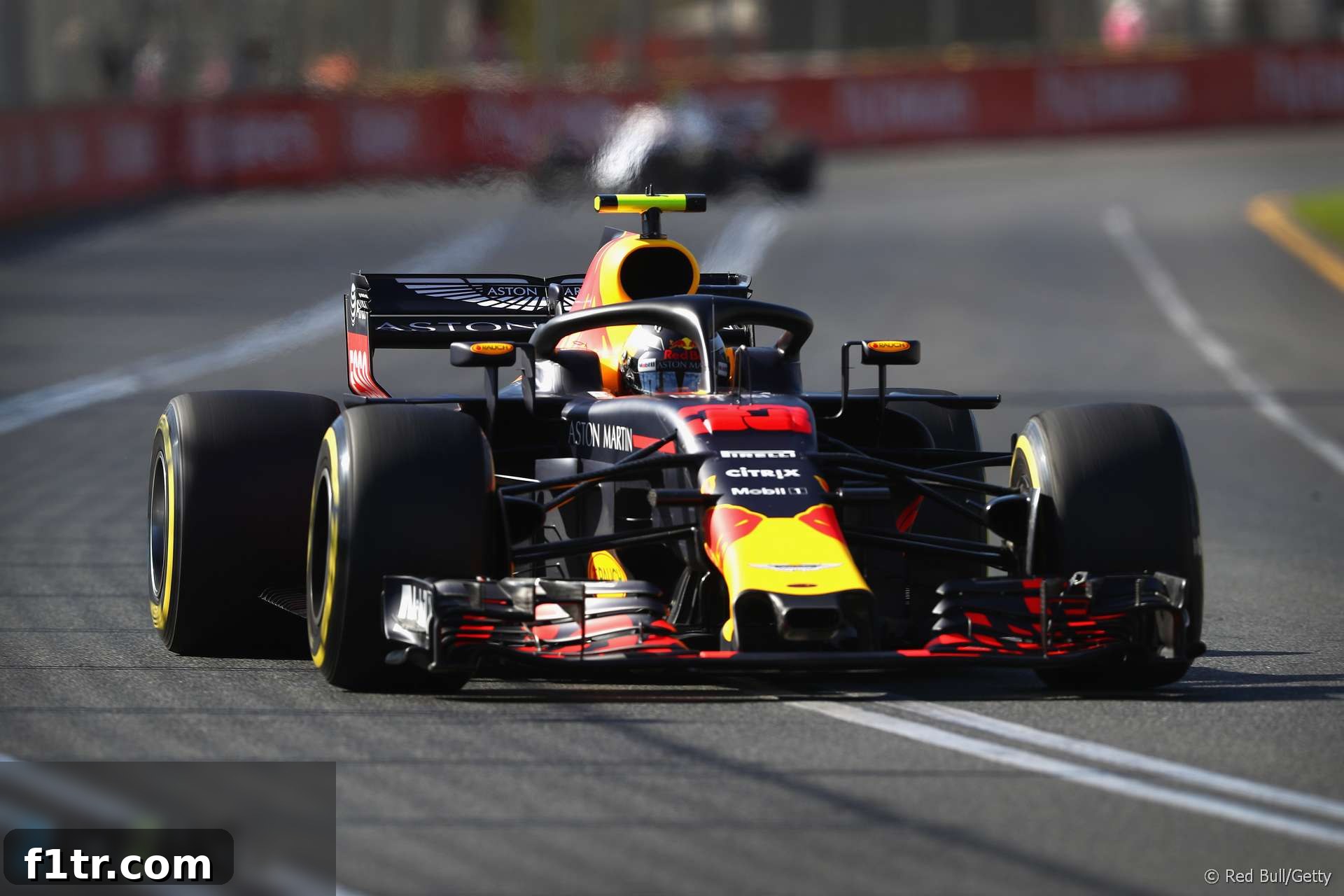
Max Verstappen’s Optimism: Red Bull RB14 a ‘Massive Step Forward’ Despite Australian GP Qualifying Challenge
The dawn of the 2018 Formula 1 season brought with it a familiar mix of anticipation and intense competition, kicking off under the sunny skies of the Australian Grand Prix. For Max Verstappen and Red Bull Racing, the qualifying session at Albert Park offered both encouraging signs and a touch of frustration. Despite securing a respectable fourth position on the grid, Verstappen emerged from the session with a clear message: the new RB14 challenger represents a “massive step forward” compared to its predecessor. However, his final qualifying run was not without its imperfections, an admission that underscored the fine margins at the pinnacle of motorsport.
Verstappen’s candid assessment highlighted a critical error that cost him a potentially better starting position. “I lost a little bit on entry so I missed the apex and then went wide on the Astroturf,” he explained, detailing the sequence of events that compromised his ultimate lap time. This seemingly minor misjudgment had immediate repercussions, causing the rear tyres to overheat due to the slide. The consequence was a loss of precious milliseconds, which ultimately saw him concede third place on the grid to Ferrari’s Kimi Raikkonen. In a sport where every hundredth of a second counts, such an error, though small, can dramatically alter the starting order.
The RB14: A Foundational Improvement for Red Bull
Despite the slight disappointment of his individual qualifying mistake, Verstappen remained remarkably upbeat about Red Bull’s overall performance. He confidently declared it had been “a good qualifying” session for the team, emphasizing the inherent strengths of the RB14. This positive outlook stems from the significant advancements made with the new car, which represents a stark improvement over the previous year’s chassis. “The car compared to the beginning of last year is a massive step forward. The car itself has been behaving strongly,” Verstappen affirmed. This sentiment is crucial for Red Bull, as a stable and responsive chassis provides a robust foundation for development throughout a demanding season.
The feeling within the cockpit also tells a compelling story. Verstappen noted that his comfort and confidence in the RB14 are “a lot better” than they were 12 months prior. This enhanced connection between driver and machine is paramount in Formula 1, allowing drivers to extract the maximum performance from the car without constantly battling its eccentricities. An intuitive and predictable car, even if not the fastest on every track, empowers a driver to push harder, make fewer mistakes, and adapt more effectively to varying conditions. For a talent like Verstappen, who thrives on pushing the limits, this improved handling is invaluable.
Challenging the Frontrunners: Bridging the Gap to Mercedes
While acknowledging the substantial progress, Verstappen also realistically assessed the gap to their main rivals, particularly Mercedes. He noted that Lewis [Hamilton] and the Silver Arrows appeared “quite far ahead.” However, a deeper analysis offered a glimmer of hope. Verstappen calculated that with a perfectly executed, clean lap, the gap to Hamilton could have been reduced to “let’s say half a second.” Furthermore, he pointed out Mercedes’ formidable qualifying “power mode,” estimating it contributes an additional “three or four tenths” to their lap time advantage. factoring this in, Verstappen concluded, “then it’s not too bad,” suggesting that Red Bull’s underlying pace wasn’t as far off as the raw qualifying times might initially imply.
The disparity in power unit modes has been a recurring theme in modern Formula 1, with certain manufacturers possessing the ability to unleash short bursts of extreme performance during qualifying. This ‘party mode,’ as it’s often colloquially known, allows Mercedes to gain a significant edge over a single lap, making it incredibly difficult for competitors like Red Bull to challenge for pole position. While Red Bull’s chassis development has been exemplary, the power unit supplied by Renault (in 2018) often struggled to match the sheer horsepower of Mercedes, particularly in these specialized qualifying modes. This dynamic highlights the complex interplay between chassis aerodynamics and engine performance in defining overall competitiveness.
Albert Park’s Unique Challenges and Future Prospects
Verstappen was also quick to contextualize Red Bull’s performance within the specific characteristics of the Albert Park circuit. “This is not our best track of the calendar,” he stated. Albert Park, with its street circuit nature, relatively low average speed, and emphasis on traction out of slow corners, often exposes any power deficit more prominently than high-speed, flowing tracks. Its unique layout requires a delicate balance between aerodynamic grip and engine grunt, and historically, circuits that demand significant engine power have not always played to Red Bull’s absolute strengths, especially against the dominant Mercedes power unit.
Despite this, the confidence in the RB14 remains unshaken. “Our car definitely is working really well. So I’m not too worried,” Verstappen added, projecting a strong sense of optimism for the races ahead. This suggests that Red Bull expects the RB14 to truly shine at venues that are more aerodynamically demanding or where the power unit delta is less pronounced. Tracks with a greater number of medium to high-speed corners, or those that allow for longer, sweeping turns where aero efficiency can be fully exploited, are likely targets where Red Bull anticipates closing the gap further to the front.
Race Day Dynamics: Overtaking and Strategic Battles
The conversation inevitably turned to race day and the critical factor of engine modes. Unlike qualifying, where an engine can be pushed to its absolute limits for a single lap, race conditions demand endurance and fuel efficiency. Consequently, Mercedes is unable to deploy its high-power engine mode as frequently or for as long during the Grand Prix. This presents a golden opportunity for Red Bull. Verstappen confidently predicted that in race trim, they would be “at least three or four tenths” of a second per lap closer to Mercedes, a significant reduction in the performance gap that could bring them squarely into contention.
However, the challenging nature of overtaking at Albert Park remains a formidable obstacle. “It will be a lot harder if you’re already behind in qualifying. Overtaking is anyway quite difficult,” Verstappen acknowledged. This perennial problem at the Melbourne circuit, compounded by the increasing sophistication of modern F1 cars and aerodynamics, means that grid position often dictates race outcome to a significant degree. The importance of a strong qualifying performance, therefore, becomes even more critical. “But we knew that already now for three or four years that’s how it is,” he concluded, highlighting that this is a known challenge Red Bull, and indeed all teams, must factor into their race strategy.
For Red Bull, the 2018 season opener underscored their position as strong contenders, perhaps still the third force behind Mercedes and Ferrari, but with a car that promises significant potential. Max Verstappen’s raw talent combined with the RB14’s improved handling characteristics sets the stage for what could be an exciting season of development and challenging the established order. The focus now shifts from qualifying pace to converting potential into points, and navigating the strategic intricacies of race day at Albert Park, and beyond.
Go ad-free for just £1 per month>> Find out more and sign up
More from the 2018 F1 Season
Explore a collection of articles related to the exciting 2018 Formula 1 season, diving into key moments, team developments, and driver insights from a pivotal year in the sport.
- F1 feared “death knell” for Drive to Survive after Ferrari and Mercedes snub
- McLaren staff told us we were “totally crazy” to take Honda engines in 2018 – Tost
- ‘It doesn’t matter if we start last’: How Red Bull’s junior team aided Honda’s leap forward
- Honda’s jet division helped F1 engineers solve power unit problem
- McLaren Racing losses rise after Honda split
Browse all 2018 F1 season articles