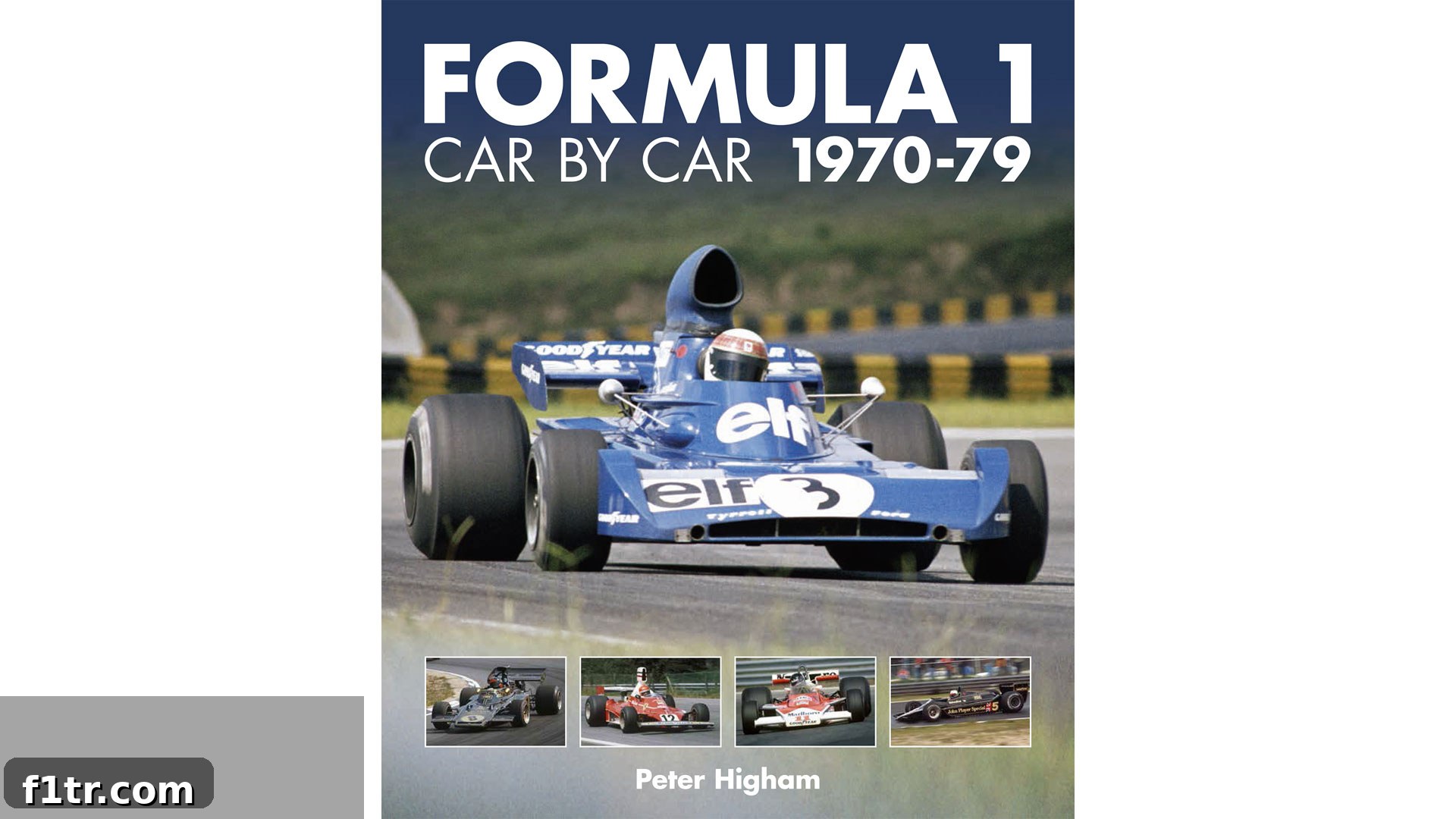
An Unforgettable Journey: Reviewing “Formula 1 Car-By-Car 1970-79”
Step into the most radical and inventive era of Grand Prix racing with “Formula 1 Car-By-Car 1970-79.” This meticulously crafted book by Peter Higham serves as an indispensable guide through a decade that redefined the very essence of Formula 1 design and engineering. Far from a mere collection of photographs, it’s a profound deep dive into the evolutionary leap of racing machinery, capturing every extreme style, every audacious innovation, from the iconic fat wheels and colossal airboxes to the groundbreaking aerodynamic concepts that continue to influence the sport today.
The 1970s stand as a monumental watershed in Formula 1 history, a period of breathtaking transformation where the sport shed its familiar, almost cylindrical shapes of the preceding decade. What began as simple, cigar-like chassis adorned with rudimentary wings quickly morphed into sophisticated machines bearing undeniable resemblances to the state-of-the-art cars we see on tracks today. This book expertly chronicles this dramatic metamorphosis, highlighting the relentless pursuit of speed and the inventive spirit that characterized every team, big or small.
The Vanguard of Innovation: Colin Chapman and Lotus
At the forefront of this design revolution stood Colin Chapman and his Lotus team, often leading the charge with a visionary zeal that left competitors scrambling to keep pace. Their influence was pervasive, their designs revolutionary, and the book meticulously traces the ripple effect of their pioneering work across the entire grid. One of the clearest examples of Chapman’s genius was the Lotus 72. Upon its debut in 1970, it was nothing short of revolutionary, a car so advanced it remained competitive and in active use for half the decade, even as its imitators began to catch up and ultimately surpass it.
But Chapman’s inventive spirit knew no bounds. Towards the latter half of the decade, he unleashed his next paradigm-shifting creations: the Lotus 78 and 79. These machines weren’t just new cars; they were harbingers of a completely new philosophy – the ground effect era. For the first time, F1 cars began to use the very air beneath them to generate downforce, effectively sucking the car to the track. This concept, brilliantly explored and exploited by Chapman, marked a seismic shift in aerodynamic understanding and performance, fundamentally changing how Formula 1 cars were designed and driven. Higham’s work brilliantly illuminates how these groundbreaking designs not only dominated races but also inspired a generation of engineers, fundamentally altering the competitive landscape of Formula 1 forever.
Speed Versus Safety: An Enduring Dilemma
The 1970s were not just about innovation; they were also a period of intense reflection and grappling with the consequences of unchecked technological advancement. As cars became faster and more aerodynamically sophisticated, the pursuit of speed reached unprecedented, sometimes perilous, levels. This era forced Formula 1 to confront a profound dilemma: how to balance the relentless quest for ultimate performance with the imperative of driver safety. The book subtly underscores this tension, reminding readers that the struggles and debates over safety regulations, which continue to this day, truly began in earnest during this explosive decade. The very pace of development highlighted the dangers inherent in the sport, leading to a crucial re-evaluation of design principles and track safety measures that would shape F1’s future trajectory.
The Golden Age of Diversity: Customer Teams and Obscure Entrants
Beyond the technological marvels, the 1970s represented the last great era of widespread participation from customer teams and a remarkable proliferation of private entrants. This fostered a vibrant, if sometimes chaotic, grid filled with a fascinating array of machines, many bearing striking similarities due to shared components or direct design influences. The author, Peter Higham, has undertaken an impressively thorough and challenging task in navigating this complex landscape. He meticulously covers the myriad permutations of teams, chassis, and drivers that populated the grids, from the established giants to the most fleeting of appearances.
What truly sets “Formula 1 Car-By-Car 1970-79” apart is its extraordinary commitment to documenting the lesser-known, often ephemeral, participants of the era. This includes entries that many modern fans might never have heard of: the peculiar Eiffeland, the ambitious but ill-fated Maki, and even the truly short-lived 1972 Connew. Regardless of how obscure a car was or how briefly it graced the Grand Prix circuits, Higham provides concise yet richly detailed “potted histories” for each. These fascinating vignettes are packed with choice details, offering invaluable insights into the diverse personalities, engineering challenges, and sheer passion that fueled even the smallest F1 operations. This comprehensive approach ensures that no corner of this dynamic decade remains unexplored, making the book a treasure trove for those interested in the full spectrum of Formula 1 history.
A Masterpiece of Reference and Historical Insight
Maintaining the exceptionally high standard set by its predecessor, “Formula 1 Car-By-Car 1960-69,” this volume is far more than a decorative coffee table book adorned with attractive car pictures. It is a supremely detailed and exhaustively researched reference work, an essential addition to the library of any serious Formula 1 historian or enthusiast. The depth of information presented, combined with a clear and engaging narrative, elevates it beyond mere visual appeal, transforming it into a vital academic resource for understanding a pivotal decade in motorsport.
The illustrative quality, while not the sole focus, is undoubtedly top-notch, with an array of images that bring the machines and their stories vividly to life. Higham’s expertise shines through every page, reflecting years of dedication to documenting the intricacies of Formula 1. Each car entry provides not just technical specifications but also delves into the unique challenges and triumphs associated with its design and racing career, providing a holistic view of its place in history. The book’s commitment to detail extends to documenting the individual chassis numbers and their respective drivers, offering a granular level of information that few other publications can match.
While the book is overwhelmingly positive in its presentation and scope, one cannot help but ponder a bittersweet realization. As this monumental series progresses through the decades towards the present era, the sheer scale and diversity of machines and private entrants captured within these pages will inevitably diminish. The highly commercialized and consolidated nature of modern Formula 1 means that future volumes might not boast nearly as large and diverse a field to write about, underscoring the truly unique and unrepeatable richness of the 1970s portrayed in this exceptional book.
In conclusion, “Formula 1 Car-By-Car 1970-79” is an indispensable resource that brilliantly encapsulates the creativity, audacity, and rapid evolution of Formula 1 during its most transformational decade. It’s a testament to the ingenuity of engineers and designers, and a poignant reminder of an era where innovation knew no bounds. For anyone seeking to understand the roots of modern F1 or simply wishing to immerse themselves in a fascinating period of motorsport history, this book comes with the highest recommendation.
Discover “Formula 1 Car-By-Car 1970-79” on Amazon
Explore more Formula 1 book reviews.
Formula 1 Car-By-Car 1970-79 Details
- Author: Peter Higham
- Publisher: Evro
- Published: 2018
- Pages: 304
- Price: £50.00
- ISBN: 9781910505229
Browse all Reviews