FIA Clears Liam Lawson in Mexican Grand Prix Marshal Incident: A Deep Dive into F1 Safety Protocols
A recent and alarming incident at the Mexican Grand Prix, involving promising Formula 1 driver Liam Lawson and two track marshals, sparked significant concern and debate within the motorsport world. While initial assessments and a statement from local authorities seemed to attribute blame to the driver, the Fédération Internationale de l’Automobile (FIA), Formula 1’s global governing body, has now issued a conclusive statement, completely absolving Lawson of any wrongdoing. This crucial ruling not only vindicates the Racing Bulls driver but also profoundly underlines the rigorous safety protocols fundamental to Formula 1 and the indispensable, often overlooked, role of trackside personnel.
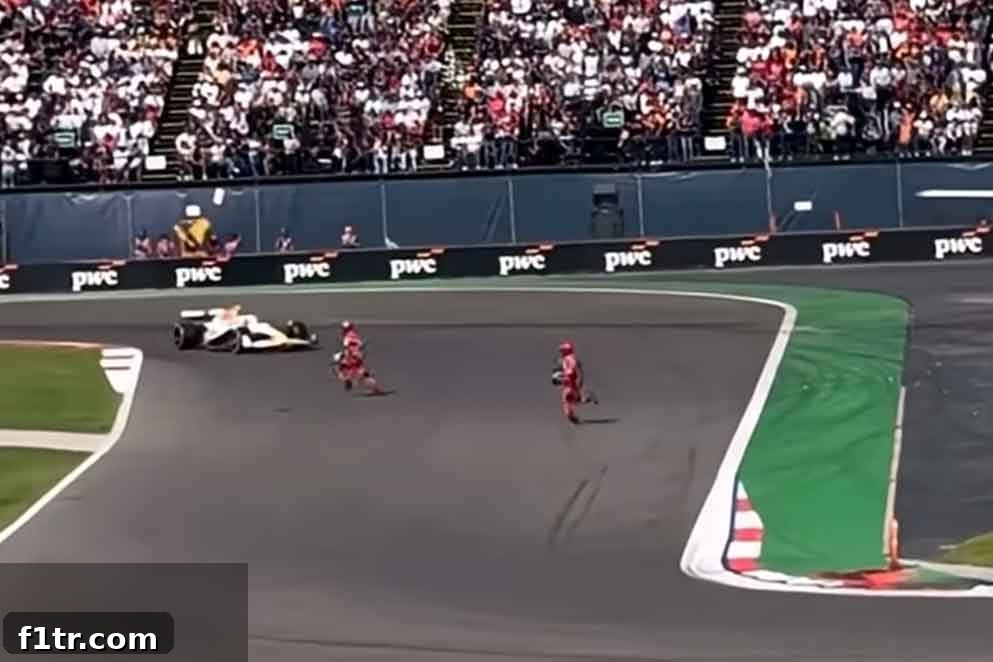
The incident, which transpired during the third lap of Sunday’s thrilling race at Turn Two, saw Lawson unexpectedly encountering two marshals on the active circuit, under circumstances that were clearly indicated by double-waved yellow flags. Fortunately, the situation did not escalate into serious consequences, yet the gravity of the near-miss immediately triggered an exhaustive investigation by the FIA, reaffirming the paramount importance of safety within the pinnacle of motorsport. This comprehensive article aims to dissect the specifics of the incident, explore the contrasting initial reactions, detail the FIA’s meticulous findings, and discuss the broader implications for Formula 1’s ever-evolving safety procedures.
The Incident Unfolds: A High-Stakes Encounter at Turn Two
The Autódromo Hermanos Rodríguez, home to the Mexican Grand Prix, is celebrated for its electrifying atmosphere and demanding circuit layout. It was early in this high-octane event that a moment of intense concern arose. As Liam Lawson navigated the challenging Turn Two section on lap three, he was operating under double-waved yellow flag conditions. This specific flag signal is a critical directive in motorsport, compelling drivers to significantly reduce their speed and be unequivocally prepared to stop, indicating a major hazard on or immediately adjacent to the track. For any Formula 1 driver, encountering human personnel on an active racing line, even with safety flags displayed, represents an extraordinarily high-stakes scenario demanding instantaneous and flawless judgment.
The frightening proximity of Lawson’s car to the marshals provoked immediate alarm and fueled an intense discussion across the F1 paddock and among fans about the efficacy of track safety. Such close calls are exceptionally rare, a testament to the sophisticated layered safety measures meticulously implemented in Formula 1. When they do occur, however, they rightly necessitate an exhaustive and thorough review process. The FIA itself acknowledged the potential severity of the situation, explicitly stating that it “could have had serious consequences,” serving as a stark reminder of the inherent dangers that even the most advanced motorsport cannot entirely eradicate.
Contrasting Narratives: OMDAI’s Initial Critique vs. FIA’s Definitive Findings
The complexity of the incident was further compounded by an initial public statement from Mexico’s FIA-sanctioned national automobile club, the Organizacion Mexicana De Automovilismo Internacional (OMDAI). Just days after the race, OMDAI issued a statement that directly criticised Lawson’s actions. Their assessment suggested that Lawson had failed to adequately adjust his racing line to account for the marshals’ presence. The statement also underscored the mandatory requirement for drivers to significantly slow down under yellow flag conditions, yet notably omitted any acknowledgment of whether Lawson had, in fact, complied with this crucial protocol.
This early public declaration by a local sporting authority prematurely created a perception of fault on the driver’s part, placing Lawson under considerable and unfair scrutiny, particularly from a public perspective. In stark contrast, the FIA, as the sport’s ultimate global governing body, adopted a far more methodical and judicious approach. It initiated a comprehensive and impartial internal investigation before making any definitive conclusions. The stark difference between OMDAI’s swift public criticism and the FIA’s meticulous, data-driven process vividly underscores the critical importance of thorough, unbiased analysis in complex, high-pressure motorsport scenarios.
FIA’s Rigorous Investigation and Liam Lawson’s Exoneration
The FIA’s exhaustive investigation into the Mexican Grand Prix incident serves as a powerful affirmation of its unwavering commitment to both transparency and paramount safety within Formula 1. The governing body embarked on a painstaking process of collecting and reviewing every piece of relevant evidence, a task that, by its very nature, demands significant time and intricate coordination. This extensive review included a deep dive into the precise telemetry data retrieved from Lawson’s car, detailed analysis of all radio communications between multiple involved parties—including race control, team personnel, and marshals—and the careful examination of various visual inputs from on-board cameras and trackside footage.
Crucially, the FIA has maintained an open and transparent collaborative approach throughout this investigation, working closely with both OMDAI and the Racing Bulls Formula One Team. This collaborative framework is designed to achieve a singular, overarching objective: to continuously enhance the safety standards within Formula 1. The full, comprehensive analysis, which involves deciphering multilingual communications and synchronizing diverse data streams, is still ongoing. However, the FIA has confidently released its preliminary findings, which unequivocally and definitively clear Liam Lawson of any blame.
In its official statement, the FIA confirmed that the telemetry data provided irrefutable proof that Lawson responded impeccably and professionally to the highly hazardous situation. The statement declared: “Having analysed the telemetry from the incident, we can confirm that the driver of car number 30, Liam Lawson, slowed appropriately and reacted correctly to the double yellow flags displayed in the area.” It further elaborated on Lawson’s precise actions, noting that he demonstrated “braking earlier than in other laps and passing significantly slower than racing speed into Turn One.” This robust, data-backed evidence firmly establishes that Lawson meticulously adhered to all established safety protocols and exhibited the necessary extreme caution under these challenging and potentially dangerous circumstances. Consequently, the FIA definitively concluded: “He is not at fault in this incident.”
The Unsung Heroes: Celebrating the Indispensable Role of Marshals
Incidents such as the near-miss at the Mexican Grand Prix serve as potent and stark reminders of the invaluable, yet often perilous, role performed by the dedicated volunteer marshals across Formula 1 and indeed, all forms of motorsport. These extraordinary individuals, instantly recognizable in their distinctive orange attire, form the critical backbone of every race weekend, working tirelessly and selflessly to ensure the paramount safety of drivers, teams, and the global spectator audience. Their multifaceted responsibilities span a wide spectrum, from expertly displaying crucial flag signals and assisting with stranded vehicles, to effectively extinguishing trackside fires and providing immediate, life-saving medical assistance when required.
The FIA took this opportune moment to express its profound and heartfelt gratitude towards these vital personnel, stating emphatically: “We would like to express our sincere thanks to the volunteers and marshals for their professionalism and dedication — without them, our sport could not operate safely.” This powerful sentiment underscores a fundamental truth: while the global spotlight overwhelmingly focuses on the drivers and their technologically advanced machines, the flawless, safe, and exciting execution of a Grand Prix critically relies upon the unwavering bravery, meticulous coordination, and relentless commitment of these unsung heroes. Ensuring their utmost safety on track, therefore, is not merely important, but as absolutely paramount as safeguarding the drivers themselves.
Broader Implications for Formula 1 Safety and Future Protocols
Formula 1 has cultivated a deep-rooted and unwavering commitment to safety throughout its storied history, a commitment that has continuously evolved and been significantly enhanced over the decades. From the groundbreaking introduction of mandatory safety cars and virtual safety cars to the revolutionary advancements in car design, driver protection (like the Halo), and sophisticated circuit modifications, every single facet of the sport undergoes perpetual review and refinement with the singular objective of minimizing risk. The recent incident involving Liam Lawson and the marshals will undoubtedly serve as a critical case study, contributing significantly to this relentless pursuit of safety excellence.
While the FIA’s ongoing investigation is designed to ascertain “exactly what happened and to identify any areas where procedures can be improved,” it represents an invaluable learning opportunity for the entire sport. This comprehensive review could potentially lead to a re-evaluation and subsequent enhancement of marshal deployment protocols, refinement of communication channels between race control and trackside personnel, or even the development of further technological innovations to provide even earlier warnings or facilitate safer clear-up operations under yellow flag conditions. The overarching objective remains constant: to ensure that any potential for human error, from any party involved, is effectively mitigated by robust systems, rigorous training, and increasingly foolproof procedures.
Moreover, this incident profoundly highlights the imperative for continuous, open dialogue and collaboration among all stakeholders: race organizers, national sporting authorities (such as OMDAI), racing teams, and the overarching FIA, to collectively uphold the absolute highest safety standards globally. Such events, while regrettable, frequently act as powerful catalysts for positive change, driving forward critical innovations and enforcing stricter adherence to best practices across every tier of motorsport, ensuring a safer future for all participants.
Video Evidence: The Moment Under Scrutiny
Video of Lawson’s Near-Miss with Marshals
The visual documentation of the near-miss, which was widely circulated online, provides a stark and compelling perspective on the fleeting, critical moments where danger can suddenly emerge on a Formula 1 circuit. Such invaluable footage is not only indispensable for thorough investigations but also serves a vital role in educating fans and stakeholders alike about the complex realities of trackside operations and the split-second, high-pressure decisions that drivers are continually required to make.
Conclusion: A Clear Verdict and a Renewed Focus on Safety
The FIA’s decisive and unambiguous verdict, which completely clears Liam Lawson of any responsibility or wrongdoing in the Mexican Grand Prix marshal incident, brings a welcome sense of closure to the controversy that briefly enveloped the promising young driver. This official exoneration not only validates Lawson’s exemplary professional conduct under immense pressure but also significantly reinforces the proven effectiveness of established safety protocols when meticulously adhered to by drivers.
More profoundly, this incident stands as a powerful and timely reminder of Formula 1’s unwavering and continuous commitment to safety as its highest priority. It vividly highlights the critical and intricate interplay between driver responsibility, the meticulous execution of marshalling procedures, and the robust, vigilant oversight provided by the FIA. As the full investigation reaches its final stages, the invaluable lessons gleaned from this near-miss will undoubtedly contribute significantly to further advancements, ensuring that Formula 1 consistently remains at the absolute forefront of motorsport safety for many years to come, unwavering in its dedication to protecting every single individual involved in the breathtaking spectacle of Grand Prix racing.