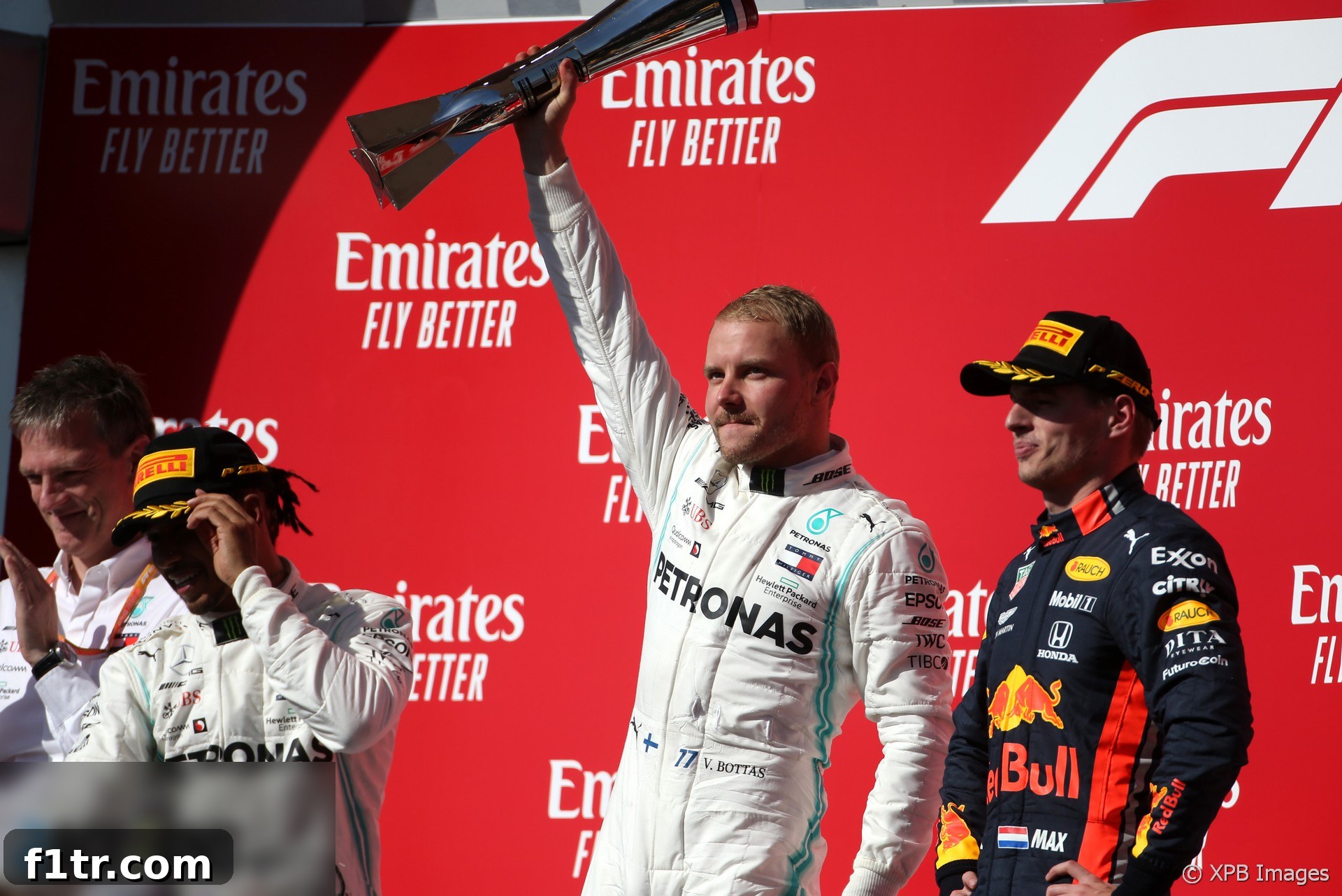
The United States Grand Prix always promises a thrilling spectacle, and the 2019 edition at the Circuit of the Americas delivered exactly that, especially with the championship on the line. While Lewis Hamilton secured his sixth world title, the race itself offered a compelling narrative of standout performances, strategic gambles, and unexpected struggles. This detailed review dives into the drivers who left an indelible mark, for better or worse, during this pivotal weekend in Austin, highlighting the stars who shone brightest, the contenders who faltered, and the rest of the field’s varied fortunes.
Stars of the United States Grand Prix
Valtteri Bottas
While the drivers’ championship may have slipped from his grasp, Valtteri Bottas displayed an unyielding fighting spirit at COTA, delivering a masterclass in controlled aggression and strategic execution. His weekend began on a high note, meticulously navigating the challenging Austin track to secure pole position. The qualifying session was an incredibly tight affair, with Bottas clinching the top spot by a mere hundredth of a second over Ferrari’s Sebastian Vettel, a testament to his precision and raw speed.
From the moment the lights went out, Bottas demonstrated phenomenal pace, dominating the opening stint of the race. He quickly built a comfortable lead, extending his advantage to nearly four seconds over Max Verstappen before the first round of pit stops. His relatively early stop committed him to a two-stop strategy, a decision that would ultimately put him back on track behind his championship-winning teammate, Lewis Hamilton.
What followed was a display of sheer determination. Bottas had to overtake Hamilton for the lead, not once, but twice. His first attempt saw him forced wide, but he regrouped instantly, demonstrating remarkable composure. On his second charge, he executed a flawless move, leaving Hamilton no chance to defend, and reclaimed the top spot. From that point, Bottas was unstoppable, cruising to the chequered flag to secure his second victory in three races. This performance wasn’t just a win; it was a powerful statement of intent, suggesting that if he can maintain such a high level of performance, he could indeed give his teammate “sleepless nights” about the upcoming season, serving as a potent reminder of his capabilities within the Mercedes-AMG Petronas Formula 1 Team. His dominance underscored his ability to perform under pressure and provided a glimpse into his potential for future championship contention.
Daniel Ricciardo
Daniel Ricciardo once again showcased why he remains one of Formula 1’s most charismatic and effective drivers, blending astute race craft with clever psychological play. His weekend began with a touch of canny public relations, as Ricciardo publicly “talked up” the McLarens, acknowledging their strong form. This seemingly innocuous gesture subtly set the stage for his own impressive performance, as he then proceeded to outperform and ultimately beat both McLaren drivers on track, proving his strategic mind extends beyond the cockpit.
Qualifying saw Ricciardo assert his dominance over his teammate, successfully guiding his Renault into Q3 and securing a commendable ninth-place starting position. As the race began, Ricciardo made swift progress, skillfully picking up two positions by the end of the very first lap. This early momentum was crucial and set the tone for a gripping battle for midfield supremacy. For the majority of the first stint, he engaged in a captivating duel with Lando Norris, exchanging blows and demonstrating exceptional wheel-to-wheel racing as they vied for the unofficial “best of the rest” position.
Ricciardo’s strategic brilliance truly shone through with his unwavering commitment to a one-stop strategy. This daring choice required impeccable tire management, consistent pace, and the ability to extract maximum performance from the car over a long stint, all of which he delivered. As the race neared its conclusion, the pressure mounted, particularly from Norris, who was still hot on his heels on fresher tires. However, thanks to the timely intervention of yellow flags in sector two – following Kevin Magnussen’s retirement – which neutralized some of Norris’s attacking potential, Ricciardo managed to hold off the McLaren driver by a minuscule margin of less than four tenths of a second. It was a testament to his unwavering focus, strategic acumen, and ability to execute under immense pressure, securing a well-deserved sixth-place finish and a significant points haul for Renault.
Pierre Gasly
Since his return to Toro Rosso, Pierre Gasly has been on a remarkable trajectory of recovery and consistent performance, and the United States Grand Prix further underscored his resurgence as a top-tier talent. Demonstrating strong qualifying pace once again, Gasly successfully placed his car within the top 10, a feat he has consistently achieved since his mid-season demotion from Red Bull. This consistent Saturday performance has been crucial for setting up his race-day opportunities and rebuilding his confidence.
In the race, Gasly was running strongly in ninth position, consistently demonstrating the refined pace and mature race management that had earned him plaudits in recent events. He looked poised for another valuable points finish, showcasing his adaptability and comfort within the Toro Rosso environment, until an unfortunate incident on lap 52 dramatically altered his race. While battling fiercely for position, he made contact with Sergio Perez at Turn 13. The collision, which appeared to be a racing incident, resulted in significant and immediate damage to the Toro Rosso’s front right suspension. Despite his best efforts to continue and nurse the car back, the damage was terminal, ultimately forcing him to retire from the race on the very next lap. It was a bitter and premature end to what had otherwise been a very promising weekend, but his overall performance throughout the practice sessions, qualifying, and the majority of the race continued to impress, signaling a bright future back with the Faenza-based team and reinforcing his growing stature in the midfield.
Strugglers of the United States Grand Prix
Lance Stroll
For Lance Stroll, the United States Grand Prix proved to be another challenging chapter in what had been an inconsistent and often frustrating season. Despite starting ahead of his teammate, Sergio Perez, who was relegated to a pit lane start due to a qualifying infringement, Stroll quickly squandered his initial advantage. On the very first lap, he unfortunately ran wide at Turn 2, an unforced error that cost him valuable track position and significantly disrupted his momentum early in the race. This incident immediately put him on the back foot, forcing him into a recovery drive from the outset and complicating his strategic options.
From that point, Stroll’s race never truly recovered its potential. The Racing Point team opted for a two-stop strategy, which, given his early setback and subsequent struggles for consistent pace, effectively took him out of contention for any meaningful points. Compounding his woes, his teammate, Perez, executed a remarkable recovery drive from the pit lane, meticulously cutting through the field to ultimately finish comfortably ahead of Stroll. Reflecting on his performance, Stroll succinctly stated, “I’ve had better days,” a sentiment that unfortunately resonated with several of his outings during that particular season. The weekend served as a stark highlight of the ongoing struggles for consistency and avoiding critical errors that plagued parts of his 2019 campaign, preventing him from regularly converting qualifying positions into strong race results.
Romain Grosjean
The United States Grand Prix was a weekend to forget for Romain Grosjean, who faced a series of unfortunate setbacks that derailed his performance almost from the outset. Initial optimism was surprisingly high after first practice, where Grosjean expressed genuine thrill with the balance and feel of his Haas car, hinting at potential. However, this promising start quickly evaporated during second practice when he had an unfortunate and costly encounter with the Turn 5 wall. The impact necessitated significant repairs to his machine, undoubtedly affecting its structural integrity, aero balance, and, critically, his confidence heading into the crucial sessions.
From that point forward, Grosjean’s weekend never truly recovered its initial promise. The damage and subsequent repair work seemed to compromise the car’s overall performance, making it incredibly difficult for him to find the consistent rhythm and outright speed he needed to compete in the highly competitive midfield. He subsequently qualified behind his teammate, Kevin Magnussen, a recurring theme during their difficult season, and this trend unhappily continued into the race. Throughout the Grand Prix, Grosjean consistently ran behind Magnussen, unable to mount a significant challenge or make substantial progress through the field. It was a frustrating and ultimately unrewarding weekend, emblematic of the struggles the Haas team, and Grosjean in particular, faced during a challenging 2019 season plagued by tire issues and car development woes.
And the rest of the field
While the focus of this Grand Prix largely revolved around the championship outcome, Lewis Hamilton still delivered a characteristic performance that, despite not being a victory, secured his historic sixth World Championship. His qualifying session was unusually challenging for him, resulting in his lowest starting position of the year – fifth. However, ever the master of race starts, Hamilton quickly made amends, expertly navigating the opening corners to pass both Ferraris with decisive moves. He then spent his first stint in relentless pursuit of Max Verstappen, who opted for an early pit stop strategy. Hamilton showcased his exceptional tire management skills, making his hard compound tires last long enough to attempt a daring one-stop strategy, hoping to undercut those ahead.
Ultimately, he couldn’t quite hold off his charging teammate, Bottas, who was on fresher, softer tires and committed to a more aggressive two-stop strategy. Hamilton was also arguably fortunate that yellow flags in sector two, caused by Magnussen’s late-race retirement, prevented Verstappen from launching a potent late-race attack to reclaim second position. Despite not taking the race win, his second-place finish was more than enough to clinch his historic sixth World Championship, a remarkable achievement that rightly overshadowed any minor disappointments from the race itself, marking a truly iconic moment in Formula 1 history.
For Ferrari, the United States Grand Prix was a bewildering and deeply disappointing affair, marked by a profound and inexplicable lack of pace. The team struggled to comprehend where their competitive edge had vanished, particularly after strong performances in previous races. This mystery was compounded by their vehement insistence that the issues had “nothing to do with the recent ruling on engines,” a direct reference to an FIA technical directive that had been issued prior to the weekend, which some speculated might have impacted their power unit’s performance. Both Sebastian Vettel and Charles Leclerc struggled significantly to find any rhythm or speed during the race. Vettel’s day was particularly disastrous; he lost four positions on the opening lap due to poor grip and a lack of balance, and his race culminated in a dramatic suspension failure that forced his early retirement. Leclerc, on the other hand, endured a largely uneventful but frustrating race, lacking the necessary pace to challenge the front-runners but also proving consistently too quick for the majority of the midfield competitors, ultimately securing a distant fourth place. The weekend was a stark reminder of the team’s ongoing inconsistency and the systemic challenges they faced in maintaining peak performance, raising serious questions about their overall package and strategic capabilities.
Alexander Albon’s race was a compelling testament to his resilience, race craft, and exceptional recovery skills. His Grand Prix got off to a difficult start, as he tangled with Carlos Sainz on the opening lap, an incident that forced him to pit immediately for repairs to his Red Bull. This early stop put him significantly on the back foot, compelling him to run an unconventional and challenging strategy, including a particularly demanding stint on hard tires, one of which had already developed a crack during practice, adding an extra layer of difficulty. Despite these formidable obstacles and the immense pressure of racing for a top team, Albon demonstrated exceptional composure and impressive pace, meticulously carving his way back through the field with a series of clean and decisive overtakes. His remarkable recovery drive saw him climb from the very back of the grid to cross the finish line in a highly commendable fifth position, salvaging significant points for Red Bull and unequivocally showcasing his burgeoning talent and capability to perform under adversity.
The intra-team battle at McLaren continued to be a fascinating and intense storyline, with both Carlos Sainz and Lando Norris pushing each other to the limit. Carlos Sainz initially held the upper hand in qualifying, benefiting from Norris’s slightly less optimal tire strategy in Q1, which consequently forced him to run an older set of tires in Q3. However, Norris delivered a scintillating performance on race day, making up an astonishing three positions on the very first lap with a series of brave and calculated moves, crucially getting ahead of Sainz, a position he then maintained for the remainder of the race. Norris subsequently engaged in a fierce, race-long battle with Daniel Ricciardo, frequently challenging for position and demonstrating relentless aggression. Despite his persistent efforts and strong race pace, Norris was ultimately unable to find a way past the Australian, partly due to the opportune yellow flags in sector two at the very end of the race, which blunted his final attacking opportunities and secured Ricciardo’s position. The battle highlighted McLaren’s strong form and the competitive spirit within the team.
Nico Hulkenberg delivered a solid, if unspectacular, performance for Renault, continuing his reputation as a reliable points scorer. While he was unable to consistently match the outright pace or strategic brilliance of his teammate Daniel Ricciardo throughout the weekend, Hulkenberg remained a consistent presence in the points-paying positions. Opting for a two-stop strategy, he executed his race cleanly and efficiently, managing to score a valuable couple of points for the team. His performance underscored his reliable nature and ability to extract the maximum from his car, even when not in the immediate spotlight, contributing steadily to Renault’s constructors’ championship campaign.
Sergio Perez’s weekend was a true rollercoaster of highs and lows, showcasing both costly errors and remarkable recovery. It began with significant drama in qualifying when he not only missed the critical weighbridge but also, crucially, failed to heed his quick-thinking race engineer’s immediate reminder not to pull into his pit box after the infringement. This costly oversight ensured he would receive a mandatory penalty, forcing him to start the race from the pit lane, a significant disadvantage. However, Perez refused to let this setback define his Grand Prix. He made spectacular amends on Saturday, embarking on a sensational recovery drive. Utilizing a well-executed one-stop strategy, he scythed through the field with precision and aggressive but controlled overtaking. Despite late-race contact with Daniil Kvyat while battling for position, Perez bravely brought home a valuable point for Racing Point, a testament to his experience, exceptional race craft, and never-say-die attitude under pressure.
Daniil Kvyat, the Toro Rosso driver, had a characteristically feisty and dramatic race in Austin. After being eliminated in Q2, he found himself locked in a fierce battle for the final points-paying positions towards the very end of the race, primarily with Sergio Perez. On the penultimate lap, in a bold and arguably over-ambitious attempt to snatch tenth position from the Racing Point, Kvyat made an aggressive lunge. Unfortunately, the move resulted in unavoidable contact with Perez’s car, leading to both cars running wide. While Kvyat initially crossed the line ahead of Perez, the race stewards swiftly reviewed the incident and deemed him responsible for the collision, handing him a five-second time penalty. This penalty ultimately relegated him out of the points, transforming a dramatic tenth-place finish into an unrewarding twelfth, an unfortunate end to an otherwise spirited and determined drive.
For the Alfa Romeo team, the United States Grand Prix was largely forgettable and punctuated by disappointment. Both Antonio Giovinazzi and Kimi Raikkonen were eliminated in Q1, a disappointing outcome that set a challenging tone for their race. While Giovinazzi managed to get the better of Raikkonen in qualifying, neither driver could truly make a significant impact from their lowly grid positions. Raikkonen made a strong start to the race, gaining five places on the opening lap and initially running in and out of the points, showing glimpses of his classic pace. However, he was ultimately unable to maintain this early momentum and pace, gradually fading in the latter stages of the race as tire degradation and car performance became limiting factors. He finished 12th on track, which improved to 11th after Kvyat’s post-race penalty. Despite the minor gain, Raikkonen, known for his blunt honesty and high standards, was far from satisfied with another point-less finish, reflecting the team’s overall struggle for consistent competitiveness in the midfield.
Kevin Magnussen’s race started with some promise, as he made a strong initial push through the field, gaining several positions in the opening laps. However, much like his teammate, he struggled to maintain pace with the drivers contesting for top-ten positions. As the race progressed, Magnussen slowly began to drop down the pack, unable to extract the necessary performance from his Haas to stay in contention. His race ultimately came to a premature and concerning end when he bravely warned his team about a developing brake problem, which became critical and forced him to retire his car a few laps before the chequered flag. It was a frustrating conclusion to a weekend that highlighted the technical challenges and reliability issues faced by the Haas team during a difficult period in their F1 campaign.
At Williams, the familiar dynamic continued, with George Russell once again proving to be the quicker and more consistent of the two drivers. He consistently outperformed his experienced teammate, Robert Kubica, throughout the sessions, further solidifying his reputation as a promising talent even in the slowest car on the grid. Kubica’s race, unfortunately, was cut short due to a hydraulic leak, a recurring mechanical issue that plagued the team’s challenging 2019 campaign, forcing him into an early retirement. The weekend further solidified Russell’s position as the leading driver at Williams, continuously demonstrating his potential despite the limitations of his machinery.
Share Your Views: Driver of the Weekend
The 2019 United States Grand Prix was a tapestry of triumphs and tribulations, with various drivers leaving their unique mark on the race weekend. From Valtteri Bottas’s commanding victory and Lewis Hamilton’s championship glory to impressive recovery drives and strategic masterstrokes, there was no shortage of talking points and standout moments. Now, it’s your turn to weigh in. Who impressed you the most with their performance, resilience, or strategic brilliance during this unforgettable Grand Prix? Cast your vote for the driver who stood out above the rest and discover whether your fellow Formula 1 enthusiasts share your perspective. Your informed opinion helps shape the narrative and celebrates the incredible talent on display in Formula 1.
- Vote for your 2019 United States Grand Prix Driver of the Weekend
More from the 2019 United States Grand Prix
- Gasly: Toro Rosso in the hunt for points every weekend
- Vettel praises “very good job” by Leclerc after losing qualifying battle
- Drivers’ salaries should be included in budget cap – Brown
- Grosjean: Hard to maintain motivation at end of tough year
- F1’s US audience continuing to grow in third year under Liberty
Browse all 2019 United States Grand Prix articles