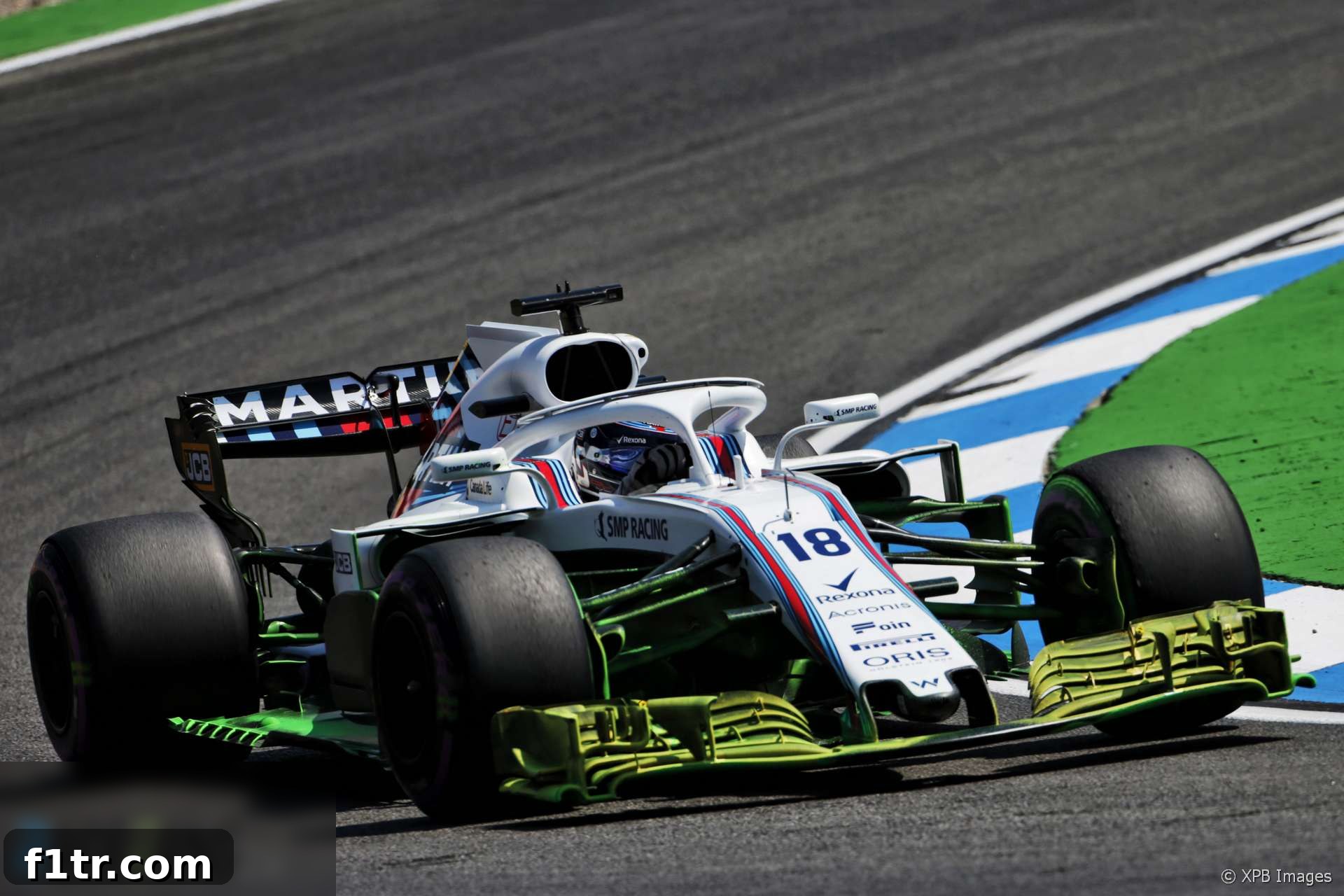
In the high-stakes world of Formula 1, every incremental improvement can signify a turning point. For the Williams Racing team, a storied constructor facing immense challenges in the 2018 season, the German Grand Prix at Hockenheim offered a glimmer of hope. According to Chief Technical Officer Paddy Lowe, the “big step” forward taken with a significant upgrade package at the Hockenheimring would be followed by a series of further, smaller enhancements in the races to come, signaling a determined effort to reverse their fortunes.
Williams’ Significant Hockenheim Upgrade: A New Front Wing Paves the Way
The core of Williams’ mid-season development push centered on a crucial new front wing, a component that represents one of the most aerodynamically sensitive parts of a modern F1 car. Introduced at Hockenheim, this upgrade was more than just a minor tweak; it was a fundamental redesign aimed at addressing some of the intrinsic aerodynamic deficiencies of their FW41 chassis, which had struggled profoundly for pace and balance throughout the year.
“We’ve brought a new wing yesterday as you know,” Lowe confirmed, highlighting the immediate impact and validation of the new component. The team’s meticulous development process, typical of Formula 1’s scientific approach, involves rigorous simulation and wind tunnel testing before parts ever hit the track. The true test, however, lies in real-world performance. “The good thing is it’s done exactly what we intended both from a measured point of view and from drivers’ comments corresponding to what we hoped to achieve,” Lowe elaborated. This alignment between theoretical predictions, empirical data, and driver feedback is paramount in F1 development, providing solid confirmation that the team was moving in the right direction. This success validated their approach and created “a good platform to build with further developments,” indicating that this front wing was not an end in itself, but a foundational element for future aerodynamic gains.
Qualifying Performance: A Step Forward at Hockenheim
The immediate impact of the upgrades was palpable in qualifying at Hockenheim. Sergey Sirotkin, in a testament to the team’s progress and his own driving prowess, secured a 12th place starting position on the grid. This marked Williams’ highest qualifying result since the Azerbaijan Grand Prix earlier in the season, a clear indicator of the relative improvement in the FW41’s performance. For a team that had often found itself at the very back of the grid, a 12th-place start offered a significant boost in morale and a more competitive position for the race.
Lowe acknowledged the circumstances that helped elevate Sirotkin’s position, noting, “12th position is flattered by a couple of big fast cars let’s say out of position.” This often refers to instances where faster cars, perhaps from top teams, face grid penalties, technical issues, or uncharacteristic mistakes, allowing competitors from less potent machinery to climb higher than they might ordinarily. Nevertheless, the underlying performance gain was undeniable. “But nevertheless he did a great lap in Q1, got himself up there, quicker than a number of cars which we weren’t quicker than before,” Lowe proudly stated, emphasizing the genuine pace improvement and the team’s ability to outqualify rivals they had previously trailed.
Lance Stroll’s Tyre Temperature Struggle
While Sirotkin celebrated a strong qualifying, his teammate Lance Stroll encountered challenges that underscored the fine margins of Formula 1. Lowe pointed out, “I think Lance [Stroll] could have done better than he did.” Stroll’s main hurdle lay in managing tyre temperatures during his crucial second qualifying run. In Formula 1, optimal tyre temperature is critical for maximizing grip and performance. On an out-lap, drivers strategically manage their pace, braking, and weaving to bring the tyres into their ideal operating window before commencing a flying lap.
Unfortunately for Stroll, “all that queue of traffic on an out-lap” severely hampered his preparation. Being stuck in traffic meant he couldn’t maintain the necessary speed or execute the required maneuvers to generate heat in his tyres. As a result, Lowe revealed, “he was a good 10 degrees down on target temperatures going into turn one which is where you lose a lot of time.” A 10-degree deficit in tyre temperature translates directly into a significant loss of grip, particularly in the crucial initial braking and cornering zones, costing valuable tenths of a second that can define a driver’s grid position. This incident highlighted not only the importance of tyre management but also the unpredictable nature of qualifying sessions where external factors like traffic can dramatically impact individual performances.
The Iterative Path of F1 Development: Hungary, Spa, and Beyond
The new front wing at Hockenheim was merely the first significant step in a broader package of upgrades Williams planned to introduce over several races, a common strategy in F1 development. This iterative approach allows teams to meticulously test, analyze, and integrate new components, ensuring that each part delivers its intended performance without adversely affecting other areas of the car. Rather than a single, all-encompassing overhaul, F1 development is a continuous process of refinement.
“We have got a few things for Hungary, then a few more for Spa,” Lowe confirmed, outlining the immediate roadmap for further enhancements. While the Hockenheim front wing was designated a “big step” and a “big item,” subsequent upgrades were expected to be of a smaller, more incremental nature. “We haven’t got such big things for the next few races,” Lowe clarified. These smaller upgrades might include minor aerodynamic modifications to bargeboards, floor edges, or rear wing elements, as well as mechanical adjustments to suspension or brake systems, each designed to optimize specific aspects of the car’s performance or adapt it to the unique characteristics of different circuits like the tight, technical Hungaroring or the high-speed Spa-Francorchamps.
The goal of these ongoing developments was to systematically address the myriad problems plaguing the FW41 chassis. The 2018 season had seen Williams struggle with fundamental balance issues, a lack of consistent downforce, and poor aerodynamic correlation between their factory data and on-track performance. Each upgrade, no matter how minor, represented a targeted effort to chip away at these deficits, gradually bringing the FW41 closer to a competitive state. This process demands immense patience, rigorous data analysis, and unwavering dedication from the entire technical team.
Paddy Lowe’s Vision for Williams’ Future
As Chief Technical Officer, Paddy Lowe bore the significant responsibility of steering Williams through one of its most challenging periods. His public statements reflected a blend of cautious optimism and transparent assessment of the team’s progress. The successful introduction of the Hockenheim front wing validated the technical team’s direction and boosted confidence within the struggling outfit.
Lowe’s emphasis on data correlation—the alignment of measured performance with design intent—is critical. In F1, if what you design in the wind tunnel doesn’t translate to the track, the entire development cycle breaks down. The fact that the new wing performed “exactly what we intended” from both empirical measurements and driver feedback indicated a healthy correlation, a positive sign for future developments. His leadership was crucial in maintaining focus and motivating the team to continue pushing forward despite the on-track difficulties. The acknowledgment that smaller upgrades would follow demonstrated a realistic and phased approach to recovery, understanding that overcoming deep-seated performance issues requires time and persistent effort rather than overnight miracles.
The Road Ahead: Rebuilding a Legacy
The 2018 F1 season was undeniably tough for Williams, a team with a rich history of championships and race victories. The Hockenheim upgrades and the subsequent qualifying performance, particularly Sirotkin’s P12, offered a much-needed morale boost and tangible proof that their efforts were beginning to bear fruit. While no single upgrade could instantly catapult them back to the front of the grid, these “big steps” and subsequent “smaller upgrades” were essential building blocks in the long and arduous journey of rebuilding a competitive F1 team.
The focus on iterative development, rigorous data validation, and addressing fundamental chassis issues underscored a committed strategy for Williams. The challenges faced by Lance Stroll with tyre temperatures also served as a reminder of the intricate details that separate success from struggle in Formula 1. As the season progressed, every new component introduced at Hungary, Spa, and beyond would be scrutinized, each race performance analyzed for further evidence of progress. For Williams, the aim was not just to improve their position on the grid, but to establish a stable and reliable development platform that could carry them forward into future seasons, slowly but surely reclaiming their place among Formula 1’s competitive elite.
Further Reading on the 2018 F1 Season
- F1 feared “death knell” for Drive to Survive after Ferrari and Mercedes snub
- McLaren staff told us we were “totally crazy” to take Honda engines in 2018 – Tost
- ‘It doesn’t matter if we start last’: How Red Bull’s junior team aided Honda’s leap forward
- Honda’s jet division helped F1 engineers solve power unit problem
- McLaren Racing losses rise after Honda split
Browse all 2018 F1 season articles