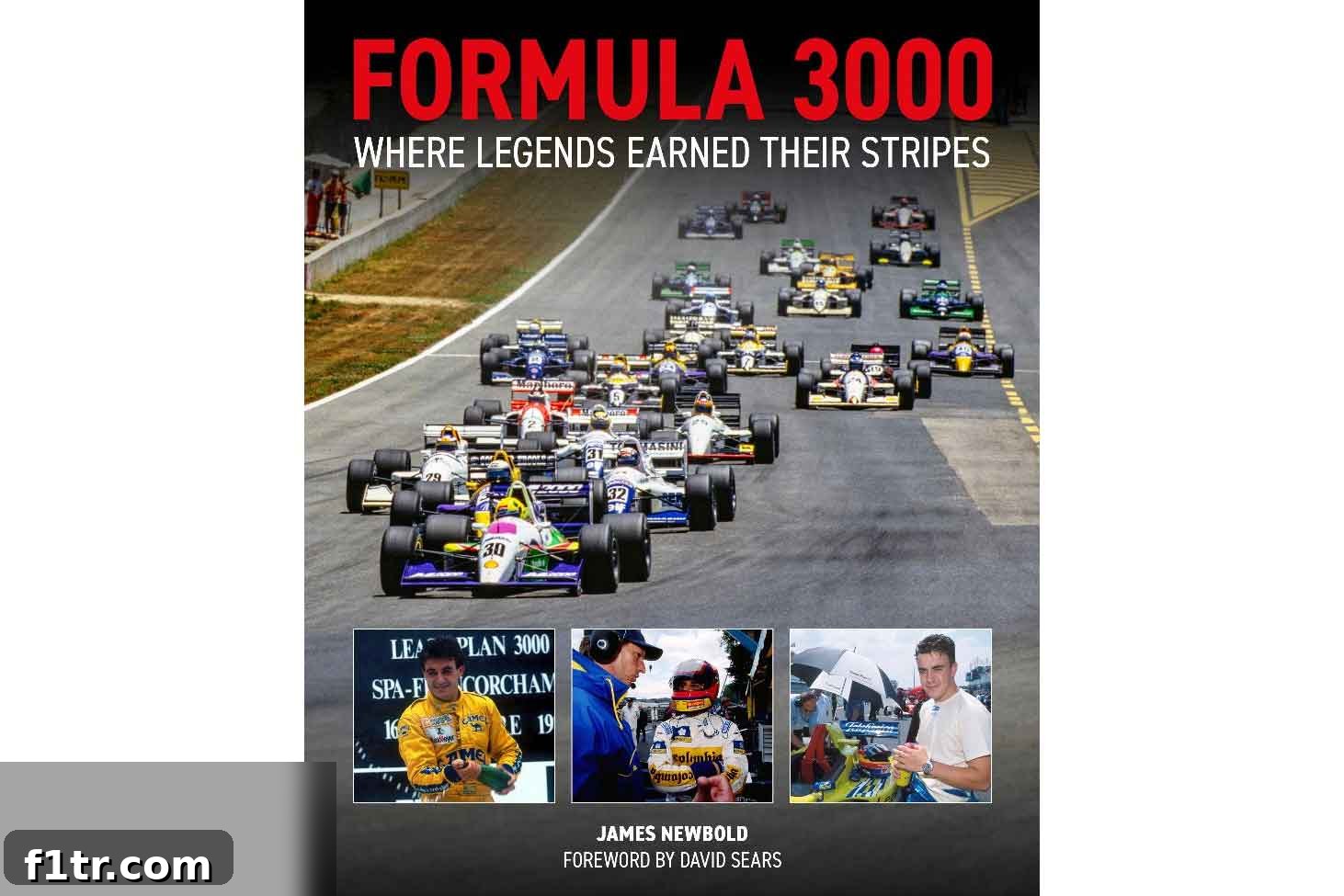
Formula 3000: Where Legends Earned Their Stripes – A Definitive History of F1’s Foremost Feeder Series
In the high-octane world of Formula 1, the path to the top tier is meticulously structured and fiercely competitive. Today, Formula 2, the primary feeder series, operates under a highly standardized model: all teams utilize identical components, and races are exclusively held alongside Grand Prix weekends. This streamlined approach ensures a level playing field and maximum visibility within the F1 paddock. However, gazing back into the annals of motorsport reveals a different landscape for aspiring champions, particularly during the vibrant era of Formula 3000.
Launched in 1985 as the successor to the original Formula 2, Formula 3000 (F3000) was conceived as a much freer, more technically diverse championship. It offered a thrilling spectacle where innovation and engineering prowess were almost as crucial as driver talent. Unlike its modern counterpart, F3000 allowed teams considerable latitude in their choice of equipment. Chassis manufacturers like Lola, March, Reynard, and later Dallara competed fiercely to supply the best rolling stock, leading to constant technical evolution and varied car designs on the grid. Engine suppliers, predominantly Cosworth with its venerable DFV/DFL derivatives, but also Mugen-Honda and Judd, provided powerful units, giving teams further opportunities to gain an edge.
Tyre wars were another hallmark of this period, with manufacturers pushing development to the absolute limit, often resulting in spectacular performance gains. This spirit of open competition extended beyond the technical specifications to the very venues where these future F1 stars honed their skills. F3000 didn’t merely follow the F1 calendar; it carved its own path, visiting a diverse array of legendary circuits that truly tested man and machine. Alongside familiar F1 tracks like Silverstone, Hockenheim, and Spa-Francorchamps, the series graced charming and challenging street circuits like the Pau Grand Prix in France, and the dauntingly fast, banked oval of Enna-Pergusa in Sicily, offering unique challenges and unforgettable racing moments rarely seen in modern junior categories.
Yet, this era of unparalleled technical freedom and diverse racing gradually receded. From its inception in 1985 to the curtain call of its international series two decades later, the variety and technical dynamism of F3000 were systematically stripped away. The escalating costs associated with open competition eventually led to greater standardization, with a move towards single-supplier chassis and engines in the later years. While F3000 undeniably continued its vital role in propelling prodigious talents up the motorsport ladder, this shift had a profound impact: it regrettably closed off the once-viable route for independent teams to graduate to Formula 1, a path famously trodden by outfits such as Jordan Grand Prix, now Aston Martin.
James Newbold’s Definitive Account: “Formula 3000: Where Legends Earned Their Stripes”
Enter James Newbold’s latest literary triumph from Evro Publishing, “Formula 3000: Where Legends Earned Their Stripes.” This magisterial work is far more than just a historical recount; it is a meticulously researched and passionately written full history of F3000, capturing the essence of an era that continues to captivate motorsport enthusiasts. The book goes beyond the well-documented international championship, delving deep into its often-overlooked but equally significant regional offshoots.
Among these regional series, the Japanese Formula 3000 championship stands out for particular acclaim. Noted for its aggressive development tyre compounds, the Japanese series allowed cars to achieve cornering speeds that rivaled, and sometimes even surpassed, contemporary Formula 1 machinery on certain tracks. This commitment to pushing performance boundaries made it a crucible of innovation and a hotbed for emerging talent. The book also extensively covers the European and British Formula 3000 series, each with their own unique characteristics, champions, and dramatic stories, painting a comprehensive picture of the championship’s global reach and influence.
This exhaustive research and detailed presentation stand in stark contrast to a recent book on the original Formula 2 series by the same publisher, which, despite its rich photography, was somewhat disappointing due to its comparatively thin text and lack of depth. Thankfully, Newbold’s F3000 chronicle avoids these pitfalls entirely. It is a considerably more detailed and thoroughly engaging account that truly does justice to its subject matter.
A Deep Dive into the Heart of F3000: Research, Narrative, and Unsung Heroes
The author’s commitment to historical accuracy and vivid storytelling is evident on every page. James Newbold has clearly undertaken extensive research, collecting a wealth of interview material from key figures – drivers, team owners, engineers, and journalists – who lived and breathed the F3000 experience. This invaluable firsthand testimony enriches the narrative, providing authentic insights and personal anecdotes that bring the history to life. The result is a consistently detailed season-by-season narrative that methodically guides the reader through each championship year, detailing the races, the rivalries, the technical battles, and the evolving landscape of the series.
Beyond the core championship narrative, the book is punctuated by insightful sidebars that illuminate notable names and pivotal events. These fascinating diversions cover everything from the quirky one-off, non-championship race held in Curacao in 1985, which showcased the adventurous spirit of the era, to the serious technical rows over controversial ‘rocket fuel’ formulations that occasionally threatened to derail the competition. The darker side of motorsport is also sensitively handled, with a poignant account of the horrific crash that tragically claimed the life of Marco Campos at Magny-Cours on the final lap of the 1995 season, reminding readers of the inherent dangers and sacrifices in the pursuit of speed.
One of the book’s most compelling aspects is its dedication to showcasing the myriad talents that passed through Formula 3000’s ranks. Followers of F1’s junior series know all too well that they inevitably produce many great drivers who, for various reasons, never get the full opportunity to demonstrate their immense potential in Formula 1 itself. From two decades of F3000, there are countless such cases – names that spark recognition among dedicated fans but might be forgotten by casual observers. Newbold does a magnificent job of bringing these stories to the forefront, celebrating both the F1 stars who emerged (like Jean Alesi, Damon Hill, Olivier Panis, Rubens Barrichello, Juan Pablo Montoya, and Jacques Villeneuve) and the numerous highly skilled drivers whose careers, though successful in other categories, didn’t culminate in sustained F1 glory.
A Feast for the Eyes: Production Quality and Visual Splendour
Completing this fine production is an exceptional collection of full-colour photography. The visual elements are not mere adornments; they are integral to the storytelling. Readers are treated to stunning images capturing the championship’s enormous entries, with some grids boasting more than 30 cars jostling for position – a spectacle rarely seen in modern junior categories. The photographs beautifully document the unusual and diverse venues, from picturesque street circuits to high-speed permanent tracks, showcasing the unique atmosphere of each race weekend. Crucially, the lens also captures the fresh-faced future stars in their formative years, allowing readers to see the raw determination and ambition that would drive them to the pinnacle of motorsport or to distinguished careers elsewhere.
These vibrant images, combined with the comprehensive text, make “Formula 3000: Where Legends Earned Their Stripes” an indispensable resource for anyone interested in the history of grand prix racing and driver development. It’s a book that not only informs but also evokes a powerful sense of nostalgia for a bygone era of motorsport.
Why This Book Belongs on Every Motorsport Enthusiast’s Shelf
For those with fond, perhaps even wistful, memories of what was once Formula 1’s ultimate feeder championship, this book will undoubtedly provide immense enjoyment and deep satisfaction. It serves as a welcome, richly detailed reminder of an era when motor racing, particularly at the junior level, was arguably freer, more open, and in many respects, all the better for it. It was a time when technical ingenuity flourished alongside raw driving talent, creating a series that was unpredictable, exciting, and genuinely a proving ground for the sport’s next generation.
James Newbold’s “Formula 3000: Where Legends Earned Their Stripes” is more than just a historical record; it’s an ode to an important chapter in motorsport. It meticulously documents the machines, the tracks, the triumphs, and the tragedies, but most importantly, it celebrates the human stories – the aspirations, the fierce rivalries, and the sheer skill of those who aimed for the top. This book is an essential acquisition for motorsport historians, F1 fans, and anyone who appreciates the rich tapestry of racing history.
Read all the RaceFans book reviews for more insights into the best motorsport literature.
Book Details: “Formula 3000: Where Legends Earned Their Stripes”
Author: James Newbold
Publisher: Evro Publishing
Published: 2025
Pages: 416
Price: £75
ISBN: 9781910505946
More Motorsport Book Reviews
- Next new F1 game to arrive in 2027, EA to offer 2026 season as paid DLC
- “F1 Insider: Notes from the Pit Lane” – Ted Kravitz’s new F1 book reviewed
- “Rennsport”: The RaceFans review
- “Grid to Glory: 75 Milestone F1 Moments” – Alex Jacques’ new book reviewed
- “Formula 3000: Where Legends Earned Their Stripes” reviewed
Browse all RaceFans Reviews