F1 Unites: Drivers Rally Behind Lewis Hamilton’s Call for a Diversity and Inclusion Charter
Formula 1, a sport often characterized by fierce competition on track, recently witnessed a powerful display of unity off it. A significant number of prominent Formula 1 drivers have emphatically backed Lewis Hamilton’s impassioned appeal for all teams to formally support and adopt a charter aimed at fostering greater diversity and inclusion. This pivotal initiative seeks to uplift individuals from under-represented backgrounds, ensuring they have equitable opportunities to thrive within the sport’s ecosystem.
This widespread show of support for Hamilton’s diversity initiative, a core proposition from his Hamilton Commission established last year, comes in the wake of severe criticism directed at three-time world champion Nelson Piquet. Piquet had used a deeply offensive and racist term when referring to Lewis Hamilton in an interview, which only recently came to light. The gravity of Piquet’s remarks underscored the urgent need for tangible action and reinforced the importance of Hamilton’s long-standing advocacy for change.
Nelson Piquet’s Controversial Remarks and the Sport’s Swift Response
The controversy ignited when an interview from 2021, conducted in Portuguese, surfaced featuring Nelson Piquet. In the interview, Piquet used a racial slur to describe Lewis Hamilton. Despite issuing an apology later, Piquet maintained that there was no racist intent behind his words, claiming it was a cultural nuance of the term in Brazil. However, this explanation was widely rejected by the global community, Formula 1 organizations, and the drivers themselves, who recognized the inherent racism and harmful impact of such language, regardless of claimed intent.
The response from the Formula 1 community was immediate and unequivocal. The sport, its governing body the FIA, and all ten teams condemned Piquet’s comments without reservation. In a decisive move reflecting the sport’s commitment to combat racism, the British Racing Drivers’ Club (BRDC) announced the suspension of Piquet’s honorary membership. Furthermore, it was understood that Formula 1 itself has barred Piquet from accessing the paddock at all Grand Prix events, a clear statement that there is no place for racism within the sport or its associated figures.
Lewis Hamilton’s Urgent Plea for Concrete Action
Speaking passionately ahead of the British Grand Prix, his home race, Lewis Hamilton reiterated his call for all ten Formula 1 teams to sign up to the diversity charter proposed by his Hamilton Commission. More than just a signature, Hamilton emphasized the necessity for teams to actively take concrete steps and allocate funds towards encouraging greater diversity and inclusion for people from under-represented backgrounds.
“It’s not good enough just saying we are also focused on it and just lip service,” Hamilton stated, highlighting a growing frustration with promises that lack follow-through. He revealed that despite positive discussions and agreements from all F1 teams to be part of the charter, it had “still not been signed and it’s still not underway.” This candid admission underscored the gap between intention and implementation, urging the sport to translate its verbal commitments into measurable progress.
The Hamilton Commission: A Foundation for Change
The Hamilton Commission, launched by Lewis Hamilton in 2020, was established to address the underrepresentation of Black people in UK motorsport, particularly in STEM careers. Through extensive research, interviews, and collaborations with academic institutions, the Commission identified significant barriers to entry and progression. Its findings and recommendations formed the basis for the diversity charter, which aims to create a more inclusive pipeline for talent into Formula 1, from grassroots racing to engineering roles and beyond. Hamilton’s call for teams to sign this charter is a direct response to these findings, seeking to embed the Commission’s principles at the heart of the sport’s operations.
A United Front: Drivers Stand in Solidarity
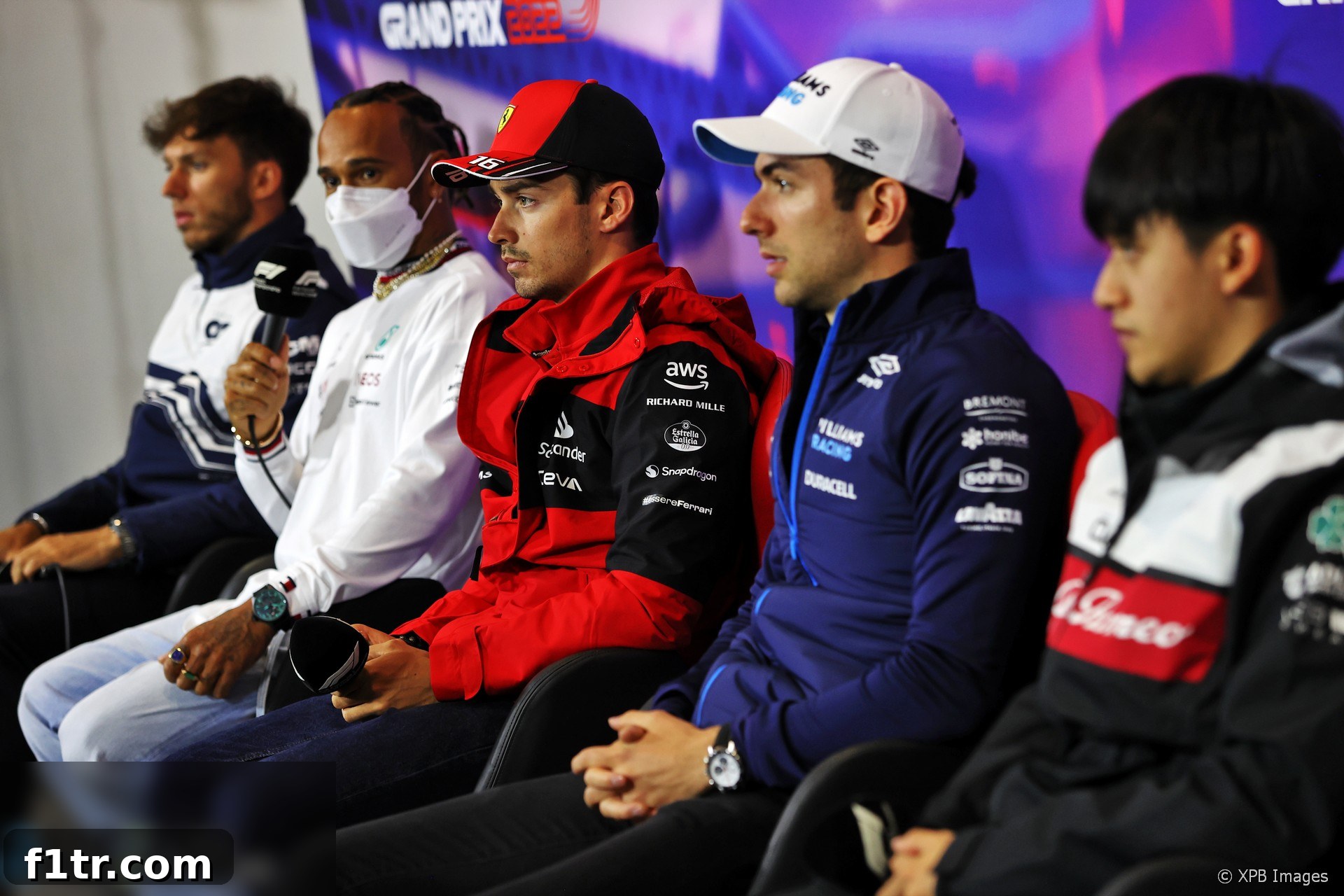
Lewis Hamilton’s fellow drivers quickly rallied to voice their unequivocal support for initiatives designed to increase participation from under-represented groups across Formula 1. Their unified stance reflected a collective recognition of the sport’s responsibility to set a positive example globally.
Pierre Gasly: Setting an Example for Society
AlphaTauri driver Pierre Gasly was among the first to lend his voice during an FIA press conference. He emphasized the need for unity in the fight against discrimination and acknowledged Hamilton’s unparalleled role as an ambassador for the cause. “We’ve got to be united in a fight and Lewis is the biggest ambassador we have in our sport and it needs to go beyond our sport,” Gasly asserted. He stressed that Formula 1, as a prominent global entity, must set an example for society at large. Gasly committed to advocating within his own team and, alongside his fellow drivers and the Grand Prix Drivers Association (GPDA), to do “anything that’s possible” to prevent such incidents and promote inclusivity.
Nicholas Latifi: Questioning Delays and Leveraging Platforms
Williams driver Nicholas Latifi expressed his bewilderment regarding the delay in signing the Hamilton Commission charter. “Me personally, I’m not 100% aware of why it hasn’t been signed yet,” Latifi admitted, signaling his intent to inquire with his team about the matter. He articulated a shared understanding among drivers about the persistent injustices in the world today. Latifi emphasized the enormous reach of Formula 1, now growing at an “astronomical level,” and the imperative for the sport and individual drivers to utilize their vast platforms to disseminate positive messages. “Anything we can to spread the positive message is needed,” he stated, highlighting the responsibility that comes with their global visibility.
Zhou Guanyu: A First-Hand Account of Racism
For Alfa Romeo’s Zhou Guanyu, the first-ever Chinese race driver in Formula 1, the experience of racism is not theoretical but deeply personal. He bravely shared his own distressing encounter with racist abuse on social media after his signing with Alfa Romeo was announced last year. “From my side, I got a perfect example experience of that once I signed the contract last year,” Zhou recounted. He spoke of “quite a lot negativities, racist comments, which never should happen in any part of sports or in the world in general.”
Zhou powerfully conveyed that the struggle for diversity and inclusion extends beyond individual drivers like himself and Hamilton. It is about fostering a better future for the next generation. “It’s not just for us, it’s for the younger generation to set a better example for them,” he emphasized, underscoring the long-term societal impact of these efforts. He called for unwavering unity, stating that one’s origin or profession should be irrelevant in the face of shared humanity. This collective endeavor, Zhou explained, is about constructing an inclusive platform within Formula 1 that champions equality for all.
The Broader Impact and Future Trajectory of Diversity in F1
The unified stance of the drivers, coupled with Formula 1’s decisive actions against Nelson Piquet, sends a strong message that the sport is evolving. While the challenges remain significant, the momentum for change is palpable. The call for a signed and implemented diversity charter is not merely symbolic; it represents a commitment to systemic transformation. This involves not only ensuring diverse representation among drivers but also within the teams’ engineering departments, management structures, media roles, and fan engagement.
As Formula 1 continues to expand its global footprint, particularly into new markets, its responsibility to embody and promote inclusive values becomes even more critical. The sport has the power to inspire millions, and by actively dismantling barriers and celebrating diversity, it can truly live up to its claim as a global spectacle. The ongoing dialogue, the proactive measures by Hamilton and the Hamilton Commission, and the solidarity among drivers are crucial steps towards building a Formula 1 that is truly open, welcoming, and reflective of the diverse world it races within.
Ultimately, the objective is to create an environment where talent can flourish irrespective of background, where every individual feels valued and respected, and where the sport stands as a beacon of progress and unity. The journey toward full diversity and inclusion is long, but the recent events have underscored a renewed commitment from many within Formula 1 to accelerate that journey, moving beyond mere words to impactful, sustained action.
2022 F1 season
- Mercedes told me “you’re wrong” about 2022 car’s problems – Hamilton
- FIA confirms all 10 F1 teams complied with 2022 cost cap
- Steiner “not ashamed” of panning “slow” Schumacher in Drive to Survive
- Albon believes year out of F1 improved him as a driver
- Hamilton sees diversity gains in F1 years on from his ‘traumatising’ experience of racism
Browse all 2022 F1 season articles