F1 Teams Confront Severe Bumps at Circuit of the Americas: A Deeper Dive into the Challenge
The highly anticipated return of Formula 1 to the Circuit of the Americas (COTA) in Austin, Texas, has been met with an unexpected and significant challenge: track bumps. Ferrari’s sporting director, Laurent Mekies, has explicitly stated that these bumps are proving to be even more problematic than teams had initially prepared for, casting a shadow over the weekend’s event and forcing immediate adjustments.
COTA’s Persistent Bumpy History and Remedial Efforts
The Circuit of the Americas has long grappled with an undulating track surface. Since its inception, and particularly noticeable since 2015, the circuit has developed pronounced bumps in various sections. These surface irregularities are often attributed to the natural geological movements of the land upon which the track is built, combined with the intense forces exerted by high-performance racing vehicles, including both F1 cars and MotoGP motorcycles, which place immense stress on the tarmac.
In an ongoing effort to maintain the track’s quality and ensure driver safety, the circuit owners have undertaken repeated attempts to mitigate these issues. Before the 2021 F1 Grand Prix, further “milling” – a process of grinding down the track surface to reduce inconsistencies – was performed on the most severely affected areas. This proactive measure followed strong complaints from MotoGP riders during their event at COTA just weeks prior, highlighting the critical need for a smoother racing line for all categories of motorsport. Despite these extensive efforts, the effectiveness of these interventions appears to have fallen short of expectations for Formula 1 teams, suggesting a deeper, more systemic challenge in maintaining the track’s integrity.
Impact on Driver Confidence and Car Performance
Mekies revealed that the unexpected severity of the bumps significantly hampered Ferrari drivers’ confidence in their cars’ handling during the crucial Friday practice sessions. For Formula 1, where margins are infinitesimally small and precise car control is paramount, even minor surface irregularities can have profound effects. The lack of confidence stems from the car’s unpredictable behavior over these bumps, making it difficult for drivers to commit to cornering speeds or braking points with their usual precision.
“Everybody started a bit on the back foot with the bumps,” Mekies commented, emphasizing that Ferrari, like other teams, found themselves scrambling to adapt. “Certainly we did with the high level of bumps on-track. We were all expecting it and we all have tried to anticipate it. But it’s one thing to think about it and try to anticipate, it is something else when you actually hit the track here.” This sentiment underscores the vast difference between theoretical preparation and the brutal reality of on-track conditions, forcing teams to confront a new and demanding challenge.
The bumps don’t just affect driver feel; they have a tangible impact on the car’s mechanical and aerodynamic performance. F1 cars operate with extremely low ride heights and stiff suspensions to maximize aerodynamic efficiency. When these cars encounter severe bumps, the delicate balance is disrupted. The car can bottom out, potentially damaging floor components or impacting the diffuser’s ability to generate downforce. This constant unsettling can also stress suspension components, increase tyre wear unevenly, and make it incredibly difficult to maintain consistent aerodynamic performance through high-speed sections. As a direct consequence, Ferrari spent a considerable portion of Friday’s practice working on car setup adjustments, striving to restore some of the lost confidence and mitigate the adverse effects of the bumpy surface. This involved recalibrating suspension settings, adjusting ride height, and fine-tuning damper characteristics – a significant deviation from a standard Friday programme, which typically focuses on race simulations and performance runs.
Ferrari’s Prior History with COTA Bumps and Worsening Conditions
The 2021 United States Grand Prix marks Formula 1’s return to COTA after a one-year hiatus due to the global Covid-19 pandemic. The last time F1 raced at the venue was in 2019, an event that saw one of Ferrari’s cars retire with a suspension problem directly attributed to the track’s bumpy nature. This history adds a layer of concern for the Maranello-based team, knowing the potential for mechanical failures under such conditions.
Alarmingly, Mekies explicitly stated that the quality of the track surface has deteriorated significantly since the 2019 race. “I think it’s worse than 2019, yes, by quite a large bit,” he confirmed. This observation suggests that despite the circuit’s efforts, the underlying issues causing the bumps are either accelerating or becoming harder to manage effectively. While COTA has always required attention to its surface to keep it as flat as possible, Mekies believes the current extent of the bumps is unprecedented in the circuit’s relatively short F1 history.
For Ferrari, and likely for other teams, this presents not just a setup challenge but also a mental one for the drivers. The constant jostling and unpredictable reactions of the car at high speed demand extreme focus and physical endurance. “It’s just a new challenge that we have to deal with from a set-up perspective and from a driver perspective, more so for these guys,” Mekies acknowledged, highlighting the additional burden placed on the athletes.
Driver Perspectives: Charles Leclerc’s Experience
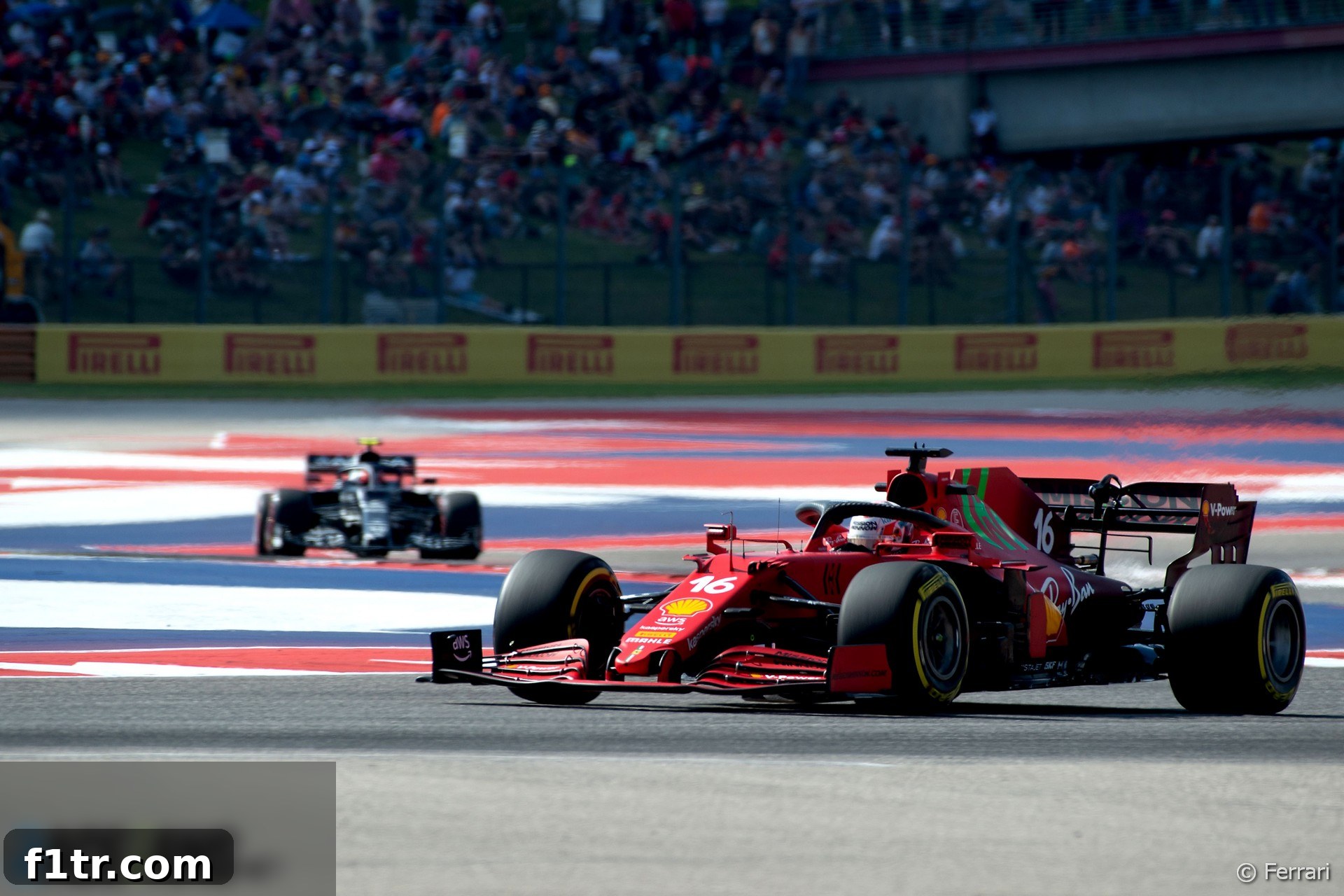
The driver’s seat offers the most immediate and visceral feedback on track conditions. Charles Leclerc, one of Ferrari’s star drivers, publicly voiced his difficulties with the track. During one of the practice sessions, Leclerc experienced a spin in the high-speed sequence of corners at the beginning of the lap, precisely where some of the most prominent bumps have developed. This incident vividly illustrates the treacherous nature of the surface and its capacity to catch even the most skilled drivers off guard.
“It’s a very bumpy track so it is very tricky to be as precise as we normally are,” Leclerc explained. His comments underscore how the bumps compromise the precise control that F1 drivers rely on. In a sport where shaving milliseconds off lap times is crucial, maintaining absolute precision through corners is fundamental. When the track itself actively works against this precision, it elevates the challenge to a new level, pushing drivers to the very edge of their capabilities and forcing them to adjust their driving style significantly.
The Broader Implications for the 2021 United States Grand Prix
The severity of the bumps at COTA adds a compelling layer of unpredictability to the 2021 United States Grand Prix. Beyond Ferrari’s specific concerns, every team on the grid must contend with these conditions, albeit with varying degrees of success depending on their car’s inherent characteristics and suspension philosophies. Teams will have to make significant compromises in their car setups, potentially sacrificing outright speed for stability and reliability over the bumps.
This situation also raises questions about long-term track maintenance for circuits hosting top-tier motorsport events. The geological nature of COTA makes it particularly susceptible to these issues, and continuous, perhaps more drastic, resurfacing efforts might be necessary to ensure its suitability for F1 in the future. The unique demands of different racing series—MotoGP with its focus on bike stability and rider safety, versus F1 with its emphasis on aerodynamic performance and low ride height—present distinct challenges for circuit management.
For the drivers, the weekend will be a testament to their adaptability and mental fortitude. Navigating the treacherous surface while pushing the limits of their machinery will be physically draining and mentally demanding. Mistakes, like Leclerc’s spin, become more likely, potentially influencing the outcome of a race weekend that is already significant in the fiercely contested 2021 championship battle between Max Verstappen and Lewis Hamilton.
Conclusion
The Circuit of the Americas has always been a fan favorite, known for its flowing layout and challenging elevation changes. However, the escalating issue of track bumps has undeniably presented a formidable obstacle for Formula 1 teams and drivers alike at the 2021 United States Grand Prix. Ferrari’s Laurent Mekies and Charles Leclerc’s candid remarks paint a clear picture of the significant impact these conditions have on driver confidence, car setup, and overall performance. As the weekend progresses, the ability to effectively manage and adapt to these unparalleled track conditions will undoubtedly be a crucial factor in determining success and could even shape the narrative of this critical phase of the F1 season.
2021 United States Grand Prix – Related Articles
- Mercedes encouraged despite ‘toughest race for a long time’ in Austin
- For the sake of the title fight, F1 must get a grip on its track limits problem
- Pit stop problems costing Ferrari “quite a lot of points” – Sainz
- Sold-out crowd of 380,000 at COTA shows F1 can add third US race – Brawn
- While the pressure’s off I can “push myself” more – Russell
Browse all 2021 United States Grand Prix articles