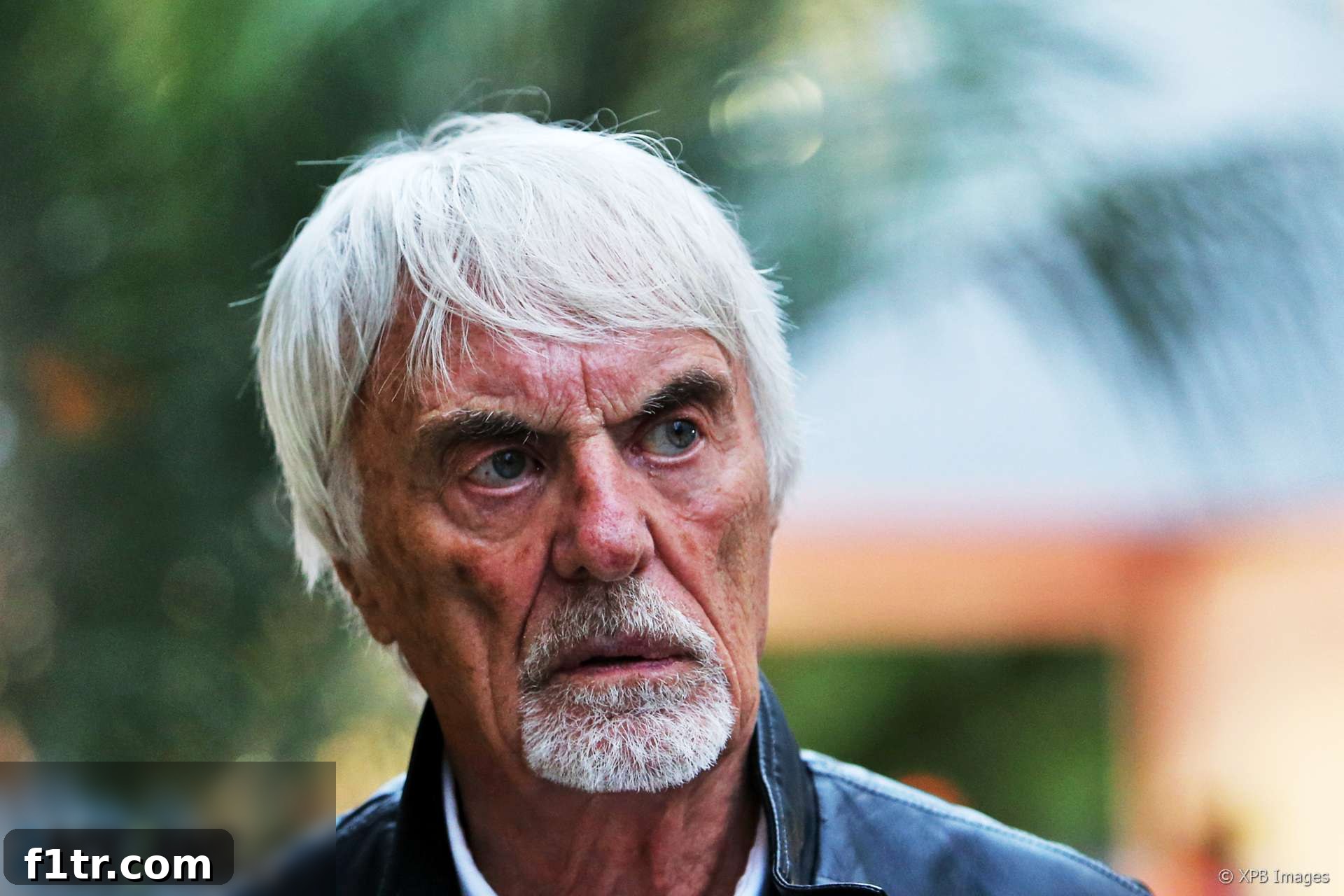
For decades, they were the undisputed architects of Formula 1, operating in perfect synchronicity. So, when former F1 supremo Bernie Ecclestone suggested to prominent news outlets like Reuters and the BBC that the 2020 F1 season should be cancelled, many saw it as an inevitable precursor to similar pronouncements from his long-time confidant and former FIA president, Max Mosley.
Advert | Become a Supporter & go ad-free
Ecclestone and Mosley’s bond stretched back to the late seventies, a period during which they masterminded the pivotal 1981 Concorde Agreement. This seminal document marked a turning point, single-handedly catapulting Formula 1 from its somewhat amateurish roots onto the global professional stage. Their shared vision and relentless drive transformed the sport, laying the groundwork for the multi-billion dollar industry it would eventually become.
Their ascent continued, culminating in Mosley securing the presidency of the FIA in 1993, following a two-year stint as head of FISA, motorsport’s governing body at the time. Firmly ensconced in the FIA’s Parisian headquarters overlooking the iconic Place de la Concorde, the duo orchestrated perhaps their most impactful deal: the sale of F1’s commercial rights, with Ecclestone becoming the primary beneficiary. This move solidified his control and reshaped the sport’s financial landscape for decades to come.
The intricate narrative of how an initial 10-year commercial rights deal inexplicably ballooned into a staggering 113-year arrangement, all while maintaining the original price point, is a complex saga deserving of its own detailed recounting. Suffice it to say, Ecclestone acquired these rights for a mere $313 million in 1998, despite conservative estimates valuing the deal at least ten times that figure, even by the standards of the late nineties. From that point onwards, the rights were repeatedly resold at escalating valuations, culminating in an enterprise valuation of $8 billion in its final transaction. Throughout these intricate dealings, Ecclestone meticulously retained an iron grip on what he openly regarded as his personal dominion, his commercial fiefdom within the world of motorsport.
This enduring reign over Formula 1’s commercial destiny persisted until 2017, when Liberty Media successfully acquired control from CVC Capital Partners. The transition marked an abrupt and rather unceremonious end to Ecclestone’s direct leadership. He famously described his ‘promotion’ to chairman emeritus as being “booted upstairs with a fancy title,” effectively a ‘don’t call us, we’ll call you’ arrangement. Predictably, those calls never materialised. This perceived slight and the loss of his long-held power seemingly provides Ecclestone with occasional motivation to act mischievously, his pointed critiques frequently aimed directly at Liberty Media’s stewardship of the sport.
As anticipated, Max Mosley, who voluntarily stepped down from the FIA presidency in 2009 after his term concluded, following highly publicised showdowns concerning both his private life and disputes with F1 teams, added his voice to the growing chorus this week. Speaking to the Deutsche Presse-Agentur (DPA), Mosley emphatically urged F1 to cancel the entire 2020 season. His argument was clear: “Waiting risks making things worse with no certainty of gain. There is no guarantee that racing can start again in July; indeed, it looks increasingly unlikely.” His pragmatic, if blunt, assessment resonated with some, yet it overlooked the immense complexities of such a drastic decision for a global enterprise.
While it may be all too convenient for multi-millionaires, particularly those instrumental in the initial sale of F1’s commercial rights, to advocate for such a definitive measure, the critical question remains: is it truly feasible for Formula 1 to simply cease operations until the following season? Both Ecclestone and Mosley, given their profound history and intimate knowledge of the sport, are undoubtedly aware that F1 is a colossal global business. It generates a combined turnover exceeding $4 billion annually and directly employs upwards of 10,000 individuals, with many multiples of that figure supported indirectly through its vast ecosystem. Their proposals, while seemingly straightforward, carry monumental implications for an industry woven deeply into the fabric of the global economy.
Advert | Become a RaceFans supporter andgo ad-free
As former F1 team owners themselves before pivoting their focus to the governance and commercial management of the sport, both Ecclestone and Mosley possess an inherent understanding of the intricate financial models underpinning F1 teams. They know implicitly that teams primarily derive their income from two critical sources: sponsorship agreements and the substantial FOM (Formula One Management) revenues. The latter category encompasses funds generated by the commercial rights holder through various channels, including lucrative race promoter fees, extensive global television rights income, and the considerable proceeds from hospitality and marketing initiatives. Sponsors, in turn, invest heavily for the invaluable exposure and brand association that Formula 1 provides, whether it’s trackside branding, broadcast visibility, or digital presence.
Advert | Become a Supporter & go ad-free
From this foundational understanding, it logically follows that a complete absence of races translates directly into a devastating absence of income for the teams. These entities operate with immense overheads, frequently averaging hundreds of millions (in any currency) per year, encompassing everything from advanced research and development to sophisticated logistical operations. For every highly visible trackside employee, there are, on average, ten more dedicated individuals working tirelessly back at the factory base – each with families to support and mortgages to service. While Ecclestone and Mosley possess personal fortunes, perhaps in the millions or even billions, affording them the luxury of not fretting over their next meal, the monthly income derived from working in Formula 1 is unequivocally vital for the vast majority of its dedicated workforce. A cancellation would not merely be an inconvenience; it would be an existential threat to countless livelihoods.
Beyond the immediate financial stability of teams and their employees, the sport’s imperative to return to action extends to its immense legions of passionate fans globally. These loyal supporters crave the thrill, the competition, and the innovation that F1 consistently delivers. Furthermore, the sport sustains a vast network of ancillary businesses that supply it with an astonishing array of commodities. This intricate supply chain ranges from fundamental provisions like food and beverages, through highly specialized software, precision components, and a myriad of trade products. The sustained activity of Formula 1 is the lifeblood for these suppliers, making a prolonged shutdown catastrophic for an entire ecosystem.
For better or worse, Formula 1 is publicly listed on NASDAQ as an indirect, yet profound, consequence of that original, contentious commercial rights deal. While Max Mosley might justifiably argue that it was ultimately an FIA council decision, the fact remains that this pivotal agreement was struck under his watchful tenure, directly benefiting his long-time close friend, Bernie Ecclestone, to an enormous degree. Consequently, Liberty Media, as the current custodian of F1, bears a significant fiduciary duty. This legal and ethical obligation compels them to ensure that the interests of their shareholders are optimally served. Putting F1 on ice, as Mosley suggested, would undoubtedly constitute a profound disservice to these shareholders, jeopardizing their investments and undermining the very foundation of the publicly traded entity.
Finally, Mosley’s suggestion that F1 should utilize the enforced hiatus “to put it on a much sounder financial footing for the future” strikes many as remarkably churlish and lacking in self-awareness. This comment comes from the very individual who presided over the era when the initial commercial rights deal was struck – a deal that, in its inception, notoriously deprived the teams of a substantial portion of F1’s generated income. Prior to this landmark agreement, teams collectively shared a significant 80% of the sport’s revenues. This figure dramatically plummeted to a mere 23% in the aftermath of the deal, before gradually, painstakingly, rising to just under 70% – a recovery most notably achieved under the diligent stewardship of the current FIA president, Jean Todt. Mosley’s call for financial reform, therefore, rings hollow given his historical role in creating the very imbalances he now purports to address.
The stark reality is that Formula 1 operates as a colossal global consumer activity, no different in its fundamental economic principles from any other major international business. Were Mosley and Ecclestone to propose that other thriving industries, employing millions worldwide, simply shut their doors for the remainder of the year, they would undoubtedly be met with justified ridicule. This would come not least from the countless legions of workers and their dependents, many of whom are already facing profound economic uncertainty in unprecedented times. One must question whether such a radical and economically devastating suggestion would be afforded any serious consideration if Ecclestone and Mosley had not, at one point, been the commanding figures at the helm of F1.
When asked by DPA for advice he might offer his successor, Mosley candidly admitted he was “out of touch with F1” and possessed no “inside knowledge.” From his response, it remains unclear whether Mosley was referring to his own lack of current insight or subtly implying it about Jean Todt. However, such a statement could unequivocally not be applied to Todt, especially considering his tireless and proactive efforts to strategically restructure Formula 1 in the profound wake of the global pandemic. Todt has been relentlessly working to prepare the sport for a safe and swift return at the earliest viable opportunity, demonstrating a clear and current grasp of F1’s operational and financial realities.
Advert | Become a RaceFans supporter andgo ad-free
2020 F1 season
- Grosjean to make F1 test return tomorrow for first time since Bahrain horror crash
- Pictures: Wrecked chassis from Grosjean’s Bahrain fireball crash to go on display
- Bottas vs Rosberg: Hamilton’s Mercedes team mates compared after 78 races each
- F1 revenues fell by $877 million in Covid-struck 2020 season
- Hamilton and Mercedes finally announce new deal for 2021 season
Browse all 2020 F1 season articles