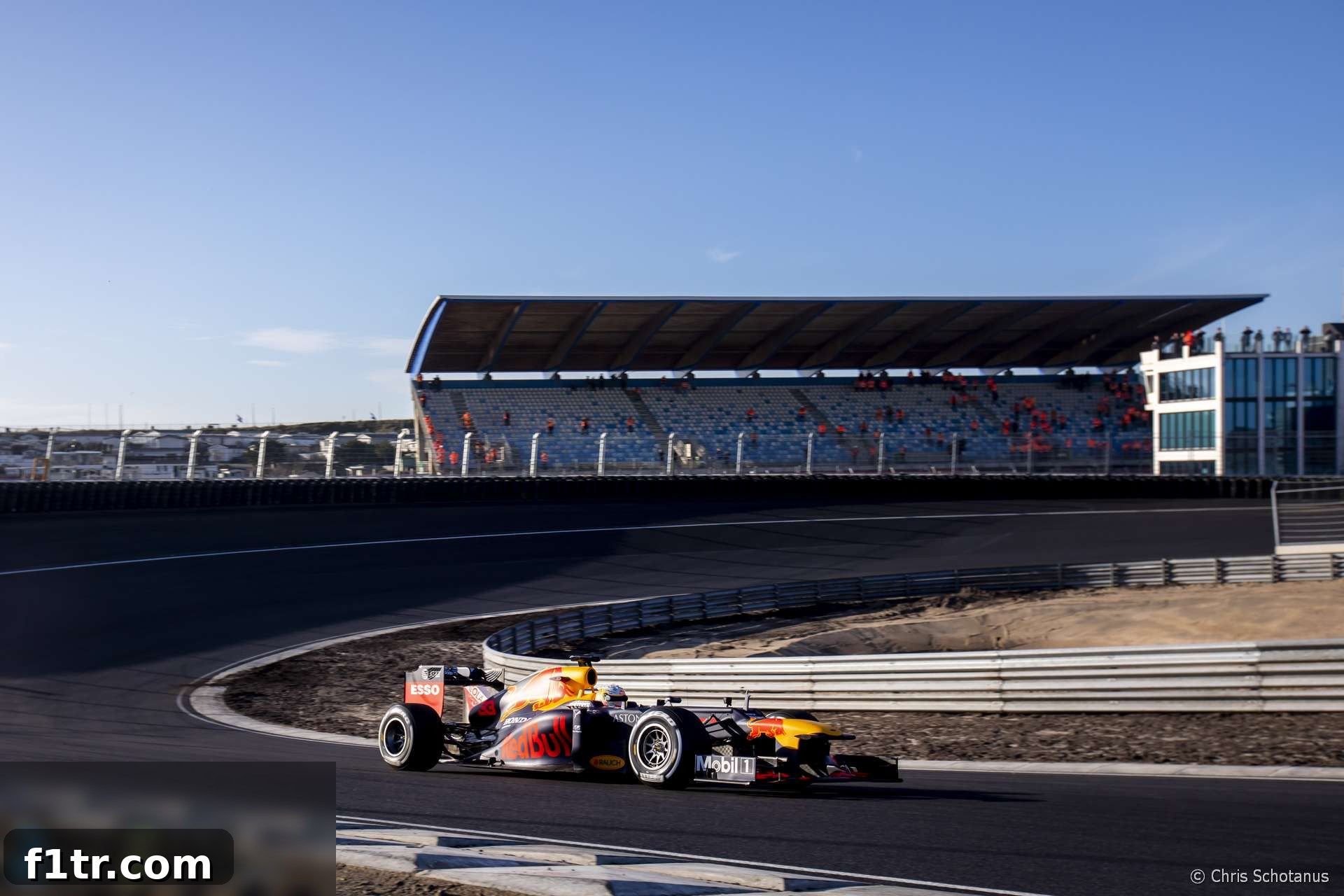
Max Verstappen Praises Transformed Zandvoort Circuit Ahead of Dutch Grand Prix Return
The eagerly anticipated return of the Formula 1 Dutch Grand Prix to the legendary Zandvoort circuit has been met with resounding enthusiasm, particularly from the Netherlands’ very own motorsport superstar, Max Verstappen. Becoming the first F1 driver to pilot a car around the newly revised track, the Red Bull Racing ace offered high praise for the significant alterations, signaling a thrilling prospect for both drivers and fans when the Grand Prix officially marks its return after a 35-year hiatus.
Verstappen’s initial test run provided invaluable insights into the circuit’s new character, which has undergone extensive modifications to meet modern Formula 1 standards while retaining its classic charm. His feedback was overwhelmingly positive, highlighting how the changes have elevated Zandvoort into a truly challenging and exhilarating racing venue. The Dutchman, whose home race is set to ignite national fervor, expressed particular admiration for the dramatically banked corners, specifically the Hugenholtzbocht (Turn 3) and the Arie Luyendijkbocht (Turn 13). These unique features are poised to become defining characteristics of the circuit, promising spectacular racing action.
The Evolution of Zandvoort: Banking on Excitement
“It was a great opportunity to be the first person to drive an F1 car at the new Zandvoort circuit and the track is really cool,” Verstappen remarked, his words echoing the excitement of an entire nation. The banking, a standout feature, was a central point of his praise. “Especially turn three where the banking is amazing. I didn’t expect the banking to be that big but it’s really cool to drive an F1 car on.” This sentiment underscores the transformative impact of these architectural changes.
The Hugenholtzbocht, now boasting a significant incline, is set to test the limits of aerodynamic grip and driver bravery. Banking in Formula 1 circuits serves multiple purposes: it can increase cornering speeds, reduce the strain on tires compared to flat corners at the same speed, and crucially, create unique racing lines and overtaking opportunities. The sheer degree of banking at Zandvoort’s Turn 3 suggests that drivers will be able to carry immense speed through this section, potentially setting up crucial battles for position. The visual spectacle of F1 cars navigating such a steep incline will undoubtedly captivate audiences worldwide, adding a distinctive element to the Grand Prix weekend.
Similarly, the Arie Luyendijkbocht (Turn 13), the final corner leading onto the main straight, has also received the banking treatment. Verstappen noted, “The last corner is the same. It’s also pretty banked and with the new cars and DRS open through there it will be a good challenge and a lot of fun.” This corner’s banking is strategic, designed to allow cars to maintain higher speeds and, critically, to utilize the Drag Reduction System (DRS) effectively as they accelerate towards the start/finish line. The combination of high-speed entry, significant banking, and open DRS will create a unique challenge for drivers, demanding precision and courage, and offering potential slipstream overtakes into Turn 1. This promises to make the run to the flag and the initial stages of the race exceptionally dynamic and unpredictable.
Verstappen’s Early Impressions and the Demanding Nature of the Track
Despite conducting his demonstration run in an eight-year-old RB8 chassis equipped with special demonstration tyres, Verstappen was able to glean a comprehensive understanding of the circuit’s renewed character. His experience, though not in a contemporary F1 machine, provided crucial qualitative feedback on the resurfaced layout and its high-speed sections. The fresh tarmac promises optimal grip and reduced bumpiness, factors that significantly influence car setup and driver confidence in modern Formula 1.
“The whole track is very demanding,” Verstappen asserted, highlighting the continuous challenge presented by Zandvoort’s layout. “There are a lot of fast corners and still not that much run-off. That makes it really challenging to go on the limit, but that’s good. That’s what we like.” This commentary speaks volumes about the circuit designers’ success in preserving Zandvoort’s inherent character. Historically, Zandvoort has been renowned for its natural dunescape, which dictates a flowing, high-speed layout with minimal run-off areas. In an era where many circuits feature vast asphalt run-off zones for safety, Zandvoort’s commitment to retaining its tighter, more punishing confines is a welcome return to traditional motorsport principles.
The limited run-off means that driver errors are more likely to be punished severely, adding an extra layer of intensity and precision to the racing. This ‘old-school’ approach is highly appreciated by drivers who relish the ultimate test of skill and by fans who crave the raw excitement of cars pushed to the absolute edge. Verstappen’s enjoyment of this demanding nature is a clear indication that the circuit will push even the most accomplished drivers, ensuring a captivating spectacle where daring overtakes and precise driving will be paramount.
Regarding any competitive advantage from his early run, Verstappen remained modest but acknowledged the benefit. “Does it give me a head start coming here today? Maybe a little. It’s always good to drive a track for the first time and see how it feels and what it’s like. I definitely enjoyed it.” While a demonstration run in an older car doesn’t translate directly to a significant competitive edge over rivals in the latest machinery, the psychological benefit and the opportunity to familiarize himself with the unique nuances of the revised track are undeniable. This early exposure allows him to begin building a mental map of the circuit, understanding its flow, grip levels, and the optimal lines through its challenging corners, potentially giving him a subtle edge over competitors who will experience it for the first time during the official Grand Prix weekend.
The Grand Return: A Nation United by F1
The Dutch Grand Prix, scheduled for May 3rd, marks a monumental occasion, bringing Formula 1 back to the Netherlands for the first time in 35 years. The excitement has reached fever pitch, evident in the overwhelming demand for tickets, which sold out almost instantly upon release. This fervent enthusiasm is largely fueled by the ‘Max Verstappen effect,’ as the young Dutch driver has captivated the nation with his aggressive driving style and relentless pursuit of victory. His popularity has rekindled a widespread passion for Formula 1 in a country with a rich motorsport history, transforming the Grand Prix into more than just a race – it’s a national celebration.
Verstappen himself is acutely aware of the significance of this event. “I’m really looking forward to coming back here for the grand prix,” he said with palpable anticipation. “To have a home grand prix will be even more crazy than usual in terms of support.” The “orange army,” a sea of Dutch fans donned in their national color, is famous for its passionate and vocal support at races across Europe. At Zandvoort, their presence will be amplified to unprecedented levels, creating an electrifying atmosphere that will be felt by every driver on the grid and broadcast to millions around the globe. This collective energy is expected to provide an incredible boost to Verstappen, spurring him on to deliver a performance worthy of his home crowd.
Looking ahead to the race, Verstappen expressed a clear objective: “I hope it’s going to be a highlight of the season, but it will all depend on the Sunday result. But we’ll do everything we can to make sure it’s a good one.” This statement encapsulates the competitive spirit of a top-tier athlete. While the atmosphere and the track itself promise an unforgettable event, the ultimate measure of success for a driver like Verstappen lies in the race result. A victory at his home Grand Prix would not only be a personal triumph but a moment of national jubilation, cementing his status as a legendary figure in Dutch sporting history. The pressure will be immense, but for a driver renowned for thriving under such conditions, Zandvoort offers the perfect stage for Max Verstappen to create history.
Pictures: Max Verstappen Drives the Revised Zandvoort
More from the 2020 F1 Season
- Grosjean to make F1 test return tomorrow for first time since Bahrain horror crash
- Pictures: Wrecked chassis from Grosjean’s Bahrain fireball crash to go on display
- Bottas vs Rosberg: Hamilton’s Mercedes team mates compared after 78 races each
- F1 revenues fell by $877 million in Covid-struck 2020 season
- Hamilton and Mercedes finally announce new deal for 2021 season
Browse all 2020 F1 season articles