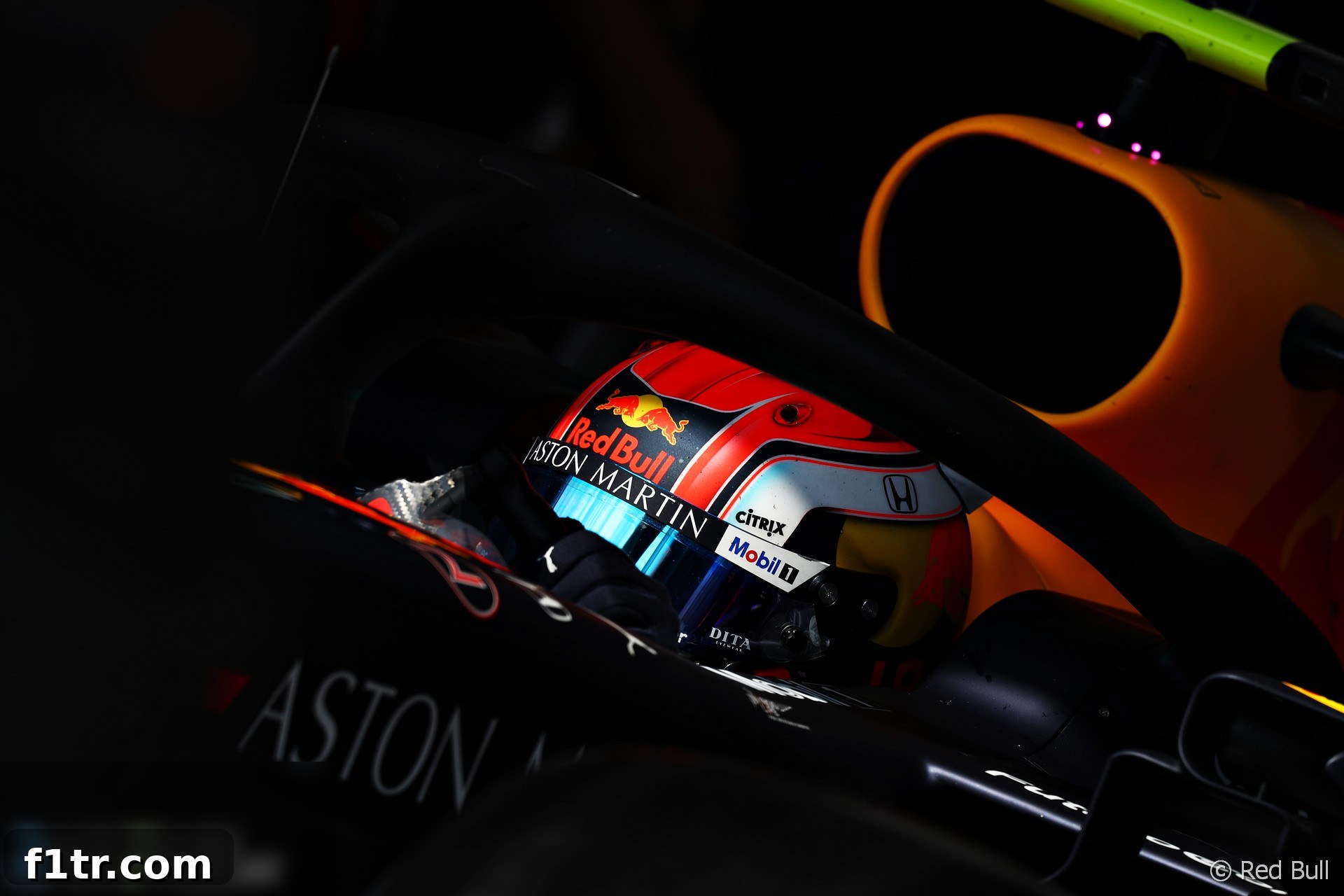
Pierre Gasly’s Unstoppable Rise at AlphaTauri: A Red Bull Dilemma
In the high-stakes world of Formula 1, driver performance is under constant scrutiny, and few have made a more compelling case for recognition in the 2020 season than Pierre Gasly. His tenure at AlphaTauri this year has been nothing short of exceptional, demonstrating a remarkable resurgence after a challenging period.
Gasly’s consistent ability to elevate the AlphaTauri car into Q3, often outpacing his more experienced teammate, stands as a testament to his refined skill and growing confidence. This strong qualifying form has frequently translated into valuable points finishes, propelling the team forward in the fiercely competitive midfield battle. His performance narrative reached its crescendo with a stunning, breakthrough victory at the team’s home race in Monza – a moment that not only etched his name into the annals of F1 history but also served as a powerful statement of his potential.
The Unlikely Victory and Unanswered Questions
The Monza victory, a truly unexpected triumph, was the culmination of exceptional driving, strategic acumen, and a touch of fortune with perfectly timed pit stops. It was a victory that sent shockwaves through the paddock, proving that Gasly, given the right circumstances, possesses the raw talent to win at the pinnacle of motorsport. This outstanding achievement naturally sparked widespread discussion: if any driver in a midfield team has earned a shot at a front-running car, it is undeniably Pierre Gasly.
However, despite his stellar year, the recently confirmed news of AlphaTauri extending his contract for the 2021 season ensures he will likely spend another year battling in the midfield. This decision has raised eyebrows, particularly given the ongoing struggles within the Red Bull Racing camp, AlphaTauri’s sister team.
Red Bull’s Familiar Conundrum: Albon’s Struggles vs. Gasly’s Redemption
The most obvious avenue for Gasly’s promotion would have been a return to Red Bull Racing. Yet, the memories of his previous stint with the team in 2019 still loom large. That initial opportunity ended abruptly after just 12 races, with Gasly being replaced by Alexander Albon due to perceived underperformance and an inability to match Max Verstappen’s pace.
Ironically, the tables have now turned. It is Albon who finds himself under immense pressure, consistently underperforming relative to his dominant teammate, Max Verstappen. The statistical disparity between the two Red Bull drivers paints a grim picture, mirroring the exact scenario that led to Gasly’s demotion. Verstappen, firmly entrenched in third place in the Drivers’ Championship, has amassed nearly 100 points more than Albon, highlighting a significant performance gap.
Albon, currently P8 in the standings, is perilously close to Gasly, holding a mere one-point advantage. This narrow margin underscores the extent of Albon’s struggles, particularly when considering the superior machinery he has at his disposal. Over the last three races, Albon has finished behind the AlphaTauri twice and was on the verge of doing so again at the Nürburgring before his unfortunate retirement. This pattern of results has inevitably intensified scrutiny on his position within the team.
Christian Horner’s Perspective: Why No Red Bull Return for Gasly?
Despite Albon’s precarious situation, the door for Gasly to rejoin Red Bull remains firmly shut, at least for the upcoming season. Red Bull Team Principal Christian Horner has been vocal about his reservations regarding Gasly’s potential return, suggesting that he might not thrive under the intense pressure and specific characteristics of the main Red Bull car.
Speaking after the Portuguese Grand Prix, where Gasly secured an impressive fifth place with a late pass on Sergio Perez, Horner articulated his reasoning. “Obviously, we have a lot of information on the drivers over a big period of time,” he stated. “Pierre has done a super job today and he’s driving very well in that environment with AlphaTauri. He’s comfortable in that car with perhaps the less pressure that goes with that environment as well and less expectation.”
Horner further elaborated on the evolving dynamics within the AlphaTauri team, formerly Toro Rosso. “Obviously their aspirations as a team are different as it was as Toro Rosso. So it makes sense that the fit works well in both directions with Pierre and the AlphaTauri team.” This suggests a strategic alignment between Gasly’s current comfort level and AlphaTauri’s goals, which may differ significantly from Red Bull’s championship aspirations.
Horner drew parallels between Red Bull’s driver performance disparity and similar situations observed across the grid. He emphasized the unique characteristics of the Red Bull car, which he believes presents a particular challenge for some drivers. “I think the car is a more difficult car to drive than the AlphaTauri. We know that, that’s very clear. The car is much more rear-sensitive and I think that that can be unnerving for drivers.”
This rear-sensitive characteristic, while mastered by the prodigious Max Verstappen, can evidently be a significant hurdle for others. “Max copes with that incredibly well, other drivers have struggled more with that. I think that’s just the facts of it,” Horner explained. He even suggested that Albon, if placed in an AlphaTauri, would likely perform comparably to Gasly, referencing Albon’s strong performance in the Toro Rosso last year. “I have no doubt of that. So it’s just the characteristics of our car; they are struggling to commit on corner entry. You see it a little bit with the Ferrari, with Leclerc and Vettel at the moment. You see it in the race with Hamilton and Bottas; that’s just the way it is sometimes.”
Beyond the Junior Programme: Red Bull’s Shifting Strategy
With Albon’s future hanging in the balance, Red Bull is reportedly considering all available options for the second seat. This suggests a potential departure from their long-standing tradition of promoting drivers exclusively from their own junior talent pool. The current driver market presents an unusual array of experienced and highly capable drivers who will be out of contract at the end of the season, including the likes of Sergio Perez and Nico Hulkenberg.
Horner acknowledged this unique situation: “I don’t think we’d be doing our job if we didn’t look at the situation within Formula 1. Obviously, drivers that have got significant experience and ability – it’s a very unusual situation – could be available.” This statement hints at a pragmatic shift in Red Bull’s recruitment strategy, driven by the immediate need for a strong, consistent teammate for Verstappen to bolster their Constructors’ Championship efforts.
However, despite the external candidates and Gasly’s stellar season, Horner reiterated Red Bull’s primary commitment to Albon. “Our first and foremost priority is to give Alex the opportunity to lay claim to that seat,” he affirmed. He also recalled Albon’s strong start at Red Bull in 2019, where he outperformed Gasly after their mid-season swap. “Let’s not forget when he jumped in the car last year, he out-scored and out-performed Pierre significantly in the balance of 2019. So if we were to swap them back, why would it be any different?”
This perspective underscores Red Bull’s belief in Albon’s underlying talent and potential, suggesting that his current struggles might be more attributable to the specific characteristics of the 2020 car and the immense pressure of competing alongside a driver of Verstappen’s caliber. The question remains whether Albon can overcome these challenges in the remaining races to secure his spot, or if Red Bull will ultimately be forced to look elsewhere, potentially altering the landscape of their driver philosophy for years to come.