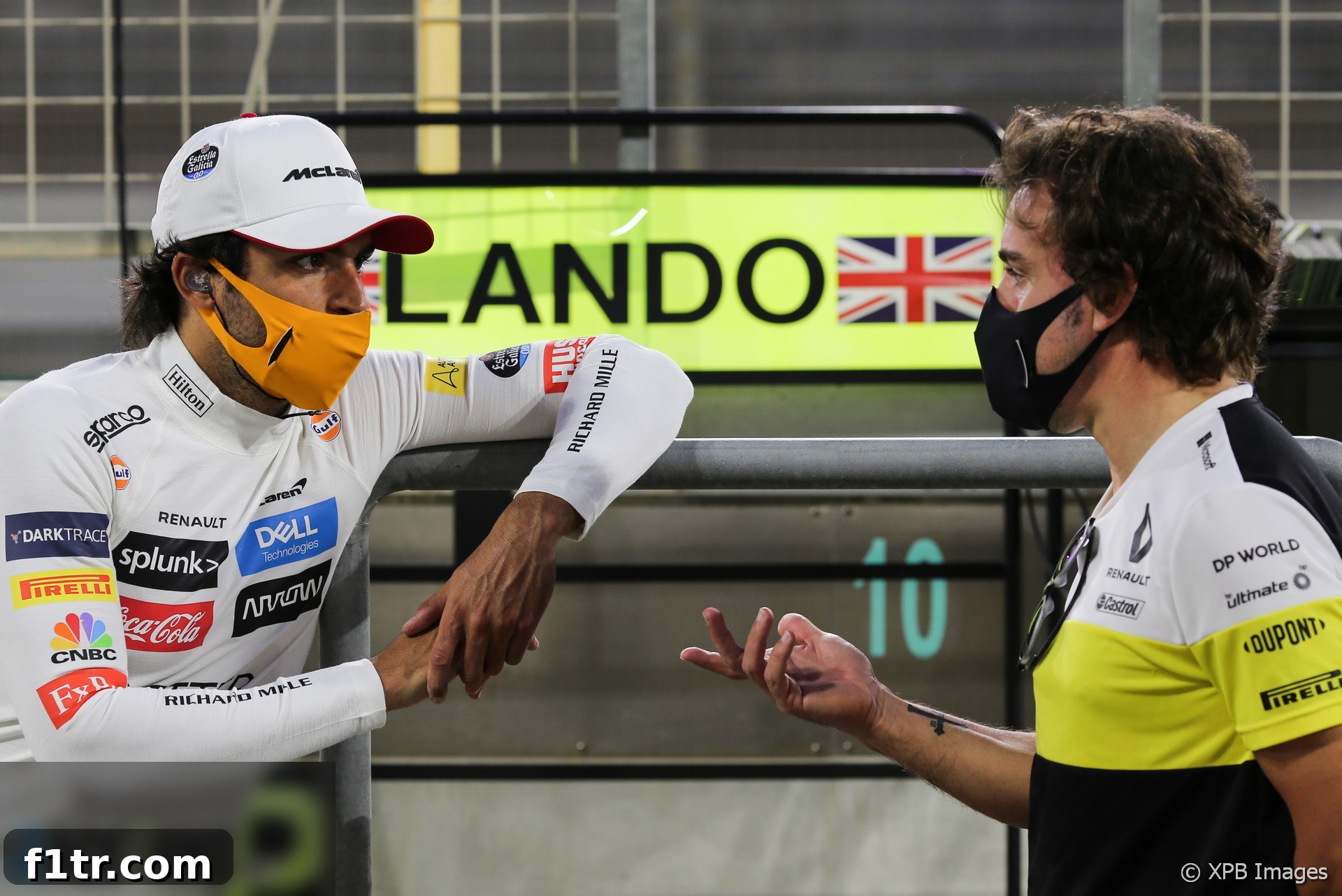
A wave of disappointment has swept through a segment of the Formula 1 paddock following the FIA’s controversial decision regarding eligibility for the crucial post-season test at the Yas Marina Circuit. Two prominent drivers, Carlos Sainz Jnr and Sebastian Vettel, who are both making high-profile team switches for the upcoming 2021 season, have voiced their frustration at being denied the opportunity to participate. This exclusion comes despite the fact that other experienced competitors, notably Fernando Alonso, have been granted permission to take part, leading to widespread questions about the consistency and fairness of the regulatory framework.
The post-season running day, initially earmarked as an exclusive ‘Young Drivers Test’, saw its stipulations altered by the FIA. The updated guidelines opened the door not only to budding talents but also to “any former drivers who did not participate in this year’s world championship.” This specific amendment became the focal point of the controversy, creating a clear division between those allowed to test and those left on the sidelines.
The Unforeseen Consequence of Rule Interpretation: A Test for Some, Not All
The spirit of the Young Drivers Test is, ostensibly, to provide crucial track time for emerging talent, aiding their development and offering teams an opportunity to evaluate potential future stars. However, the FIA’s subsequent clarification broadened the scope considerably, effectively allowing seasoned veterans like Fernando Alonso, who returns to F1 with Alpine (formerly Renault) in 2021 after a two-year hiatus, to participate. Other experienced figures such as Sebastian Buemi and Robert Kubica were also permitted to join, leveraging this updated rule.
For drivers like Carlos Sainz and Sebastian Vettel, whose transitions involve fundamental shifts to new teams, this interpretation of the rules has proven to be a significant setback. Sainz, moving from McLaren to the prestigious Ferrari outfit, articulated his profound disappointment and the perceived illogicality of the situation.
“There hasn’t been any logic explained to me, because, first of all, I think there’s very little logic behind it,” Sainz stated, echoing a sentiment likely shared by many within the F1 community. “I think not many people really understand what’s going on.” His remarks highlight a perceived lack of transparency or a clear rationale from the governing body regarding their decision-making process. For a driver embarking on a new chapter with an iconic team like Ferrari, early acclimatization is paramount, and the denial of this opportunity raises considerable hurdles for his preparations.
Despite his frustration, Sainz maintained a pragmatic outlook. “Of course I’m disappointed [at] not being able to test, but I have to accept it and turn the page. I will make sure I’m prepared as much as I can for next year.” This professionalism underscores the challenges drivers face when confronted with unforeseen regulatory obstacles, forcing them to adapt their meticulous preparation plans.
The Critical Importance of Pre-Season Testing: A Shrinking Window
The context surrounding this post-season test adds another layer of complexity. Pre-season testing for the 2021 season has been drastically reduced from six days to a mere three, severely limiting the invaluable track time available to drivers and teams. This reduction intensifies the need for any additional testing opportunities, making the Yas Marina exclusion even more impactful for those changing teams.
Sainz forcefully argued that, given the reduced pre-season schedule, a more inclusive approach to the Abu Dhabi test would have been the logical course of action. “If it’s only one and a half day testing for each driver next year, the logical thing would have been to open up the hand to some or to all of the drivers who wanted to take part in the Abu Dhabi test. Especially knowing it’s two cars per team.” The fact that teams were permitted to run two cars, rather than the usual single car per test, only amplifies the perceived missed opportunity for drivers like Sainz and Vettel.
The Intricacies of Driver Integration: Beyond Just Driving
For a driver transitioning to a new car, the benefits of early testing extend far beyond simply learning the vehicle’s handling characteristics. Sainz detailed the practicalities and safety aspects that could have been addressed during the Yas Marina session, offering crucial groundwork for his move to Ferrari.
“To at least fit the driver into a car, knowing that next year is the same chassis and see that everything is more or less working well, with the safety aspects from the jump-out test to the fitting of the car itself, it’s obviously primarily important,” he explained. The process of configuring the cockpit to a driver’s exact specifications – seat fitting, pedal positions, steering wheel setup, mirror adjustments, and the ergonomic placement of crucial buttons and switches – is a highly personal and critical step. Ensuring safety protocols, such as the rapid exit test, are properly conducted and comfortable within the new environment is also paramount. These are not trivial adjustments; they fundamentally influence a driver’s comfort, confidence, and ultimately, performance.
“Those are the things that thanks to the Abu Dhabi test, we would have been able to sort out and get a bit of a head start on,” Sainz lamented. “Unfortunately, it’s not happening and obviously I’m disappointed, but [it’s] nothing I can change.” This highlights the practical disadvantages faced by drivers who must now compress these vital preparatory steps into the already curtailed pre-season window.
Sebastian Vettel’s Plea for Fairness and Consistency
Sebastian Vettel, a four-time world champion and another high-profile mover, transitioning from Ferrari to Racing Point (soon to be Aston Martin), echoed Sainz’s sentiment with strong criticism of the FIA’s decision. He described the ruling as “unfair,” directly challenging the perceived double standard that allowed some experienced drivers to participate while others were excluded.
“It’s not my decision to take [but] I think if you allow Fernando then basically you have to allow everyone,” Vettel argued. His point is clear: if the rule amendment was made to accommodate drivers returning to the sport after a break, then consistency demands that all drivers changing teams, who face similar acclimatization challenges, should also be granted the same opportunity. The distinction made between “former drivers who did not participate in this year’s world championship” and current drivers changing teams appears arbitrary and discriminatory in the eyes of many.
“I think the governance should take a fair decision which in this case I don’t think they did otherwise Carlos and some others and myself would have had the opportunity to test,” Vettel added, directly calling into question the FIA’s impartiality and decision-making integrity. The implication is that the rule was perhaps tailored to specific circumstances rather than upholding a broader principle of fairness for all participants navigating team changes.
Vettel admitted to not having delved into the full, detailed explanation for the FIA’s stance, but ultimately dismissed it as “pointless because we are not allowed to test.” This sentiment encapsulates the frustration of being excluded from a vital preparatory session, regardless of the underlying justification provided by the governing body.
Broader Implications for Driver Transitions and F1 Testing Philosophy
The controversy surrounding the Yas Marina test underscores a broader tension within Formula 1 regarding testing philosophy. With increasingly stringent limits on track time, every session becomes disproportionately valuable. For drivers like Daniel Ricciardo, who is also changing teams from Renault to McLaren, the reliance on simulator work and limited pre-season running becomes even more pronounced.
The FIA’s decision, while perhaps intended to support the return of drivers like Alonso, has inadvertently created a perceived imbalance. It raises questions about whether the rules adequately cater to the complex dynamics of driver and team transitions in an era of compressed schedules and ever-evolving technical regulations. The argument could be made that allowing drivers to acclimate to new machinery safely and efficiently ultimately benefits the sport by enhancing competitiveness and reducing the likelihood of early-season struggles or even accidents due to unfamiliarity.
As Formula 1 continues to evolve, the delicate balance between promoting young talent, managing costs, and ensuring a level playing field for all experienced competitors remains a persistent challenge for its governing bodies. The Yas Marina test controversy serves as a stark reminder of the significant impact that seemingly minor rule interpretations can have on driver preparations and, by extension, the competitive landscape of the sport.
2020 Abu Dhabi Grand Prix
- Mercedes also had MGU-K concerns over Russell’s car
- Ferrari hail “outstanding professional” Vettel after his final drive for team
- 2020 Abu Dhabi Grand Prix Star Performers
- Driver line-up confirmed for Yas Marina test, two teams won’t attend
- Paddock Diary: Abu Dhabi Grand Prix
Browse all 2020 Abu Dhabi Grand Prix articles