McLaren Cleared: Unpacking the Lando Norris Pit Stop Investigation and Formula 1 Safety Protocols
In the high-stakes world of Formula 1, every millisecond counts, especially during a pit stop. The rapid tire changes and mechanical adjustments are a breathtaking display of precision and teamwork, yet they also harbor inherent risks. One such incident recently put McLaren under the spotlight as the team faced an investigation following an alleged unsafe release of Lando Norris’s car during a critical phase of a race. This article delves into the details of the incident, the subsequent investigation, and the broader implications for safety regulations within the sport.
The Incident: A Moment of Uncertainty in the Pit Lane
The incident occurred on lap 13, a pivotal moment in the race, when Lando Norris pulled into the McLaren pit box for a routine tire change. Pit stops are typically executed with astounding speed, often under two seconds, demanding perfect synchronization from the crew. However, on this occasion, a lapse in certainty created a potentially dangerous situation. As Norris was given the signal to leave his pit box, a concern quickly arose within the team regarding the security of his wheels.
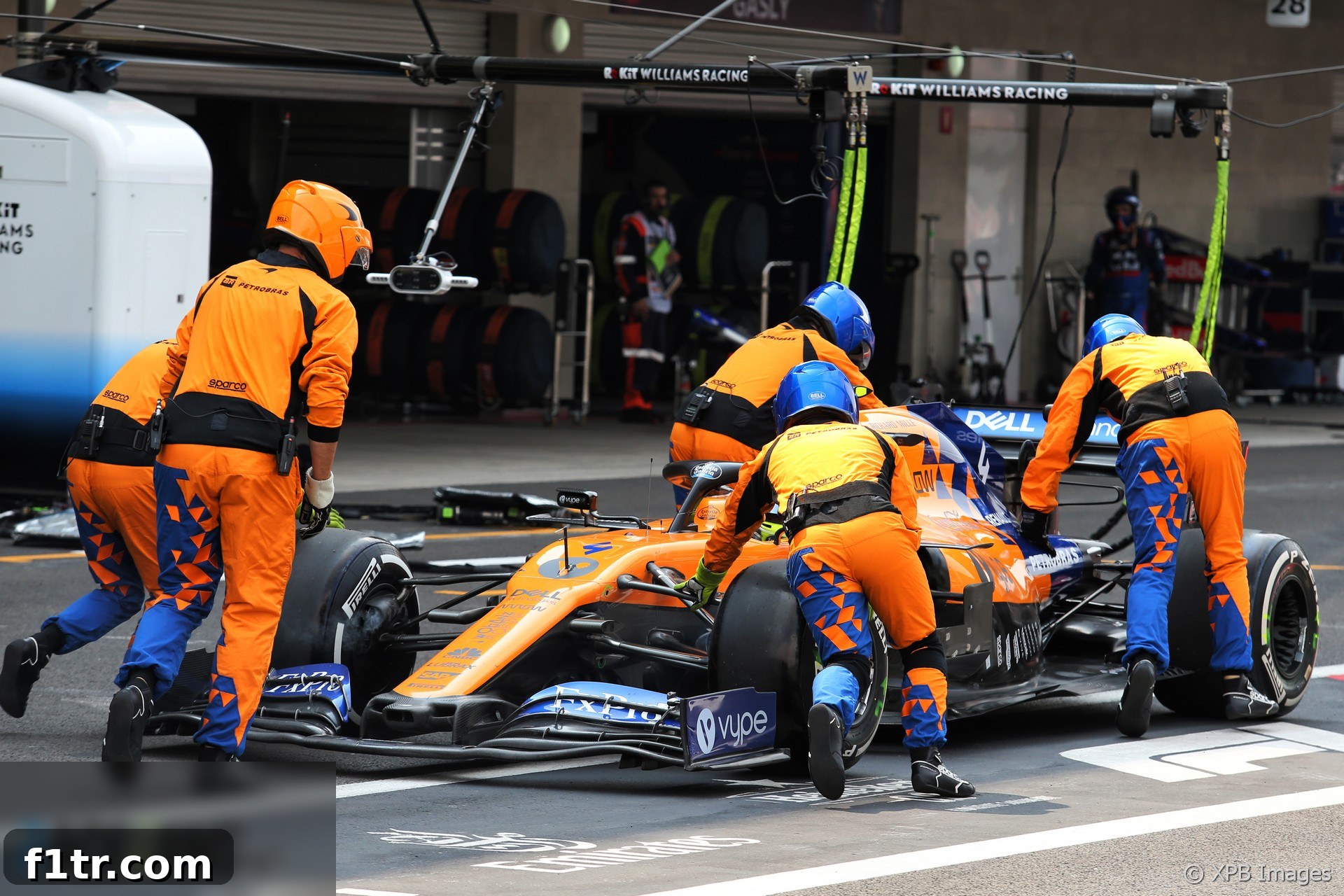
Immediately after Norris’s car was released, the McLaren pit wall communicated an urgent instruction: “Stop the car, we’re coming to get you.” This radio call, delivered with a sense of urgency, signaled that something was amiss. Norris promptly brought his car to a halt just beyond the pit box. The McLaren mechanics, demonstrating quick thinking and adherence to safety protocols, rushed to his aid, pushing the car back into the pit lane to thoroughly check the wheel fittings, specifically the front-left tyre.
This swift action by the team underscored the paramount importance of safety in Formula 1. An insecurely fitted wheel, if not detected, could lead to catastrophic consequences at the high speeds cars reach on track, endangering the driver, fellow competitors, and trackside personnel. The decision to immediately halt Norris’s car, despite the potential loss of race position, was a testament to McLaren’s commitment to safety over competitive advantage.
The FIA Stewards’ Investigation: Seeking Clarity Amidst High Pressure
Following the incident, the stewards of the event initiated a formal investigation, a standard procedure when there’s any doubt regarding the safety of a car released from a pit stop. The primary objective of such an inquiry is to determine whether the team violated Article 34.14 of the FIA Formula 1 Sporting Regulations, which pertains to the safe release of cars from pit stops. This regulation explicitly states that “a car will be deemed to have been released unsafely if it is likely to endanger other drivers or personnel.”
To establish the facts, the stewards undertook a comprehensive review of available evidence. This included meticulously examining video footage from various angles, which often provides crucial visual cues on the execution of a pit stop. Audio evidence, encompassing team radio communications between the pit wall and the driver, and potentially internal team communications, was also scrutinized. This allows investigators to understand the real-time communication and decision-making processes within the team.
Furthermore, the stewards convened with a representative from the McLaren team and the FIA technical delegate. The McLaren team representative provided their account of the events, clarifying the sequence of actions and, critically, the reason behind their immediate recall of Norris’s car. They stated that the front-left mechanic, responsible for securing that specific wheel, had experienced uncertainty regarding whether the tyre was properly fastened. This doubt, however slight, prompted the team to act with extreme caution, leading to the decision to stop the car and bring it back for a re-check.
The FIA technical delegate, an independent expert, also presented their findings. Their role is to provide an objective technical assessment of the situation. Despite reviewing all available video evidence, the technical delegate concluded that they “could not establish if the car was in an unsafe condition after being released from the pit stop.” This lack of definitive visual or technical proof posed a significant challenge for the stewards.
The Verdict: No Penalty Due to Insufficient Evidence
After careful consideration of all the presented evidence and testimonies, the stewards reached a pivotal conclusion: McLaren would not receive a penalty. Their official statement highlighted the critical factor in their decision: “The stewards considered that with the available evidence it is not possible to determine if the car was released in an unsafe condition.”
This ruling underscores a fundamental principle of justice in motorsport: for a penalty to be imposed, there must be clear and irrefutable evidence of a rule infringement. In this specific case, while McLaren’s proactive measure suggested a potential issue, the subsequent investigation could not definitively confirm that the wheel was indeed improperly secured to the point of being unsafe. The doubt, ironically, worked in McLaren’s favor, as the burden of proof rests with the regulatory body.
The outcome serves as a reminder of the fine line between a precautionary measure and an actual safety breach. McLaren’s actions were commendable from a safety perspective, demonstrating a robust risk management approach. However, the inability of the stewards to definitively prove an unsafe release meant that no sporting penalty could be levied against the team. This decision, while perhaps frustrating for those seeking clear accountability, upholds the rigorous standards of evidence required in Formula 1 adjudication.
The Broader Context of F1 Pit Stop Safety and Regulations
Pit stop safety has been a continuous area of focus and evolution in Formula 1. The sheer speed and complexity of these operations mean that even minor errors can have significant consequences. Over the years, the FIA has implemented numerous regulations and technological advancements to enhance safety in the pit lane.
Historically, there have been incidents that have shaped current regulations. For example, severe accidents involving mechanics being hit by cars or flying wheels have led to stricter rules regarding pit lane speed limits, mandatory equipment, and the design of wheel guns and retention systems. Modern wheel guns are equipped with sensors that indicate whether a wheel nut has been properly tightened, providing an additional layer of security and real-time feedback to the pit crew and the pit wall.
Furthermore, the introduction of robust pit stop lights and automated release systems aims to minimize human error. These systems often integrate with the wheel gun sensors, only giving the “go” signal when all wheels are confirmed as secure. However, as this McLaren incident highlights, even with advanced technology, the human element of judgment and precaution remains vital.
The responsibility for ensuring a safe release ultimately lies with the team. They are expected to have stringent internal protocols and training programs for their pit crews. The pressure on these crews is immense, with global audiences scrutinizing their every move. Yet, their professionalism and dedication to safety are unwavering.
Impact on Lando Norris and McLaren’s Race
For Lando Norris, the pit stop drama was an unfortunate setback in his race. While the immediate issue was resolved, the time lost by stopping and being pushed back inevitably compromised his track position and strategy. Later in the race, Norris ultimately retired, adding to a challenging day for the young driver and the McLaren team. While the retirement itself may not have been directly caused by the pit stop incident, the sequence of events certainly contributed to a disrupted race for Norris.
For McLaren, the investigation, despite resulting in no penalty, serves as a valuable learning experience. It reinforces the need for absolute certainty and flawless execution in every aspect of a pit stop. The team’s decision to prioritize safety at all costs, even if it meant sacrificing precious race time, reflects a responsible and mature approach to motorsport, one that prioritizes the well-being of its driver and others on track.
Conclusion: A Continuous Pursuit of Perfection
The investigation into Lando Norris’s pit stop serves as a compelling reminder of the intricate balance between speed, precision, and safety in Formula 1. While McLaren ultimately avoided a penalty due to insufficient conclusive evidence, the incident underscored the critical importance of secure wheel fittings and the constant vigilance required in the pit lane. The stewards’ decision, based on the principle of clear proof, highlights the fairness and thoroughness of the FIA’s regulatory processes.
Formula 1 continues to push the boundaries of technology and human performance, but never at the expense of safety. This incident, rather than being a black mark, reinforces the sport’s unwavering commitment to mitigating risks. Teams like McLaren, alongside the FIA, are perpetually engaged in a pursuit of perfection, ensuring that every element, from the fastest pit stops to the most complex aerodynamic designs, adheres to the highest possible safety standards. It is this dedication that allows Formula 1 to remain a thrilling yet responsibly governed spectacle of speed.
Don’t miss anything new from RaceFans
Follow RaceFans on social media for the latest updates:
- Join RaceFans on Facebook
- Follow RaceFans on Twitter
- Get daily email updates from RaceFans
Explore More from the 2019 F1 Season
Delve deeper into key moments and stories from the 2019 Formula 1 season:
- Crying in the Melbourne car park at 2019 grand prix was my career low – Ocon
- McLaren Racing reports reduced £71 million loss in 2019
- Kvyat: Hockenheim podium last year was “my biggest achievement” so far
- How the FIA’s new encrypted fuel flow meter targets Ferrari’s suspected ‘aliasing’ trick
- “He smashed my office door”: 23 must-see moments from ‘Drive to Survive’ season two
Browse all 2019 F1 season articles