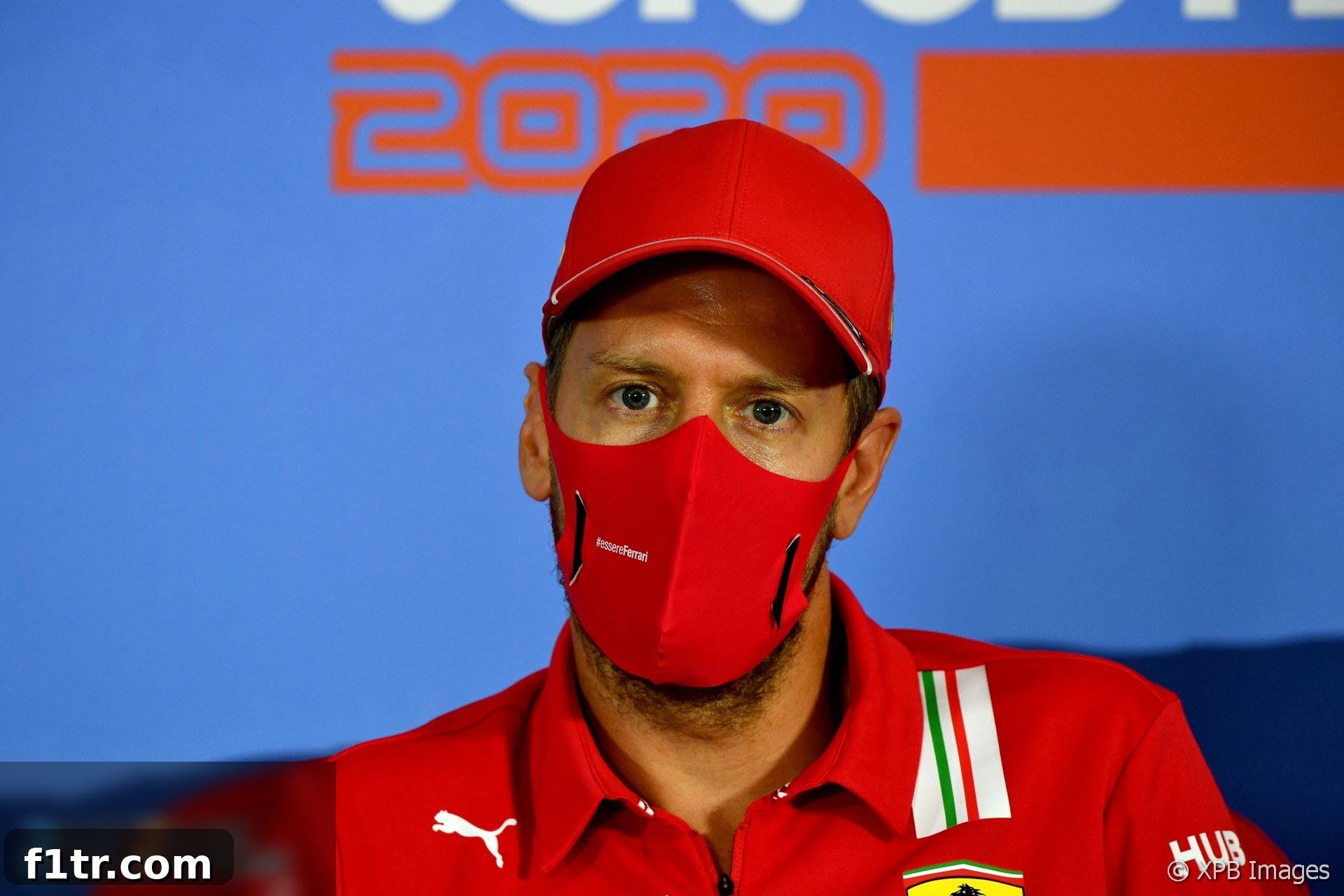
Sebastian Vettel: Loyalty Amidst Departure and Reflecting on Ferrari’s F1 Journey
Sebastian Vettel, the revered four-time Formula 1 world champion, has unequivocally stated that his impending departure from Ferrari at the conclusion of the current season will not, in any measure, influence his approach to team orders during races. His commitment to the iconic Scuderia, he asserts, remains absolute, signifying that his willingness to adhere to strategic directives on track will neither heighten nor diminish as a consequence of his expiring contract.
This resolute declaration emerges amid a period of intense scrutiny over internal team dynamics at Ferrari, particularly concerning the competitive relationship between Vettel and his formidable younger teammate, Charles Leclerc. Previously, team principal Mattia Binotto had outlined a policy of granting both drivers equal treatment throughout the 2020 campaign. However, Binotto also articulated a pragmatic stance, confirming that the team remains prepared to implement team orders in what he termed “clear situations” – instances where such strategic interventions would demonstrably lead to a more advantageous outcome for the storied Italian racing powerhouse. This nuanced position highlights the enduring tension within Formula 1, balancing the fierce individual aspirations of drivers with the overarching collective objectives of the team.
Vettel’s perspective on the complexities of team orders is significantly shaped by his past experiences, most notably an incident during the 2019 Russian Grand Prix. In that race, Vettel famously chose to disregard a direct instruction from Ferrari to allow Leclerc to overtake him. He later publicly admitted that this action was a mistake. Speaking at an FIA press conference held at the scenic Red Bull Ring – a venue that hosted the highly anticipated, albeit delayed, commencement of the revised 2020 season – Vettel presented a pragmatic viewpoint. He conveyed that it is entirely reasonable for racing drivers to comply with team orders when those instructions are logically sound and clearly serve a legitimate benefit for the team as a whole.
The Unchanged Professionalism of a Champion
Elaborating on his consistent approach, Vettel underscored his steadfast dedication to seamless integration within any team structure he has been a part of. This philosophy has consistently guided his tenure at Ferrari, a period marked by both immense promise and significant challenges. “I’ve always, I think, tried to integrate inside the team and the same goes for my time with Ferrari,” Vettel explained. “I think as much as obviously you want to have success on track and look out for your own result, I think in the end you’re driving for a team as well.” This profound statement encapsulates a fundamental principle of team sports, even within the seemingly individualistic arena of Formula 1, where the success of the collective endeavor ultimately supersedes individual glory.
Vettel acknowledged the unprecedented circumstances of the 2020 season, profoundly impacted by the global pandemic, made it exceedingly difficult to foresee specific on-track scenarios or team directives. “I think this year it’s very difficult to answer because we don’t know what type of season we will have ahead of us. We don’t know yet how competitive we will be, et cetera.” The pervasive uncertainty surrounding the revised calendar, potential alterations to race formats, and the continuously evolving competitive landscape adds layers of complexity to any pre-season predictions, especially regarding sensitive issues like strategic team orders.
Despite the knowledge of his impending departure, Vettel firmly maintained that his commitment to aiding the team remains unwavering should such a collaborative situation arise. “But should the situation arise and make perfect sense, then I think you expect both drivers to help each other out. I don’t think that has anything to do with the fact that my contract expires and I’m going to leave the team.” This perspective powerfully underscores the professional integrity and unwavering dedication often required in high-stakes environments like Formula 1, where loyalty frequently transcends immediate personal ambitions or contractual changes. However, he swiftly tempered this statement by reaffirming his inherent competitive spirit and drive to win. “But as I said, at the same time, obviously, you’re racing for yourself. So I’m not trying to make Charles’s life easy on track in terms of waving him by. I think we have been fighting each other in the past and we will continue to do so.” This intricate duality – the ultimate team player and the fiercely competitive individual – largely defines the challenging ethos of an elite Formula 1 driver.
Reflecting on Ferrari’s Championship Pursuit and Unfulfilled Ambitions
While Ferrari had, somewhat cautiously, downplayed its potential for the then-upcoming season at the start of the year, Sebastian Vettel was quick to inject a note of caution against prematurely dismissing the team’s championship aspirations. He advocated for a patient, wait-and-see approach, emphasizing the inherently unpredictable nature of any Formula 1 season, particularly one as uniquely structured as 2020. Nevertheless, in a moment of profound and candid reflection, Vettel acknowledged a challenging truth: throughout his tenure at Maranello, Ferrari had consistently struggled to produce a car capable of regularly outperforming Mercedes and securing the coveted Formula 1 world title.
“Since the day that I joined we’ve tried everything together to fight for the championship, which I think is what we’ve done on several occasions,” he thoughtfully mused. “We did not win the championship so in that regard looking back also you can say that I have failed, we have failed.” This remarkably honest self-assessment, coming from a driver of Vettel’s caliber, vividly illustrates the immense pressure and the ultimate metric of success in Formula 1 – clinching world championships. His much-anticipated arrival at Ferrari in 2015 was met with tremendous expectations, fueled by hopes that he could emulate his idol, Michael Schumacher, and return the championship trophy to the legendary Maranello headquarters. While there were significant title challenges, particularly in the 2017 and 2018 seasons, the ultimate prize heartbreakingly continued to elude them.
Vettel continued, “Obviously, we set out with a clear target that we wanted to achieve. And the truth is that up to this point, we didn’t. We still have this season ahead of us.” This poignant statement encapsulates both the lingering hope for the revised 2020 season, however slender, combined with a pragmatic and sober acceptance of past shortcomings. The ambitious vision of restoring Ferrari to its glorious championship-winning days, a vision profoundly shared by both driver and team, regretfully remained unfulfilled during his five seasons.
The unprecedented circumstances surrounding the severely delayed 2020 season further complicated any definitive predictions about Ferrari’s prospects. “Given that it’s such a strange season, strange start without fans, without people here, I think it’s impossible to know exactly what will expect us. So I think it would be too soon to write everything off.” The compressed calendar, the introduction of potential double-headers at the same circuit, and the striking absence of spectators at races could collectively inject an element of profound unpredictability that might just, against all odds, play into the hands of a team desperately seeking an upset.
The Persistent Gap to Mercedes: A Defining Challenge
When delving into the specific reasons why Ferrari ultimately fell short of championship glory during his time, Vettel pointed to a fundamental and recurring issue: a consistent lack of overall package strength that could endure an entire season. “But when we talk about looking back, I think here and there was missing a little bit. I think in the end, we were never able to put the package together that was good enough until the end of the year to fight for the championship.” He elaborated that while Ferrari often demonstrated formidable pace and started certain seasons strongly, they consistently struggled to maintain that crucial performance edge throughout the entire, grueling campaign.
“We got close until I would say midway, halfway in some years. But then the gap was opening up and I think we then were defeated quite clearly by Mercedes and Lewis in those years.” This observation serves as a stark and painful reminder of Mercedes’ formidable consistency, unparalleled operational efficiency, and relentless development pace. Their remarkable ability to not only design and build a dominant car but also to continuously evolve and improve it throughout a season frequently left competitors, including a determined Ferrari squad, struggling desperately to keep pace. The unwavering strength of Lewis Hamilton, combined with the precision engineering and strategic brilliance of the Mercedes operation, collectively created an almost insurmountable benchmark for all their rivals.
Ultimately, Vettel’s summary of Ferrari’s championship struggles was delivered with striking candor and an unvarnished honesty: “In the end, it’s quite simple, we were not quick enough, our package wasn’t good enough and as a team, we were not as strong as Mercedes.” This candid assessment powerfully illuminates the multifaceted nature of sustained success in Formula 1, where optimal car performance, astute team strategy, flawless operational efficiency, and exceptional driver skill must all converge in perfect harmony to clinch a coveted world title. Ferrari, despite its immense historical legacy, vast resources, and passionate global fanbase, simply could not consistently match the all-around superiority of Mercedes throughout Sebastian Vettel’s impactful tenure.
The Unprecedented 2020 F1 Season: A Glimmer of Hope in Uncertainty?
The 2020 Formula 1 season stands as an entirely unique chapter in the sport’s extensive history, having been dramatically reshaped and profoundly impacted by the global COVID-19 pandemic. The initial race calendar suffered severe disruption, leading to unprecedented delays, numerous cancellations, and the eventual creation of a condensed, predominantly European-focused schedule. This created an atmosphere of pervasive uncertainty, not only for the teams and drivers but for the entire global motorsport community. With races commencing largely without spectators and under stringent health and safety protocols, the traditional vibrant and bustling F1 environment was fundamentally transformed.
For teams like Ferrari, who might have been generally perceived as starting the season slightly behind their main rivals in terms of raw pace, such a “strange season” could conceivably present unexpected opportunities. The compressed schedule, the innovative possibility of multiple races at the same venue, and the intense pressure of a rapidly unfolding championship battle could collectively lead to greater variability in performance across the grid. Unexpected results, unforeseen reliability issues, or sudden fluctuations in competitive form might allow a determined team to capitalize where they otherwise would not have under more conventional circumstances. Furthermore, the limited testing and development time available could mean that initial car performance holds even more sway, or conversely, the ability to adapt quickly and effectively becomes an even more crucial differentiator.
Vettel’s sentiment about not writing off Ferrari’s chances too soon resonates deeply with this unique and unpredictable context. In a season where established norms are fundamentally challenged, and the conventional rhythm of technological development and sporting competition is profoundly disturbed, an underdog might genuinely find an unexpected avenue to surprise. While Mercedes undeniably remains the formidable benchmark, and other strong contenders like Red Bull often thrive in chaotic and evolving conditions, Ferrari’s vast experience, immense resources, and strategic acumen could still see them contending for victories, especially if the competitive balance shifts unexpectedly through nuanced regulatory interpretations or specific circuit-performance variances. For Sebastian Vettel, entering his poignant final season with the Scuderia, this unprecedented variability and potential for surprise might just represent his last, best chance to add another glorious chapter to his illustrious career with the iconic Italian racing giants.