F1 Budget Cap Breach: Red Bull’s Penalty Ignites Fierce Debate Among Teams
The aftermath of the FIA’s ruling on Red Bull Racing’s breach of the 2021 Formula 1 budget cap has sent ripples across the paddock, sparking a contentious debate among team principals regarding the appropriateness and severity of the imposed sanctions. While the sport’s governing body concluded its thorough investigation, confirming a significant overspend by the Milton Keynes outfit, the resultant penalty has been met with vastly divergent opinions, highlighting the complex challenge of enforcing financial regulations in elite motorsport.
On Friday, the FIA formally announced the details of Red Bull’s transgression against the Financial Regulations. It was revealed that the team had exceeded the budget cap by more than £1.8 million ($2.2 million at the time), categorised as a ‘minor overspend breach’ – meaning it was less than 5% of the overall cap. For this infraction, Red Bull was fined $7 million (£6 million) and, critically, faced a 10% reduction in its aerodynamic testing allocation for the upcoming 2023 season. This decision, intended to uphold the integrity of the financial rules, has instead unveiled deep divisions within the Formula 1 community.
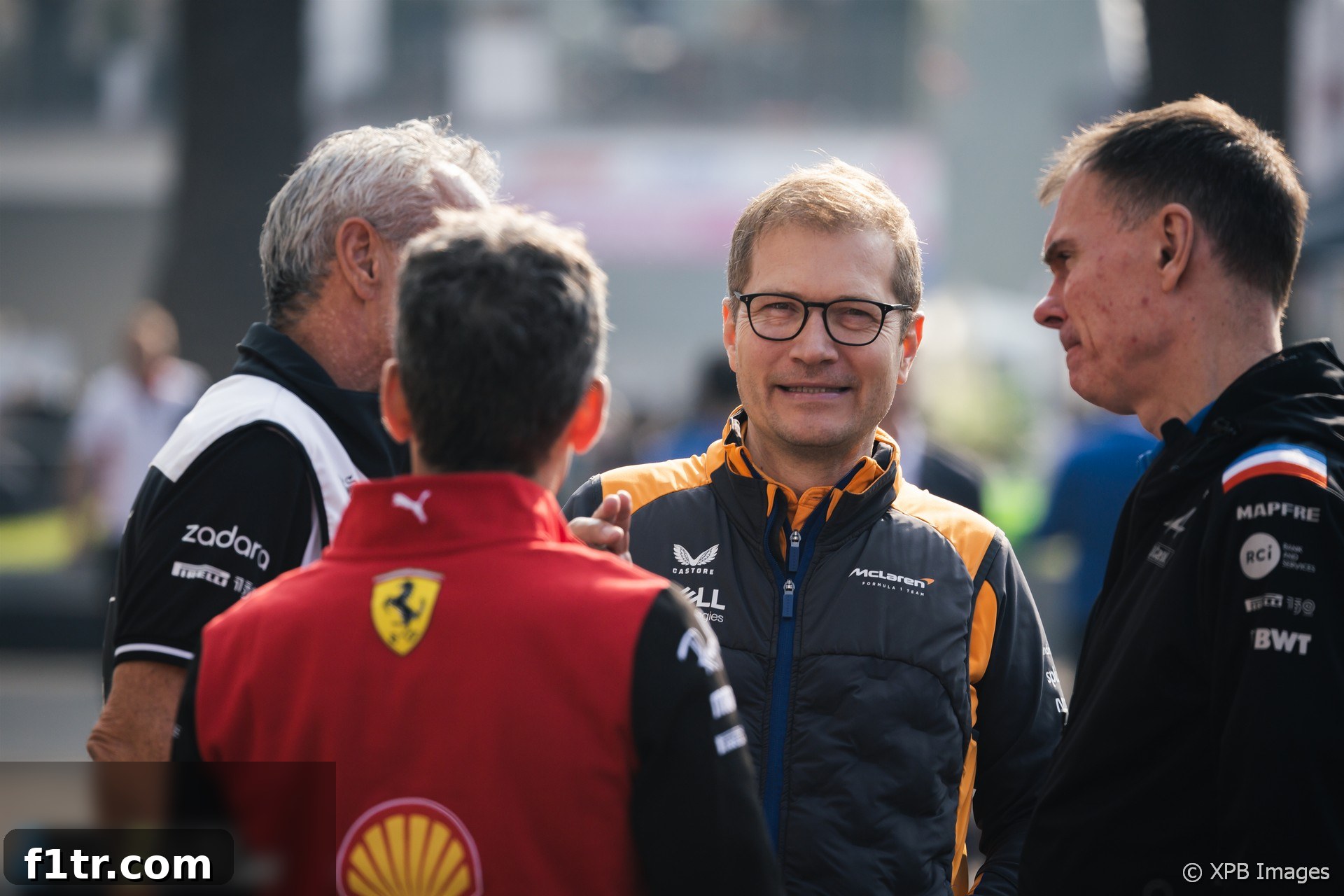
McLaren’s Stance: Andreas Seidl Calls for Stricter Penalties
Among the most vocal critics of the FIA’s chosen penalty has been McLaren team principal Andreas Seidl. While acknowledging and commending the diligent efforts of the FIA in conducting a comprehensive audit across all ten Formula 1 teams, which accurately identified Red Bull’s non-compliance, Seidl expressed profound disappointment with the leniency of the sanctions. His perspective underscores a widespread concern that insufficient penalties could undermine the very foundation of the budget cap system, which was introduced to level the playing field and ensure the long-term financial sustainability of the sport.
“On the positive side, I think it’s good to see that actually the FIA did a good job in terms of doing the audit where nine teams got it right and where it was confirmed that one team was clearly in breach,” Seidl stated in an interview. “So that’s a positive outcome. But on the negative side it’s also clear that, from my point of view, the penalty clearly doesn’t fit the breach. I just hope that moving forward we’ll have stricter penalties in place.”
Seidl’s apprehension stems from the belief that any overspend, regardless of its classification as ‘minor’, inherently confers a competitive advantage. In a sport where marginal gains dictate success, even a seemingly small financial boost can translate into crucial tenths of a second on track or superior development resources. McLaren’s principal argues that if the penalties do not sufficiently outweigh the benefits of breaching the cap, teams might be tempted to view fines as a mere cost of doing business, rather than a significant deterrent. This could erode the core principle of fair competition that the budget cap was designed to protect, fostering an environment where financial might, rather than ingenuity and efficiency, dictates performance.
Red Bull’s Defense: Christian Horner’s “Draconian” Claim
In stark contrast to Seidl’s critique, Red Bull team principal Christian Horner launched a robust defense of his team, vehemently describing the penalty as “draconian.” In an extensive 50-minute press conference following the FIA’s announcement, Horner meticulously detailed Red Bull’s reasons for the overspend, attempting to justify the circumstances surrounding their financial non-compliance. His explanation centered on what he claimed were differing interpretations of complex financial regulations and the inclusion of non-performance-related costs in the audit.
Horner highlighted specific expenditure categories such as catering costs for staff, sick pay, and unused parts, arguing that these should not have fallen under the budget cap as they did not directly contribute to the car’s performance. He stressed that Red Bull believed they were operating within the cap and that the overspend was a result of a misinterpretation of a nascent and evolving set of financial rules. According to Horner, the team gained “zero sporting benefit” from the overspend, characterising the breach as an administrative error rather than a deliberate attempt to gain an unfair advantage.
However, Seidl remained unmoved by Horner’s explanations. When asked if he had listened to the Red Bull chief’s lengthy justification, Seidl retorted, “No I didn’t listen to it because I can imagine it was another fairy-tale hour, probably. No, not really interested in that.” This dismissive response underscores the deep skepticism among rival teams regarding Red Bull’s narrative, suggesting a belief that any explanation is merely an attempt to downplay the seriousness of the breach and its potential competitive implications.
Alpine’s Perspective: Otmar Szafnauer Finds Penalty Appropriate
Offering a third, more conciliatory perspective was Alpine team principal Otmar Szafnauer, who expressed satisfaction with the FIA’s decision. Szafnauer acknowledged that while Red Bull’s overspend was marginal, a breach is still a breach, drawing parallels to on-track infractions. His view suggests a pragmatic acceptance of the FIA’s process and a focus on moving forward, rather than dwelling on the specific severity of the penalty.
“They were marginally over from what I could tell by reading all the releases and listening to Christian,” Szafnauer told Sky. “But over is over. From a half kilogram underweight on-track we were excluded from a particular race. But I believe the punishment’s a good one, that the process was followed. I’m happy that both the FIA and Red Bull have come to their conclusion and they’re happy to move forward and so are we.”
Szafnauer’s comparison to technical infringements on track, where even minimal deviations from regulations can lead to severe penalties like disqualification, highlights the zero-tolerance approach often applied to sporting rules. From Alpine’s perspective, the FIA’s process and the resulting penalty, while not as harsh as some might desire, represent a fair and consistent application of the financial regulations, allowing the sport to close this chapter and focus on future competition.
Understanding the Impact: The 10% Aerodynamic Testing Reduction
While the $7 million fine represents a significant financial hit for Red Bull, the 10% reduction in aerodynamic testing allocation for 2023 is arguably the more potent part of the penalty. In Formula 1, aerodynamic development is paramount to performance, and teams invest heavily in wind tunnel time and CFD (Computational Fluid Dynamics) simulations to refine their car designs. A 10% reduction means Red Bull will have fewer opportunities to test new parts, optimise existing designs, and gather crucial data, potentially hindering their development curve compared to rivals.
This limitation could have tangible effects on Red Bull’s performance throughout the 2023 season, particularly in the early stages of development and during in-season upgrades. Teams are constantly striving for aerodynamic efficiency, and any constraint on this process can lead to slower progress, fewer innovation cycles, and potentially a less competitive package. The direct impact on car development makes this penalty a sporting one, designed to address the competitive advantage gained from the overspend, even if inadvertently.
The Future of F1 Financial Regulations and Compliance
The Red Bull budget cap saga has undeniably served as a critical test for the FIA’s nascent Financial Regulations. As the first major breach and subsequent penalty, it sets a precedent for how such infringements will be handled in the future. The divergent reactions from team principals underscore the ongoing challenge of achieving consensus and maintaining absolute fairness in a fiercely competitive environment.
Andreas Seidl reiterated the importance of strict adherence moving forward: “Teams have absolutely no reason to be in breach this year following the first experience of making their cost cap submissions. I just hope if there’s any breach again this year that as I said before then it also ends up being appropriate penalties.” This sentiment is widely shared, with many hoping that the lessons learned from Red Bull’s situation will lead to greater clarity in the regulations and even more robust enforcement mechanisms.
The FIA is now faced with the task of refining its auditing processes and potentially clarifying ambiguous areas within the regulations to prevent future disputes. The integrity of the budget cap, as a cornerstone of Formula 1’s efforts towards sustainability and competitive balance, hinges on transparent, consistent, and undeniably firm enforcement. As the sport moves into the 2023 season, all eyes will be on how teams adapt to the financial constraints and how the FIA continues to police this vital aspect of modern Formula 1.
Related F1 Articles
- How many victory chances did Hamilton have in his first winless F1 season?
- Delay in producing new parts held up Alfa Romeo upgrade
- Doohan’s practice run earns praise, but Alpine undecided over reserve role
- ‘I was in the fight, which hasn’t been often this year’: Ricciardo’s Mexican GP transcript
- Verstappen “will continue to break records for the rest of his career” – rivals
Browse all 2022 Mexican Grand Prix articles