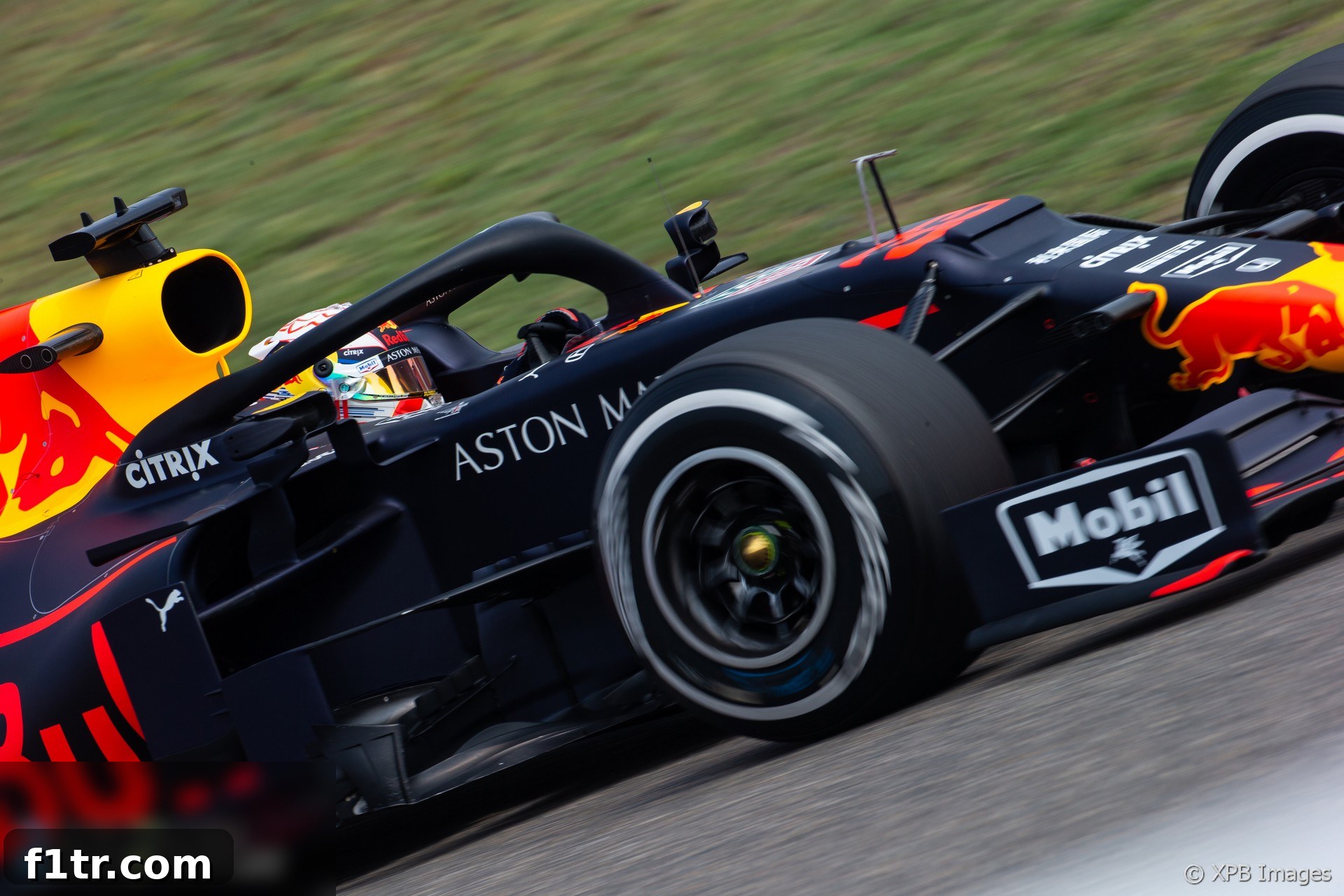
The Fiery Aftermath of F1 Qualifying: Verstappen vs. Vettel in a War of Words
The intense final moments of Formula 1 qualifying are often a crucible of raw speed, strategic brilliance, and sometimes, simmering tension. It was precisely this high-stakes environment that ignited a heated dispute between two of the sport’s most formidable talents: Max Verstappen and Sebastian Vettel. Following a dramatic Q3 session, Red Bull’s Max Verstappen openly criticized Ferrari driver Sebastian Vettel, accusing him of a crucial lapse in track etiquette that ultimately cost the young Dutchman a vital final flying lap attempt.
The incident unfolded in the dying seconds of the qualifying session, a period where every driver is pushing to extract the absolute maximum from their machinery and secure the best possible grid position. Drivers typically aim to create a gap in front of them, allowing for clean air, optimal tire preparation, and an undisturbed run at a fast lap. This unwritten ‘gentleman’s agreement’ is crucial for fair competition, but in the heat of the moment, it can often be tested.
The Incident Unfolds: A Costly Overtake in Q3
As the clock ticked down to zero in Q3, the pressure on every driver was immense. Each competitor was meticulously positioning themselves on track, attempting to create the perfect window for their final, decisive assault on the lap times. Verstappen, focused on optimizing his final run, was carefully following the Ferrari ahead of him, attempting to maintain the necessary space for a clean lap without impeding others or being impeded himself. However, this delicate balance was abruptly disrupted.
Approaching the critical final corner of the circuit, a moment demanding utmost precision and concentration, Sebastian Vettel executed an overtake on Verstappen. While overtaking is a standard procedure in racing, its timing and context in the final seconds of qualifying, particularly when drivers are preparing for flying laps, can be highly contentious. Verstappen found himself in an unenviable position: either hold his line and risk compromising Vettel’s preparation, or back off to re-establish a suitable gap. Opting for the latter, he lifted off the throttle to create the desired separation for a proper run.
This forced lift-off, however, had immediate and detrimental consequences. By the time Verstappen had found sufficient space and regained his rhythm, he was unable to reach the start/finish line before the chequered flag was waved. This meant he could not begin his final flying lap, effectively ending his Q3 efforts prematurely. A qualifying session where every tenth of a second counts, losing a final, potentially faster lap can dramatically alter a driver’s grid position and subsequent race prospects.
Verstappen’s Vehement Criticism: Unwritten Rules and Lost Potential
Understandably, Max Verstappen’s frustration was palpable in the aftermath of qualifying. Speaking to the media, he didn’t mince words, expressing his disappointment directly. “I was trying to follow the Ferrari in front of me and trying to be nice,” Verstappen stated, highlighting his adherence to the established, albeit unwritten, code of conduct among drivers during qualifying. He elaborated on the difficult choice he faced: “I could also have overtaken him but it’s just not what you do in qualifying.” This remark underscores the nuanced etiquette that governs driver behavior when preparing for a hot lap, where mutual respect for track position and space is paramount.
Verstappen’s disappointment was rooted not only in the lost lap but also in the perceived missed opportunity. “This time it caught me out so of course I’m not happy about that but it will swing around and it will come back to others as we sometimes,” he mused, hinting at the cyclical nature of such incidents in racing, perhaps even suggesting a future reprisal or a belief in racing karma. The Red Bull driver was particularly aggrieved because he felt he had the pace to challenge for a higher position. “It’s annoying because we could have fought for third today. Now we just have to do some more overtaking,” he concluded, transforming his frustration into a determined resolve for the upcoming race.
This incident brought into sharp focus the perennial debate surrounding track manners and the interpretation of racing rules during qualifying. While there are strict regulations against impeding other drivers, the more subtle actions, like aggressive positioning or untimely overtakes in warm-up laps, often fall into a grey area of ‘gentleman’s agreements’ that are difficult for stewards to police effectively. Verstappen’s comments served as a powerful reminder of the delicate balance between competitive aggression and sportsmanship required in Formula 1.
Ripple Effect: Gasly Also Impeded
The consequences of Vettel’s maneuver and Verstappen’s subsequent need to back off extended beyond just the Dutchman’s individual qualifying effort. The ripple effect inadvertently impacted Verstappen’s then-teammate, Pierre Gasly. As Verstappen slowed to create a gap for himself, he unintentionally held up Gasly, who was following closely behind. This unfortunate chain reaction meant that Gasly, too, was unable to begin his final flying lap before the chequered flag, effectively ruining his last opportunity to improve his grid position.
At the time, the race stewards did not indicate that the incident between Vettel and Verstappen, or the subsequent impedance of Gasly, was under formal investigation. This lack of official action often leaves drivers and teams feeling a sense of injustice, especially when such incidents directly impact their performance. The stewards’ reluctance to intervene in situations that are often deemed a part of ‘racing incidents’ or ‘qualifying chaos’ can be a source of ongoing tension within the paddock, highlighting the challenge of enforcing subjective rules around driver etiquette versus objective regulations on dangerous driving.
A Pattern Emerges? Vettel’s Prior Incidents
This wasn’t an isolated incident for Sebastian Vettel. Indeed, it brought to mind a strikingly similar situation from earlier in the season during qualifying in Bahrain. On that occasion, Vettel faced significant criticism for a comparable maneuver. As Haas driver Romain Grosjean was preparing to begin his flying lap, Vettel overtook him, disrupting Grosjean’s rhythm and forcing him to adjust his track position. This, in turn, caused a further knock-on effect, as Grosjean then inadvertently held up McLaren’s Lando Norris, who was also on a preparatory lap.
Norris, much like Verstappen, openly expressed his dissatisfaction with Vettel’s actions, attributing his compromised lap to the Ferrari driver’s decision. The recurrence of such incidents involving Vettel raises pertinent questions within the F1 community: Are these aggressive yet ultimately legal attempts to gain track position, or do they represent a recurring misjudgment of qualifying etiquette? The fine line between gaining a strategic advantage and unfairly impeding a competitor is constantly debated, and Vettel’s actions in these instances have certainly placed him at the center of that discussion.
Qualifying traffic management remains one of the perpetual challenges in Formula 1. With twenty cars vying for space on track, often within tight timeframes, the potential for conflicts is always high. Drivers are constantly balancing the need for clear air, optimal tire temperatures, and the psychological edge of track position. While stewards are vigilant about clear cases of impeding, situations like those involving Vettel and Verstappen often highlight the gaps between explicit rules and the implicit understandings that drivers try to maintain for the sake of fair play.
The Nuances of F1 Qualifying Etiquette
The unwritten rules of Formula 1 qualifying etiquette are a complex blend of common sense, mutual respect, and strategic maneuvering. At its core, the primary objective for every driver in qualifying is to achieve the fastest possible lap time. To do this, a car needs to be in its optimal operating window—this includes tire temperature, brake temperature, and having clear air to maximize aerodynamic performance. When a driver is preparing for a flying lap, they often engage in specific warm-up routines, which involve weaving to heat tires and strategically positioning the car to avoid the ‘dirty air’ created by a car directly ahead.
This delicate preparation can be easily disrupted by another driver’s actions. An untimely overtake, especially on the final corner before the start/finish line, can force a driver to lift off the throttle, momentarily losing momentum, or deviate from their intended line. Such actions can throw off tire temperatures, making them too cold or too hot, and disrupt the entire rhythm of the lap. In Q3, where the margins between grid positions are often measured in mere hundredths of a second, any such disruption can be catastrophic to a driver’s chances.
Teams use sophisticated real-time data and radio communication to guide their drivers through traffic, advising them on gaps and potential impeding situations. However, in the chaotic rush of the final minutes, human judgment plays a critical role. Drivers are constantly walking a tightrope: pushing for every possible advantage, including a slipstream from a car ahead, while trying not to compromise their own or another competitor’s lap unfairly. The incidents involving Max Verstappen and Sebastian Vettel serve as stark reminders of how quickly this delicate balance can be upset, leading to intense disputes and a questioning of sportsmanship in the heat of battle.
Conclusion: Looking Ahead – The Race and Beyond
The contentious qualifying session, marked by the clash between Max Verstappen and Sebastian Vettel, undoubtedly set the stage for an intriguing race. For Verstappen, the inability to complete his final Q3 lap translated directly into a grid position that he felt was below his car’s true potential. His defiant declaration of “Now we just have to do some more overtaking” not only showcased his competitive spirit but also hinted at an aggressive approach to the upcoming Grand Prix, eager to rectify the perceived injustice of qualifying.
Such incidents are more than just momentary frustrations; they contribute to the narrative of rivalries and shape the dynamics of the season. They highlight the relentless pressure within Formula 1, where every decision, every move on track, carries significant weight. As the sport continues to evolve, the debate surrounding track etiquette, the unwritten rules of racing, and the boundaries of fair play will undoubtedly remain a crucial talking point, influencing driver behavior and fan discussions alike.
Don’t miss anything new from RaceFans
Follow RaceFans on social media:
- Join RaceFans on Facebook
- Follow RaceFans on Twitter
- Get daily email updates from RaceFans
2019 F1 season
- Crying in the Melbourne car park at 2019 grand prix was my career low – Ocon
- McLaren Racing reports reduced £71 million loss in 2019
- Kvyat: Hockenheim podium last year was “my biggest achievement” so far
- How the FIA’s new encrypted fuel flow meter targets Ferrari’s suspected ‘aliasing’ trick
- “He smashed my office door”: 23 must-see moments from ‘Drive to Survive’ season two
Browse all 2019 F1 season articles