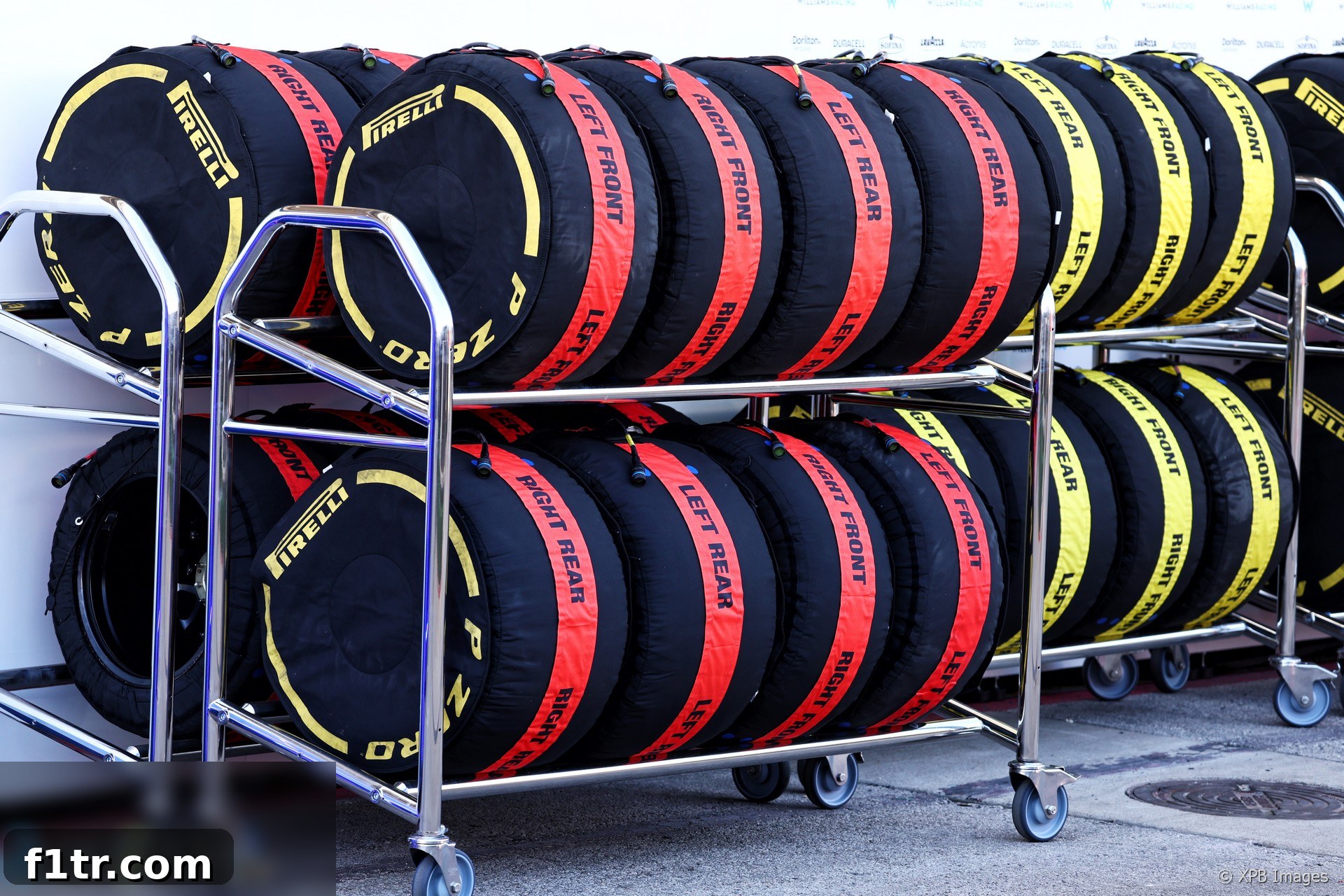
Formula 1 is currently embroiled in a significant debate regarding its ambitious plan to completely ban tire heating blankets by the 2024 season. This proposal, intended to promote sustainability and streamline operations, has sparked considerable concern across the paddock, with many drivers and engineering experts warning of potential detriments to racing quality and, more critically, driver safety.
The journey towards eliminating these vital pre-heating devices has been gradual. In previous seasons, teams were permitted to pre-heat their dry tires to a maximum of 100 degrees Celsius. However, this limit was reduced to 70C for the current season. The trajectory continues downwards, with plans to further decrease the temperature cap to 50C next season, culminating in a complete prohibition of tire blankets by 2024.
The initial tests of these lower pre-heating temperatures have already yielded strong feedback. Pirelli, Formula 1’s exclusive tire supplier, conducted a test with the 50C limit during a Friday practice session at the Circuit of the Americas. The results prompted a wave of negative reactions from several prominent drivers, including reigning world champion Max Verstappen and Haas driver Kevin Magnussen, who voiced serious concerns about the implications for grip and car control.
While tire blankets are indeed forbidden in other major motorsport categories, such as Formula 2 and IndyCar, many within the F1 community argue that drawing direct comparisons is overly simplistic and potentially misleading. Andrew Shovlin, the trackside engineering director at Mercedes, highlighted the unique challenges F1 faces in adapting to such a change, emphasizing that the sheer performance levels of an F1 car set it apart from its counterparts.
Shovlin elaborated on this distinction, stating, “In terms of the tires, it’s quite hard to compare because we did the harder tires in Austin at a lower blanket temperature. What we have now, what we have this weekend, is very similar to what we’ve run before.” He stressed the monumental task facing Pirelli: “I think the challenge of taking a car this fast, this powerful, has this much downforce and making a blanket-less tire is incredibly difficult. It’s very easy to look at the Formula 2 series and say ‘well, they do it’, but the energies involved are enormously high – we’re doing around 20 seconds quicker at some circuits – and that challenge for Pirelli is very, very difficult. It requires a lot of steps of technical development.”
The complexity of developing an appropriate tire compound for Formula 1 that can function optimally without pre-heating, while simultaneously coping with the sport’s relentless pace of car development, presents a multifaceted engineering puzzle. Shovlin articulated a deep concern that mismanaging this transition could severely compromise the quality and safety of F1 racing. The risk lies in legislation potentially outpacing the technological advancements needed to make such a change viable without negative consequences.
Pirelli’s mission is not a static one. Modern Formula 1 cars generate significantly more downforce than their predecessors, subjecting tires to immense high-speed loads. Teams are constantly innovating to extract even more performance, meaning Pirelli must continually adapt its tire designs to keep pace with these evolving demands. “Pirelli’s problem is not a static problem,” Shovlin emphasized. “These cars have got more downforce this year than the cars we used to have. High speed loads are very, very high and teams are constantly working to add performance and for Pirelli to just keep up with that constant development is different.”
While it might seem conceptually straightforward to produce a tire that doesn’t require pre-heating – a task Pirelli could theoretically accomplish quickly – Shovlin warns that such a tire would inevitably lead to substandard racing. It would likely prevent drivers from pushing their cars to the absolute limit, diminishing the spectacle and competitive integrity of the sport. “You would say, ‘yes, of course you can make a blanket-less tire’ – Pirelli could give us one straight away – but that tire would not lead to good racing. It would not allow the drivers to push as hard,” he explained.
The anticipated outcomes of such a tire would include significantly higher tire pressures and a substantial loss of mechanical grip, fundamentally altering how cars behave and how drivers approach corners and overtakes. The delicate balance involves weighing the sport’s competitive requirements against genuine environmental concerns, which are undoubtedly important. However, the overarching imperative, according to Shovlin, is “making sure we don’t end up with a worse sport.”
Echoing these sentiments, Alpine sporting director Alan Permane relayed specific feedback from his team’s experienced driver, Fernando Alonso. Alonso’s experience with the 50-degree Celsius tire test was stark: he deemed the conditions “dangerous” due to a profound lack of grip. Permane described seeing “power-sliding and things like that we rarely see with that sort of thing,” highlighting the dramatic shift in car behavior.
However, Permane also indicated that Pirelli might be making progress in finding a viable compromise. He noted a critical distinction between the Austin test and subsequent sessions: “The difference from here to Austin is that we ran the tires at 70 degrees here but heated them for two hours.” He went on to explain, “Normally our heating time is three hours and Mario [Isola] from Pirelli tells us that 70 degrees at two hours is the same or even a little bit less [energy use] than 50 degrees in three hours.” This suggests that adjusting the duration of heating, even at a slightly higher temperature, could potentially achieve similar energy savings to a lower temperature limit, without compromising initial grip as severely.
This potential compromise offers a glimmer of hope, indicating that a solution could be found that addresses both the environmental objectives and the critical performance and safety concerns. “So it seems like they’ve already found a good compromise from Austin where our drivers, certainly Fernando, said it’s actually dangerous. He found a real lack of grip. I think you can see power-sliding and things like that we rarely see with that sort of thing,” Permane concluded, cautiously optimistic. “So I think that they’ve found a direction, something that hopefully we can take through to next year.”
The debate surrounding tire blanket bans in Formula 1 encapsulates a broader challenge facing modern motorsport: how to innovate for a sustainable future while preserving the core essence of competitive, high-performance racing. The transition to blanket-free tires impacts every facet of the sport, from race starts and pit stops to qualifying performance and overall race strategy. Drivers facing cold tires will need longer warm-up laps, potentially leading to more cautious initial stints and increasing the risk of incidents early in a race or after a safety car restart. This could profoundly alter the dynamics of the racing spectacle.
Ultimately, the onus is on Pirelli and the FIA to develop a tire solution that satisfies stringent safety requirements, maintains exceptional grip levels for aggressive racing, and aligns with the sport’s environmental goals. The consequences of rushing this development or misjudging the technical challenges could be severe, impacting both the competitive integrity and the safety record of Formula 1. The coming seasons will undoubtedly be crucial in determining whether F1 can successfully navigate this complex path, delivering a blanket-less future without sacrificing the thrill and precision that define the pinnacle of motorsport.
Explore more about Formula 1’s technical challenges and race insights.