A New Era Dawns: Unveiling Formula 1’s Hybrid Ifema Madrid Circuit
For months, the Formula 1 world has buzzed with speculation and whispers regarding a brand-new circuit in Madrid, set to host the Spanish Grand Prix from the 2026 season onwards. While initial rumors predominantly pointed towards a traditional street circuit winding through the vibrant Spanish capital, official information released by Formula 1 today painted a picture that is both familiar and refreshingly unique. The eagerly anticipated Ifema Madrid Circuit has been officially designated as a “hybrid” course, a classification that immediately distinguishes it from many of its contemporaries on the global calendar.
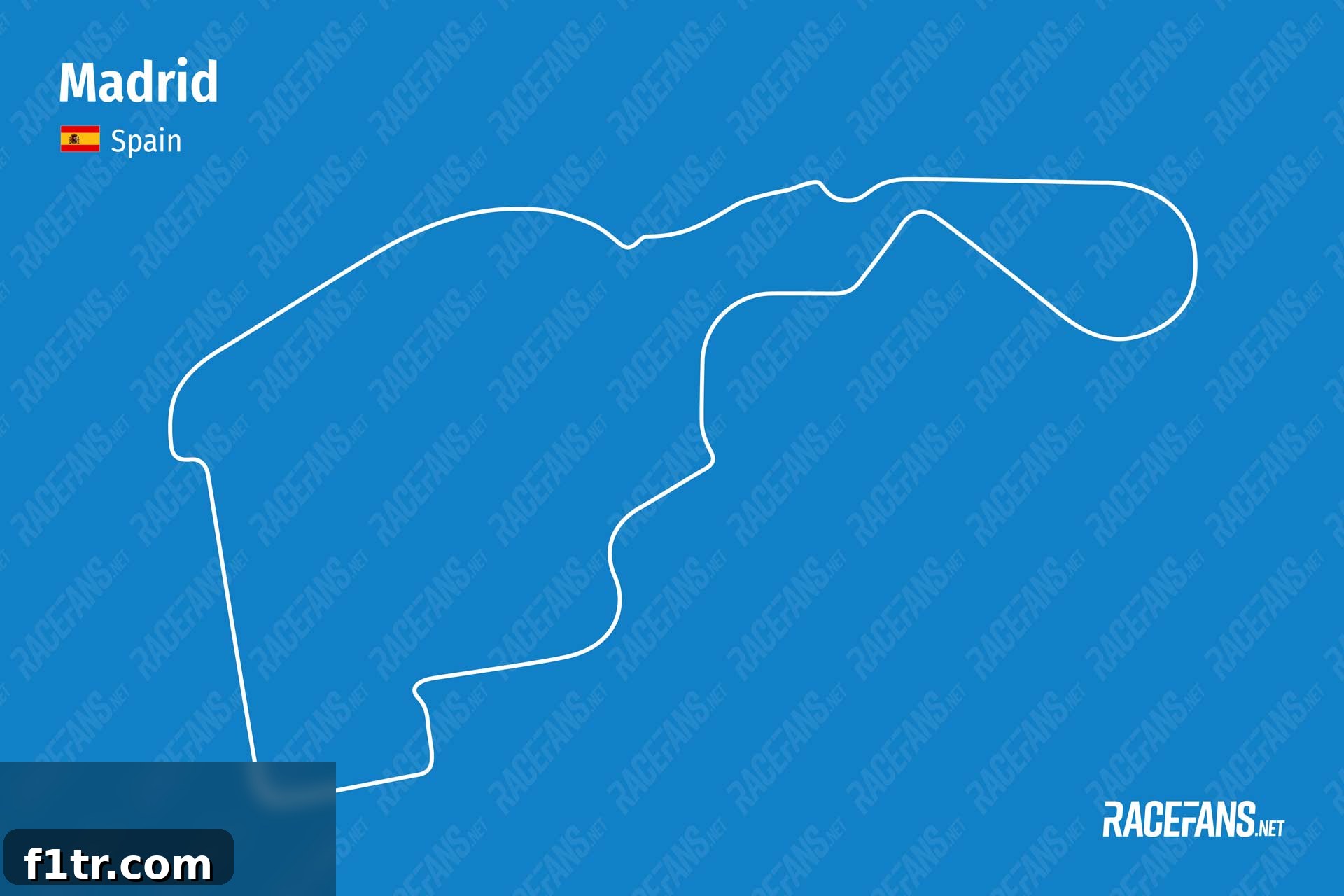
This innovative 20-turn track stretches an impressive 5.5 kilometers, or approximately 3.4 miles, promising a demanding yet exhilarating challenge for drivers. What makes it truly hybrid lies in its composition: roughly 1.5 kilometers – just over a quarter of its total length – will utilize existing public roads. The vast majority of the circuit, however, will be purpose-built, specifically engineered for the pinnacle of motorsport. This carefully balanced fusion aims to capture the raw excitement and urban charm of a street circuit while integrating the high-performance characteristics and safety measures typically associated with permanent racing facilities.
Unpacking the Hybrid Design: More Than Just a Street Track
The concept of combining public roads with dedicated racing sections is, of course, not entirely new to Formula 1. Iconic venues such as the Singapore Street Circuit and the newer Las Vegas Grand Prix circuit already incorporate public thoroughfares into their layouts. Historically, circuits like Adelaide in Australia also embraced this mixed approach. However, what sets the Ifema Madrid Circuit apart is the distinctive ratio between its public and purpose-built components. In most existing hybrid tracks, public roads constitute the predominant section, with permanent facilities typically limited to the pit and paddock areas. Madrid’s new circuit, by contrast, largely reverses this trend, leaning heavily towards newly constructed sections.
This deliberate design choice is expected to offer a unique set of challenges and opportunities. While the existing roads of the Recinto Ferial site, home to the sprawling Ifema exhibition center, will form the foundation for the crucial start/finish area and parts of the opening sector, much of the remaining track will be carved out of virgin territory. The significant purpose-built section will be meticulously constructed in the Valdebebas site to the north, allowing designers unparalleled freedom to create a layout optimized for modern F1 machinery and thrilling racing action. This approach promises a track that merges the unexpected nature of street racing with the precision and predictability of a dedicated circuit, potentially delivering the best of both worlds.
A Virtual Lap: Navigating the Ifema Madrid Circuit’s Key Features
Formula 1 drivers and fans alike can anticipate a high-octane spectacle when the Ifema Madrid Circuit makes its debut. From the moment the lights go out, the action will be intense. The start/finish area seamlessly transitions into a challenging left-right chicane, a section designed to offer the very first potential overtaking opportunity. With the track varying between 12 and 15 meters in width in places, designers have strategically identified up to four prime spots where drivers might attempt to outmaneuver their rivals, promising plenty of wheel-to-wheel combat.
The Ascent to Valdebebas: The Track’s Signature Corner
Exiting the initial chicane, drivers will unleash the full power of their F1 machines, accelerating through a sweeping curved zone where top speeds are projected to exceed 300 kilometers per hour (approximately 186 mph). This high-speed blast culminates in a heavy braking zone at Turn 5, another prime location for potential overtakes, setting the stage for strategic maneuvers and daring lunges.
As drivers accelerate away from Turn 5, the circuit takes a dramatic turn upwards, passing beneath the M11 motorway and climbing rapidly into the purpose-built section. It is here that Turn 10, christened “Valdebebas,” is expected to emerge as the track’s defining and most talked-about corner. Drivers will face a blind approach to this incredibly fast, right-hand corner, which sweeps through well over 180 degrees. Crucially, this corner is expected to incorporate significant banking, though the precise degree of its incline remains a subject of ongoing refinement and decision-making.
Jarno Zaffelli, CEO of Dromo, the renowned Italian architectural firm tasked with developing the track design, anticipates that the Valdebebas banking will be a particular favorite among the drivers. “We have been able to follow an approach to the track based on the comments of the drivers, who demand fast and safe layouts, and the presence of more banking, so appreciated after its reintroduction in Formula 1 in Zandvoort,” Zaffelli stated, highlighting the direct influence of driver feedback on the circuit’s conceptualization and Dromo’s prior success in incorporating such features.
The Return Journey and Street Circuit Finish
Having navigated the challenges of Valdebebas, drivers will then begin their journey back towards the exhibition center, encountering a rapid-fire sequence of corners that will demand precision and commitment. This section includes a second tunnel, cleverly routing the track beneath the motorway once more. As they emerge from this intricate sequence, they will rejoin the public roads, transitioning back into a classic street circuit ambiance. The final two corners embody this urban character perfectly: a pair of sharp, 90-degree bends designed to test braking ability and car control, potentially offering a final opportunity for a late-race lunge before the finish line.
Beyond the Asphalt: Infrastructure, Experience, and Sustainability
The Ifema Madrid Circuit is not merely designed for thrilling on-track action; it is also set to introduce several groundbreaking features aimed at enhancing the overall Formula 1 experience and reinforcing the sport’s commitment to sustainability.
A First for F1: The Covered Paddock
One of the most remarkable and innovative aspects of the Madrid circuit will be its fully covered paddock area – a first in the history of the Formula 1 World Championship. This ambitious architectural feat promises numerous benefits, from providing optimal working conditions for teams regardless of weather to potentially creating a more integrated and engaging fan experience. A covered paddock could offer enhanced hospitality spaces, improved logistical flow, and a unique aesthetic that sets Madrid apart.
A Fan-Centric Venue
Formula 1 is also placing a strong emphasis on the environmental benefits and spectator convenience of situating its new race within such an accessible urban location. The Ifema Madrid site boasts excellent public transport links, allowing fans to reach the circuit efficiently and sustainably, reducing reliance on private vehicles. This integration within the city’s existing infrastructure not only minimizes the environmental footprint but also offers visitors the opportunity to seamlessly combine a world-class motorsport event with exploring the rich cultural tapestry and vibrant atmosphere of Madrid itself. The ease of access and the wealth of amenities in and around the Ifema exhibition center are poised to make the Spanish Grand Prix one of the most spectator-friendly events on the calendar.
The Dromo Touch: Engineering a Modern F1 Track
The selection of Dromo to spearhead the circuit’s design speaks volumes about the ambition behind the Ifema Madrid project. The Italian architects have garnered a reputation for their innovative and driver-focused approach to track design and revision. Their most notable recent achievement includes the acclaimed overhaul of Zandvoort for its triumphant return to the F1 calendar, where they successfully incorporated challenging banked corners that were universally praised by drivers and fans alike. Dromo’s philosophy prioritizes creating layouts that are not only fast and safe but also inherently exciting and conducive to close racing, often by introducing unique topographical features and varying corner characteristics.
Their expertise in balancing speed with technicality, and their understanding of how modern F1 cars interact with different surfaces and gradients, makes them an ideal partner for a hybrid circuit of Madrid’s nature. Their previous work demonstrates a commitment to driver feedback and an ability to translate those insights into tangible track features that enhance the spectacle without compromising safety. This collaboration ensures that the Ifema Madrid Circuit will be a meticulously engineered facility, built to the highest contemporary standards of Formula 1.
The 2026 Factor: Adapting to Future Regulations
Assessing how well-suited the Ifema Madrid Circuit will be for exhilarating racing at this nascent stage presents a unique challenge, primarily due to the fluid nature of Formula 1’s regulations. The chassis regulations for the cars that will compete in the 2026 season are still under development and have yet to be finalized. These regulations, encompassing everything from aerodynamics to power unit specifications, will profoundly impact car performance, cornering speeds, and ultimately, the racing dynamics on any given circuit.
Unlike recent additions to the F1 calendar, such as Jeddah with its sustained high-speed sections or Las Vegas with its extraordinarily long straights, Ifema Madrid appears to strike a different balance. Its design suggests a more technical challenge, with a blend of medium to high-speed corners, a signature banked turn, and strategic overtaking zones rather than outright top-speed dominance. The exact character of the racing will hinge significantly on how the 2026 cars perform – whether they favor aerodynamic efficiency, mechanical grip, or raw power. The circuit’s inherent versatility, with its mix of permanent and public road sections, offers a degree of adaptability, but the final verdict on its racing prowess will only truly be known once the new generation of Formula 1 cars hits the track.
Madrid’s F1 Future: A Distinctive Addition to the Calendar
In conclusion, the Ifema Madrid Circuit promises to be a distinctive and exciting addition to the Formula 1 calendar from 2026. Its innovative “hybrid” design, with a significant proportion of purpose-built track seamlessly integrated with urban elements, offers a fresh perspective on modern F1 venues. Features like the groundbreaking covered paddock and the track’s commitment to spectator accessibility and environmental responsibility underscore a forward-thinking approach.
While the ultimate racing spectacle will depend heavily on crucial decisions yet to be taken – including the precise surface characteristics, the exact steepness of the Valdebebas banking, and, most importantly, the finalized 2026 Formula 1 regulations – all signs point towards a circuit capable of delivering unique challenges and memorable moments. Madrid is not just getting a race; it’s getting a meticulously designed, innovative, and potentially game-changing venue that could redefine the Formula 1 experience for years to come.
Formula 1 Insights
- Verstappen loathes F1’s new generation of cars – but what do his rivals reckon?
- The ‘throwback weekend’ is back in fashion. But it’s a flawed concept – especially for F1
- Is Formula 1’s double race cancellation a blessing in disguise?
- Todt admits Schumacher crashed on purpose – but did it really cost him two titles?
- 25 of the most memorable radio exchanges from the ‘Max and GP show’
Browse all Formula 1 articles