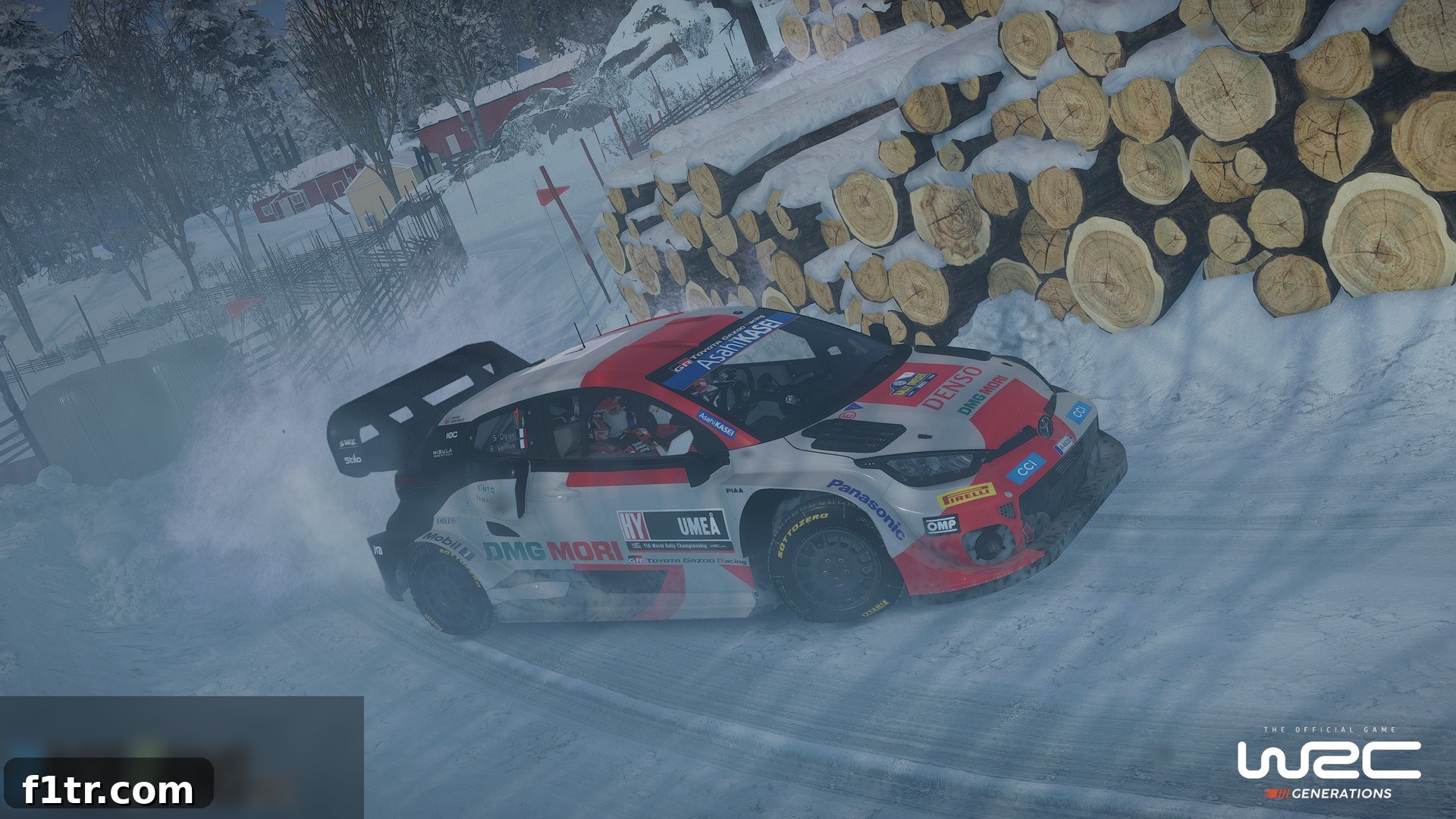
The exhilarating world of rally racing ignites once more this month, with the legendary Monte Carlo Rally kicking off the World Rally Championship (WRC) season. This iconic event serves as a thrilling start to the motorsport calendar, setting the stage for a new era in the realm of rally games. For 2023, the coveted WRC game license has officially transitioned to EA, marking a significant shift in the landscape of virtual rallying. However, before the next chapter begins, we must acknowledge the grand finale of an impressive lineage: WRC Generations.
Developed by the highly experienced KT Racing, WRC Generations stands as their ultimate contribution to the official WRC game series. This release marks the culmination of years of dedicated development and passion for the sport. The question on every rally enthusiast’s mind is whether this often-understated series, known for its authentic simulation and challenging gameplay, manages to sign off with a memorable high note. As the last title from KT Racing under the WRC banner, Generations was conceived as a true celebration of the franchise’s journey, packed with an unprecedented amount of content designed to be a definitive farewell.
A Content King: KT Racing’s Grand Farewell
WRC Generations arrives brimming with an expansive array of content, designed to give the series a spectacular send-off. Unlike typical license transitions, KT Racing and publisher Nacon were aware well in advance that their 2022 WRC title would be their last. This foresight allowed them to pour an extraordinary amount of effort into making Generations a comprehensive ‘greatest hits’ package, a veritable museum of rally history and recent championship action.
At its core, the game features all the critical elements from the 2022 WRC season. Players can take the wheel of the groundbreaking new hybrid cars in the premier WRC class, alongside all the official teams and star drivers who competed last year. The thirteen rallies from the 2022 championship are meticulously recreated, offering the latest in competitive rally stages. But Generations goes far beyond the contemporary, delving deep into the archives to present a wealth of additional historic content that will delight long-time fans.
Adding to the core championship, eight iconic rallies from previous games in the franchise make a triumphant return. These fan-favorite locations, including the challenging stages of Wales Rally GB, the technical asphalt of Rallye Deutschland, and the diverse terrains of Rally Argentina and Rally Mexico, significantly bolster the game’s geographical diversity. This makes WRC Generations arguably the most content-rich official WRC rally game ever released, offering an unparalleled volume of rallies and special stages to master. Furthermore, a treasure trove of historic cars is included, transporting players through rallying’s most legendary eras. From the untamed power of the infamous Group B monsters to the fierce rivalry of the Nineties with legendary Subaru Imprezas and Mitsubishi Evos, all the way to Sébastien Ogier’s championship-winning Volkswagen Polos, Ford Fiestas, and Toyota Yaris WRCs from the pre-hybrid era, the roster is a petrolhead’s dream. While veterans of the more recent WRC titles might find some stage layouts familiar, the sheer number of unique stages ensures that variety remains abundant, making it difficult to lodge any complaints about repetition.
Immersive Gameplay and Deep Career Progression
WRC Generations offers a robust suite of gameplay options to cater to every type of rally fan. From an intricately detailed career mode and single-season options to individual rallies and focused stage time trials, the game provides diverse avenues for engagement. A comprehensive multiplayer offering further expands its appeal. As with most major motorsport titles, the career mode is expected to be a primary draw, though those who have journeyed through KT Racing’s previous WRC iterations will experience a strong sense of familiarity, a testament to the series’ consistent design philosophy.
The career mode masterfully balances the thrill of driving with the strategic demands of team management. Players can choose their starting point, whether it’s beginning in the junior WRC3 category, establishing a privateer team, or partnering with an existing manufacturer in WRC2 or even the top-tier WRC class. This flexibility allows for a tailored experience. The management aspect is appreciably more involved than it might seem, encompassing crucial decisions such as hiring staff, securing sponsorship deals, and strategically allocating time across the calendar to maximize earnings and experience points without overworking the crew. While some might find its presentation and structure bear a slight resemblance to mobile game design, it nonetheless offers a captivating and rewarding journey through the demanding world of professional rallying.
Behind the Wheel: Authentic Driving Dynamics
Once you strap into the virtual cockpit, WRC Generations truly shines with its impressive handling model. While not aiming for the hyper-realism of a simulator like Richard Burns Rally, the cars possess a palpable sense of weight and inertia this year. This subtle but impactful change elevates the importance of momentum and precision, demanding a more nuanced driving approach. Crucially, players cannot employ a one-size-fits-all strategy; adapting to different cars and varied surface types—gravel, asphalt, snow, ice—is essential for success. The inclusion of variable weather conditions and dynamic time-of-day for every stage further enhances the challenge, ensuring that drivers are constantly kept on their toes and require quick thinking and adaptability throughout the career mode.
As has become a hallmark of KT Racing’s work, the stage design in WRC Generations is nothing short of excellent. Each rally location feels distinct and authentic, offering unique challenges and breathtaking vistas. The subtle nuances between gravel rallies, for instance, are incredibly well-executed; no two feel exactly alike, demanding different driving styles and setups. The environments appear meticulously crafted, almost as if directly traced from real-life onboard footage of WRC events, which speaks volumes about the developers’ dedication to authenticity. Without a doubt, the stage designs remain the most compelling and consistently impressive aspect of the game and indeed, KT Racing’s entire WRC franchise.
In terms of authenticity, WRC Generations bravely opts for a no-flashbacks policy, meaning that every mistake – and you will make them regularly – carries real consequences. For those seeking an even greater challenge, the game allows players to limit stage retries. However, the ultimate test of skill and nerve comes with enabling ‘permacrash’. This hardcore option grants you only a single attempt per stage; if you wreck your car severely enough to retire, your rally is over. This mode undoubtedly offers the most immersive and rewarding way to experience WRC Generations, even if the damage model occasionally feels a little too forgiving in certain situations.
Engaging Multiplayer and Community Features
Beyond the single-player experience, WRC Generations boasts one of the more interesting and comprehensive online multiplayer offerings found in modern racing titles. Competition is structured across competitive seasons, mirroring many popular esports games. After an initial ranking, players are assigned to individual leagues based on their skill levels, fostering fair and balanced competition. Each week, a select number of top-performing players earn promotion to the league above, while those at the bottom face relegation. Points are accumulated through participation in daily special stages and a weekly rally event, typically lasting around 30 minutes. The social aspect is also well-integrated, allowing players to form and join Clubs, and even create individual Teams within those Clubs, competing against other teams in a separate league system where every member’s performance contributes to their team’s overall score.
While this system is undeniably intriguing and ambitious, it does demand a significant commitment from players, with the expectation of competing in two daily stages every single day. Moreover, both the daily stages and weekly rallies allow for three attempts at each, a design choice that tends to benefit players who are either already deeply familiar with the special stages or have ample time to practice extensively and attempt multiple runs. This can potentially create a skill gap that heavily favors those who can dedicate more time to the game.
Welcome Additions: Enhancing the Rally Experience
WRC Generations includes several thoughtful features that, while seemingly minor to some, would be sorely missed if future iterations of the franchise fail to carry them over. One such feature is the livery editor, a robust tool that allows players to customize the liveries for every car in the game. Beyond personal expression, players can share their unique designs online and download creations from the community. While perhaps not as polished or intuitive as the editors found in games like Gran Turismo or Forza Motorsport, it certainly provides enough flexibility for players to bring their creative vision for rally car designs to life.
Another excellent inclusion is the training and open-world test area. This unrestricted sandbox environment allows players to select any car from their garage and push it to its limits without any time constraints or competitive pressure. It’s an invaluable tool for experimenting with various car settings, fine-tuning control preferences, and adjusting driving aids to discover the most comfortable and effective combination for individual play styles. This feature significantly enhances the learning curve and allows for deeper engagement with the game’s physics and handling models.
Frustrations on the Final Stretch: Lingering Issues
Despite its many commendable qualities, WRC Generations is not without its share of hard-to-ignore issues that detract from the overall experience. Even after multiple post-release patches, some perplexing throttle behavior persists across many cars. The engine often seems reluctant to apply power until the throttle pedal is pressed beyond a certain threshold, irrespective of the car’s current RPMs. While a KT Racing developer has stated this is an intentional design choice on the game’s subreddit, it feels undeniably unnatural and ‘off’, particularly when trying to smoothly exit tight hairpins at low speeds, where precise throttle control is paramount.
The game’s difficulty level also suffers from inconsistency. Players might find themselves comfortably winning rallies on 120% difficulty in one location, only to be fifteen seconds off the pace on a clean stage in another. While setting consistent AI levels across diverse locations and surfaces is undoubtedly a significant challenge for developers, the fluctuations in WRC Generations are simply too wild to overlook, leading to an uneven and sometimes frustrating player experience.
Furthermore, the stage pace notes, a critical element in any rally game, are not as refined as those found in benchmark titles like Dirt Rally. While generally functional, there are too many instances where the co-driver issues a “cut” instruction with no obvious or safe way to do so, or fails to warn of a potentially hazardous obstacle that should have been clearly called out. Compounding this, the audio quality of the co-driver calls sounds noticeably compressed compared to previous years, impacting immersion.
On the technical front, PlayStation 5 players will find very minimal feedback from the DualSense controller, offering only minor environmental cues rather than the constant, tactile sensation of the car traversing various surfaces. More frustratingly, navigating into the in-game menus to adjust settings mid-gameplay often results in the game automatically switching your co-driver’s voice against your will. Attempting to improve the vibration feedback on the controller, unfortunately, frequently leads to consistent full-game crashes – an especially infuriating problem if you play with resets turned off and face penalties for not finishing a stage when forced to reload the game after a crash.
These persistent issues, unfortunately, prevent what could have been a truly great rally game from reaching its full potential. This is a considerable shame, given the undeniable excellence of the stage design and the clear, immense effort put into providing players with such a vast array of cars and locations to drive. While one might hope for further patches to address some of the more annoying problems, with no future WRC games planned from KT Racing, the incentive for continued long-term support for Generations after its launch appears limited.
Conclusion: A Legacy and the Road Ahead
Ultimately, WRC Generations presents a complex picture. It’s a solid rally game, but its notable flaws make it challenging to wholeheartedly recommend to existing WRC 10 or even WRC 9 players who might already possess much of its core content and experience similar quirks. Nevertheless, it stands as a testament to KT Racing’s enduring commitment to the WRC series, offering an unparalleled content package that celebrates the sport’s rich history alongside its modern era.
As the WRC license now firmly rests with EA, and development on their new rally franchise is well underway, there is a renewed sense of anticipation within the rally gaming community. The hope is that EA can build upon the strong gameplay foundations and the incredible depth of content established by KT Racing, while simultaneously delivering a more polished and bug-free product. WRC Generations serves as both a fond farewell and a valuable blueprint, showcasing what is possible in an official rally game, and setting a high bar for the new custodians of the WRC legacy.
RaceFans Rating: 8.0/10
Game Title
Platform(s): PS4/5 Xbox Series S|X, Xbox One, Switch, Steam, EGS
Developer: KT Racing
Publisher: Nacon
Released: November 2022
Price: £39.99 (PS5)
Reviews
Browse all Reviews