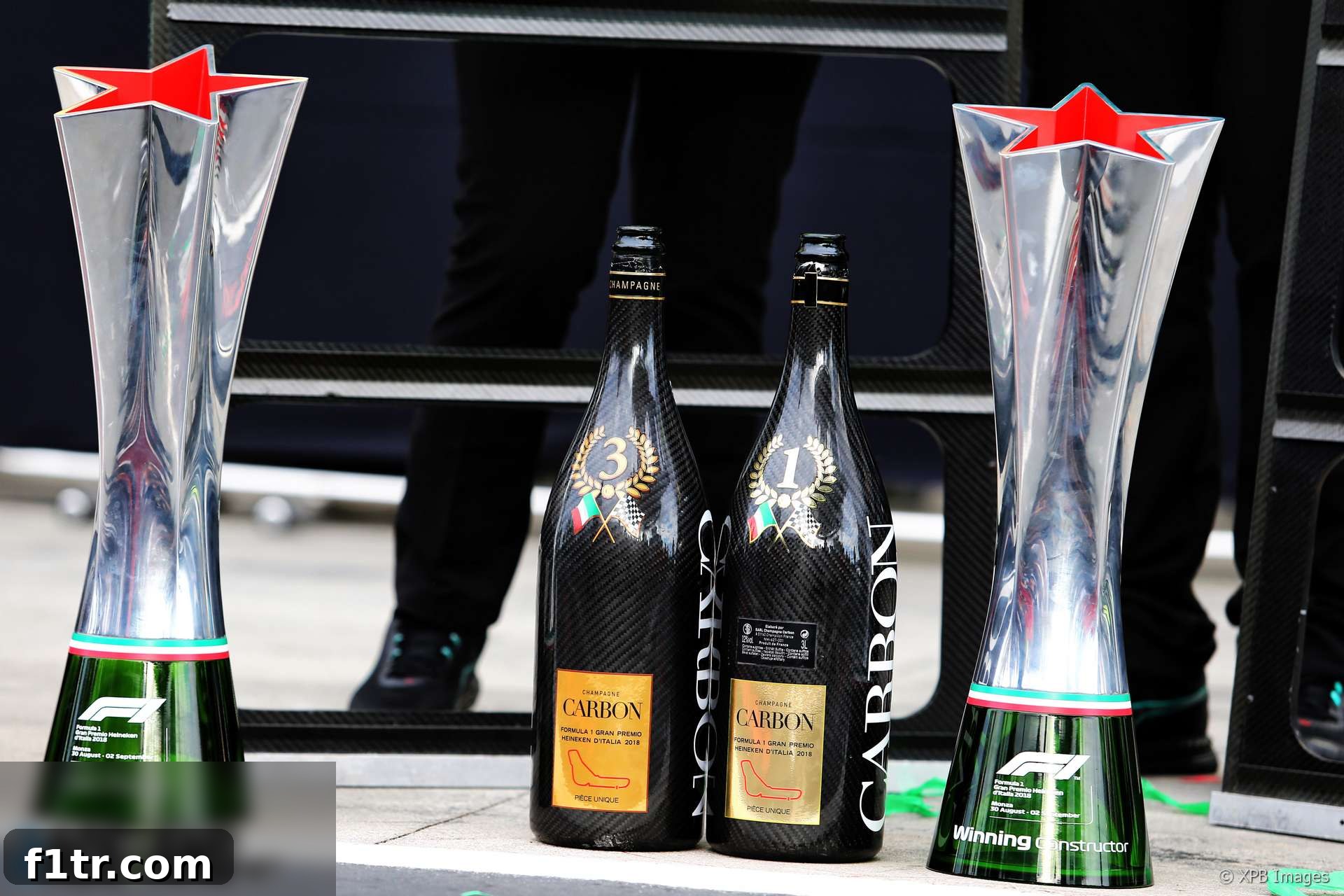
In the high-stakes world of Formula 1, where every detail from aerodynamics to tire strategy is meticulously optimized, a seemingly minor element has recently garnered significant attention: the design of Grand Prix trophies. A growing chorus of prominent drivers, including multiple world champions Lewis Hamilton, Sebastian Vettel, and Max Verstappen, has voiced concerns over the increasing prevalence of generic, sponsor-branded awards. Adding his influential voice to this sentiment, Daniel Ricciardo has passionately called for a shift towards more unique, culturally resonant trophies that truly reflect the monumental achievement of winning a Formula 1 race.
Ricciardo’s perspective, shared during an interview, largely echoes the criticisms of his peers. He acknowledges the immediate euphoria of victory, stating, “A win is a win and you’re actually not too fussed in the moment what the trophy looks like. I’m the winner and my high is higher than what’s going to be handed to me.” This sentiment perfectly captures the adrenaline and raw emotion of crossing the finish line first. However, Ricciardo quickly shifts focus to the long-term significance of these mementos, emphasizing that while the immediate joy is paramount, the lasting legacy and visual representation of that achievement are equally crucial.
The Australian driver eloquently articulated the difference between a fleeting moment of triumph and a cherished, enduring symbol of success. “But I think whether it’s a year on or 10 years on you’re going to look back and if you see something amazing sitting in your cabinet, it’s going to be a lot nicer than seeing, as Seb said, a Heineken star or whatever.” This distinction lies at the heart of the drivers’ collective plea. They seek awards that transcend mere sponsorship placement, transforming into works of art that encapsulate the spirit of the sport and the unique character of the host nation, rather than serving as overt commercial billboards.
Sebastian Vettel, known for his thoughtful and often outspoken views on the sport, specifically criticized the trophies at the Mexican Grand Prix, which were shaped to prominently feature an F1 sponsor’s star logo. This particular incident highlighted the increasing trend of commercially driven designs that overshadow artistic merit and cultural relevance. Ricciardo firmly believes that race promoters should leverage the rich tapestry of local heritage and culture to inspire trophy designs, making each Grand Prix’s award distinct and memorable.
To illustrate his point, Ricciardo fondly recalled an alternative token received in Mexico. “In Mexico, the bottle of tequila we all received was like a piece of art,” he explained. “It was all hand-painted. I feel like what they represent and their culture and history represents in Mexico, they could do something amazing with their trophy if they left it to the locals, to the country, not to a sponsor.” This example powerfully underscores the potential for truly iconic and special trophies. Imagine, for instance, a trophy for the Italian Grand Prix at Monza that subtly incorporates elements of Renaissance art or classic automotive design, rather than just a corporate emblem. Similarly, a British Grand Prix trophy could draw inspiration from the UK’s motorsport engineering prowess or its historical landmarks. Such designs would not only be visually appealing but would also tell a story, connecting the victory to the place where it happened in a meaningful way.
The essence of Ricciardo’s argument, aligning with Vettel’s, is that winning an F1 race or even securing a podium finish is a monumental accomplishment, demanding an award that mirrors its grandeur. “I think Seb’s point that if you win an F1 race – I know he didn’t win on that weekend – but if you win, podium, whatever it’s a big achievement. And I think you want to be recognised with something that’s a bit more special than something generic that’s from a sponsor. I think they should be cooler.” This call for “cooler” trophies is more than just a preference for aesthetics; it’s a desire for authenticity and respect for the drivers’ extraordinary efforts and the sport’s rich history. A trophy that is a genuine work of art, perhaps crafted by local artisans, adds immeasurable prestige and a deeper sense of connection to the moment of victory.
The practical implication of this sentiment is a call to action for the sport’s governing bodies and stakeholders. Ricciardo believes the Grand Prix Drivers’ Association (GPDA) has a crucial role to play in advocating for this change. “I think it’s our place to do so. I think we all feel it and I don’t think it’s a big ask as well.” The GPDA, as the collective voice of the drivers, is ideally positioned to engage with Formula 1 management, the FIA, and race promoters to explore new guidelines for trophy design. This isn’t about eliminating sponsors, whose financial contributions are vital to the sport, but rather about reimagining how their involvement is represented in these cherished awards.
Ricciardo is keenly aware of the commercial realities. “I don’t want to be ignorant, I’m sure Heineken put a bit of money behind it and I know Santander did trophies and all that.” He acknowledges that sponsors invest significantly to be associated with Formula 1, and trophy placement is one avenue for visibility. However, he suggests there’s a middle ground—an opportunity for sponsors to be associated with an award that is not only branded but also exceptionally designed and culturally significant. Instead of a trophy being a giant logo, perhaps the sponsor’s branding could be tastefully incorporated on the base or as part of a unique design element that celebrates both the brand and the local culture. This could even enhance the sponsor’s image, associating them with art, heritage, and the prestige of a truly bespoke award.
Ultimately, the debate over F1 trophies transcends mere aesthetics. It touches upon the identity of Formula 1 itself, balancing commercial interests with artistic integrity and the deep-seated desire to honor historical achievements with fitting, enduring symbols. Drivers like Ricciardo, Hamilton, Vettel, and Verstappen are not just racing machines; they are athletes who dedicate their lives to mastering their craft. They seek recognition that reflects the profound impact of their victories, not just the marketing objectives of a corporate partner. By embracing designs that celebrate local heritage, artistic expression, and the unparalleled thrill of motorsport, Formula 1 can ensure that its trophies become as iconic and legendary as the champions who lift them, preserving the sport’s legacy for generations to come.
The opportunity lies in fostering collaboration between race promoters, local artists, and sponsoring brands to create awards that are not only visually stunning but also imbued with meaning and a sense of place. Such a shift would undoubtedly enhance the emotional value of the trophies for the drivers, create more memorable images for fans, and ultimately elevate the overall prestige of the Formula 1 Grand Prix experience. It’s a small change with potentially massive impact on how the sport’s greatest achievements are celebrated and remembered.
More from the F1 Season
- Crying in the Melbourne car park at 2019 grand prix was my career low – Ocon
- McLaren Racing reports reduced £71 million loss in 2019
- Kvyat: Hockenheim podium last year was “my biggest achievement” so far
- How the FIA’s new encrypted fuel flow meter targets Ferrari’s suspected ‘aliasing’ trick
- “He smashed my office door”: 23 must-see moments from ‘Drive to Survive’ season two
Browse all articles related to F1 seasons