Drivers Penalised: Verstappen and Gasly Receive Penalty Points After Chinese Grand Prix Collisions
The 2018 Formula 1 Chinese Grand Prix proved to be a pivotal race for more than just its on-track action. Both Max Verstappen of Red Bull Racing and Pierre Gasly of Scuderia Toro Rosso found themselves under scrutiny from the FIA stewards, ultimately receiving penalty points on their super licenses for incidents that disrupted the race for themselves and their competitors. These penalties highlighted the rigorous standards of driver conduct enforced in motorsport’s premier category, especially when aggressive racing leads to avoidable contact.
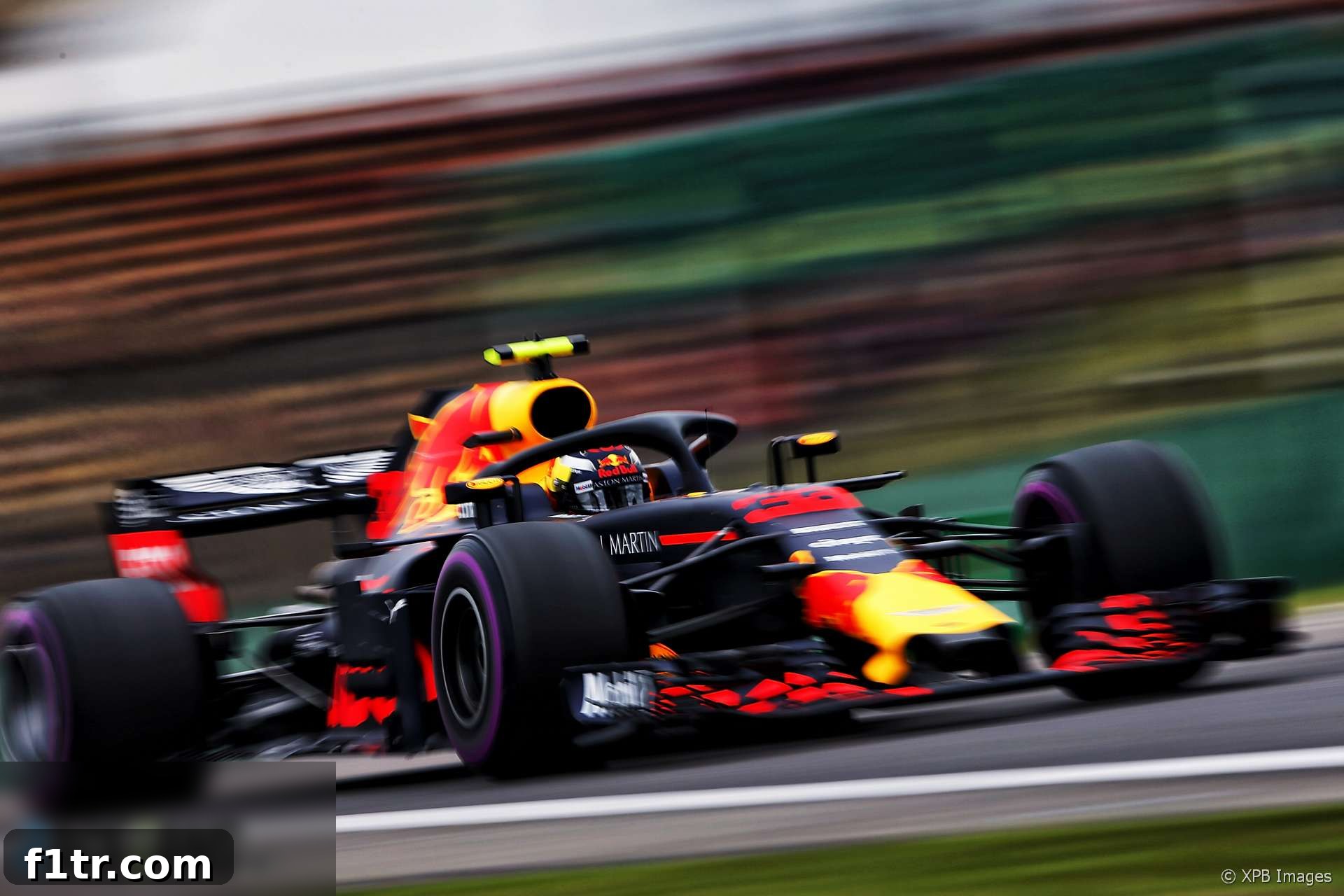
For rookie driver Max Verstappen, the two penalty points awarded for his collision with Sebastian Vettel at Turn 14 brought his total to five points within the rolling 12-month period. This accumulation served as a stark reminder of the consequences of his often-audacious driving style. Meanwhile, Pierre Gasly received his first two penalty points for making contact with his Scuderia Toro Rosso teammate Brendon Hartley, an unfortunate incident that had significant implications for the team’s race strategy and standings.
The Incidents Unpacked: Aggression, Misjudgment, and Team Tensions
Verstappen’s Charge and Vettel’s Championship Hopes Derailed
The collision involving Max Verstappen and Sebastian Vettel was undoubtedly one of the most talked-about moments of the 2018 Chinese Grand Prix. As the race entered its latter stages, with the safety car having bunched up the field, Verstappen, known for his relentless pursuit of overtakes, was charging hard through the pack. Having already made contact with Lewis Hamilton earlier in the race (for which no penalty was given at the time, though it was a strong defensive move from Hamilton), Verstappen set his sights on Vettel, who was then leading the championship and running in a strong position.
At the hairpin Turn 14, a notoriously tricky corner for overtakes, Verstappen attempted an ambitious move down the inside of Vettel. However, the Red Bull driver misjudged the available space and the braking point, locking up and subsequently running into the side of Vettel’s Ferrari. The contact sent Vettel’s car into a spin, dropping him down the order and severely compromising his race. While Verstappen was able to continue, the damage to Vettel’s championship aspirations from this single incident was significant. He would finish a lowly eighth, having started from pole position.
The stewards swiftly investigated the incident, determining that Verstappen was “predominantly to blame” for the collision. Their reasoning centered on the fact that Verstappen had failed to sufficiently control his car during the overtake attempt, leading to an unavoidable impact with a competitor who had established his line. This decision reinforced the FIA’s stance on drivers being responsible for completing overtakes safely, without compromising other drivers’ races.
Toro Rosso’s Internal Tangle: Gasly vs. Hartley
Earlier in the same race, another, less high-profile but equally impactful collision occurred between the two Scuderia Toro Rosso teammates, Pierre Gasly and Brendon Hartley. This “friendly fire” incident also unfolded at Turn 14, highlighting the challenges presented by the Shanghai International Circuit’s layout. Gasly, on a faster pace, was attempting to overtake Hartley, who was battling for position.
As Gasly moved to pass, there was contact between the two Toro Rosso cars. While neither car was forced to retire immediately, the collision caused damage, particularly to Hartley’s car, which subsequently impacted his performance and race trajectory. The internal team incident was a frustrating moment for Toro Rosso, as it effectively cost them potential points or at least compromised their ability to fight higher up the order. Such incidents between teammates are often viewed with particular displeasure by team management, as they represent a self-inflicted wound.
The stewards, upon review, concluded that Gasly was “predominantly to blame” for the contact. While racing incidents can often be complex, the responsibility was placed on the attacking driver to execute the pass cleanly. This incident, while less dramatic than the Verstappen-Vettel clash, underscored the pressure on drivers, even within the same team, to perform and secure track position.
Understanding F1’s Penalty Point System
The penalty point system in Formula 1 is designed to track persistent infringements by drivers and deter reckless or dangerous driving. Introduced in 2014, the system operates on a rolling 12-month basis. When a driver accumulates 12 penalty points within this period, they are automatically handed a one-race ban. Points are removed from a driver’s license exactly 12 months after they were issued, ensuring that only current and recent infringements contribute to the total.
For Max Verstappen, the two points from the Chinese Grand Prix brought his total to five. While this was still well below the 12-point threshold for a ban, it placed him on the stewards’ radar and highlighted a pattern of aggressive driving that, on occasion, crossed the line into being overly risky. For a driver of his caliber and championship ambitions, managing this tally becomes an important aspect of his race strategy and overall career progression.
Pierre Gasly’s two penalty points represented his first entry onto this ledger. As a rookie in F1, learning the boundaries of aggressive racing while staying within the rules is a crucial part of development. While an unfortunate start, it served as an early lesson in the high stakes and strict officiating of Formula 1. The system acts as a constant reminder to drivers about the need for both speed and discipline on track.
Implications for the 2018 Season and Driver Development
These penalty point awards in China had broader implications for the 2018 Formula 1 season. For Sebastian Vettel, the incident with Verstappen was a significant blow to his championship challenge against Lewis Hamilton. Dropping crucial points due to an avoidable collision can be incredibly costly in a tight title fight, and this event undoubtedly added pressure and frustration to his campaign.
For Max Verstappen, the Chinese Grand Prix was a microcosm of his early career. His undeniable speed and raw talent were often coupled with moments of questionable judgment and excessive aggression. The penalty points, alongside other incidents during the 2018 season, fueled debates about his maturity as a driver and whether he needed to temper his approach to avoid such mistakes. His “send it” mentality was thrilling for fans but often costly for himself and others.
Pierre Gasly’s incident with Brendon Hartley, while less visible, was a difficult moment for Toro Rosso. In a constructor’s championship where every point counts, losing out due to an internal clash is particularly painful. It underscored the fierce competition even among teammates and the steep learning curve for rookie drivers in F1. Both drivers were keen to impress their parent team, Red Bull, and such incidents could negatively impact their standing.
The Chinese Grand Prix of 2018 served as a stark reminder of the fine line between aggressive, exciting racing and actions deemed detrimental to fair play and safety by the FIA. The penalty point system remains a critical tool in maintaining order and ensuring that drivers, no matter their talent or reputation, adhere to the highest standards of conduct on track. These specific incidents contributed to the narrative of a thrilling and often controversial 2018 season, shaping not only the championship battles but also the ongoing development of some of Formula 1’s most exciting talents.
2018 F1 season
- F1 feared “death knell” for Drive to Survive after Ferrari and Mercedes snub
- McLaren staff told us we were “totally crazy” to take Honda engines in 2018 – Tost
- ‘It doesn’t matter if we start last’: How Red Bull’s junior team aided Honda’s leap forward
- Honda’s jet division helped F1 engineers solve power unit problem
- McLaren Racing losses rise after Honda split
Browse all 2018 F1 season articles