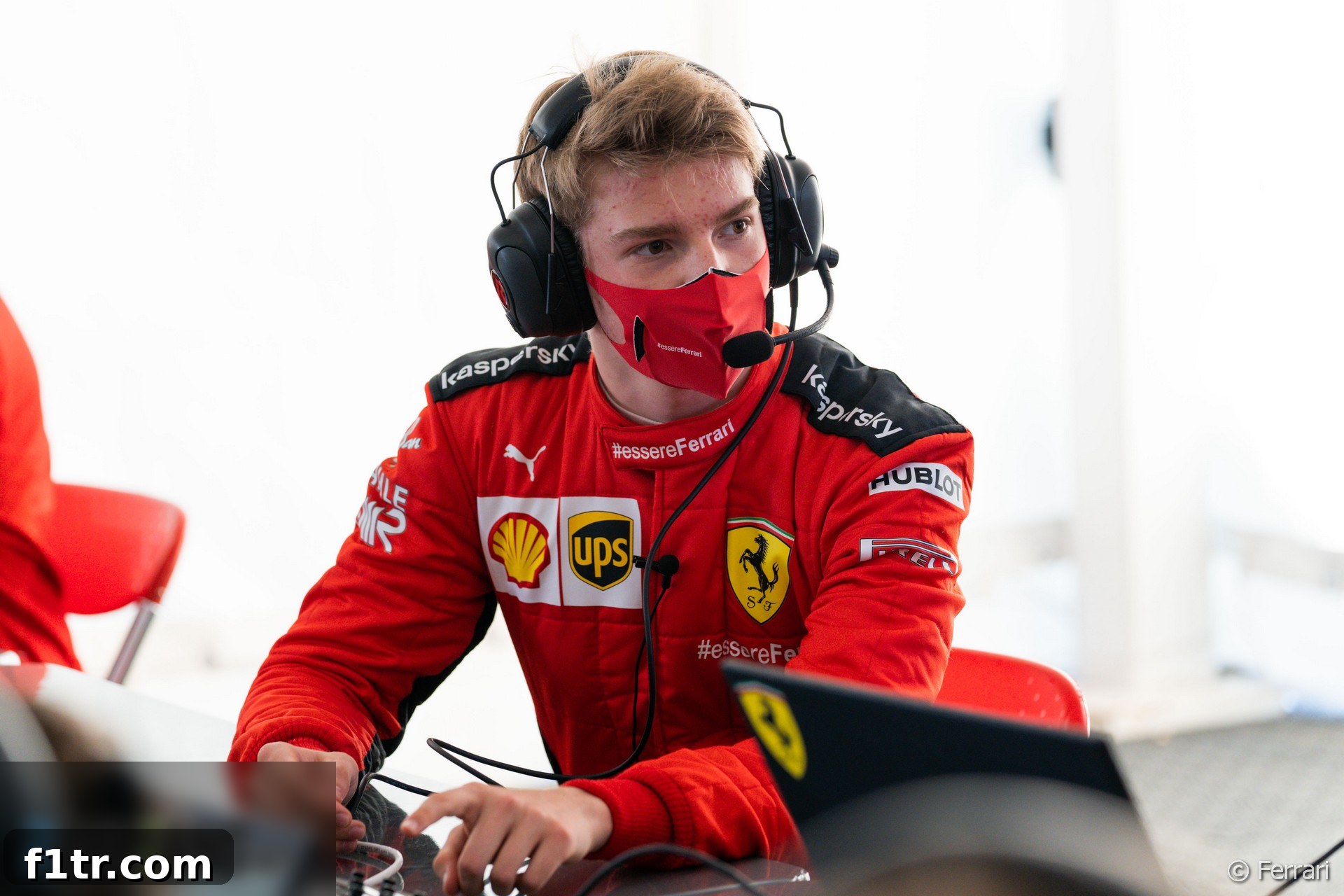
Scuderia Ferrari has officially confirmed its driver lineup for the upcoming young drivers test in Abu Dhabi, scheduled to take place immediately following the conclusion of the 2020 Formula 1 season. The prestigious opportunity will be granted to two key members of the Ferrari family: Robert Shwartzman, a highly-touted member of the Ferrari Driver Academy (FDA), and Antonio Fuoco, who serves as a vital development driver for the Maranello-based squad. This test marks a crucial moment for both drivers, offering invaluable F1 experience and the chance to demonstrate their capabilities on the sport’s biggest stage.
Ferrari’s Strategic Investment in Talent: Abu Dhabi F1 Test Confirms Young Driver Ambitions
The selection of Shwartzman and Fuoco underscores Ferrari’s enduring commitment to cultivating future talent and maintaining a strong pipeline of skilled drivers. While neither driver is currently positioned for a full-time race seat in the highly anticipated 2021 F1 season, the Abu Dhabi test represents a significant step in their respective careers. For Ferrari, it’s an opportunity to thoroughly evaluate its rising stars and gather critical data from track operations, feeding directly into their ongoing development programs and simulator work.
Robert Shwartzman: Charting a Course to Formula 1 Stardom
Robert Shwartzman, a Russian talent, has been a central figure in the Ferrari Driver Academy since joining in 2017. His trajectory through the junior categories has been nothing short of impressive, culminating in a dominant performance in the 2019 FIA Formula 3 Championship, which he won convincingly. This success naturally propelled him into Formula 2, often regarded as the final stepping stone before Formula 1. His debut F2 season has been a testament to his resilience and natural speed, despite facing personal adversity earlier in the year with the passing of his father in April.
Shwartzman began his Formula 2 campaign with a strong showing, initially leading the championship standings and demonstrating his potential to compete at the highest level of junior motorsport. Although he later slipped to fifth place in a fiercely competitive field, his raw talent and racecraft have remained evident. This Abu Dhabi test will not be his first taste of Formula 1 machinery; he previously drove an F1 car for the first time in September during a private test at Ferrari’s Fiorano circuit. That initial experience, though in an older SF71H chassis, provided him with an invaluable introduction to the power and demands of a contemporary Formula 1 car.
Expressing his palpable excitement, Shwartzman remarked on the upcoming test: “It’s incredibly exciting to know that I will be driving the SF1000 in Abu Dhabi immediately after the end of the Formula 1 season. My previous experience trying the SF71H at Fiorano at the end of September was truly incredible, even though that car is almost three years old now. Getting into the SF1000, which is the current-generation car, will be an even more profound experience. I am fully committed to making the most of this opportunity, learning everything I can, and providing valuable feedback to the team.” This test offers him a direct comparison with the most current F1 technology and a chance to prove his readiness for future top-tier opportunities.
Antonio Fuoco: The Crucial Bridge Between Simulation and Reality
Antonio Fuoco occupies a unique and critically important role within the Scuderia Ferrari structure as a dedicated development driver and simulator expert. Having tested for the team on three prior occasions, his experience with F1 machinery is substantial. Since January 2019, Fuoco has been instrumental in Ferrari’s simulator program, an area that has grown exponentially in importance within modern Formula 1. His meticulous work in the simulator helps refine car setups, validate new components, and prepare both race drivers for upcoming weekends.
Despite seeing other promising talents ascend the FDA ladder ahead of him into race seats, Fuoco’s dedication to his technical role has been unwavering. The Abu Dhabi test provides him with a vital opportunity to refresh his real-world track experience, which directly enhances the accuracy and effectiveness of his simulator duties. The correlation between virtual and physical car performance is paramount in F1 development, and drivers like Fuoco are the linchpins in this process. His ability to provide precise, real-world data points allows Ferrari’s engineers to fine-tune their simulator models, making them even more representative of actual track conditions.
Fuoco highlighted the practical benefits of the test, stating: “I’m very happy to get back behind the wheel of a real car, having done so many virtual laps in the SF1000 in the simulator. This opportunity is incredibly useful for someone in my position. It allows me to get into a car from time to time and directly check the correlation between the tools I usually use in the simulator and how the car actually behaves on track. This direct comparison is invaluable for refining our simulation models and ensuring that the virtual world accurately reflects the real one. It helps me to provide even more precise feedback and contribute more effectively to the team’s development efforts.” His expertise ensures that the race drivers’ preparation is as realistic and beneficial as possible, making him an unsung hero within the team.
The Strategic Importance of the Young Driver Test
The annual young driver test in Abu Dhabi serves multiple critical functions for Formula 1 teams. Primarily, it’s an invaluable platform for assessing emerging talent and providing them with essential track time in current-generation F1 cars. For aspiring drivers, it’s a dream come true, offering a chance to impress senior team personnel and gain crucial experience that cannot be replicated in junior categories. The data gathered from these tests is also pivotal for teams, allowing them to evaluate new aerodynamic concepts, validate simulator models, and test minor components within the permitted regulations.
For Ferrari, this test is an integral part of their long-term strategy for driver development. By giving Shwartzman this opportunity, they are nurturing a potential future race driver, evaluating his progress, and preparing him for higher echelons of motorsport. For Fuoco, it’s about maintaining and enhancing his expertise in a highly specialized technical role, ensuring that Ferrari’s simulator remains at the cutting edge of F1 technology. The Yas Marina circuit, with its diverse range of corners and demanding layout, offers an excellent proving ground for both drivers and machinery, making it an ideal location for such a critical evaluation.
The Ferrari Driver Academy: A Pathway to the Pinnacle of Motorsport
The Ferrari Driver Academy (FDA) stands as a testament to Ferrari’s commitment to securing its future legacy in Formula 1. Established to identify, nurture, and develop the most promising young racing drivers from around the globe, the FDA provides a structured pathway designed to lead its members to the pinnacle of motorsport. Through comprehensive training programs, technical support, and invaluable exposure to the Ferrari F1 team, the academy aims to equip its talents with all the tools necessary to succeed. The selection of Shwartzman for the Abu Dhabi test highlights the FDA’s effectiveness in promoting its most promising graduates.
Over the years, the FDA has produced a roster of impressive talents, with several members making their way into Formula 1. The academy’s holistic approach covers not just on-track performance but also physical fitness, media training, and mental preparation, molding well-rounded athletes ready for the intense pressures of Grand Prix racing. The ultimate goal for any FDA member is to one day race for Scuderia Ferrari, following in the footsteps of legends. While the path is challenging, opportunities like the young driver test are crucial milestones that validate the academy’s mission and the progress of its members.
Beyond Maranello: FDA Talent Across the Grid
Ferrari’s influence in developing young talent extends beyond its own factory team, often leveraging its customer relationships to provide opportunities for its FDA members. Another highly-rated FDA member, Callum Ilott, is also set to participate in the Abu Dhabi test, driving for Alfa Romeo. This demonstrates the wider strategy of the FDA to place its talents in F1 environments, allowing them to gain invaluable experience with current machinery and team operations. Such arrangements are mutually beneficial, providing customer teams with capable young drivers while giving FDA members crucial track time and exposure.
Furthermore, fellow FDA member and Shwartzman’s Formula 2 teammate, Mick Schumacher, is widely expected to make an appearance for Haas in the same F1 rookies test. This follows strong speculation regarding his promotion to Formula 1 with Haas for the upcoming 2021 season, showcasing another successful graduate of the Ferrari Driver Academy pathway. These diverse opportunities highlight the FDA’s strategic approach to ensuring its drivers are well-prepared for the demands of Formula 1, regardless of which team provides their initial stepping stone into the elite category.
Looking Ahead: Implications for the 2021 F1 Season and Beyond
The Abu Dhabi young driver test serves as a crucial concluding event for the 2020 season and an exciting prelude to what lies ahead in 2021 and beyond. For Robert Shwartzman, a strong performance could significantly bolster his prospects for a future Formula 1 seat, potentially with Ferrari or one of its customer teams. It provides a benchmark against other emerging talents and a chance to leave a lasting impression on team principals and engineers. For Antonio Fuoco, the test reinforces his indispensable role within Ferrari’s technical department, enhancing his ability to contribute to car development and performance analysis.
Ferrari’s continued investment in its Driver Academy and its commitment to providing track opportunities for its members sends a clear message about its long-term vision. As the landscape of Formula 1 constantly evolves, nurturing homegrown talent becomes increasingly vital for sustained success. The insights gained from Shwartzman and Fuoco’s runs in the SF1000 will be meticulously analyzed, contributing to Ferrari’s performance strategy for the challenging 2021 season and beyond. This commitment ensures that Ferrari remains at the forefront of identifying and developing the next generation of Formula 1 stars, solidifying their legacy in the sport for years to come.
Related Articles: 2021 F1 Season
- Masi ‘basically gifted the championship’ to Verstappen says 2021 FIA steward Sullivan
- Las Vegas race backers looking to extend F1 deal beyond 2025
- Why Mercedes put ‘a reminder of joy and pain’ on display in their factory lobby
- Verdict on error in GT race suggests Mercedes would have lost 2021 Abu Dhabi GP appeal
- Title ‘stolen’ from Mercedes made us ‘underdogs people cheer for’ – Wolff
Explore all articles related to the 2021 F1 season