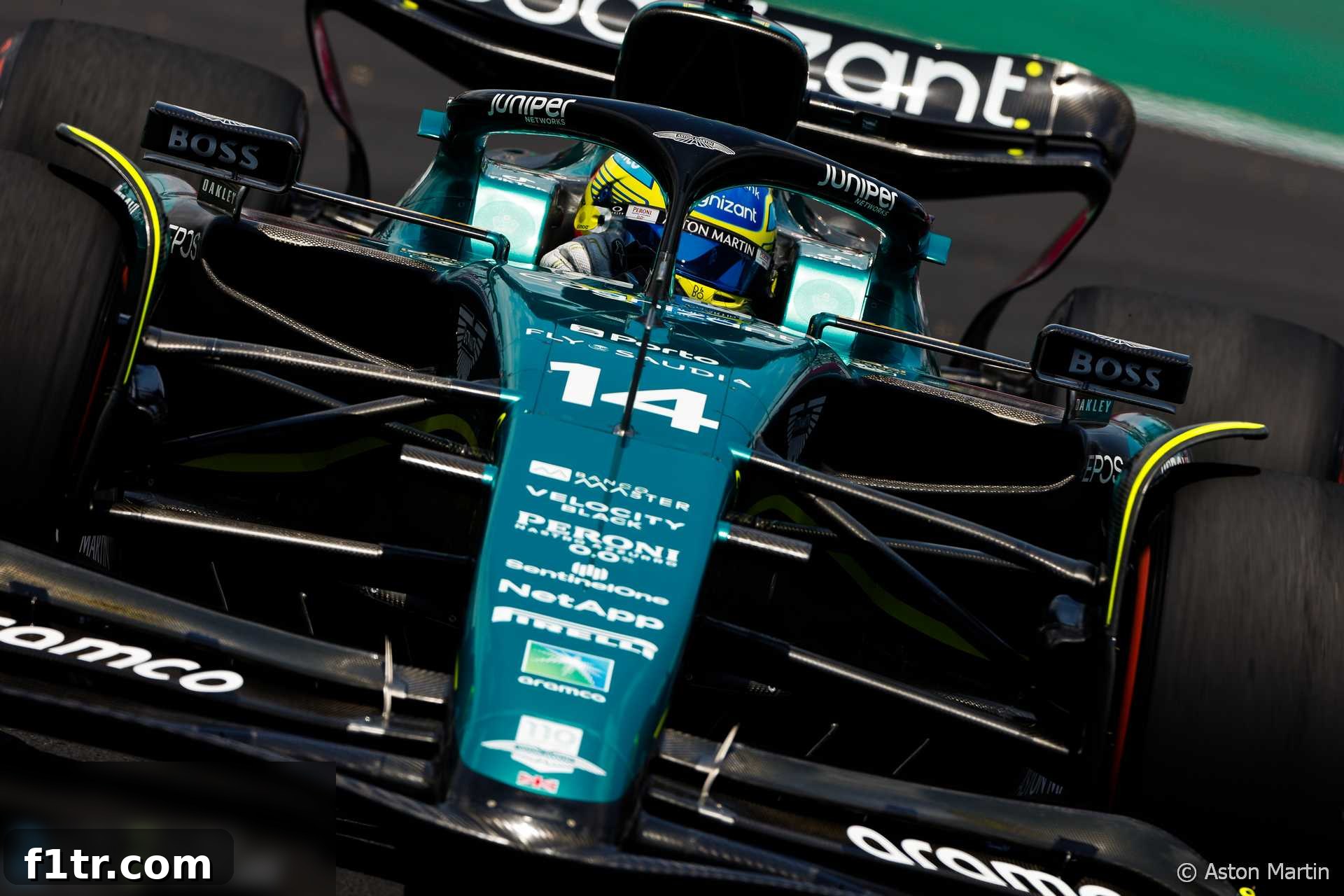
In a significant announcement that reverberated across the global motorsport community, Honda has officially confirmed its highly anticipated return to Formula 1 in 2026. The Japanese automotive giant will re-enter the pinnacle of racing as a power unit manufacturer, forging a new and exciting partnership with Aston Martin, a team that is rapidly asserting itself as a formidable contender on the grid. This strategic alliance marks a pivotal moment for both brands and for Formula 1 itself, aligning with the sport’s ambitious drive towards a more sustainable and technologically advanced future.
Honda’s Return: A New Chapter in Formula 1 History
Honda’s decision to re-commit to Formula 1, following its official departure at the end of the 2021 season, underscores the profound impact of the sport’s upcoming technical regulations. While Honda had formally ceased full-scale development for the existing 1.6-litre turbocharged V6 formula after achieving a World Championship title with Red Bull that year, its involvement never truly ended. The company continued to manufacture crucial components for Red Bull and AlphaTauri, whose power units proudly bore the ‘Honda RBPT’ designation, a testament to their ongoing engineering prowess and contribution.
The FIA’s confirmation in February that Honda was among six esteemed power unit manufacturers registered to supply engines under the 2026 rules set the stage for this announcement. With Red Bull having already secured a new alliance with Ford for the revised regulations, Honda found itself in search of a new chassis partner to avoid being left out of the sport’s electrifying new era. Aston Martin emerged as the ideal candidate, a team with burgeoning ambitions and a clear vision for championship success.
The Driving Force: 2026 Regulations and the Path to Sustainability
Honda’s Global CEO, Toshihiro Mibe, articulated the core rationale behind the brand’s bold decision at a press conference held in Tokyo. He highlighted that the sweeping changes introduced by the new regulations were the primary impetus for Honda’s recommitment to F1. Mibe emphasized the synergy between Formula 1’s sustainability goals and Honda’s own corporate direction towards achieving carbon neutrality.
“One of the key reasons for our decision to take up the new challenge in F1 is that the world’s pinnacle form of racing is striving to become a sustainable racing series,” Mibe stated. “This is directly in line with the direction Honda is aiming toward carbon neutrality, and it will become a platform which will facilitate the development of our electrification technologies.” This statement encapsulates Honda’s strategic intent: to leverage the extreme environment of Formula 1 as a cutting-edge laboratory for future automotive innovations.
The 2026 Formula 1 regulations are designed to usher in a revolutionary era for the sport. A cornerstone of these changes is the mandate for the use of 100% carbon-neutral fuel, a significant step towards mitigating the environmental impact of racing. Furthermore, engine efficiency will be dramatically improved, with the maximum allowable fuel consumption during a race being slashed from the current 110kg to a mere 70kg. This substantial reduction will demand unparalleled efficiency and energy management from the power unit manufacturers.
Electrification plays an even more central role under the new rules. The energy deployment capability of the MGU-K (Motor Generator Unit – Kinetic) will see a substantial boost, increasing from 120kW to an impressive 350kW. Conversely, the MGU-H (Motor Generator Unit – Heat), a complex and costly component of the current power unit architecture, will be removed entirely. This shift places a greater emphasis on the battery and the kinetic energy recovery system, making electric power a more dominant force in the overall performance equation. To ensure a level playing field and encourage broader participation, a cost cap for power unit providers will also be introduced, fostering innovation within responsible financial frameworks.
“With the new 2026 regulations, the key for winning will be a compact, lightweight, and high-power electric motor with a high-performance battery capable of handling high and swift power output, as well as the energy management technology,” Mibe further elaborated. He expressed strong belief that “the technologies and know-how gained from this new challenge can potentially be applied directly to our future mass production electric vehicles.” This dual benefit—competitive success on track and tangible advancements for consumer products—forms the bedrock of Honda’s strategic return.
Aston Martin: The Ideal Partner for Championship Aspirations
The choice of Aston Martin as Honda’s new partner is a testament to the Silverstone-based team’s remarkable trajectory and shared ambition. Mibe underscored this alignment, stating that Aston Martin “share the same sincere attitude and determination to win” as Honda. This cultural and strategic fit is crucial for a successful works partnership in Formula 1, especially given the increased integration requirements of the 2026 regulations.
Mibe also extended his respect to the governing bodies: “Honda has the utmost respect for the FIA, which made a bold decision to introduce these new and challenging regulations to ensure the sustainability of both racing activities and the global environment, and for the Formula One Group, which has been enhancing the brand value of F1 and ensuring F1’s evolvement as the most prestigious automobile racing in the world.” This acknowledgement highlights the collective effort to steer Formula 1 towards a more responsible yet equally thrilling future.
Aston Martin’s recent performance on track has been nothing short of spectacular. The team, which competed as Jordan in 1999 during its last most successful period, is currently enjoying its finest season in decades. With four podium finishes from the first five Grands Prix of the 2023 season, they demonstrated a profound leap forward, positioning themselves second in the Constructors’ standings. This dramatic improvement signals their readiness to challenge the established frontrunners and makes them an attractive partner for a power unit manufacturer with championship aspirations.
A Strategic Move Towards World Titles
Aston Martin CEO Lawrence Stroll hailed the team’s new partnership with Honda as “the final piece in the jigsaw to establish Aston Martin Formula 1 as a top team capable of winning world titles.” Stroll’s ambition is clear and unwavering. He believes that by combining this bespoke power unit partnership with the team’s new state-of-the-art campus, they are providing every necessary tool for success. “To establish Aston Martin Formula 1 at the top of the sport we need to exploit every single area of our technical package and now a bespoke PU is the most important last step in that journey,” he emphasized.
Martin Whitmarsh, CEO of Aston Martin Performance Technologies Group, a figure with a rich history of working with Honda at McLaren in the 1980s and 90s, and instrumental in their 2015 return, echoed Stroll’s sentiments. He highlighted the extensive efforts undertaken by the team to bolster its capabilities. “Over the last 18 months I think we’ve been recruiting the right people, we’ve been investing in the required facilities and developing the right culture and processes to win,” Whitmarsh told media, including RaceFans. He stressed the importance of strong partnerships, acknowledging existing alliances with IT firm Cognizant and fuel supplier Aramco. “But I think today in particular, it’s a great opportunity to partner a global motorsport titan like Honda as a works team. This is an extremely exciting and important further step for the team.”
Whitmarsh’s insight into the 2026 regulations further illuminates the significance of this partnership. He believes that the new rules will drastically increase the importance of seamless integration between the chassis and the power unit. This makes a ‘works engine’ supply—where the chassis constructor and engine manufacturer collaborate closely as a single entity—absolutely crucial for achieving future success. “It’s clear to us and I think to Honda that the 2026 F1 regulations will require the sort of full integration of chassis and PU that only a full works team relationship delivers,” Whitmarsh asserted. “So to have this partnership puts us in a position to compete for championships.”
Confirmed 2026 F1 Power Unit Suppliers
| Chassis | Engine |
|---|---|
| Red Bull | Red Bull-Ford |
| Ferrari | Ferrari |
| Mercedes | Mercedes |
| Alpine | Renault |
| McLaren | Mercedes |
| Sauber | Audi |
| Aston Martin | Honda |
| Haas | Ferrari |
| AlphaTauri | Red Bull-Ford |
| Williams | Mercedes |
“I think it’s very clear from everything that we’ve seen of Honda in the past, from our recent learnings from being in conversation over the last few weeks, they have a huge passion, they’re racers, they want to win,” Whitmarsh added, highlighting the shared competitive spirit that binds the new partners.
Honda’s Enduring Legacy and Future Ambitions
Honda’s journey in Formula 1 is characterized by periods of both immense success and challenging setbacks. The manufacturer’s engines have started more races in F1 than those of any other manufacturer bar Ferrari, Mercedes, Renault, and Ford, a testament to its long-standing commitment to the sport. Their initial foray as a full works team in the 1960s yielded victories. They then dominated F1 as an engine supplier to iconic teams like Williams and McLaren in the 1980s and 90s, etching their name in the annals of motorsport history with multiple championships.
Their return with a factory team in the early 2000s, however, proved less fruitful. Despite a solitary race win, the team experienced a decline and was eventually sold at the end of 2008. Seven years later, Honda made another comeback as an engine supplier, initially facing significant hurdles with McLaren before eventually finding formidable success with Red Bull Racing, culminating in the 2021 World Championship title. This rich and varied history underscores Honda’s resilience, its unyielding desire for competition, and its deep-rooted passion for racing.
Whitmarsh acknowledged this legacy, stating, “We’ve got a lot to learn from Honda, who have been successful over many, many decades in the sport. But I think we’re already confident this is going to be a fantastic partnership for the future. So we look forward to it.” This mutual respect and eagerness to learn from each other’s strengths form a strong foundation for their collaboration.
Koji Watanabe, President of Honda Racing Corporation, expressed the manufacturer’s enthusiasm for the fierce competition that awaits in 2026. “We believe that the technology and knowhow gained from this new challenge has the potential to be applied directly to our future mass production electric vehicles,” he reiterated, reinforcing the dual-purpose strategy. He also pointed out a crucial structural change in F1: “Also, F1 is introducing a cost cap structure on power unit development, which will make a long-term and continuous participation in F1 easier. In fact, starting in the 2026 season, various automakers are planning to enter F1, which we expect will further intensify the competition.” This new financial framework, combined with the exciting technical regulations, has clearly made Formula 1 an even more attractive proposition for major automotive players.
The Road Ahead: Challenges and Opportunities
Honda’s return with Aston Martin for 2026 injects a fresh wave of excitement and competition into Formula 1. This partnership not only strengthens Aston Martin’s championship credentials but also ensures that Honda, a name synonymous with engineering excellence and racing heritage, remains a vital part of the sport’s future. The convergence of Honda’s electrification expertise with Aston Martin’s ambitious drive for success, all under the umbrella of Formula 1’s progressive 2026 regulations, promises a thrilling new chapter.
The challenge for both Honda and Aston Martin will be immense. The development of an entirely new power unit under stringent new rules, combined with the pressure to deliver immediate performance, will test their collective resolve. However, the shared vision for victory and a commitment to technological advancement position them strongly for the coming era. For fans, the prospect of another legendary manufacturer battling at the front of the grid with an ascendant team makes 2026 a year to eagerly anticipate, as Formula 1 continues its evolution towards a faster, more efficient, and sustainable future.
This alliance represents more than just a collaboration; it is a declaration of intent from two entities committed to reaching the pinnacle of motorsport and pushing the boundaries of automotive technology.