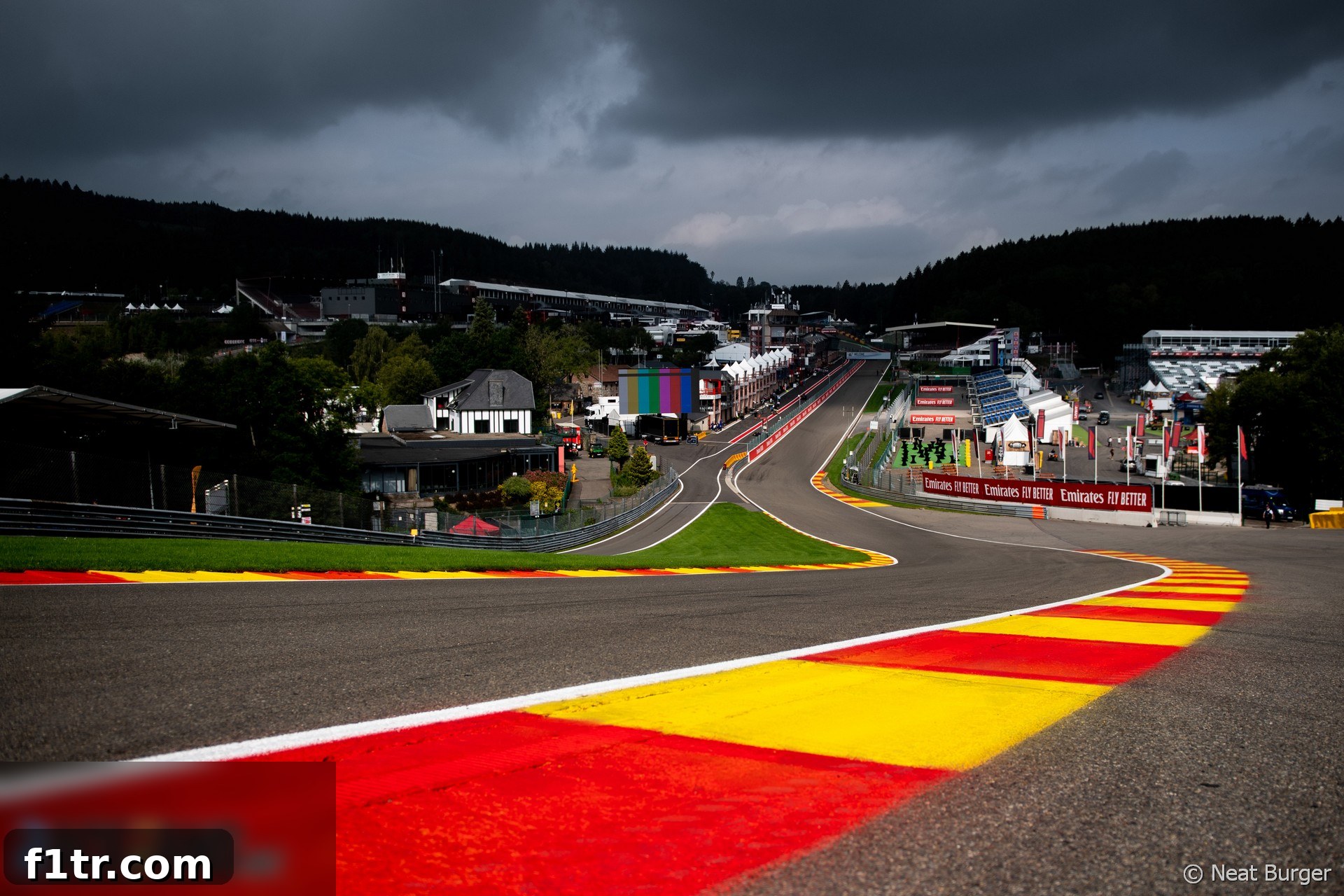
A Somber Reflection: The Tragic Belgian Grand Prix Weekend
This is a diary I had profoundly hoped never to write, yet the tragic events that unfolded on Saturday at the Spa-Francorchamps circuit compel me to record them. It’s a stark reminder of the inherent risks within motorsport, a world often perceived as increasingly safe, but where danger forever lurks at the cutting edge of human endeavour.
The word ‘hoped’ is deliberately chosen over ‘thought’ here, because for decades, Formula 1 and its feeder series have made tremendous strides in safety. Serious injuries and fatalities have become virtual strangers to the sport, a testament to relentless innovation and dedication. However, to say they are entirely absent would be a perilous overstatement. The pursuit of speed, where humans push the limits of physics and engineering, means danger is an ever-present companion. The recent safety record, while outstanding, may have inadvertently fostered a belief that racing is now devoid of its ultimate risk. This tragic weekend shattered that illusion, as evidenced by the devastating death of Anthoine Hubert and the severe injuries sustained by Juan-Manuel Correa during Saturday’s F2 feature race.
While I cannot claim to have known Anthoine personally, having only met him fleetingly at Paul Ricard following his impressive double F2 victories, his immense talent was undeniable. He was a driver clearly destined for the pinnacle of motorsport, Formula 1. Highly rated by his peers and mentors, Hubert was a karting contemporary of current F1 stars Charles Leclerc, Pierre Gasly, and Esteban Ocon, and arrived at Spa as the reigning GP3 champion. His trajectory was steep, his potential limitless, making his untimely passing even more heartbreaking.
As I pen these words, I find myself seeking solace in the thought that Anthoine, before his tragic accident, was truly in the prime of his life, passionately pursuing the sport he undeniably loved. It’s a small comfort amidst overwhelming grief. One can only hope that every possible lesson, no matter how minor or complex, will be meticulously learned from this tragedy. Even if the incident is ultimately classified as a genuine racing accident, seemingly a catastrophic culmination of a series of individual events, the motorsport community must continue its unwavering commitment to enhancing safety. My deepest thoughts and most heartfelt condolences extend to Anthoine’s grieving family and his numerous friends, as well as every single member of the larger Arden team, who are undoubtedly grappling with this profound loss.
7am
The day began much as any other race weekend morning, rising early with the promise of another thrilling day of motorsport ahead. The forecast for the Ardennes region was bright and sunny, a beautiful, clear day that would likely be the last of its kind for the summer. The crisp morning air held the scent of damp earth mixed with the distant hum of generators, a typical Spa prelude.
An hour later, I hit the road, heading towards the circuit. Even at this early hour, traffic was already building, a clear indicator of the immense enthusiasm for the Belgian Grand Prix. Yellow license plates were everywhere, signaling the arrival of the massive ‘Orange Army’ – the legions of dedicated fans supporting Max Verstappen. They were out in considerable force, their vibrant orange attire creating a striking presence. A quiet concern lingered, however, regarding their hopes for a dominant performance. Spa-Francorchamps is renowned as a true power circuit, probably even more demanding on engines than Monza, and at that time, Red Bull’s Honda power unit had not yet reached the formidable performance levels of Mercedes or Ferrari. One hoped their unwavering support would not lead to too much disappointment.
Nonetheless, witnessing such fervent enthusiasm for a single driver is always a powerful experience. Verstappen’s popularity in his home region and beyond is truly remarkable, arguably rivalling that of Michael Schumacher’s immense following in Germany during his golden era, especially when considered on a pro rata population basis. It’s a phenomenon that injects incredible energy into the sport. One fervently hopes that this profound worship translates into a lasting passion for Formula 1 itself, a passion that will prevail long after the Dutchman eventually retires, and does not wither as unfortunately became the case in Germany after Schumacher’s departure, where Grand Prix attendance saw a noticeable decline.
8:30am
After a pleasant and insightful breakfast session at the Ferrari hospitality unit, shared with the Swedish television commentators, I returned to an eagerly anticipated technical briefing. We were privileged to hear from Sporting Director Laurent Mekies and Head of Aerodynamics and Vehicle Projects Enrico Cardile, who delivered a detailed presentation on the intricate process of setting up a Formula 1 car for Monza, the iconic ‘Temple of Speed’ and the next stop on the calendar.
They meticulously outlined the myriad technical and strategic considerations involved in preparing for Monza’s unique demands. The presentation included fascinating comparisons with car setups required for other distinct circuits such as Monaco, with its tight, low-speed corners, and Baku, known for its long straights interspersed with challenging urban sections. The contrasts highlighted the incredible versatility and precision demanded in F1 engineering. Intriguingly, they revealed a specific data point for Monza: a mere difference of 10 horsepower in an engine’s output could equate to a lap time delta of approximately 0.2 seconds. This statistic underscored the critical importance of power on such a high-speed track and provided valuable insight into the competitive margins in Formula 1. It was a salient reminder of the fine details that define success, a stat to keep firmly in mind for the qualifying session next Saturday.
1pm
Lunchtime arrived, offering a much-needed break from the intensity of the paddock. I made my way to the Mercedes hospitality area, known for its excellent catering and a relaxed, yet professional, atmosphere. The team served a delightful prawn and wild rice salad to start, a light and refreshing dish. This was followed by a succulent duck breast, perfectly cooked and served atop creamy mash with a medley of fresh, vibrant vegetables. Dessert was equally enticing: a fresh fruit salad complemented by a zesty lemon mousse. Need I even add that the entire fare was absolutely delicious? Such gastronomic experiences are a testament to the high standards maintained across the F1 paddock.
After a satisfying lunch, I took the opportunity to delve into the reasons behind the significant change of name for Mexico’s round of the world championship. On the 2020 F1 calendar, the event was now officially referred to as the Mexico City Grand Prix, a notable alteration from its previous designation. My investigation revealed a fascinating story of financial ingenuity and local pride. The country’s federal government had, at that time, refused to underwrite the event, meaning no public funds were made available by the city itself. In response, Mexico City’s resourceful mayor, demonstrating remarkable entrepreneurial spirit, established a bespoke trust fund. This fund was robustly supported by a coalition of local hospitality businesses and commercial interests, effectively stepping in where government funding had ceased. This privately-backed trust, in turn, successfully underwrites the entire project, ensuring the Grand Prix’s future.
While an incredibly enterprising solution, this new funding model has a symbolic implication: the event is no longer perceived as a purely national occasion but rather a celebration of the city itself. This shift is reflected in the addition of ‘Mexico City’ to the title, a practice reminiscent of historical Grands Prix such as the Long Beach and Dallas Grands Prix, which were known by their respective city names. This makes the Mexico City race unique on next year’s calendar. Even seemingly city-specific races like Monte Carlo’s round are officially known as the Monaco Grand Prix, representing the principality, and Abu Dhabi, while a city, is a state within the broader UAE, maintaining a national identity. The Mexico City Grand Prix thus stands out as a true testament to municipal initiative and private sector support in securing a place on the prestigious F1 calendar.
4:30pm
Following the intense qualifying session, which had delivered its usual share of drama and excitement, I began my customary rounds on the interview trail. The paddock was buzzing with analysis of the day’s performances. I was attending a debrief with Alexander Albon, who was candidly discussing his first qualifying session for Red Bull Racing – a significant moment in his young career. The room was focused on his insights when suddenly, a series of loud gasps and murmurs erupted, drawing everyone’s attention away from Albon and towards the large television screens positioned behind him. There, in horrifying slow motion, the tragic unfolding of Anthoine Hubert’s crash was being replayed. The jovial atmosphere vanished instantly, replaced by a chilling silence and a collective sense of dread.
The immediate aftermath saw all subsequent media sessions adopt a profoundly subdued tone. Teams across the paddock were forced to make difficult decisions, each based on their individual links and relationships with the drivers involved in the incident. Some, such as Mercedes and Renault, understandably chose to cancel their remaining media sessions out of respect and in acknowledgement of the gravity of the situation. Others, like McLaren and Haas, opted to proceed, albeit with a heavy heart and a noticeable shift in mood. Having been privy to some of the conversations and deliberations that took place, I can unequivocally assure readers that these decisions were not taken lightly. They were the result of careful, often agonizing, consideration for the well-being of their personnel and the broader emotional impact on the sport. In times of such profound crisis and tragedy, the entire motorsport community, regardless of team allegiances or rivalries, demonstrably pulls together as one, united in grief and solidarity.
7pm
The hours that followed the crash were agonizing, filled with rumour and uncertainty, each moment stretching endlessly. Then, as the evening drew in, the official news filtered through, confirming our worst fears: Anthoine Hubert had tragically succumbed to his injuries. The confirmation sent a fresh wave of shock and despair through the paddock, solidifying the day’s events as one of the darkest in recent motorsport history.
Since I began covering the sport full-time two decades ago, I have unfortunately known four other deaths directly during a Grand Prix weekend. These include the three dedicated marshals who lost their lives in Monza, Melbourne, and Montreal, and, more recently, Jules Bianchi, who succumbed to injuries sustained in his 2014 crash at Suzuka. While the raw pain of such memories may eventually recede with time, they never truly fade. The profound impact, the questions, and the sense of loss remain. So it will undoubtedly be with Anthoine Hubert. His memory, his talent, and the tragic circumstances of his passing will forever be etched into the collective consciousness of motorsport. Soon after receiving the devastating news, I quietly left the track, the usual post-qualifying buzz replaced by an eerie silence, reflecting the somber mood of everyone present.
9pm
Later that evening, the news arrived that a decision had been taken to cancel Sunday’s Formula 2 sprint race. The official statement cited ‘out of respect’ as the primary reason for the cancellation. I was informed that the F2 team owners themselves had formally requested the cancellation, a clear indication of the deep emotional toll the day’s events had taken on the entire paddock.
While I absolutely respect the sentiment behind the decision to cancel, and fully understand the immediate need for a period of mourning and reflection, I found myself, along with numerous colleagues, questioning its broader implications. Accidents of that nature, unfortunately, could theoretically occur wherever F2 cars race, given the inherent risks of high-speed competition. There was no question about the structural integrity or safety standards of the F2 cars involved, nor was there any doubt regarding the safety protocols and infrastructure of the Spa-Francorchamps circuit itself, which is regularly updated to meet the highest standards. So, the fundamental question lingered: what precisely did the cancellation change in terms of safety or preventing future incidents? Would Anthoine, a young man who so demonstrably loved racing and dedicated his life to it, not have wished for the sprint race to continue? It’s a complex ethical dilemma, balancing immediate emotional responses with the spirit of the sport and the legacy of a driver who lived for competition. The debate over when to race and when to pause after a tragedy is never simple, and often leaves more questions than answers.
2019 Belgian Grand Prix Reflections
For more in-depth coverage and analysis of the 2019 Belgian Grand Prix weekend, including driver insights and race reviews, please explore the articles below:
- Norris says he thought of Hubert during Belgian GP
- 2019 Belgian Grand Prix Star Performers
- “For Tonio”: Dominant Leclerc scores maiden win
- Leclerc is only the sixth new F1 race winner in last 10 years
- Hamilton: Crowd reaction to practice crash prompted safety comments
Browse all 2019 Belgian Grand Prix articles