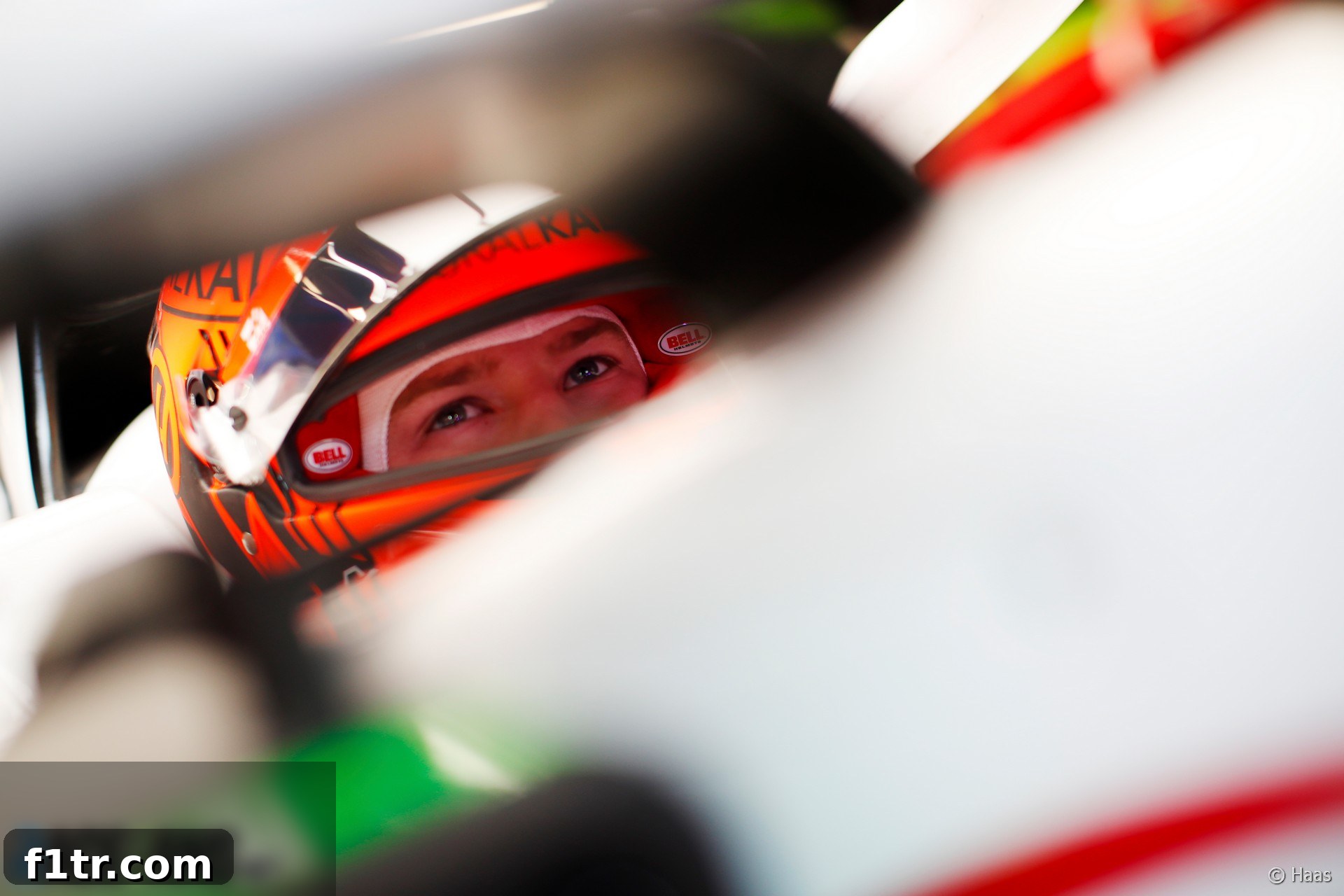
Nikita Mazepin Grapples with Car Confidence Ahead of Demanding Monaco Grand Prix Debut
Nikita Mazepin, the rookie driver for the Haas F1 team, has openly admitted to a significant lack of confidence in his VF-21 car as he prepares for his inaugural Formula 1 race on the iconic and unforgiving streets of Monaco. This candid admission comes at a critical point in his rookie season, underscoring the immense challenges faced by newcomers in the pinnacle of motorsport, especially when confronting one of its most legendary and demanding circuits for the very first time.
Mazepin’s journey in the 2021 season has been a steep learning curve, characterized by a consistent pattern of finishing last in the preceding three races. This trend has seen him trailing significantly behind his fellow rookie and Haas teammate, Mick Schumacher, highlighting the difficulties he’s encountering in adapting to the unique demands of modern Formula 1 machinery and the intensely competitive environment.
The Root of the Struggle: Unpredictable Car Dynamics on Track
During the official FIA press conference prior to the Monaco Grand Prix, Mazepin articulated the core of his struggles with remarkable transparency. “Being very honest, I’m not too confident because so far I’ve struggled with the car this year,” he stated, his words reflecting the raw honesty often heard from drivers under immense pressure. His primary concern revolves around his consistent inability to extract optimal performance from the VF-21, a problem severely exacerbated by a persistently elusive car balance.
The Haas driver further elaborated on this critical issue, explaining how a usable and stable car balance frequently only materializes very late in a race weekend. This often coincides with the moment when the softer tire compounds begin to offer enhanced grip, which is far from ideal for a driver needing to build consistent understanding. “The balance was appearing very late in the weekend where the grip was arriving with soft compounds. So therefore I found the car, most of the time, very unpredictable,” Mazepin revealed. This inherent unpredictability is a substantial hurdle for any seasoned driver, but it proves particularly detrimental for a rookie attempting to build crucial track knowledge, refine their driving lines, and consistently push the limits of their machine on circuits where every fraction of a second is vital.
Rookie Realities: Limited Testing and a Steep Learning Curve in F1
The challenges Mazepin faces are not entirely unique to his individual situation; they are, to a significant extent, a shared experience among the current crop of Formula 1 rookies. The modern era of F1 offers significantly fewer pre-season and in-season testing opportunities compared to previous decades. This drastic reduction leaves newcomers with an extremely limited window to fully acclimate themselves to their complex new cars, sophisticated systems, and the dynamic environment of their new teams.
Mazepin acknowledged this broader context, noting, “But as you know it’s a 23-race year and we’re quite early on still, so I think getting confident in Monaco will be important, going forward.” This insightful perspective highlights the long-term nature of an F1 career and the necessity for incremental improvements and a patient approach to development. Each race, especially in the formative stages of a driver’s career, serves as a crucial learning experience that contributes to their overall growth and future performance.
The Unforgiving Nature of Monaco for an F1 Rookie
The Monaco Grand Prix presents a particularly intense baptism of fire unlike any other circuit on the Formula 1 calendar. Its narrow streets, tight and twisting corners, and the unwavering proximity of solid barriers leave absolutely no margin for even the slightest error. For a driver already struggling with inherent car confidence and battling persistent unpredictability, Monaco amplifies every single challenge exponentially. The circuit demands absolute precision, unflinching commitment, and an innate, intuitive sense of the car’s dynamic limits – qualities that are incredibly difficult to exhibit consistently when the car itself feels like an unknown entity, refusing to communicate its true intentions clearly.
Building confidence on such an iconic and dangerous track isn’t merely about achieving high speeds; it’s fundamentally about fostering trust. Trust in the brakes to bite effectively at monumental speeds, trust in the steering to respond precisely and predictably, and trust in the intricate aerodynamics to provide the necessary downforce through the legendary tunnel section and around the treacherous swimming pool complex. Mazepin’s honest admission about his confidence issues underscores the profound mental battle he faces even before the wheels turn in anger during practice sessions, let alone in qualifying or the race itself.
Strategic Goals for the Monaco Weekend: Prioritizing Laps Over Lap Times
Given his current predicament and the unique characteristics of the Monaco circuit, Mazepin’s priorities for the Grand Prix weekend are pragmatic, sensible, and firmly focused on long-term development rather than chasing immediate, perhaps unrealistic, results. His primary objective is to accumulate as many valuable laps as possible in his VF-21 and to progressively build his comfort level and understanding of the car’s behavior throughout the various practice sessions leading up to the crucial qualifying session.
“The goals are to make laps and to build up to it gradually throughout FP1 to qualifying,” he explained. This measured and methodical approach is absolutely crucial for any rookie at Monaco, where pushing too hard too soon almost invariably leads to costly errors, damaged machinery, and a significant loss of precious track time. Each lap completed without incident is a valuable data point, a small but significant victory in the ongoing battle for adaptation, consistency, and ultimately, improvement.
Monaco: A True Driver’s Circuit Where Skill Reigns Supreme
Monaco is famously and consistently dubbed a “driver’s circuit,” a unique track where raw driving talent, meticulous precision, and sheer bravery can often compensate for a car’s inherent deficiencies more effectively than at almost any other venue on the calendar. Mazepin fully recognizes this fundamental characteristic of the principality’s street circuit.
“Realistically, we need to find our ways here. It’s a driver’s circuit and driving skills, I believe, matter a lot around here,” he affirmed. While this acknowledgment suggests a commendable internal belief in his own driving abilities, he is also acutely aware of the significant limitations imposed by his current machinery. The Haas VF-21 is not currently among the fastest cars on the grid, and its comparative lack of downforce will undoubtedly make the formidable task of competing against more established rivals even more challenging on a track where aerodynamic grip and stability are paramount.
“I’m quite confident going in with myself but of course knowing that there is not much downforce available in the car to fight with our competitors, it’s not going to be easy,” Mazepin candidly admitted. This dual perspective – a commendable self-confidence tempered by a realistic and pragmatic appraisal of his equipment – paints a clear and honest picture of the mental tightrope he walks. While a driver’s exceptional skill and commitment can certainly make a tangible difference, there are inherent limits to what can ultimately be achieved with a car that fundamentally lacks competitive pace and stability, especially on a circuit as uniquely demanding and unforgiving as Monaco.
The Broader Context: Haas F1 Team’s Rookie-Focused Season
The challenges currently faced by Nikita Mazepin are also intrinsically reflective of the broader strategic approach and the current standing of the Haas F1 team. With an all-rookie line-up comprising both Mazepin and Mick Schumacher, and a deliberate, forward-looking decision to focus the vast majority of their development efforts and resources on the dramatically changing 2022 technical regulations, the 2021 season was always anticipated to be a transitional and challenging year. This strategic decision means both young drivers are learning and developing their skills in a car that is not receiving significant in-season upgrades, effectively making their task even more arduous. They are, in essence, serving as crucial test pilots for their own long-term development, extracting invaluable lessons and data from a car that is not designed to win races, but rather to provide a crucial foundation of experience.
The team’s long-term vision unequivocally requires patience, both from the ambitious drivers themselves and from the keen observers of the sport. Mazepin’s journey, while currently marked by undeniable struggles and learning opportunities, is an integral part of a larger, ongoing process of growth and development within the Haas team structure. Every completed lap, every minor error analyzed, and every small gain in confidence at an incredibly demanding circuit like Monaco contributes significantly to a deeper understanding that will hopefully pay substantial dividends in future seasons, positioning both Mazepin and the team for greater competitiveness.
The Psychological Aspect of F1: Confidence as a Performance Catalyst
In the high-stakes world of Formula 1, mental fortitude and unwavering confidence are arguably as crucial as raw natural talent and finely honed driving skills. A driver’s deeply held belief in their car’s capabilities and, crucially, in their own abilities directly translates into tangible lap time performance. When that essential confidence is lacking, drivers tend to hesitate, brake earlier, turn in less aggressively, and are significantly less willing to push the car to its absolute, ragged limits. This often leads to a challenging vicious cycle: slower lap times can further erode confidence, making it even harder to perform at the elite level required.
Mazepin’s remarkable openness and honesty about his confidence issues are noteworthy and commendable. It allows for a more nuanced and empathetic understanding of his performance on track, moving beyond simplistic lap time comparisons that often fail to capture the full picture. For him, Monaco isn’t simply another race weekend; it represents a critical psychological test. Successfully navigating its inherent complexities, even if competitive results remain elusive in this particular instance, could represent a significant and vital step in rebuilding that essential mental foundation required for a successful and sustained F1 career. The psychological victories often pave the way for tangible on-track improvements.
Looking Ahead: The Road to Adaptation and Continuous Improvement
While the Monaco Grand Prix is just one event in a long and arduous season, its distinctive challenges mean that any progress made here, however small, can have a profound ripple effect on future performances. If Nikita Mazepin can manage to find even a small degree of comfort, predictability, and stability in his Haas VF-21 on the narrow, unforgiving streets of the principality, it could serve as a vital turning point in his rookie campaign. The invaluable experience gained in managing an inherently unpredictable car on such a high-stakes and unforgiving track will be immensely valuable as the season progresses to more conventional and forgiving circuits.
His journey through his rookie year in Formula 1 is far from over; it is an ongoing process of learning, adapting, and growing. The objective remains unequivocally clear: continue to learn, adapt to the demanding machinery, and meticulously build confidence, lap by lap, race by race. While the competitive results may not immediately follow in the short term, the fundamental foundation for a more assured, capable, and confident Formula 1 driver is actively being laid, one challenging circuit at a time. The Monaco Grand Prix, with all its inherent glamour, prestige, and peril, offers Nikita Mazepin a unique and public stage to confront his personal demons, overcome significant hurdles, and take a definitive, crucial step forward in his promising, yet undeniably arduous, F1 career.
Related Articles: 2021 Monaco Grand Prix Insights
- ‘I need that point, we’ve lost a ton’: Hamilton team radio transcript analysis
- Perez sees Austrian double-header as valuable chance to master his RB16B
- No fun to be had in Monaco Grand Prix even if you’re winning, says Hamilton
- Mercedes explain Bottas’ Monaco pit stop failure
- F1 will consider adopting “intelligent” IndyCar rule in wake of Leclerc crash
Browse all 2021 Monaco Grand Prix articles