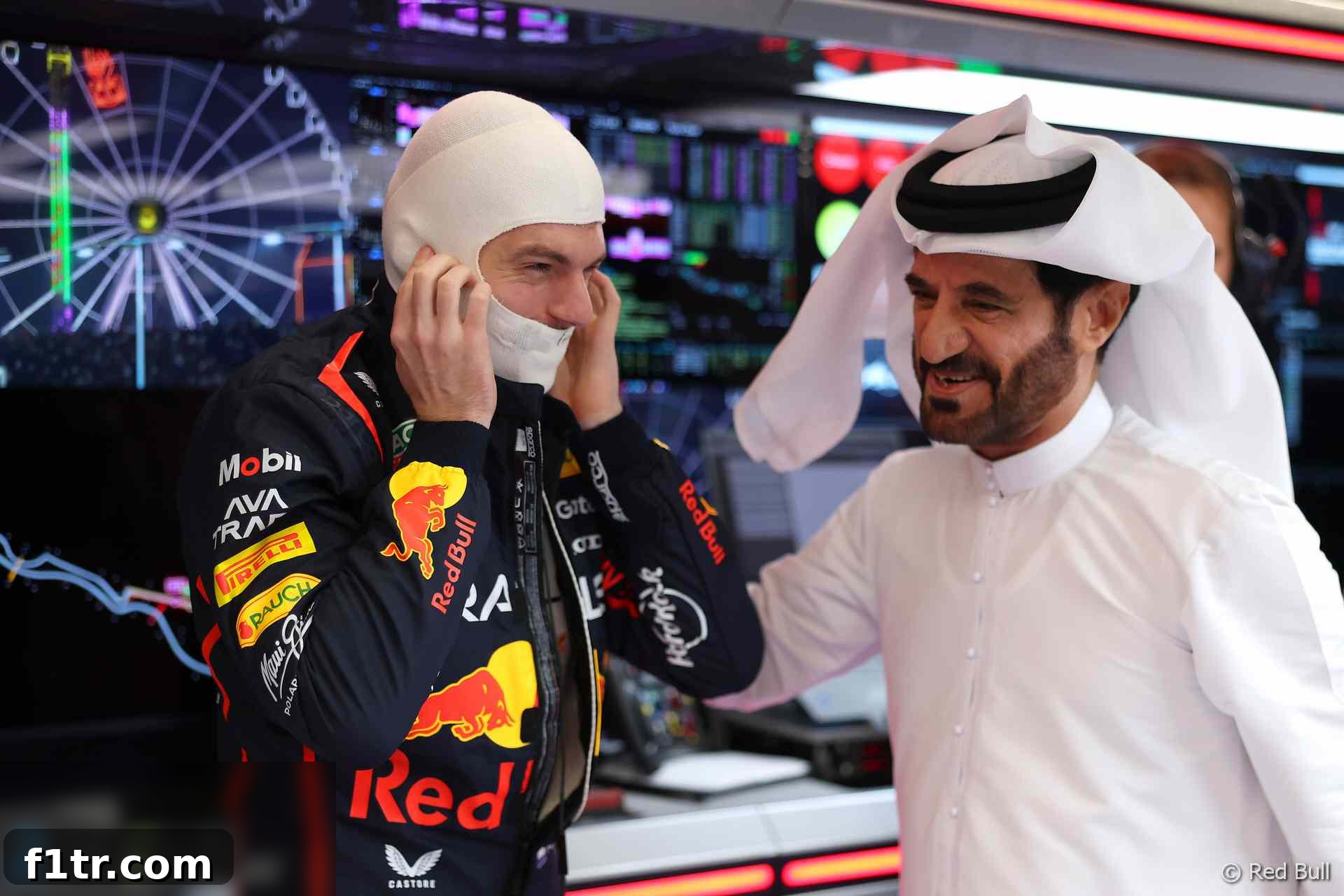
FIA president Mohammed Ben Sulayem has dismissed much of the criticism aimed at Formula 1’s new power units, while confirming he is pushing to accelerate plans to replace them.
Advert | Become a Supporter & go ad-free
The FIA announced F1’s latest engine regulations in the year after Ben Sulayem became president. Since the new rules came into effect this season, some drivers, team members and fans have voiced concerns about their impact on on-track racing and single-lap performance.
Ben Sulayem says much of the criticism has come from teams that have found themselves less competitive under the new regulations.
“We consulted with the power unit manufacturers and we consulted with teams,” Ben Sulayem told Forbes. “When I took over, it was 2022 – it was signed in 2022, in August. But this didn’t come in eight months. It has been discussed for 18 months, collectively, with all of the teams, and then was introduced.
“Everybody had the same time: if you look at August of 2022 and then the implementation in the first test they did which was in Barcelona this year, that was enough time for everyone. Some of them had an issue with the car – some the power unit and some with the chassis – but it’s amazing how only the people who are behind are complaining. Did you hear Mercedes or Ferrari complain? No, of course they won’t. It’s a cycle.
“It’s today you have someone who is so good, and then everybody wants to be taking his place. And that’s the competitors, being competitive. But the criticism is only from the people who maybe didn’t do it right.”
Advert | Become a RaceFans supporter andgo ad-free
The FIA has acknowledged, however, that some adjustments to the 2026 regulations were necessary. To address driver and team concerns, it agreed a package of changes, most of which were introduced at the Miami round.
“We had a discussion after Australia, we had to discuss it with our technical department and the single-seater commission and then we came with consultation with the drivers. So we consulted with the drivers on how to apply the electrification, and a matter of safety, and now it seems it’s better,” Ben Sulayem said. “For the FIA, it’s our responsibility. We don’t take decisions just because we feel like it. We engage, we consult, we take all of the information and then we see what’s the best for everyone, not the best single team.”
The FIA has also announced a more significant change to next year’s engine rules: rebalancing the power units so a greater share of power comes from the combustion engine rather than electrical systems. That marks a clear shift away from the original vision of a 50-50 split between combustion and electrical energy generation.
Ben Sulayem is also pressing to bring forward plans to replace the current power units. He said this year’s shift to synthetic fuel creates an opportunity for F1 to return to a predominantly combustion-based power unit that could match current engines for efficiency and power while being lighter and cheaper to develop.
“The new engine, we talked about a V8, and I’m more now thinking of bringing the V8 back because in the end of 2030 the FIA gets back the power to do the engine without even having to go through a vote,” he explained. “But we would like to make it one year earlier.”
Accelerating the replacement would mean the current power unit rules would last just four years instead of the 12-year cycle that governed the previous regulations.
Advert | Become a RaceFans supporter andgo ad-free
Formula 1
- Only F1’s struggling teams are complaining about 2026 rules – Ben Sulayem
- Poll: Has the time finally come for Hamilton to hang up his helmet?
- Grosjean felt Renault ‘told everyone I wasn’t good enough for F1’ before return
- There’s one 2026 change Verstappen will approve of: Zero penalty points
- Which F1 drivers have made the strongest start to 2026 against their team mates?
Browse all Formula 1 articles