Formula One drivers found themselves grappling with a new reality regarding stewarding decisions following a pivotal meeting prompted by the contentious events of the São Paulo Grand Prix. The core message delivered to competitors was a disconcerting one: prepare for the possibility that similar on-track incidents might be judged differently depending on the panel of stewards overseeing each race. This revelation has ignited a fierce debate within the paddock, underscoring the complexities of regulating a sport where split-second judgments can dictate championships, and the quest for consistent application of rules is paramount.
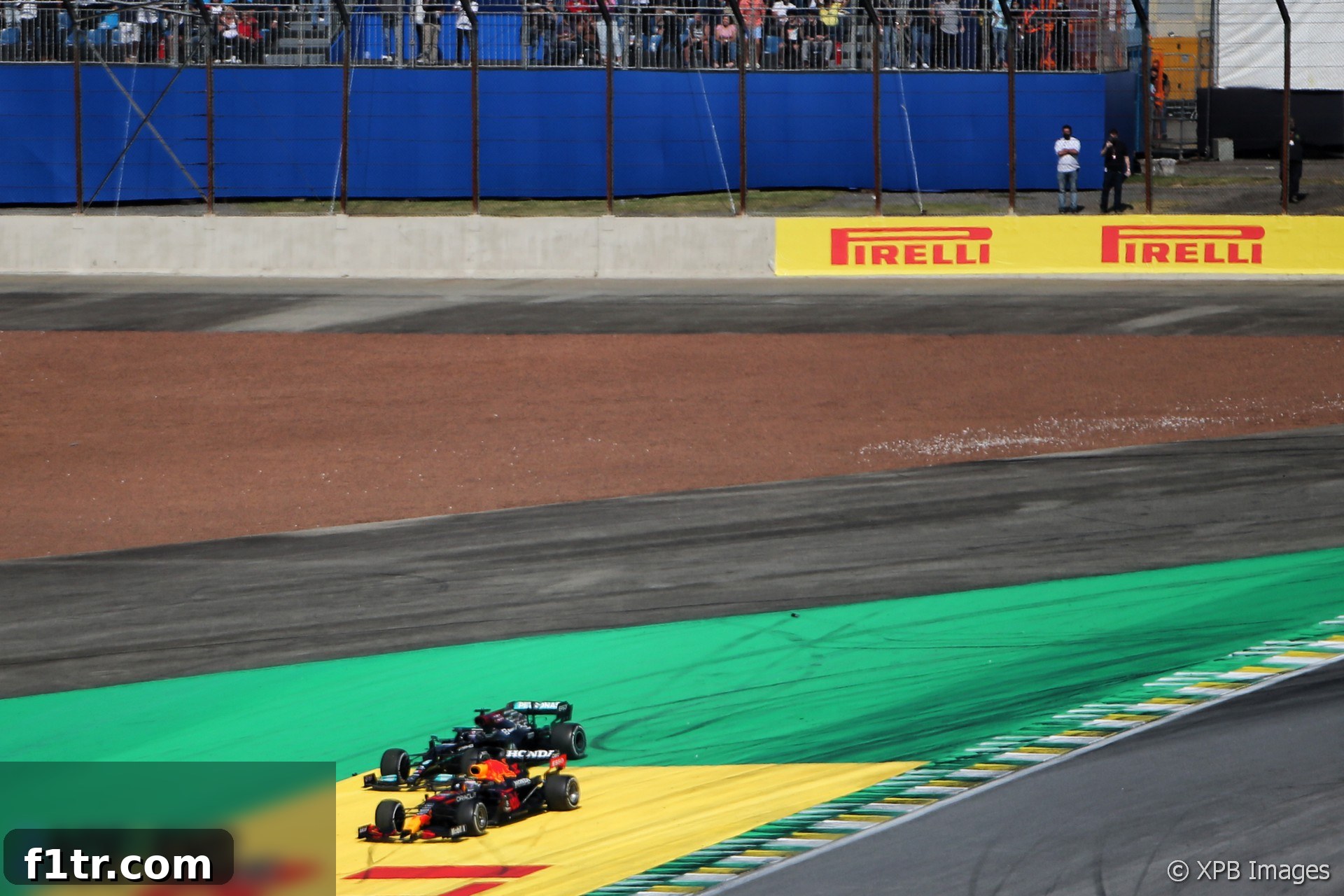
At the heart of the controversy was a high-stakes battle between title protagonists Max Verstappen and Lewis Hamilton. During their wheel-to-wheel clash at Turn 4 in Brazil, Verstappen was accused of aggressively forcing Hamilton wide and off the track, an incident that became a major talking point. While the stewards at the time opted against investigating the incident, their initial decision sparked immediate outcry from the Mercedes team and many observers. Several drivers and teams vocally asserted that identical maneuvers in previous races had consistently resulted in penalties, creating a palpable sense of injustice and inconsistency that threatened to undermine the integrity of the racing.
Mercedes-AMG Petronas F1 Team, feeling aggrieved by the initial ruling, formally requested the stewards to review their decision not to investigate the incident further. However, this appeal was ultimately refused, solidifying the original controversial judgment and prompting further questions about fairness. The refusal to reopen the case only amplified concerns within the sport about a potential new precedent being set for how such aggressive defensive driving would be handled in the future. This critical question inevitably dominated the subsequent drivers’ briefing held with FIA Formula 1 Race Director Michael Masi, where drivers sought much-needed clarification on the shifting landscape of racing regulations and the application of sporting penalties.
Speaking to the press after qualifying for the next race, Lewis Hamilton articulated his profound disappointment and confusion regarding the outcome of the meeting. He openly admitted that the discussions had failed to provide definitive clarity on whether the type of robust defensive move executed by Verstappen in Brazil would incur penalties in subsequent events. Hamilton revealed that the FIA had attributed this potential inconsistency to the rotating nature of the steward panels, implying that different individuals might interpret the rules differently from one Grand Prix to the next. “It’s not clear,” Hamilton stated plainly, conveying his frustration. “They said it’s going to be different with different stewards. It could be different with different stewards is what they said.” This explanation, rather than offering reassurance, left many drivers feeling more uncertain than before about the boundaries of acceptable racing conduct.
Hamilton’s candid remarks came in response to a direct question about whether drivers had been informed to expect varying decisions in similar circumstances to the Brazilian Grand Prix. This transparency from Hamilton, however, was not universally welcomed. When the same question was later posed to Max Verstappen, the Dutchman expressed his displeasure at the contents of the private meeting being disclosed to the media. Verstappen argued passionately for the sanctity of these internal discussions, emphasizing that sensitive racing matters should be debated among the sport’s experts rather than publicly aired or “thrown around on social media for nothing,” where interpretations can be easily skewed and opinions polarized.
“For me, the thing I don’t like, we discuss these kinds of things and they don’t need to go to the media,” Verstappen asserted, underlining his preference for confidentiality. “You talk to the experts, and I think it’s more important that we discuss these things with the experts and not just throw things around on social media for nothing. I don’t know really what to comment on that, I prefer to talk to the people in charge and just discuss with them about future things in general, not only like an incident or whatever.” His comments highlighted a broader philosophical divide within the paddock concerning the transparency of regulatory discussions versus the perceived need for internal, focused problem-solving away from public scrutiny.
The sentiment regarding potential inconsistencies was echoed by Valtteri Bottas, Hamilton’s Mercedes teammate at the time. Bottas remarked that it “would be a bit weird” if stewards were to apply differing standards to similar on-track infringements in the future. This collective apprehension among drivers underscored a fundamental principle of fair competition: the expectation of predictable and uniformly applied rules. Without such consistency, drivers face the daunting challenge of adapting to an ever-changing interpretation of the regulations, potentially leading to unfair advantages or penalties based solely on the composition of the steward panel rather than the objective facts of an incident.
According to Hamilton, the overwhelming majority of drivers present at the meeting actively sought a comprehensive clarification on the precise handling of the Brazil incident. He vividly recalled that “Every driver – I think, except for Max – was asking for clarity but it wasn’t very clear.” Hamilton’s frustration extended beyond just the specific incident to the broader ambiguity surrounding track limits, particularly during aggressive overtaking maneuvers. “It’s still not clear what the limits of that track are. It’s clearly not the white line any more, when overtaking,” he lamented. This sentiment reveals a deeper concern about the evolving nature of racing rules, where traditional boundaries appear to be blurred, leaving drivers unsure of the acceptable limits of wheel-to-wheel combat. The collective plea from the grid was unequivocally for consistency: if the stewarding standard seen in Brazil was to become the norm, then it must be applied equally and predictably to all competitors in all similar scenarios, thereby ensuring a truly level playing field.
However, Max Verstappen offered a starkly different interpretation of the meeting’s outcome, maintaining that it provided a sufficiently clear impression of how stewards intend to approach incidents moving forward. He acknowledged the inherent diversity among drivers, each possessing their unique style of racing, defending, and overtaking. “Everyone is different and everyone has their own of racing and defending and overtaking,” he stated, recognizing the significant challenge this presents to the FIA in establishing a universally accepted baseline for conduct. Verstappen further elaborated, “And of course it’s very hard for the FIA as well to get everyone on the same line. Of course they decide but every driver has a different opinion.” From his perspective, the meeting served as a crucial platform for drivers to voice their differing opinions, followed by the FIA’s detailed explanation of its decision-making processes. “I think yesterday it was all about sharing their opinions and then the FIA explaining their process of talk behind it. So I think we came a long way, and it was a very long briefing. So I think it was, at the end, pretty clear.” This contrast in perceptions between Hamilton and Verstappen highlights the subjective nature of sporting regulations and the difficulty in achieving universal consensus, especially when championship stakes are incredibly high and individual driving styles are so distinct.
The implications of this ongoing debate extend far beyond a single incident in Brazil. As the Formula One season progresses and the championship battle intensifies, the consistency, or lack thereof, in stewarding decisions will remain a critical focal point for the entire sport. Drivers need clear, predictable guidelines to compete fairly and safely, knowing precisely where the boundaries lie. Conversely, fans demand transparency and equal application of the rules to maintain faith in the integrity of the sport and the fairness of its outcomes. While the FIA faces the unenviable task of balancing varying interpretations and individual racing styles while ensuring safety, the consensus among many drivers is clear: a greater degree of uniformity and predictability in judging on-track incidents is paramount for the credibility and fairness of Formula One, particularly in such a fiercely contested championship year.
The contentious meeting and the differing views expressed by leading figures like Hamilton and Verstappen underscore a significant and persistent challenge for Formula One’s regulatory body. How can the FIA maintain a level playing field and ensure equitable competition when the very officials judging the competition may interpret rules differently from one event to the next, or even one lap to the next? The resolution of this fundamental question will be crucial not only for the outcome of the current championship but also for shaping the future standards of racing conduct and the overall perception of fairness in Formula One for years to come.
2021 Qatar Grand Prix and Beyond: The Consistency Conundrum
The discussions surrounding stewarding consistency naturally cast a long shadow over subsequent races, including the inaugural 2021 Qatar Grand Prix. The lingering questions from Brazil meant that every on-track skirmish, every defensive maneuver, and every overtaking attempt would be scrutinized with even greater intensity by drivers, teams, and fans alike. The FIA’s ability to demonstrate clear and consistent application of its rules would be tested repeatedly in the crucible of competitive racing, making every steward’s decision a potential point of contention in the heated championship battle.
- Pirelli’s investigation into Qatar tyre failures indicates kerbs caused punctures
- Horner rejects talk of title fight pressure after criticism over marshal comment
- “I don’t know how much slower I can go”: Inside Ricciardo’s unnecessary economy run
- ‘No regulator in the world will be popular’ with a title fight this intense – Masi
- Why drivers backed Hamilton’s call for clarity after meeting over Verstappen incident
Browse all 2021 Qatar Grand Prix articles