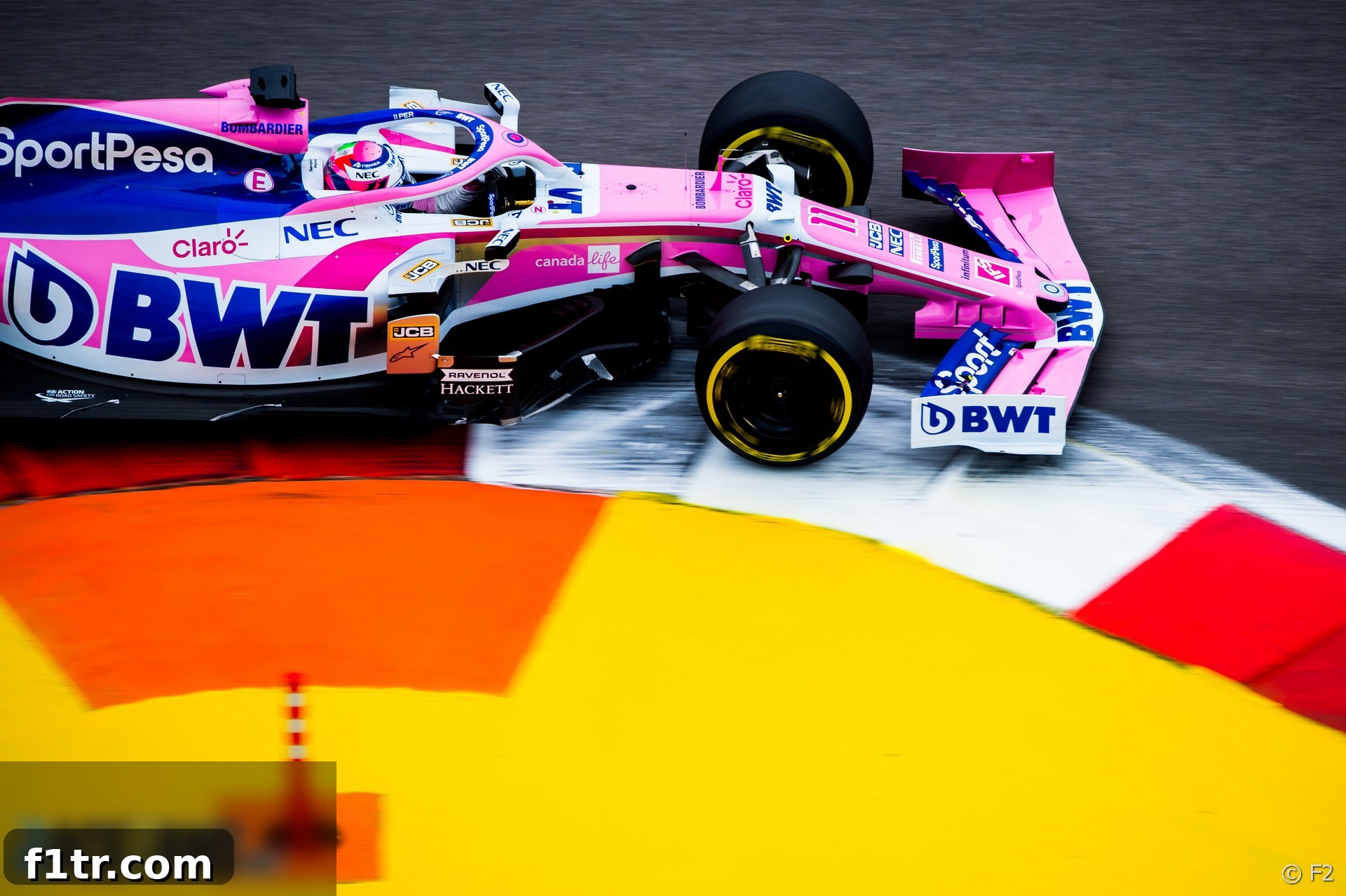
The dawn of a new Formula 1 season always brings with it a sense of renewed hope and expectation, but for Racing Point, the anticipation surrounding the 2020 F1 season carries an even deeper significance. According to CEO Otmar Szafnauer, the team is poised to reclaim its former glory, returning to the competitive levels that once established it as a formidable force in the midfield. This season marks a crucial turning point, signaling the potential end of a tumultuous period defined by financial uncertainty and developmental setbacks.
Advert | Become a Supporter & go ad-free
The journey to this hopeful juncture has been anything but smooth for the Silverstone-based outfit. The team, then known as Force India, faced an existential crisis in the middle of the 2018 championship when it entered administration. This dire situation cast a long shadow over its future, jeopardizing the livelihoods of its dedicated staff and threatening to erase years of hard-earned competitive progress. The financial collapse, stemming from issues with previous owner Vijay Mallya, effectively halted development and plunged the team into a period of deep uncertainty. The subsequent acquisition by a consortium led by Canadian billionaire Lawrence Stroll provided a much-needed lifeline. Stroll’s significant investment stabilized the team, allowing it to emerge as Racing Point. However, the immediate aftermath of the administration and the transition period inevitably delayed crucial development work on its 2019 chassis, forcing the team to start that season at a disadvantage.
Despite these considerable hurdles, Racing Point demonstrated remarkable resilience and made steady progress throughout the 2019 season. Szafnauer reflected on this period, noting that the team “kept pace and out-developed” their rivals “a little bit, but not by enough” during the year. This statement underscores the incredibly competitive nature of Formula 1’s midfield, where even marginal gains require immense effort and resources. The season began with significant struggles, particularly in qualifying sessions, a point Szafnauer vividly recalled. “At the beginning of the year we weren’t getting into Q3 at all,” he explained, referring to the crucial third qualifying segment where only the top ten cars compete. “If you remember those races, we struggled to get out of Q1.” This initial performance deficit highlighted the impact of their delayed development, as they grappled to adapt to the new technical regulations introduced for 2019 without adequate preparation time.
However, the team’s persistence paid off. As the season progressed, the benefits of the new ownership and a more stable environment began to manifest on track. “Almost every race we got a chance to make Q3. Sometimes we got it, sometimes we didn’t, we were right around there,” Szafnauer elaborated, illustrating the tangible improvement in their competitive standing. This consistent push for Q3 demonstrated their ability to develop the car effectively over the course of the season, showcasing the underlying talent and engineering prowess within the team. While they weren’t able to leapfrog all their midfield competitors, their development rate was commendable given their starting point. “So we did out-develop some of the people in the midfield,” he affirmed. However, Szafnauer also acknowledged the difficulty of significantly outpacing rivals once a deficit is established, stating, “But you can’t double their development rate because if you were to do that then within three years you’d be well past them. So it’s a tough thing once you start.” This insight highlights the exponential challenge of catching up in F1, where every team is relentlessly pushing the boundaries of performance.
Looking ahead to the 2020 season, Szafnauer exudes confidence that the team is in a significantly stronger position. He believes they should begin the new season in much better shape, primarily attributing this optimism to the crucial winter development period. “Now the winter months give you a big opportunity to out-develop,” he stated. This winter break offers teams a vital window to design, develop, and refine their new challengers without the immediate pressure of race weekends. This stands in stark contrast to the previous year, where Racing Point faced an unprecedented challenge. “Things change over the winter months, especially if there’s a regulation change, which we had last year – over the winter we had a regulation change with no ability to develop, which is what got us to where we did at the start of the season. That’s not the case this year.” The 2019 regulations, which introduced simplified front wings and modified brake ducts, significantly impacted aerodynamic design. For Racing Point, still reeling from administration and a change of ownership, the inability to properly develop for these changes during the preceding winter compounded their difficulties.
The current scenario for the 2020 season is entirely different. With stable ownership and a clear development plan, the team has been able to fully utilize the winter months. This period has been characterized by significant strategic investments and operational improvements. The team has actively recruited new staff, bolstering its engineering, aerodynamic, and design departments with fresh talent and expertise. Furthermore, they have taken steps to consolidate workers from different sites, bringing them together under one roof to foster greater collaboration, efficiency, and synergy within the organization. This move is designed to streamline communication channels and accelerate the design and manufacturing processes. Alongside personnel and structural enhancements, Racing Point has also invested in upgrading its systems, likely encompassing state-of-the-art simulation tools, advanced computational fluid dynamics (CFD) resources, and improved manufacturing capabilities. These comprehensive upgrades are expected to translate directly into a more competitive car and a more cohesive team operating at peak performance.
Szafnauer’s expectations for the 2020 campaign are clear and unequivocal: Racing Point should be a stronger force in the midfield. He articulated this ambition with conviction, stating, “There are no excuses if we’re not performing to the level that we’ve been used to performing. We should be the sharp end of the midfield.” This target represents a return to the team’s historical standing, aiming to consistently challenge for points, secure regular Q3 appearances, and potentially even contend for podiums on occasions. The “sharp end of the midfield” implies battling with established teams like McLaren, Renault, and AlphaTauri, rather than fighting at the back of the pack. The strategic advantage of having a stable financial backing from Lawrence Stroll and his consortium allows Racing Point to operate with a long-term vision, investing in infrastructure and personnel in a way that was impossible during its Force India days. This renewed stability also enabled the team to pursue a radical design philosophy for their 2020 car, which later gained notoriety as the ‘Pink Mercedes’ due to its striking resemblance and performance characteristics inspired by the championship-winning W10.
The team’s aspirations for 2020 are firmly rooted in its impressive track record. Prior to its financial woes, the team, competing as Force India, achieved remarkable success by consistently punching above its weight. They finished an impressive fourth in the Constructors’ Championship in both the 2016 and 2017 seasons. This achievement was particularly significant given their comparatively modest budget against manufacturer-backed rivals, underscoring the efficiency and talent within the organization. That era, characterized by shrewd management and effective development, proved that the team possessed the intrinsic capability to compete at the highest level of the midfield. The financial problems related to previous owner Vijay Mallya tragically cut short this period of ascendancy, forcing the team into administration and a subsequent rebuild. However, with the Stroll investment, Racing Point has been able to retain much of that core talent and rekindle the ambition that defined its most successful years. The 2020 season, therefore, represents not just a new beginning, but a powerful opportunity to reclaim a legacy of competitive excellence and once again challenge the established order in Formula 1’s fiercely contested midfield.
Advert | Become a RaceFans supporter andgo ad-free
2020 F1 season
- Grosjean to make F1 test return tomorrow for first time since Bahrain horror crash
- Pictures: Wrecked chassis from Grosjean’s Bahrain fireball crash to go on display
- Bottas vs Rosberg: Hamilton’s Mercedes team mates compared after 78 races each
- F1 revenues fell by $877 million in Covid-struck 2020 season
- Hamilton and Mercedes finally announce new deal for 2021 season
Browse all 2020 F1 season articles