In a significant development poised to inject new strategic dimensions into Formula 1 racing, Pirelli, the sport’s exclusive tyre supplier, has announced the introduction of a sixth tyre compound for the upcoming 2025 season. This expansion of their tyre range, specifically targeting street circuits, aims to enhance on-track action, create more diverse strategic options for teams, and ultimately deliver a more thrilling spectacle for fans worldwide.
The addition of this new, ultra-soft compound, designated C6, represents Pirelli’s ongoing commitment to evolving with the sport and addressing specific challenges presented by certain track types. This strategic move is particularly aimed at tracks known for their unique characteristics, such as the iconic street circuits that often offer high drama but sometimes limited tyre strategy variation.
The Rationale: Optimizing Performance on Street Circuits
Formula 1 street circuits are a breed apart. Tracks like Monaco, Baku, Singapore, and Las Vegas present a unique set of challenges for tyre manufacturers. They typically feature lower grip levels due to public road surfaces, tighter corners demanding maximum mechanical grip, and often less abrasive asphalt compared to purpose-built racetracks. Furthermore, the average speeds can be lower, leading to less energy transfer into the tyres and making it harder for compounds to reach their optimal operating temperature range. This often results in a limited degradation window, allowing drivers to complete lengthy stints on softer compounds without significant performance drop-off, which can inadvertently lead to fewer pit stops and more predictable race outcomes.
Mario Isola, Pirelli’s Motorsport Director, articulated the company’s vision behind this innovation. “We are already planning to go softer for next year, to introduce a C6, a softer compound especially for street circuits,” Isola confirmed. This statement underscores Pirelli’s proactive approach to refining its product to better suit the diverse demands of the modern F1 calendar. The goal is clear: to ensure that tyre performance plays a more dynamic role in race strategy, even on circuits where it has historically been less influential.
From Concept to Track: The Development and Testing Phase
The development of a new tyre compound is a rigorous process, involving extensive research, simulation, and real-world testing. Pirelli has already commenced this critical phase for the C6. The new compound has undergone initial testing at the Paul Ricard circuit, a venue often utilized for its versatile layout and ability to simulate various track conditions. Isola further elaborated on the testing roadmap, stating, “We are planning to test it again in Monza or later in the year.” These additional testing opportunities will be crucial for gathering more data, fine-tuning the compound’s characteristics, and ensuring its durability and performance meet the exacting standards of Formula 1. The tests will focus on evaluating its grip levels, degradation rates, thermal management, and overall consistency across different temperatures and loads.
A Broader Tyre Range Overhaul for 2025
The introduction of the C6 is not an isolated change but rather part of a broader re-evaluation and adjustment of Pirelli’s entire tyre range. Pirelli also intends to soften other compounds in its existing lineup to create a more evenly spaced and strategically diverse portfolio. “We have this idea to introduce a softer compound and to move slightly also the range of the other compounds,” Isola explained. Specifically, the current C2 compound is slated to move closer to the C3 in terms of softness, suggesting a slight shift across the middle of the range. The C1, which currently represents the hardest compound, will retain its position as the most durable option, providing teams with a solid anchor for long stints or high-energy tracks. This holistic approach ensures that the entire spectrum of tyres offers distinct performance characteristics, giving teams more meaningful choices for their race strategies.
Beyond the compound adjustments, Pirelli is also making significant progress on the construction of the 2025 tyres. Isola revealed that “The 2025 construction has been defined 90%.” This foundational work is vital as the construction dictates the tyre’s structural integrity, how it deforms under load, and its overall handling characteristics. With the construction largely finalized, Pirelli can now intensify its focus on compound development with clear objectives: “to reduce overheating, and move a little bit of the compounds in order to have them better spaced.” Reducing overheating is a perennial challenge in F1 tyre development, as excessive heat can lead to rapid performance degradation and make tyres difficult for drivers to manage. Better spacing between compounds means that each step in softness offers a more noticeable difference in grip and degradation, which is essential for creating genuine strategic dilemmas for teams.
Pirelli’s Evolving Tyre Range: A Historical Perspective
Pirelli’s journey as Formula 1’s sole tyre supplier has been marked by continuous evolution and adaptation. The number and characteristics of their nominated compounds have varied significantly over the years, reflecting the sport’s ever-changing technical regulations and Pirelli’s efforts to meet the demands for improved racing. As recently as last year, Pirelli’s range featured six compounds, though the hardest of these, the C0, was ultimately not utilized at any race event. This highlights a persistent challenge: creating a range that is broad enough to cover all possible track conditions without having redundant compounds that never see action.
The situation was even more varied in 2018, when Pirelli offered a remarkable seven compounds, ranging from the ‘hyper soft’ to the ‘super hard.’ While a wider range theoretically offers more options, it also complicates the selection process for both Pirelli and the teams. The current move to a more refined six-compound system, with a clear purpose for each tyre, suggests a more targeted and efficient approach. Pirelli strives to strike a delicate balance between providing enough variation to foster strategic diversity and keeping the range manageable and relevant for every Grand Prix weekend. The C6 compound is a testament to this ongoing quest for optimal performance and strategic depth.
Strategic Implications for the 2025 Season
The introduction of the C6 compound has been met with enthusiasm from Formula 1 teams, who recognize its potential to open up new strategic avenues. The sentiment within the paddock is that a softer tyre, particularly for street circuits, can significantly enhance the tactical element of races. Aston Martin team principal Mike Krack voiced this positive outlook, stating that the C6 is a worthwhile move “because I think it opens up additional strategic options” for races. This is particularly pertinent given that the technical regulations for 2025 are expected to remain largely unchanged from the previous season. In an era of stable regulations, where car development might plateau, tyre variations become an even more powerful tool for influencing race outcomes and providing opportunities for teams to differentiate their strategies.
Krack elaborated on the potential for varied tyre nominations: “Whether it will be [nominating] C6, C5, C4 or C6, C4, C2 or stuff like that, that is obviously for [Pirelli] to choose. But I think with the cars staying the same [for] the final year of the regulations, I think adding some variation there, we welcome that.” His comments highlight the eagerness for more unpredictability and decision-making on the pit wall. With a wider array of effective compounds, strategists will face more complex calculations regarding stint lengths, pit stop windows, and managing degradation, potentially leading to more overtakes and exciting finishes.
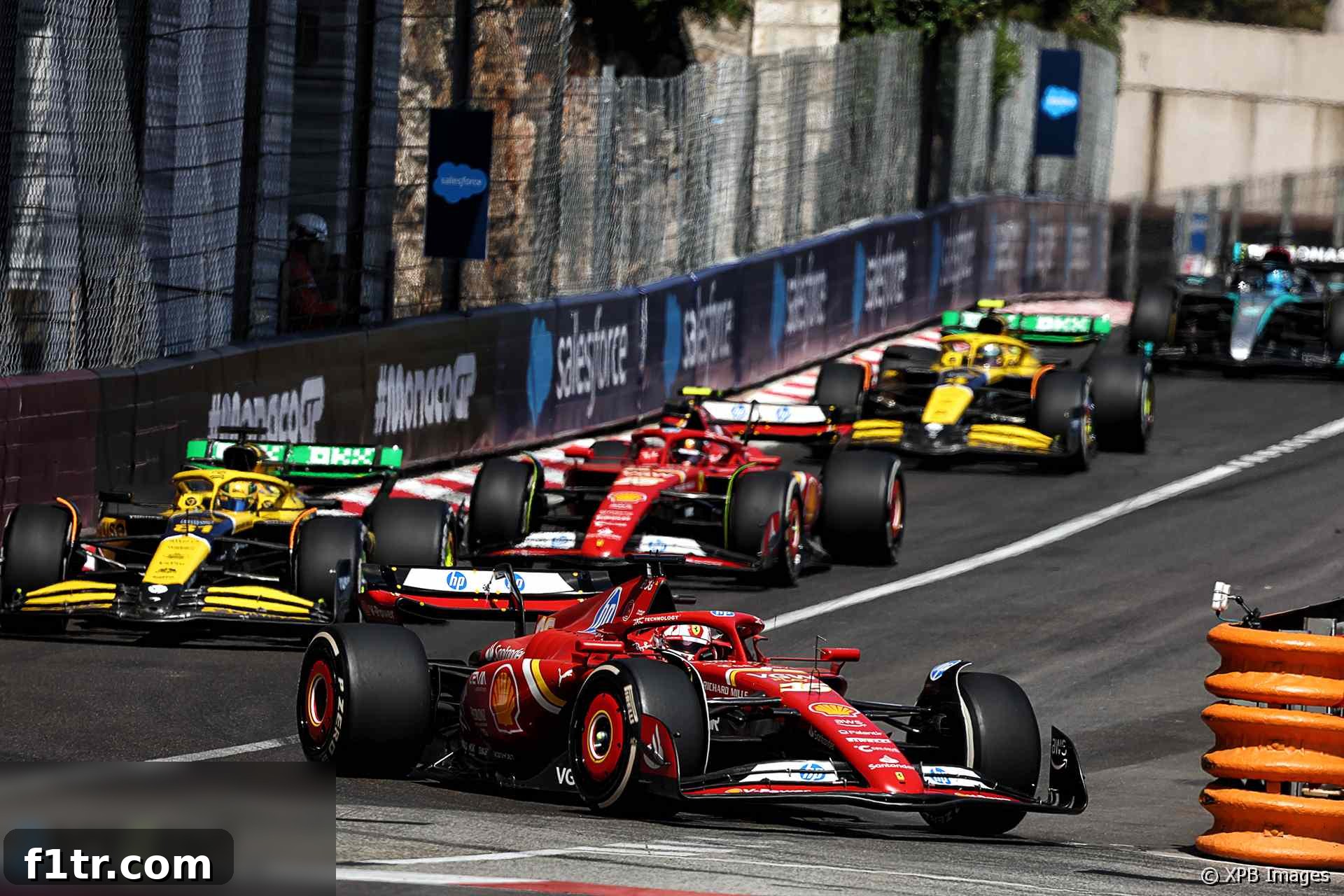
A recent example that underscores the need for greater strategic variation on street circuits was the Monaco Grand Prix, where some drivers were able to complete almost the entire race distance on Pirelli’s softest existing tyre compound, the C5. This was largely facilitated by a red-flag period on the first lap, which allowed teams to change tyres without losing track position. While this created an unusual scenario, it also highlighted how extreme circumstances can allow a single soft compound to last an entire race, potentially limiting genuine strategic choices under normal green-flag conditions. The C6, with its even softer characteristics, would likely introduce a higher rate of degradation, making such long stints on the softest compound less feasible and thus compelling teams to consider multi-stop strategies or more aggressive tyre management.
Targeting the Right Tracks: Where We Might See the C6
In the past year, Pirelli nominated its C5 compound – currently the softest in its range – at several tracks renowned for their low-grip surfaces or specific layout characteristics that favor mechanical grip. These included Baku, Monaco, Circuit Gilles Villeneuve (Canada), the Red Bull Ring (Austria), Hungaroring (Hungary), Monza (Italy), Singapore, Autodromo Hermanos Rodriguez (Mexico), Las Vegas Strip, and Yas Marina (Abu Dhabi). These circuits often present unique challenges where a softer tyre can unlock performance, either due to their street circuit nature, the need for maximum grip in tight sections, or specific track temperatures. With the introduction of the C6, it is highly probable that many of these tracks, particularly the street circuits like Monaco, Baku, Singapore, and Las Vegas, will be prime candidates for receiving the new ultra-soft compound. This selection would align perfectly with Pirelli’s stated goal of improving racing on these challenging venues by providing a tyre that offers even more grip but also demands more careful management, thereby promoting diverse strategies.
The Continuous Pursuit of Innovation and Strategic Depth
The introduction of the C6 compound for the 2025 Formula 1 season is a testament to Pirelli’s relentless pursuit of innovation and its dedication to enhancing the racing spectacle. By expanding its tyre range and strategically softening other compounds, Pirelli aims to provide teams with a broader palette of choices, encouraging more dynamic and unpredictable race strategies, especially on the unique canvases of street circuits. This proactive approach ensures that tyres remain a critical and exciting element of Formula 1, challenging teams and drivers alike to master the intricate art of tyre management and strategic foresight. As the 2025 season approaches, anticipation will build to see how this new compound reshapes the competitive landscape and contributes to even more thrilling Grands Prix.
2024 Austrian Grand Prix
- Austrian GP clash will have taught Norris how to race Verstappen – Ricciardo
- Verstappen was “lucky” tyre damage didn’t force him to retire like Norris
- Pirelli introducing new C6 tyre to improve racing on street tracks next year
- Norris admits ‘overreacting’ but queries why Verstappen avoided track limits penalty
- Norris and Verstappen’s Austrian GP collision “blown out of proportion” – rivals
Browse all 2024 Austrian Grand Prix articles