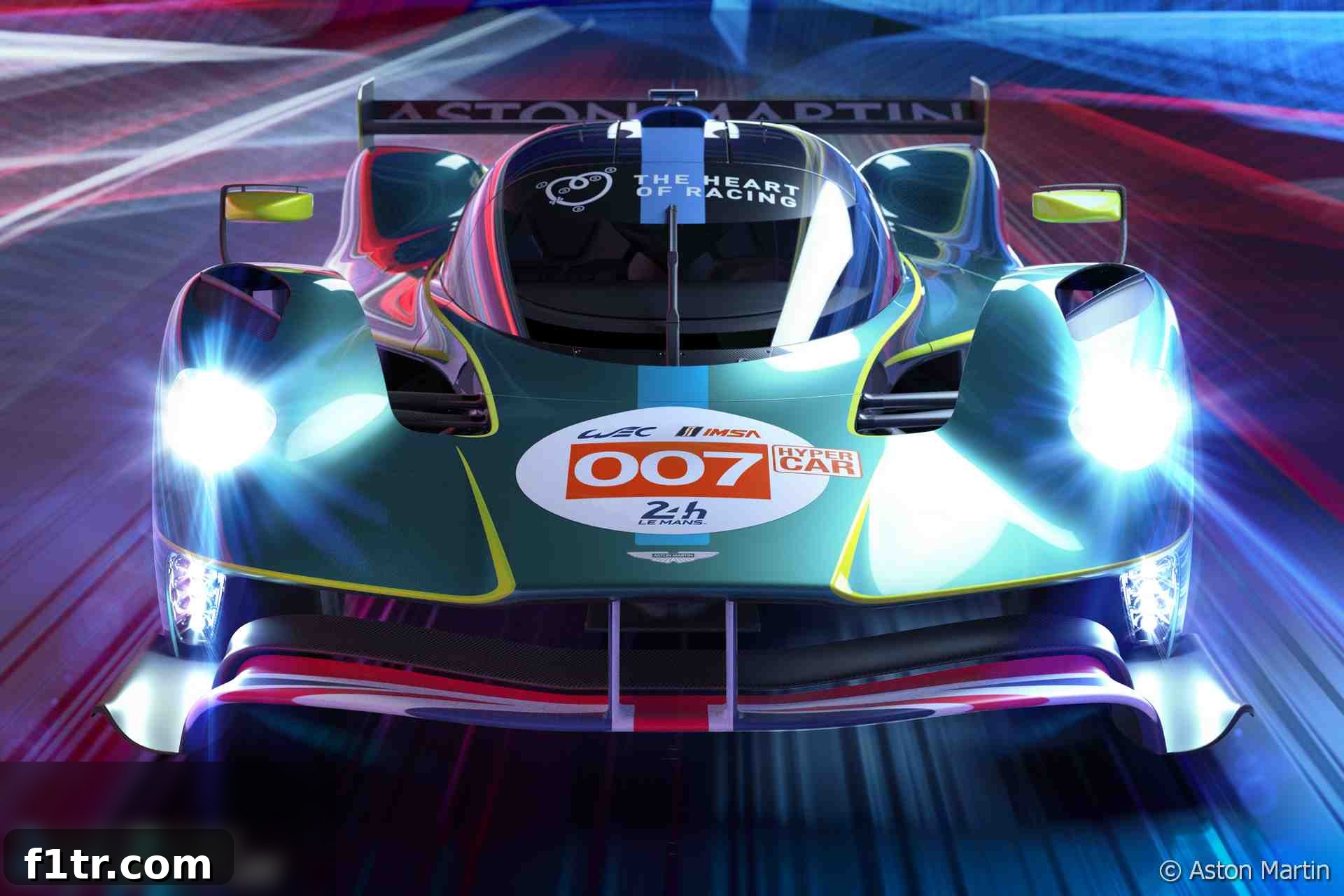
In a monumental announcement that has reverberated through the global motorsport community, Aston Martin has confirmed its highly anticipated return to the pinnacle of endurance racing. The prestigious British marque will enter its formidable Valkyrie hypercar into the top-tier Hypercar class of the World Endurance Championship (WEC) beginning in the 2025 season. This bold move signals Aston Martin’s unwavering commitment to elite competition, aligning its motorsport ambitions with its identity as a producer of world-class, performance-driven automobiles. Beyond the WEC, the Valkyrie will also campaign in North America’s fiercely competitive IMSA series, ensuring a global presence for Aston Martin in the most demanding categories of sports car racing.
For decades, Aston Martin has been synonymous with the rich tapestry of endurance racing, particularly at the legendary 24 Hours of Le Mans. While the brand has been a consistent and successful contender in the GTE class, securing numerous victories and class championships, a full factory assault on the overall win in the top prototype category has been absent since the challenging AMR-One project in 2011. The intervening years have seen a significant evolution in both Aston Martin’s road car division and its racing programs, culminating in the strategic decision to leverage the extreme engineering and performance capabilities of the Valkyrie hypercar for this renewed top-level campaign. The announcement resolves much speculation surrounding the Valkyrie’s racing future, solidifying Aston Martin’s intent to compete at the very highest echelons of global motorsport.
The Aston Martin Valkyrie: A Hypercar Forged for Racing
At the heart of Aston Martin’s ambitious return is the Valkyrie, a car that blurs the lines between road-legal hypercar and pure racing machine. Originally conceived through a groundbreaking collaboration between Aston Martin and Red Bull Advanced Technologies, with design input from the legendary Adrian Newey, the Valkyrie epitomizes cutting-edge automotive engineering and aerodynamic prowess. Its radical design, lightweight construction, and obsessive attention to detail were always destined for greatness, and adapting it for the crucible of endurance racing represents a natural evolution of its extreme capabilities.
Under the bonnet, the Valkyrie is powered by a naturally aspirated 6.5-litre Cosworth V12 engine. This powerhouse is a marvel of engineering, known for its spine-tingling sound and prodigious output. While the road-going version integrates a sophisticated hybrid system, the racing iteration of the Valkyrie for the Hypercar class will forgo this hybrid component, adhering to the specific technical regulations designed to level the playing field and manage performance across diverse powertrains. The focus will be on optimizing the pure V12 engine’s performance, reliability, and fuel efficiency – critical factors for success in multi-hour endurance events. The transition from road car concept to a full-fledged racing prototype requires meticulous engineering, rigorous testing, and a deep understanding of aerodynamics, chassis dynamics, and powertrain integration, all of which Aston Martin and its partners are now undertaking.
A Strategic Partnership: Heart of Racing Leads the Charge
To spearhead its charge into the WEC and IMSA, Aston Martin has entrusted the operational execution of the Valkyrie program to the esteemed American team, Heart of Racing. This partnership is a testament to an already established and successful relationship, as Heart of Racing has previously campaigned Aston Martin machinery in various GT categories, demonstrating both passion and competence. Their familiarity with Aston Martin platforms, coupled with their extensive experience in top-tier sports car racing, makes them an ideal choice to manage the complexities of a dual-series Hypercar/GTP program.
The commitment from Aston Martin and Heart of Racing ensures at least one Valkyrie hypercar will be actively competing in both the WEC and IMSA series for the 2025 season. This dual-pronged assault is strategically significant. It allows Aston Martin to gather crucial data from diverse racing environments, pushing the boundaries of the Valkyrie’s performance and reliability under varying track conditions and competitive pressures. Success in both championships will significantly elevate Aston Martin’s global motorsport profile and reinforce its performance credentials on two of the world’s most prestigious endurance racing stages.
Historical Roots and Future Aspirations: Lawrence Stroll’s Vision
Aston Martin’s rich heritage in endurance racing provides a powerful backdrop to this new chapter. As Lawrence Stroll, Chairman of Aston Martin Lagonda, eloquently put it, “We have been present at Le Mans since the earliest days, and through those glorious endeavours, we succeeded in winning Le Mans in 1959 and our class 19 times over the past 95 years.” Stroll’s words underscore the deep-rooted connection Aston Martin has with the spirit of Le Mans and the challenge of endurance racing. The 1959 overall victory with the DBR1 remains a cornerstone of Aston Martin’s racing legend, a triumph that cemented its place in motorsport history.
The current endeavor with the Valkyrie represents more than just a return; it is a declaration of intent to “write new history with a racing prototype inspired by the fastest production car Aston Martin has ever built.” This vision perfectly encapsulates the synergy Aston Martin aims to achieve between its road car innovation and its motorsport aspirations. By bringing the Valkyrie to the race track, Aston Martin seeks not only to compete for overall victories but also to showcase its engineering prowess, attract new enthusiasts, and solidify its brand image as a leader in high-performance automotive design and technology. The ambition is clear: to reclaim the top step of the podium at iconic events like the 24 Hours of Le Mans and the Rolex 24 at Daytona.
Leveraging Formula 1 Expertise: A Cross-Platform Advantage
A significant advantage for the Valkyrie’s racing development comes from its close ties to Aston Martin’s thriving Formula 1 program. The announcement confirmed that the Valkyrie’s race-ready version has been developed utilizing some of the cutting-edge facilities and engineering expertise housed at Aston Martin’s Formula 1 base in Silverstone. This cross-pollination of knowledge and resources is invaluable. F1 engineering brings unparalleled insights into advanced aerodynamics, composite materials, simulation tools, and rapid development cycles—all critical elements for designing and refining a competitive Hypercar/GTP prototype. This synergy ensures that the Valkyrie benefits from the absolute latest in motorsport technology and strategic thinking, propelling its development forward with an edge derived directly from the pinnacle of single-seater racing.
The Hypercar Landscape: A New Golden Era of Endurance Racing
Aston Martin’s entry into the Hypercar class comes at a particularly exciting time for endurance racing. The WEC’s Hypercar regulations and IMSA’s GTP class, facilitated by the LMDh/LMH convergence rules, have ushered in a new golden era, attracting an unprecedented number of global manufacturers. Porsche, Toyota, Ferrari, Cadillac, Peugeot, BMW, Alpine, and Lamborghini are among the formidable competitors already battling for supremacy. This fiercely contested environment provides a perfect stage for Aston Martin to prove the Valkyrie’s mettle against the best in the world. The challenge will be immense, requiring not just raw speed but also unwavering reliability, strategic precision, and flawless execution from both the team and the car.
The concept of Balance of Performance (BoP) will play a crucial role in regulating competition within this diverse field, ensuring that different vehicle architectures—such as the Valkyrie’s LMH platform—can compete fairly against LMDh counterparts. Aston Martin’s homologation process will be completed ahead of the 2025 season, marking the final technical approval for its entry into this elite category. The global nature of the championships, featuring iconic circuits like Circuit de la Sarthe (Le Mans), Spa-Francorchamps, Sebring, and Daytona, offers an incredible platform for Aston Martin to showcase its engineering prowess and racing spirit to a worldwide audience.
Anticipation Builds for 2025
As the 2025 season draws closer, anticipation within the motorsport community continues to mount. Aston Martin’s return to the top tier of endurance racing with a car as radical and captivating as the Valkyrie is a significant moment for the brand and for sports car racing as a whole. It’s a statement of ambition, a commitment to innovation, and a tribute to a storied racing past. The sight and sound of the Cosworth V12-powered Valkyrie battling it out against a grid of the world’s most advanced prototypes will undoubtedly be a thrilling spectacle. Fans worldwide eagerly await the moment this magnificent machine takes to the track, ready to etch a new chapter in Aston Martin’s glorious racing legacy and compete for outright victory on the grandest stages of endurance motorsport.