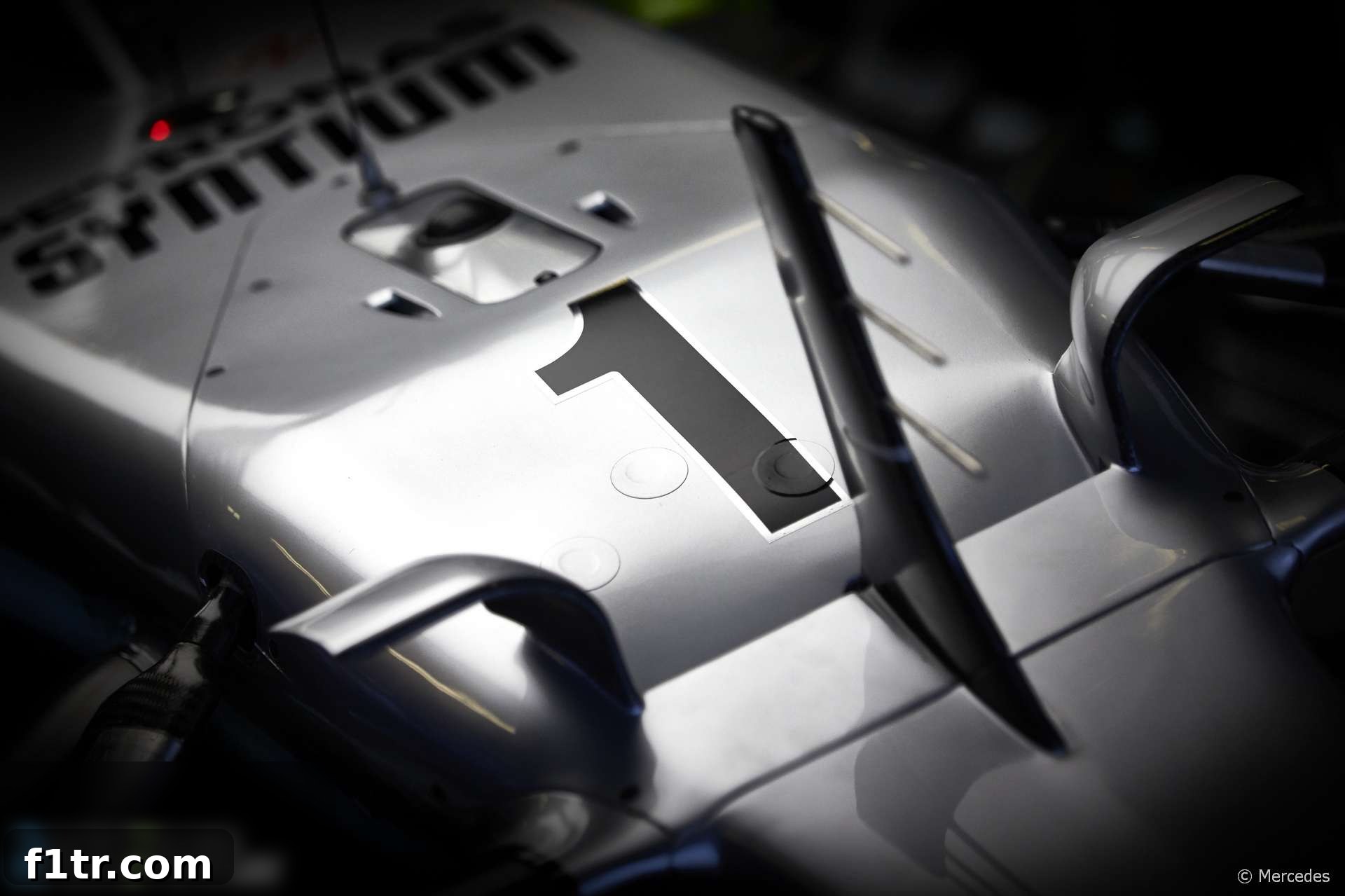
Lewis Hamilton’s Unique Tradition: Sporting the Champion’s Number 1 at the Abu Dhabi Grand Prix Practice
The Yas Marina Circuit in Abu Dhabi, the illustrious setting for the Formula 1 season finale, witnessed a familiar sight as six-time world champion Lewis Hamilton momentarily swapped his iconic number 44 for the coveted number 1 on his Mercedes-AMG F1 W10 EQ Power+ during the initial practice session. This one-off appearance of the champion’s number, a tradition Hamilton has observed in recent years, serves as a symbolic nod to his unparalleled success in the sport, even as his personal connection to number 44 remains steadfast.
In the high-stakes world of Formula 1, car numbers carry significant weight, representing both identity and achievement. Since 2014, drivers have been able to choose their permanent racing numbers, which they carry throughout their careers. Lewis Hamilton, from the outset, chose the number 44, a digit deeply personal to him, stemming from his karting days. Yet, as the reigning World Drivers’ Champion, he holds the unique privilege, as per FIA regulations, to adopt the number 1 for the following season – a right exclusively reserved for the sport’s current titleholder.
Advert | Become a Supporter & go ad-free
While most champions embracing the number 1 do so for an entire season, Hamilton has consistently chosen to stick with his beloved 44, a testament to his humility and the sentimental value he places on his personal journey. However, for a select few practice sessions, particularly at the beginning or end of a championship year, Mercedes has sought and received special permission to adorn the front of his car with the number 1. This gesture allows the team and fans to celebrate his triumph, albeit briefly, while the number 44 remains visible, often on the engine cover, reflecting his true racing identity.
Inside the Cockpit: Hamilton’s Reflections on Abu Dhabi Practice
Despite the change in car number, which was purely symbolic for a single run during the first free practice session, Hamilton described his Friday as largely “usual.” This assessment, however, quickly gave way to a deeper reflection on his performance and the ongoing pursuit of perfection, even in a championship-winning car. “I was struggling to get into the rhythm today, but you have your good and bad days,” he candidly admitted. This insight offers a rare glimpse into the mental fortitude and relentless self-assessment required at the pinnacle of motorsport.
The “rhythm” Hamilton refers to is a critical component of a driver’s performance, encompassing the synchronization with the car, understanding the track conditions, and extracting maximum performance from the tires. Even for a driver of Hamilton’s caliber, finding this rhythm can be a challenge, particularly on a track like Yas Marina, which features a mix of tight corners and long straights, demanding a finely balanced car setup. His comments highlight that success in Formula 1 is not merely about raw talent but also about continuous adaptation and problem-solving.
Despite his personal struggles to find peak rhythm, Hamilton’s assessment of the Mercedes W10 was largely positive. “Nonetheless, the car still felt good,” he stated, reassuring fans of the underlying strength of his machinery. However, ever the perfectionist, he quickly identified areas for improvement: “but there’s definitely areas that we can work on as a team and areas for me to work on personally.” This dual focus on both team and individual progress is a hallmark of Hamilton’s approach, demonstrating his collaborative spirit and unwavering commitment to excellence.
The British champion further elaborated on his methodology, revealing his strategic approach to practice sessions, especially towards the end of a dominant season. “I’ll just sit down tonight and make sure to get that straight for tomorrow. I’ve been trying to explore some new avenues with the car. We already know where it works well, so I’m pushing the car into different places, just trying to see if there’s anywhere else I can exploit the car and the tyres for the future.” This proactive exploration is crucial for long-term development, allowing the team to gather valuable data on alternative setups, tire management strategies, and driving lines, all of which contribute to future competitive advantages.
The 2019 Formula 1 Season: A Dominant Chapter for Hamilton
The Abu Dhabi Grand Prix served as the culmination of the 2019 Formula 1 season, a year that saw Lewis Hamilton clinch his sixth World Championship title, further cementing his place among the sport’s all-time greats. His dominance throughout the season was undeniable, characterized by a potent combination of raw speed, strategic brilliance, and remarkable consistency. Mercedes-AMG F1, under the leadership of Toto Wolff, provided him with a formidable machine in the W10, which proved to be the class of the field across a wide range of circuits.
Hamilton’s journey to his sixth title was marked by several memorable victories, often showcasing his ability to perform under pressure and capitalize on every opportunity. From his commanding win at the Hungarian Grand Prix to his strategic masterpiece in Monaco, he consistently outmaneuvered rivals and extracted the maximum from his package. The season was a testament to Mercedes’ engineering prowess, as they successfully navigated regulatory changes and maintained their technological edge over competitors like Ferrari and Red Bull Racing.
The battle for the championship, while ultimately decisive in Hamilton’s favor, was not without its challenges. Ferrari, with Charles Leclerc and Sebastian Vettel, showed flashes of brilliance, particularly in qualifying, while Max Verstappen in the Red Bull often pushed the Mercedes cars to their limits. However, Hamilton’s ability to minimize errors, coupled with Mercedes’ operational efficiency and tactical acumen, allowed them to maintain a consistent points advantage throughout the grueling 21-race calendar. Abu Dhabi, therefore, was not just the season’s end, but a celebratory lap for a team and driver who had truly earned their accolades.
Beyond the Numbers: The Enduring Legacy of Lewis Hamilton
Lewis Hamilton’s choice to display the number 1, even temporarily, is more than just a nod to his championship status; it reflects a unique chapter in F1 history. His dedication to his personal number 44 resonates with fans, showcasing a driver who is deeply connected to his roots and journey, rather than just the symbols of his success. Yet, the brief appearance of number 1 serves as a powerful reminder of his extraordinary achievements.
At the time of the 2019 Abu Dhabi Grand Prix, Hamilton was already widely regarded as one of the most successful drivers in Formula 1 history. His six world titles placed him second only to the legendary Michael Schumacher. His ability to adapt to changing regulations, extract performance from any car, and maintain an unparalleled level of consistency over numerous seasons set him apart. His influence extended beyond the track, becoming a vocal advocate for diversity and inclusion within the sport, further cementing his legacy as a transformative figure.
The meticulous approach Hamilton takes to every practice session, even when a championship is already secured, underlines his relentless pursuit of perfection. His constant quest to “explore new avenues” and “exploit the car and the tyres for the future” is a testament to his forward-thinking mindset and his understanding that in Formula 1, standing still is akin to moving backward. This dedication ensures that even in moments of celebratory display, the focus on competitive advantage never wavers.
As the curtain fell on the 2019 season in Abu Dhabi, the temporary number 1 on Hamilton’s car was a fitting visual summary of his reign. It represented not just a single victory, but a sustained period of excellence that has redefined modern Formula 1. While his heart remains with 44, the sight of the number 1 was a powerful and well-deserved tribute to a champion at the peak of his powers, continually pushing boundaries for himself and his team.
Don’t miss anything new from RaceFans
Follow RaceFans on social media for the latest updates and exclusive content:
- Join RaceFans on Facebook
- Follow RaceFans on Twitter
- Get daily email updates from RaceFans
Advert | Become a RaceFans supporter andgo ad-free
Explore More from the 2019 F1 Season
Dive deeper into the memorable moments and key stories from a championship-winning year:
- Crying in the Melbourne car park at 2019 grand prix was my career low – Ocon
- McLaren Racing reports reduced £71 million loss in 2019
- Kvyat: Hockenheim podium last year was “my biggest achievement” so far
- How the FIA’s new encrypted fuel flow meter targets Ferrari’s suspected ‘aliasing’ trick
- “He smashed my office door”: 23 must-see moments from ‘Drive to Survive’ season two
Browse all 2019 F1 season articles