The 2018 German Grand Prix at Hockenheim was a race weekend that will forever be etched in Formula 1 history, a dramatic spectacle of shifting fortunes, strategic brilliance, and heartbreaking errors. From the initial qualifying sessions to the final checkered flag, the event delivered an unpredictable narrative where the weather played a pivotal role in dictating the championship pendulum. While some drivers navigated the treacherous conditions with remarkable skill, seizing unexpected opportunities to elevate their performance, others faltered under pressure, watching their hopes unravel in a moment of misfortune. This analysis delves into the standout performances that defined the weekend, celebrating those who shone brightly, and examining the struggles of those who faced a more challenging race.
Stars of the German Grand Prix
Lewis Hamilton: A Masterclass in Recovery and Opportunity
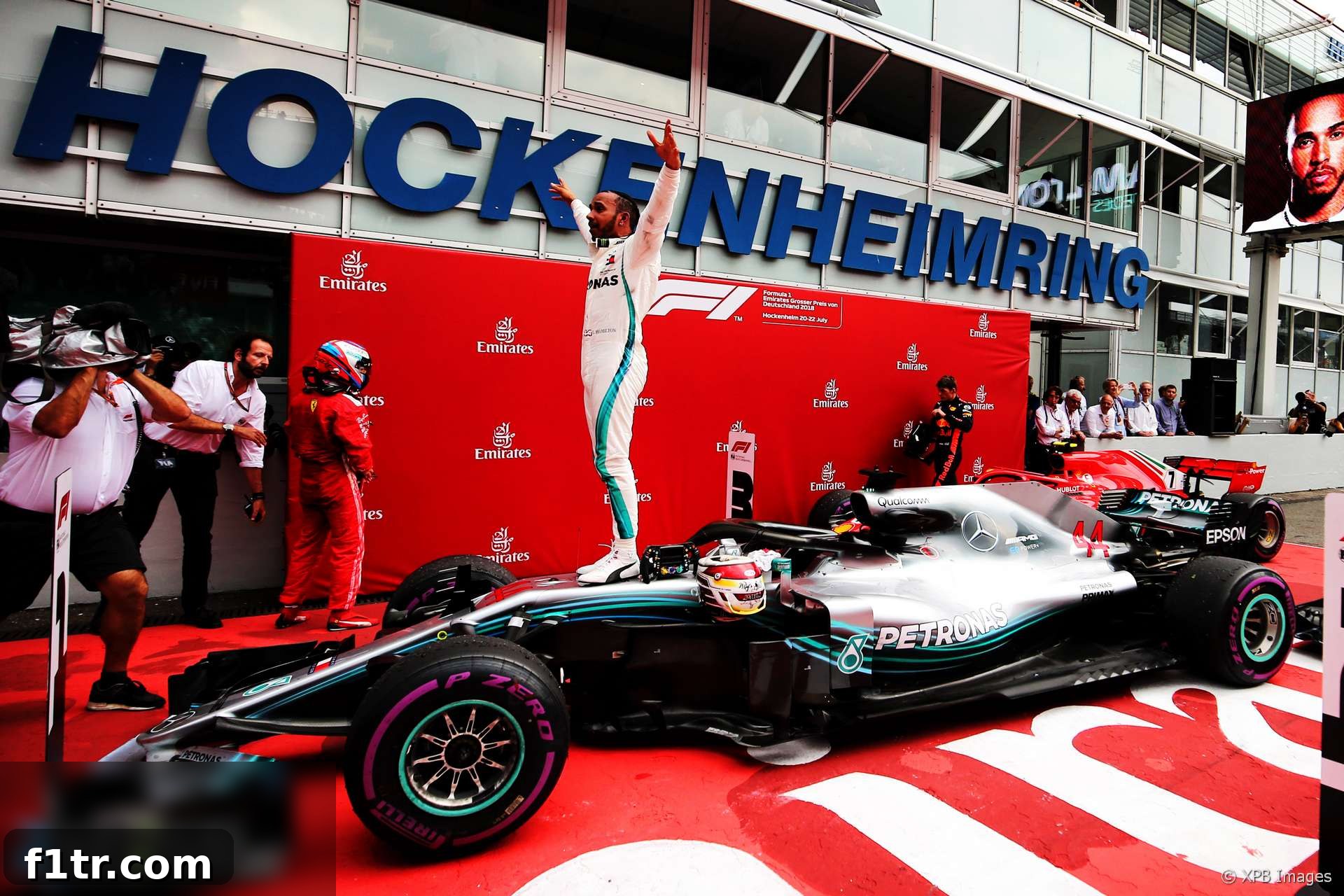
Few could have predicted a victory for Lewis Hamilton after a calamitous qualifying session saw him start a lowly 14th on the grid. A hydraulic failure during Q1 effectively ended his qualifying hopes prematurely, leaving him with an uphill battle and a significant points deficit to championship rival Sebastian Vettel, who had secured pole position. The British driver, however, is renowned for his resilience and ability to perform under pressure, and Hockenheim 2018 was a quintessential demonstration of these qualities.
Hamilton’s recovery drive in the initial stages of the race was nothing short of exceptional. Systematically making his way through the midfield, he showcased Mercedes’ raw pace and his own overtakes. Opting for a long first stint on the soft tyres, he managed his degradation expertly, maintaining a competitive pace before switching to the ultra-soft compound as the clouds began to gather ominously. This strategic decision proved astute, positioning him perfectly for the impending drama. Vettel, who had been comfortably leading, saw his substantial 22-second advantage over Hamilton evaporate rapidly as the rain started to fall. The pressure mounted, and then, in a pivotal moment that sent shockwaves through the paddock, the Ferrari crashed out of the race, handing Hamilton an unexpected lifeline.
The subsequent Safety Car period introduced another layer of chaos and strategic intrigue. Mercedes’ initial radio communications suggested a double stack pit stop for both Hamilton and Bottas. However, amidst the confusion and split-second decisions, Hamilton made the decisive call to stay out, a move that would ultimately secure his victory. This swift, almost instinctive decision contrasted with his teammate’s pit stop and Raikkonen’s decision to pit on the subsequent lap for fresh tyres. At the restart, Hamilton, on older tyres, found himself under immense pressure from a fresh-tyred Valtteri Bottas. He masterfully defended his position through turns six, seven, and eight, demonstrating supreme car control and race craft. The team, recognizing the immense value of Hamilton’s lead and his championship position, then issued team orders, calling off the fight between their drivers. Hamilton’s triumph from 14th on the grid was a testament to his unwavering determination, strategic acumen, and ability to capitalize on every opportunity, solidifying his position as a true master of adverse conditions.
Nico Hulkenberg: Home Hero Shines Bright
For Nico Hulkenberg, racing on home soil at the Hockenheimring, the German Grand Prix offered a chance to demonstrate his consistent talent, and he certainly delivered. Continuing his impressive qualifying form over teammate Carlos Sainz Jr., Hulkenberg once again proved to be the quicker of the two Renault drivers. While he narrowly missed out on out-qualifying the strong Haas pair, his race performance was a different story, as he decisively beat both Haas cars when it mattered most. His strong start was key, allowing him to immediately get ahead of Romain Grosjean, setting a solid foundation for his race.
Hulkenberg’s race craft truly came to the fore when the rain began to fall. He expertly navigated the changing conditions, taking full advantage of Kevin Magnussen’s mistake during the damp phase. Like the Haas drivers, Hulkenberg briefly switched to intermediate tyres, a common, albeit often risky, strategy during such transitions. However, his decision to quickly revert to slicks as the track began to dry was critical and perfectly timed, allowing him to maintain momentum and avoid the pitfalls faced by those who stayed on intermediates for too long or made poor tyre calls. This swift adaptability underscored his experience and situational awareness. Throughout the race, Hulkenberg maintained a strong, consistent pace, extracting the maximum from his Renault package. His performance not only delighted the home crowd but also reinforced his reputation as a reliable and formidable competitor in the midfield, often dubbed the “best of the rest.” Finishing ahead of key rivals, particularly the Haas cars, was a significant achievement for Renault and a testament to Hulkenberg’s composed and intelligent drive.
Esteban Ocon: Underrated Excellence in Adversity
At first glance, one might question whether a driver who started and finished behind his teammate can truly be considered a “star” performer. However, Esteban Ocon’s performance at the German Grand Prix was a nuanced display of skill, resilience, and shrewd decision-making in challenging circumstances that fully justifies his inclusion. His Q1 exit, by a minuscule margin of just 0.018 seconds, belied his underlying pace and was partly attributable to limited dry practice time, as Saturday morning rain and Nicholas Latifi driving his car in FP1 had severely curtailed his track time. Starting from 15th on the grid, Ocon immediately began his ascent through the field, showcasing his race craft by climbing to 12th position after the first lap.
Ocon’s strategic intelligence became evident as he executed a well-timed undercut on Fernando Alonso through the pits just before the rain truly began to fall, gaining crucial track position. Crucially, like his teammate Sergio Perez, he made the brave and ultimately correct call to stay on slick tyres when the rain initially hit the track. However, unlike Perez, who suffered a spin in the treacherous damp conditions, Ocon maintained impeccable control of his Force India. This ability to keep the car on track and maintain pace in the slippery conditions highlighted his exceptional car control and maturity. As a result of his composed driving and strategic choices, Ocon found himself in an impressive seventh position by the time the Safety Car was deployed. While neither Force India driver was ultimately able to hold off the charging Romain Grosjean in the closing stages, and Ocon finished just behind his teammate Perez, his drive was a standout performance. Navigating a chaotic race weekend with minimal dry practice, making smart strategic calls, and demonstrating superior car control when others faltered, Ocon certainly earned his stripes as a star performer, proving his mettle in one of the season’s most challenging races.
Strugglers of the German Grand Prix
Sebastian Vettel: The Agony of a Home Mistake
The 2018 German Grand Prix was, for Sebastian Vettel, a weekend that promised so much and delivered so little, culminating in a moment of profound heartbreak. Entering his home race at Hockenheim, Ferrari and Vettel possessed a car that was demonstrably superior, and he had brilliantly secured pole position, placing him in the perfect position to extend his championship lead over Lewis Hamilton. The first half of the race unfolded largely according to plan, with Vettel controlling the pace from the front. However, a slightly longer first stint compared to his teammate Kimi Räikkönen briefly saw him drop behind the Finn. After airing concerns over team radio about the degradation of his tyres, Ferrari orchestrated a seamless position swap, allowing Vettel to reclaim the lead and build up a comfortable ten-second buffer. All signs pointed towards a dominant home victory, a pivotal moment in his championship campaign.
Then, the rain began. As the track became increasingly treacherous, Vettel started to lose significant time to the charging Lewis Hamilton, who was on a different strategy and flying through the field. Despite this, Vettel had just managed to match Hamilton’s pace when, on lap 52, disaster struck. In a cruel twist of fate, the Ferrari driver made a tiny, yet catastrophic, error. Skidding into the barrier at turn 13, the iconic Sachs Kurve, his race was over. The image of his stricken car, nose-first in the gravel, sent a gasp through the crowd and the paddock. This was not merely a DNF; it was a devastating psychological blow and a colossal championship swing. The precious 25 points he threw away would prove to be incredibly significant in the tight battle for the title. What was set to be a triumphant home victory transformed into a crushing defeat, highlighting the brutal and unforgiving nature of Formula 1, where the finest margins can dictate destiny. Vettel’s error was a stark reminder that even the most dominant drivers can succumb to pressure and the fickle nature of the elements.
Lance Stroll: A Weekend to Forget for Williams
Lance Stroll’s German Grand Prix weekend served as a stark illustration of the struggles faced by Williams in 2018, coupled with a performance that left much to be desired from the Canadian driver himself. In qualifying, only Stoffel Vandoorne, plagued by McLaren’s chronic chassis issues, was slower than Stroll. This placed his performance in a particularly unflattering light, especially when contrasted with his rookie teammate Sergey Sirotkin, who impressively qualified the other Williams in 11th position, far exceeding expectations for the struggling team. The significant performance gap between the two Williams drivers in qualifying immediately set a challenging tone for Stroll’s race.
In the race itself, Stroll initially ran behind his teammate. Williams attempted to gain an advantage by bringing him in first for a pit stop, employing the “undercut” strategy to move him ahead of Sirotkin. This move highlighted the team’s desperation to salvage any competitive edge. Stroll then gambled on a set of intermediate tyres as the rain arrived, a decision that proved to be ill-fated. While some drivers managed to make intermediates work briefly, Stroll’s gamble quickly unraveled. Adding to his woes, a brake problem emerged shortly after, ultimately forcing him to retire from the race. From a disastrous qualifying to a failed strategic gamble and a technical retirement, Stroll’s German Grand Prix was a forgettable affair, underlining a weekend where very little went right for him or his team. It further exposed the difficulties Williams faced in extracting performance and making critical in-race decisions, with Stroll unfortunately finding himself at the sharper end of those challenges.
The Rest of the Field: Mixed Fortunes and Defining Moments
Beyond the outright stars and strugglers, the 2018 German Grand Prix offered a fascinating tableau of performances from the rest of the grid, each contributing to the dramatic narrative of the weekend.
Valtteri Bottas demonstrated precisely why Mercedes had secured his services for the following season. He put in a strong qualifying performance, skillfully splitting the Ferraris to secure second on the grid. In the race, he was a steady force, capitalising on the changing conditions to pass Kimi Räikkönen for second place when the rain began. During the Safety Car period, Mercedes brought him in for fresh tyres, a decision that resulted in a somewhat lengthy pit stop. Despite this, he only lost one position, to his teammate Lewis Hamilton, a position he would likely have lost anyway given Hamilton’s strategic gamble. Bottas had a single, clear opportunity to challenge Hamilton for the lead at the restart, pushing hard through the challenging turns, but the battle was swiftly curtailed by the issuance of clear team orders from Mercedes, prioritizing the championship implications for Hamilton. While denied a potential victory, Bottas’s performance was solid and professional.
Kimi Räikkönen experienced an average weekend by his high standards, having been out-qualified by Valtteri Bottas. However, the Safety Car period and the sudden shift in conditions presented him with an unexpected chance at victory. The critical question arose: could he have held off a charging Hamilton by staying out on his older, worn soft tyres, or was pitting for fresh tyres the correct call? Ultimately, Ferrari opted for the latter, bringing him in for new rubber, a decision that leaves the tantalizing “what if” question unanswered. Had he stayed out, the outcome could have been dramatically different, adding another layer of intrigue to an already chaotic race. Despite not securing the win, Räikkönen managed to claim his fourth consecutive podium finish, a testament to his consistent performance.
For Max Verstappen, fourth place seemed like the best available outcome in a race where his teammate Daniel Ricciardo’s engine penalties and early retirement left him isolated from any internal Red Bull battle. Verstappen, with little to lose, took a gamble on intermediate tyres as the rain intensified. While this didn’t ultimately propel him to a podium spot, it was a logical strategy given that Hamilton was likely to pass him regardless of his tyre choice. His race was a relatively solitary affair, demonstrating Red Bull’s underlying pace but also their vulnerability without both cars in contention.
Romain Grosjean, despite qualifying behind his Haas teammate Kevin Magnussen and enduring a challenging first stint where he was passed by both Renaults, mounted a fantastic recovery drive to finish sixth. His resilience was truly commendable, as he surged from 11th to sixth in the final 11 laps, crucially overtaking Sergio Perez for seventh place on the very last lap. This late-race charge underscored his ability to perform under pressure and make up ground when it mattered most. His teammate, Sergio Perez, also had a mixed race. While he experienced a spin in the damp conditions, he skillfully took advantage of many drivers who pitted for intermediates, allowing him to maintain a strong position and ultimately finish seventh, just behind Grosjean. Both Haas drivers demonstrated good racecraft, albeit with moments of struggle.
Marcus Ericsson enjoyed a strong weekend, securing a valuable points finish for Sauber for the first time since Austria. While his teammate Charles Leclerc was, as usual, significantly quicker in qualifying, Ericsson distinguished himself with a clean, mistake-free race, effectively navigating the chaotic conditions to bring his car home in the points, a solid result for the Swedish driver and the team.
Brendon Hartley delivered one of the most underrated performances of the Grand Prix, earning his second points finish of the season. His crucial decision to resist his team’s call to pit during the initial rain shower, opting instead to stay on slicks, proved to be a stroke of genius. He expertly managed his dry tyres on the damp track for the remainder of the race, brilliantly holding off Kevin Magnussen in a much quicker Haas car. This defiant and skillful drive earned him well-deserved points. In contrast, his Toro Rosso teammate Pierre Gasly was the only driver to pit for the full wet tyre, a decision that proved dearly costly, as the track never became wet enough to justify the extreme wet compound, leading to a significantly compromised race.
Carlos Sainz Jr. had a more challenging weekend compared to his Renault teammate. Unlike Hulkenberg, Sainz did not have the benefit of Renault’s new front wing, which likely impacted his performance. He qualified behind his teammate and, unfortunately, a penalty for overtaking under the Safety Car cost him a crucial points finish, dropping him behind Brendon Hartley. This decision effectively negated his efforts to secure valuable championship points.
McLaren’s struggles continued to be a prominent feature of the 2018 season, and Hockenheim was no exception. Stoffel Vandoorne qualified last, battling persistent aero problems with his chassis, and further lost time in the race due to a mysterious engine glitch. Fernando Alonso’s hopes for a points finish were cruelly dashed after he made the ill-fated decision to switch to intermediate tyres, despite having warned his team that it was too soon. This internal team miscommunication and strategic error highlighted the ongoing operational difficulties within the McLaren camp.
Finally, Sergey Sirotkin, despite an impressive qualifying performance where he placed his Williams 11th on the grid, had a difficult race. He lost multiple places over the chaotic first few laps and eventually retired from the race under the Safety Car due to an oil leak, a frustrating end to what had started as a promising weekend for the Russian rookie.
The 2018 German Grand Prix served as a microcosm of Formula 1’s thrilling unpredictability. From the despair of a back-of-the-grid start to the jubilation of an unexpected victory, from strategic masterstrokes to critical errors, and from heroic recoveries to disheartening retirements, Hockenheim delivered a race weekend that profoundly impacted the championship narrative and left an indelible mark on the memories of fans. It was a stark reminder that in the world of F1, every decision, every lap, and every drop of rain can dramatically alter the course of destiny.
2018 German Grand Prix Overview
- 2018 German Grand Prix Star Performers: Heroes and Heartbreaks
- Statistical Insights from the 2018 German Grand Prix
- Top Ten Visual Highlights from Hockenheim 2018
- Race Review: Hamilton Reigns as Vettel’s Home Dream Shatters
- Paddock Diary: Behind the Scenes at Hockenheim – Race Day Reflections
Explore All Articles on the 2018 German Grand Prix